



Victorian Glass Wine Jug
These nineteenth-century table vessels combine blown crystal with silver or plated mounts, offering an elegant centrepiece for serving wine.
Victorian Glass Wine Jug
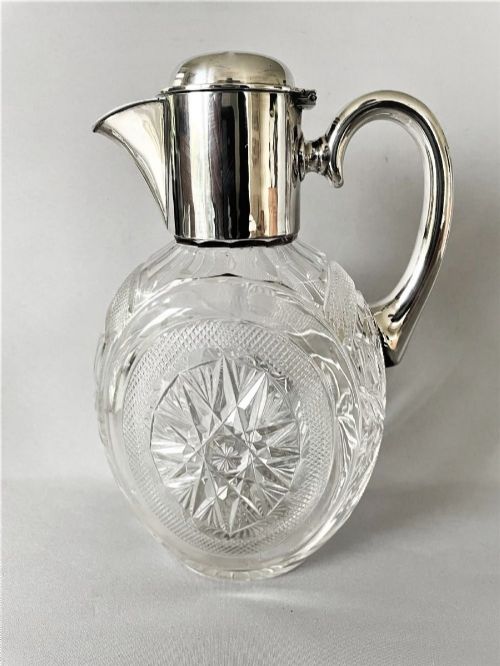
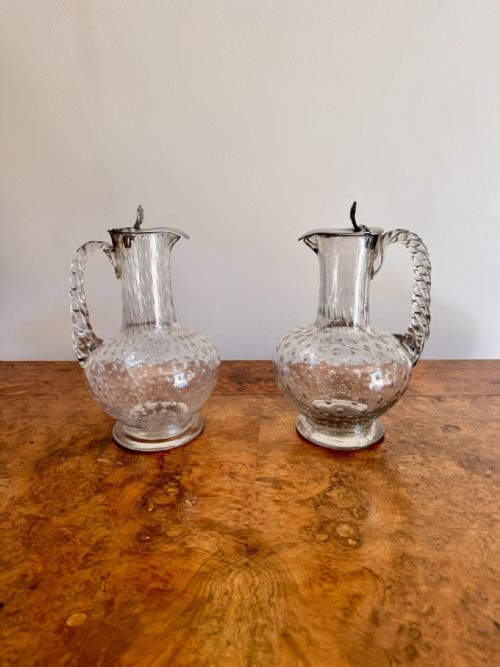
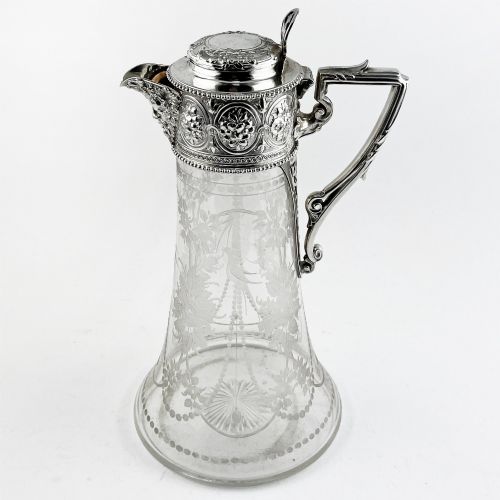
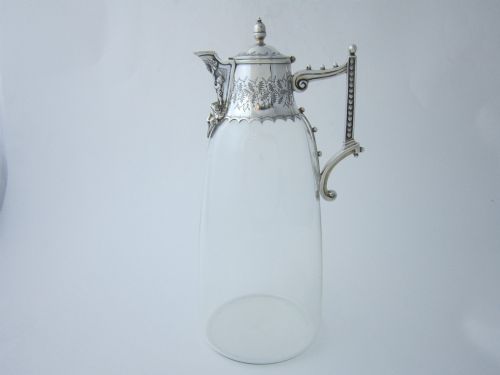
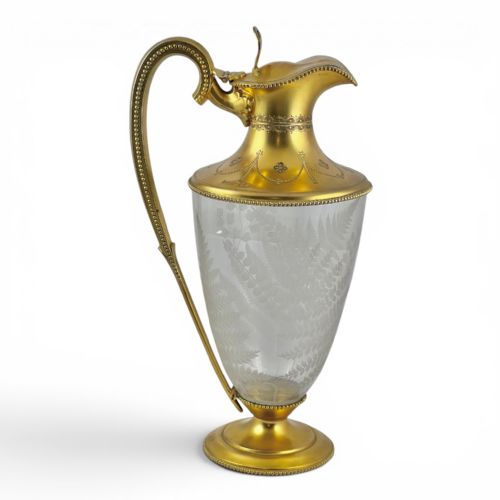
A Victorian glass wine jug serves as a decorative and functional piece designed for the dining table, most commonly appearing as a claret jug or ewer with a metal mount and handle. These examples span the Victorian and Edwardian periods, reflecting the heavy dining ritual of the nineteenth century.
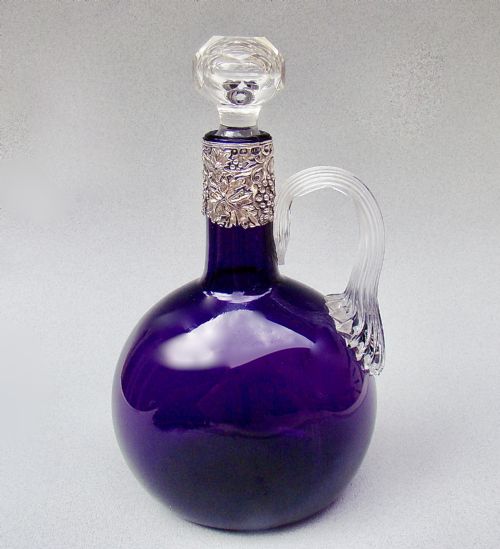
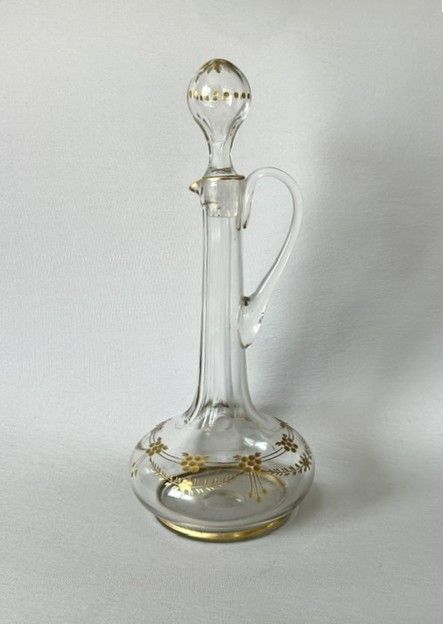
Buyers will frequently encounter cut glass and crystal bodies fitted with sterling silver or silver-plated collars, lids, and spouts. Variants also include coloured glass vessels, such as cranberry, green, amber, and amethyst bodies, alongside Bohemian cut and gilded pieces.
Materials and construction
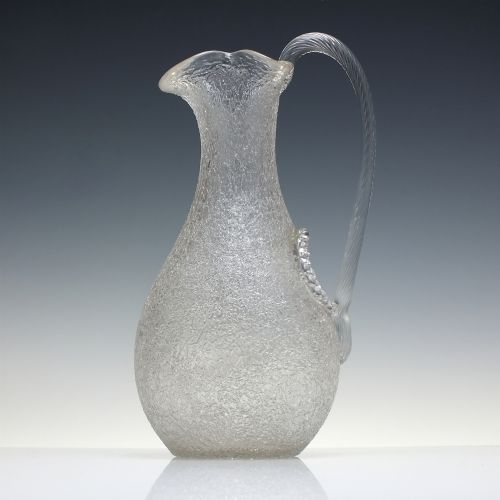
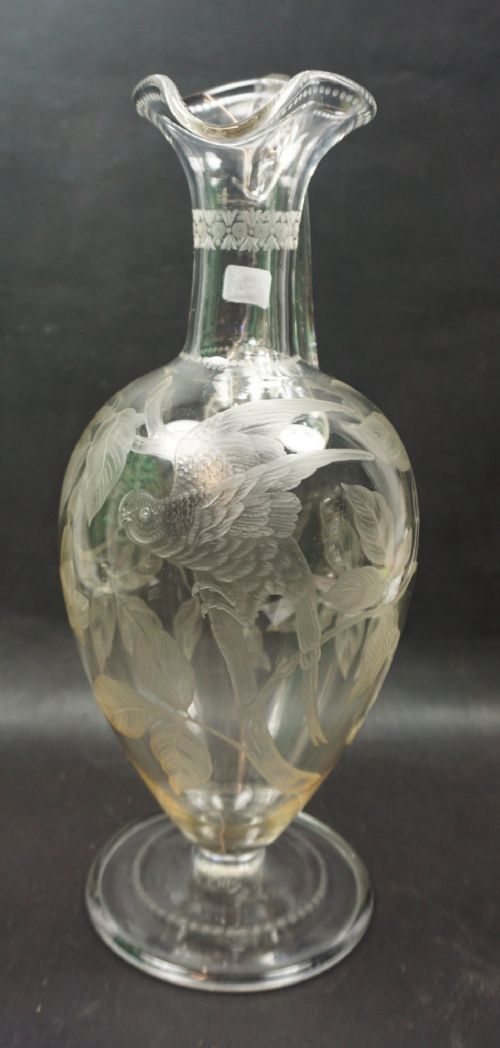
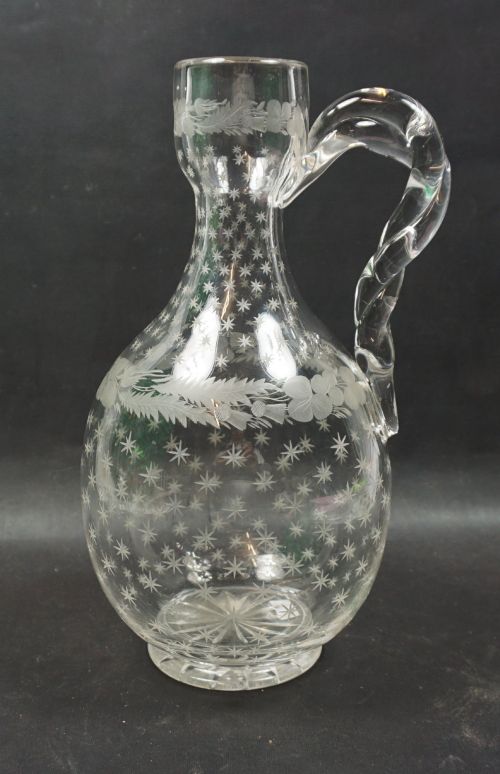
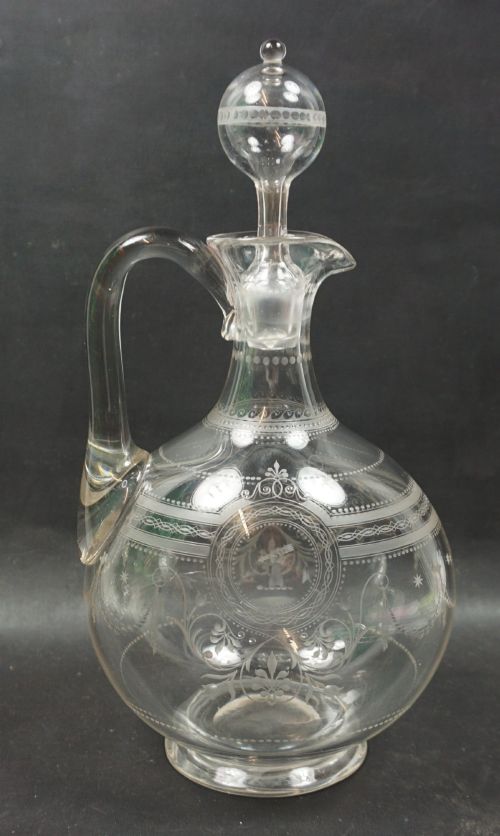
Makers utilised heavy-blown glass and crystal, often shaping the body through deep wheel-cutting, overlay techniques, or delicate hand-engraving depicting florals, crests, and foliage. Nailsea and latticinio decorative methods occasionally appear to add colour and linear pattern within the glass walls.
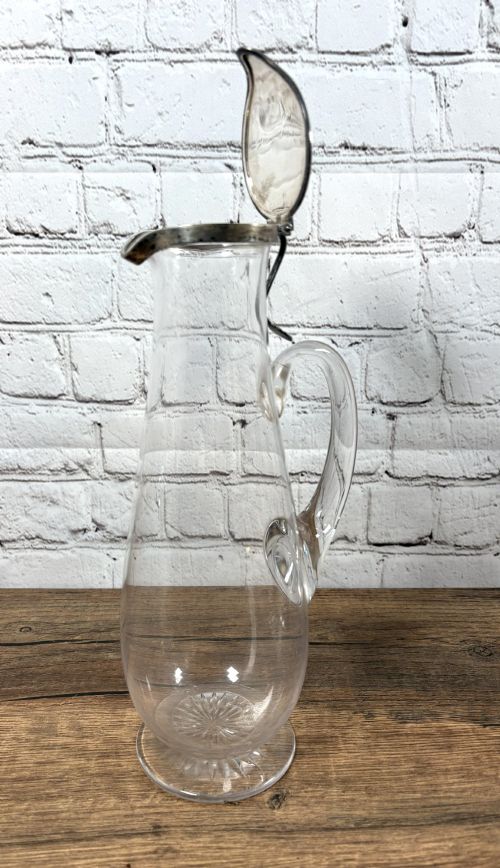
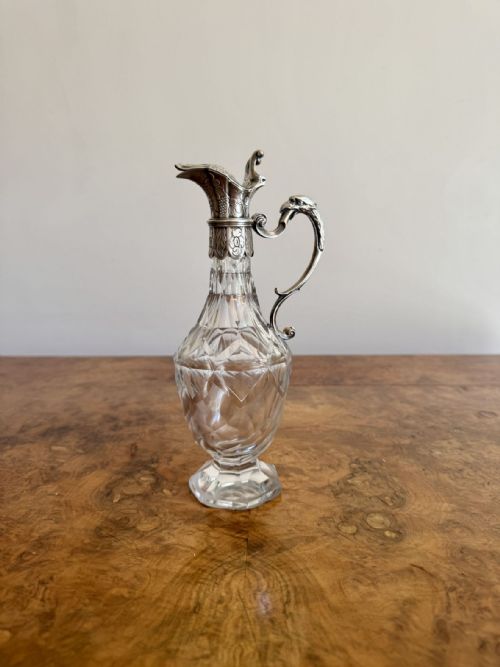
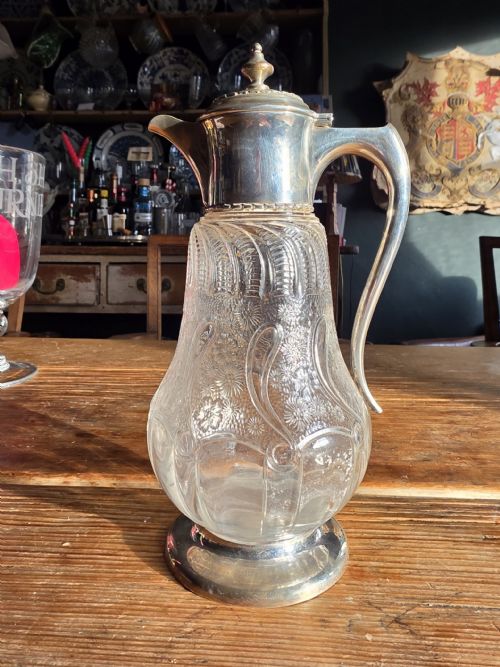
Metal mounts incorporate sterling silver, silver gilt, white metal, and old Sheffield plate or silver plate. These mounts are securely fitted around the neck of the glass vessel, terminating in hinged lids and cast handles formed as scrolls or serpents.
Victorian Glass Wine Jug Retail Price Guide 2026
Typical asking prices for victorian glass wine jug among the pieces listed under this phrase on Sellingantiques today, from the lower quarter to the upper quarter. They describe what is for sale here now, not the wider market.
Several Victorian jugs feature intricately cast serpent handles that appear to slither down the glass body to steady the pour.
Assessing craftsmanship and execution
The distinction between standard production and the finest work lies in the clarity of the crystal and the depth of the wheel-cut or engraved decoration. Skilled artisans produced crisp, detailed motifs such as naturalistic foliage or heraldic crests that catch the light cleanly.
Mount quality separates mass-produced items from superior examples, with heavier gauge silver, complex cast handles like serpents, and well-fitted hinged lids indicating finer workshop output. The harmony between the glass body and the metal collar determines the overall balance of the piece.
William Comyns·Henry Matthews·Elkington
The Victorian Glass Wine Jug Glossary
- Ewer
- A large jug with a wide spout and a looped handle, often used as a decorative water or wine pitcher during the nineteenth century. These vessels frequently display elaborate cut glass patterns.
- Cranberry glass
- A rich red-pink transparent glass created by adding gold chloride to the molten batch. It gained popularity during the Victorian era for decorative tableware and decanters.
- Old Sheffield plate
- A composite material made by fusing a thin sheet of silver to a thicker copper base. It predates electroplating and appears on earlier nineteenth-century mounts.
- Latticinio
- A glassblowing technique incorporating fine white or coloured glass threads into clear glass. This method creates delicate, interwoven patterns within the body of the vessel.
Victorian Glass Wine Jug: Frequently Asked Questions
What is the difference between a claret jug and a decanter?
A decanter typically uses a glass stopper to seal the contents and sits on the sideboard between pours. A claret jug incorporates a hinged metal lid and a handle, allowing for easy one-handed pouring at the table.
Claret jugs specifically emerged to serve red wine directly during the meal, whereas decanters served a broader range of spirits and fortified wines.
How do I date a glass wine jug?
Dating relies on a combination of hallmarks stamped on the metal mounts and stylistic clues within the glass. Silver hallmarks provide exact assay years and city marks for the metal collar.
Stylistic shifts, such as heavy Victorian cutting transitioning into flowing Art Nouveau lines during the Edwardian period, help narrow down unmarked examples.
Are these jugs suitable for regular use?
Most antique jugs remain structurally sound for serving wine at modern tables, provided they receive careful hand washing. The silver mounts and glass bodies require gentle maintenance to preserve the original polish.
Harsh detergents and automatic dishwashers must be avoided to protect both the metal plate and the delicate engraved crystal surfaces.
Why are some glass bodies coloured?
Coloured glass became highly fashionable during the mid-to-late Victorian period as glassmakers experimented with metallic oxides. Cranberry, green, amethyst, and amber hues added visual warmth to the dining room.
Overlay techniques, where a coloured layer of glass was cut away to reveal clear crystal underneath, created striking contrast and depth.