



Victorian Glass Tantalus
A Victorian glass tantalus is a locking barware frame holding decanters securely, designed to restrict unauthorized access to spirits in nineteenth-century homes.
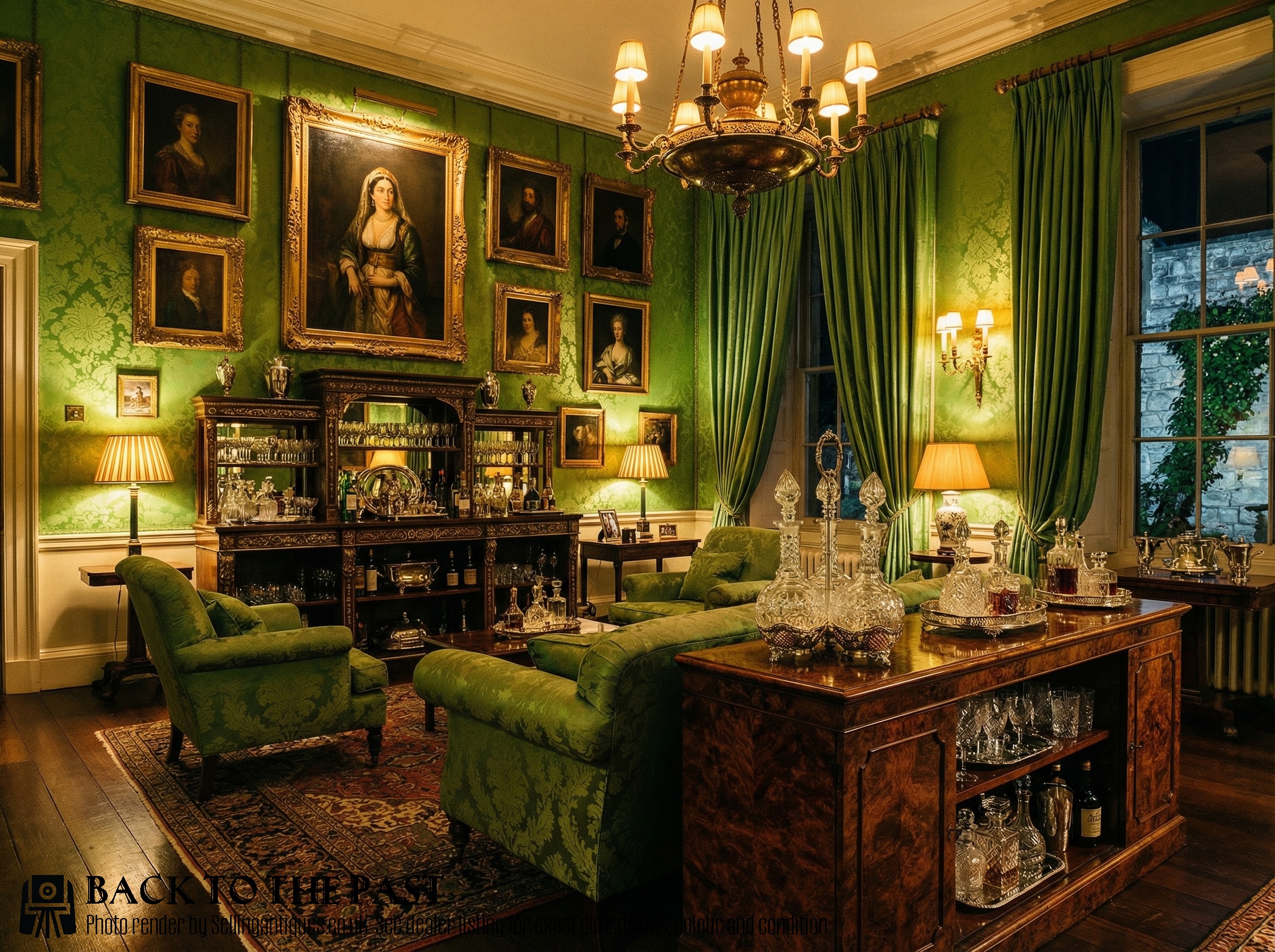
Victorian Glass Tantalus
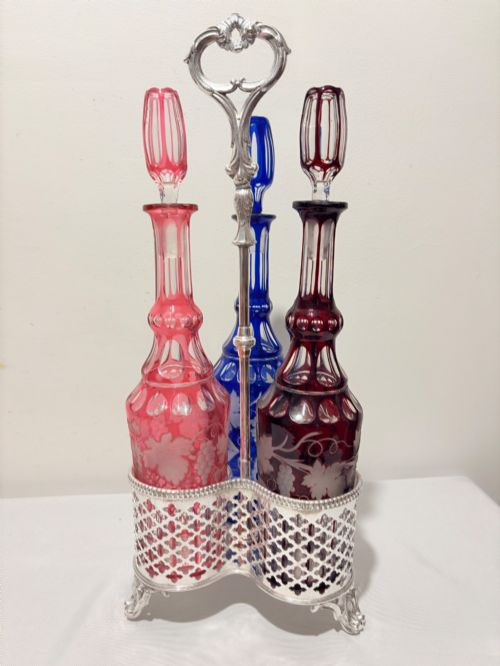
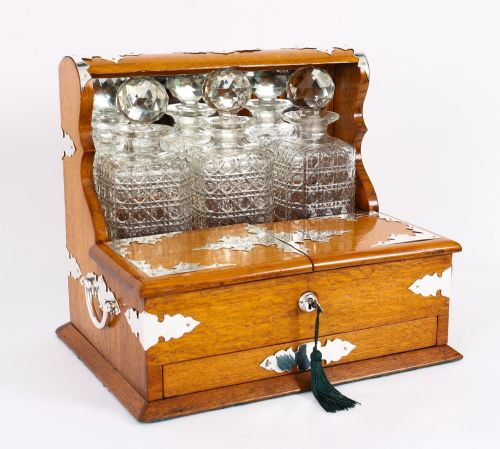
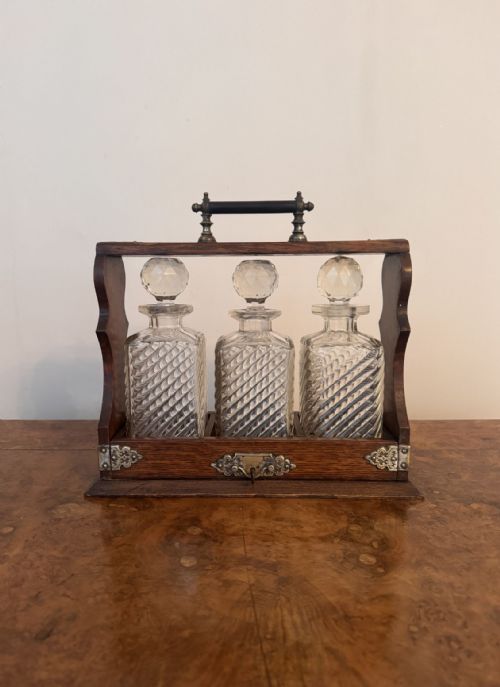
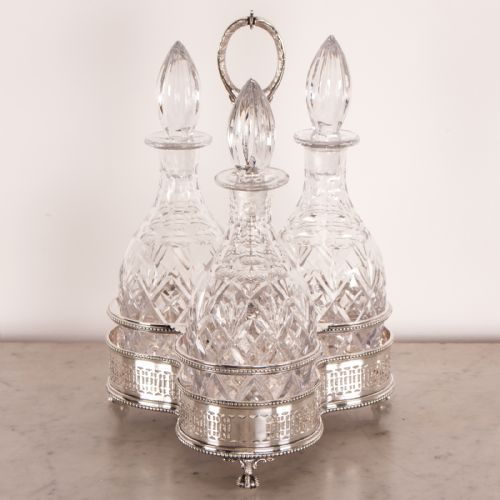
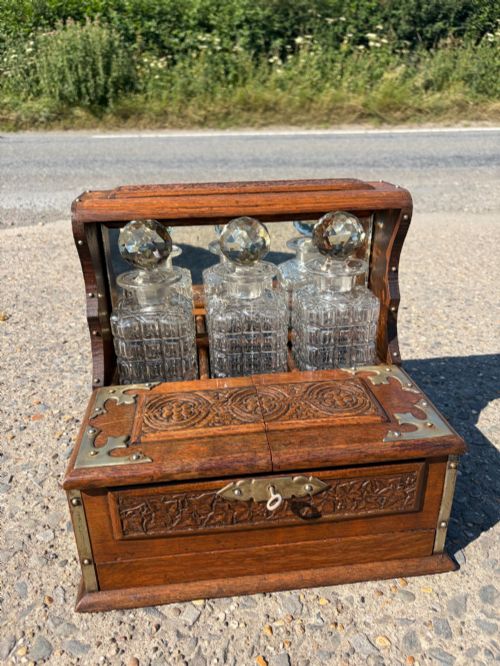
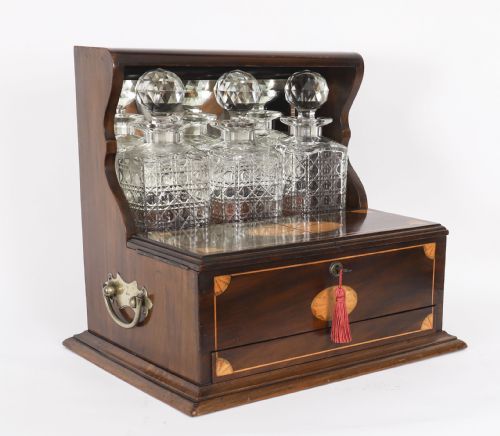
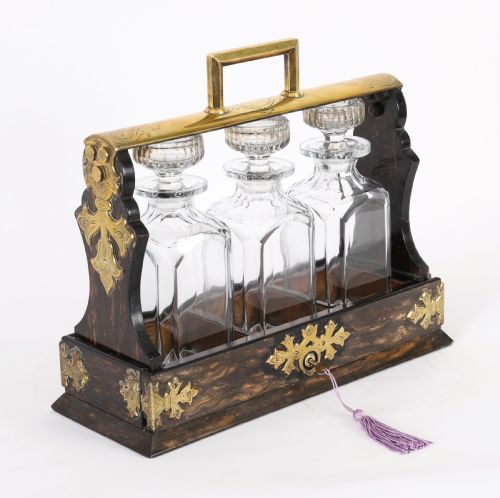
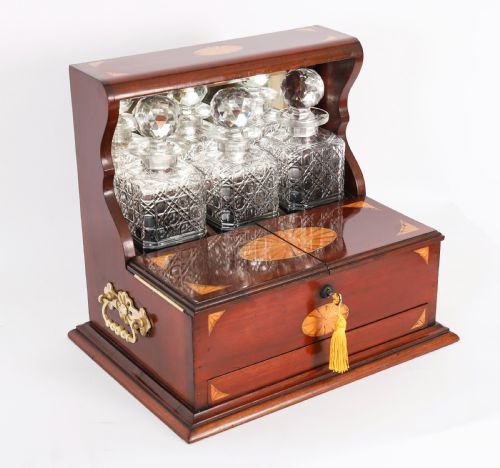
A Victorian glass tantalus functions as a lockable security frame for decanters, appearing in forms from single-bottle oak cases to large three-bottle combinations with integrated games compendiums. The pieces on this page span the mid-nineteenth century through the Edwardian period, encompassing standard barware stands alongside elaborately fitted dry bars.
Most examples rely on a rising metal bar secured with a key to lock the glass stoppers in place, preventing anyone from pouring a drink without the proper clearance. Builders housed these mechanisms in timber frames or ornate stands, frequently combining them with storage compartments for cards, dice, or cigars.
Materials range from sturdy oak and blonde oak to exotic coromandel, walnut, and mahogany, often accented with brass mounts, mirror glass, or marquetry stringing. The vessels held within include cut crystal decanters, frosted barrel dispensers, and cut glass jugs.
Materials and construction methods
Cabinet makers utilised dense hardwoods such as oak, walnut, and coromandel to construct the heavy chassis required to anchor a locking barware stand. These wooden bodies often feature intricate marquetry stringing, satinwood inlay, or brass mounts that reinforce the corners and house the locking mechanism.
The locking frames and accompanying stands depend on silver plating, brass, or sterling silver elements to secure the glass vessels firmly in place. Artisans shaped the accompanying barware from cut glass, cut crystal, and frosted glass, often pairing the set with tot pails or liqueur jugs.
Black Forest tantalus frames occasionally disguise their security mechanisms inside intricately carved wooden tree trunks and foliage.
Differentiating quality across pieces
Quality rests heavily on the complexity of the cabinetwork and the integration of secondary functions, such as fold-down fronts and multi-tier games compendiums. Finely executed marquetry stringing, intricate wood veneers like coromandel or satinwood, and substantial brass mounts distinguish superior examples from plain timber boxes.
The refinement of the metalwork, including heavy silver plating on the locking frame and handles, separates standard stands from exceptional productions. Additionally, the clarity and depth of the cut crystal decanters and the operational precision of the locking mechanism dictate the overall standard of the piece.
Walker And Hall·Elkington·Betjemann Brothers·The Goldsmith Co
The Victorian Glass Tantalus Glossary
- Tantalus
- A locking drink stand that displays decanters while physically blocking the removal of their stoppers. The name derives from Greek mythology, teasing thirsty guests who can see the spirits but cannot pour them without a key.
- Games compendium
- A fitted cabinet containing equipment for various parlour games alongside a barware section. These multi-purpose boxes typically include spaces for cards, dice, and counter trays.
- Silver plate
- A thin layer of silver fused to a base metal foundation, widely utilised for the handles, frames, and mounts of nineteenth-century barware. This technique provided the appearance of solid silver at a lower production cost.
- Coromandel
- A dense, heavily figured timber imported from Asia, valued for its rich dark brown colour and contrasting light stripes. Cabinet makers deployed it as a decorative veneer on luxury nineteenth-century boxes and tantalus frames.
Victorian Glass Tantalus: Frequently Asked Questions
What is a Victorian glass tantalus?
A Victorian glass tantalus is a locking barware frame designed to hold decanters securely. It prevents unauthorised access to spirits by locking the glass stoppers beneath a metal bar.
These pieces combine functional security with decorative display, frequently incorporating timber frames and storage compartments for games or cigars.
How did people use a tantalus?
Households used a tantalus in dining rooms and drawing rooms to store and dispense alcoholic beverages safely. The locking mechanism allowed hosts to restrict access to expensive spirits from servants or guests.
Many versions also served as social hubs by integrating folding writing surfaces, card compartments, or game pieces into the same cabinet.
How do I date a tantalus?
Dating relies on timber choices, hardware styles, and the mechanical design of the locking bar. Mid-nineteenth-century examples often feature coromandel or walnut with ornate brass mounts, while later Victorian and Edwardian pieces frequently utilise oak.
Maker marks stamped onto the silver-plated mounts or locks provide additional chronological markers for specific firms.
What woods are common on these pieces?
Oak is the most frequent timber found on these pieces, appearing in blonde, golden, and standard finishes across late Victorian and Edwardian examples. Cabinet makers also utilised exotic hardwoods like coromandel, walnut, and mahogany for luxury commissions.
Inlays of satinwood and decorative marquetry stringing frequently enhance these wooden surfaces.