

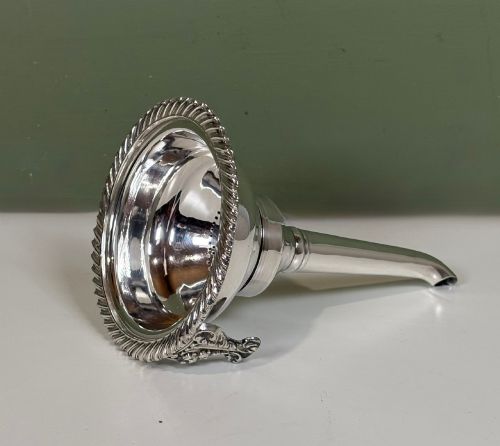
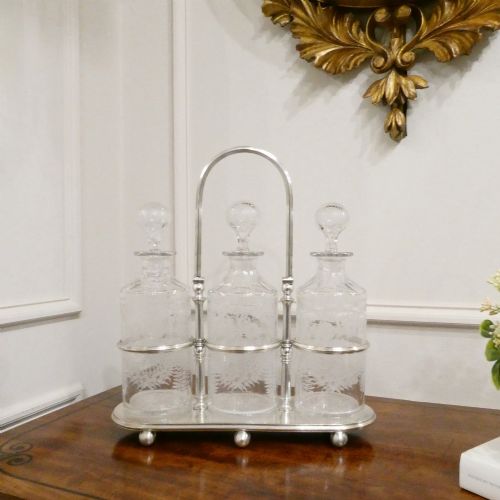
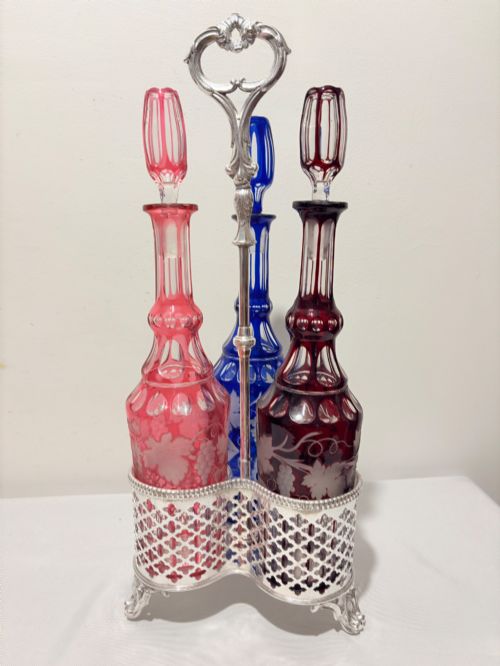
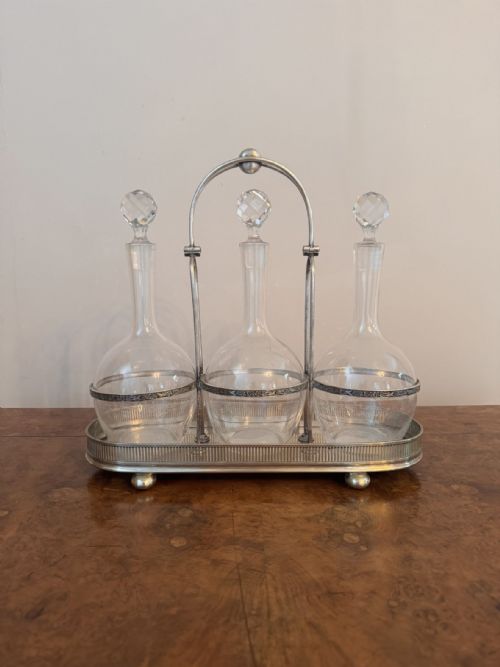
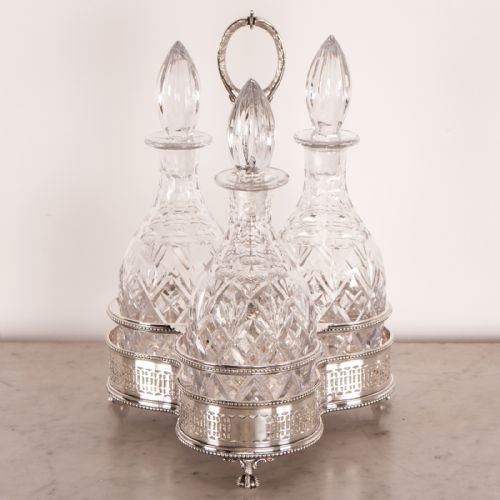


Silver Plated Liquor Decanter
These silver plated liquor decanter pieces combine cut glass and silver plate across Victorian, Edwardian, and nineteenth-century forms.
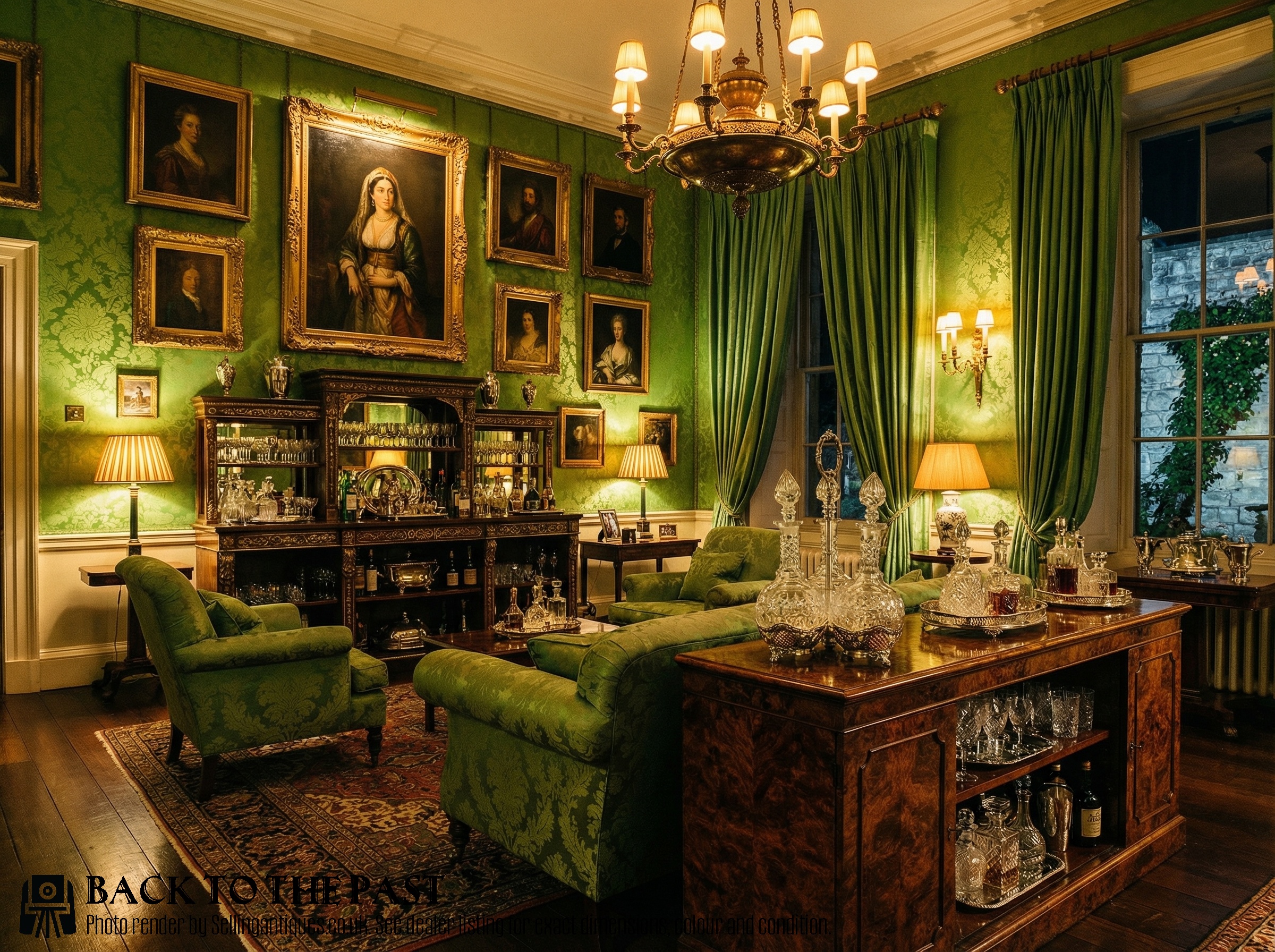
Silver Plated Liquor Decanter
A silver plated liquor decanter brings together heavy glass bottles and metallic frames, often arranged in sets, stands, or locking tantaluses. When searching for a silver plated liquor decanter, buyers encounter single spirit bottles, three-bottle cruets, and novelty barrels resting on carriages or oak frames.
The pieces on this page span from the eighteen-sixties through the Edwardian period, encompassing Victorian designs and Art Nouveau spirit ewers. Forms range from simple decanter stands to elaborate rotating or locking frames that secure the bottles against unauthorized use.
Most examples combine clear or frosted cut glass with silver plate or Old Sheffield Plate, reflecting the entertaining customs of the nineteenth and early twentieth centuries. Buyers frequently find matching sets complete with original stoppers and fitted wooden bases.
Silver plate and cut glass
Makers combined silver plate and Old Sheffield Plate with clear glass, cut crystal, and coloured glass. Metal mounts and frames were cast, chased, or pierced to hold individual bottles securely.
Glass components feature deep wheel-cutting and facet-cutting, whilst structural elements incorporate oak and other timbers for partnered stands and boxes. Spirit barrels and novelty dispensers utilise intricate mechanical linkages and locking bars.
Silver Plated Liquor Decanter Retail Price Guide 2026
Typical asking prices for silver plated liquor decanter among the pieces listed under this phrase on Sellingantiques today, from the lower quarter to the upper quarter. They describe what is for sale here now, not the wider market.
Victorian travellers enjoyed miniature spirit barrels mounted on wheeled carriages for portable hospitality.
Substance and assembly
Quality rests in the weight of the metal plating and the depth of the glass cutting. Superior examples feature heavy cut crystal bottles that fit precisely within ornate, solid silver plated frames.
The integrity of the mechanism in a tantalus or spirit barrel dictates the grade of the piece. Well-engineered locking bars, original keys, and robust oak or metal carriages distinguish the finer works from standard production.
Walker & Hall·Elkington·Hukin and Heath·Philip Ashberry·Mappin Brothers·Martin Hall & Co
The Silver Plated Liquor Decanter Glossary
- Tantalus
- A locking drink container that secures decanters within a metal and wood frame while keeping the contents visible. The locking mechanism prevents removal of the bottles without a key.
- Old Sheffield Plate
- An early fusing technique where a thin sheet of silver is fused to a copper base before rolling. This method predates modern electroplating and leaves characteristic copper edges.
- Cruet
- A stand holding multiple bottles or jars for oils, vinegars, or spirits. These frames often feature handle mounts and ring separators for each vessel.
- Spirit Barrel
- A cylindrical vessel mounted horizontally on a stand or carriage for dispensing liquor. They frequently incorporate internal glass linings or taps.
- Silver Plate
- A base metal coated with a thin layer of silver through electroplating. It became the predominant method for manufacturing accessible decorative metalware in the nineteenth century.
Silver Plated Liquor Decanter: Frequently Asked Questions
What is a silver plated liquor decanter tantalus?
A tantalus is a locking frame designed to hold spirit decanters securely in place. It prevents guests or servants from accessing the liquor without a key.
These pieces typically combine oak woodwork with silver plated metalwork and handled frames.
How do I date a silver plated liquor decanter set?
Dating relies on stylistic clues such as Victorian Gothic revival motifs, Edwardian proportions, or Art Nouveau curves. Maker marks and registration dates stamped into the metal also provide precise timelines.
The integration of cut glass styles and mounting techniques helps narrow the decade of production.
What is Old Sheffield Plate on these decanters?
Old Sheffield Plate is a material created by fusing silver to a copper core prior to fabrication. This technique produces subtle copper wear lines visible along edges and high points.
It appears on nineteenth-century cruets and stands before standard electroplating took over the market.
Were these decanter stands used for travel?
Some specialised pieces, such as travelling bars and carriage barrels, were built for transit. They feature secure wooden boxes or fitted compartments to prevent glass breakage during movement.
Most standard decanter stands and tantaluses remained stationary on dining room sideboards or smoking room tables.