


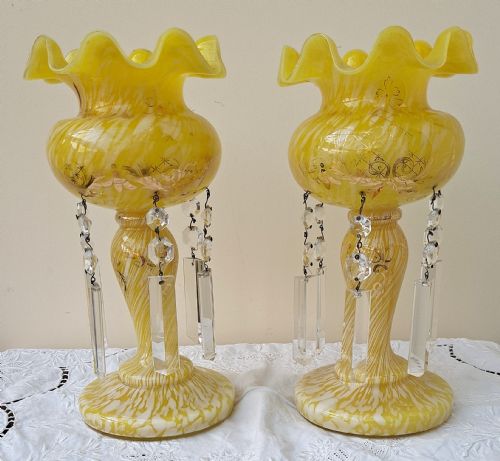


Victorian Glass Prism Vase
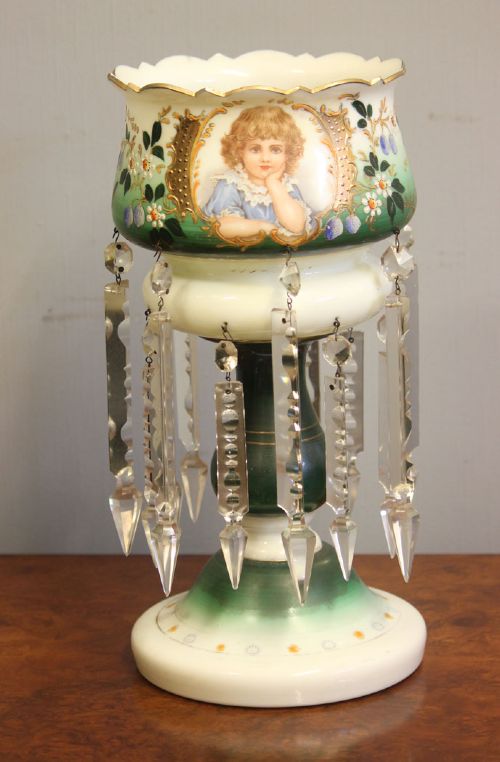
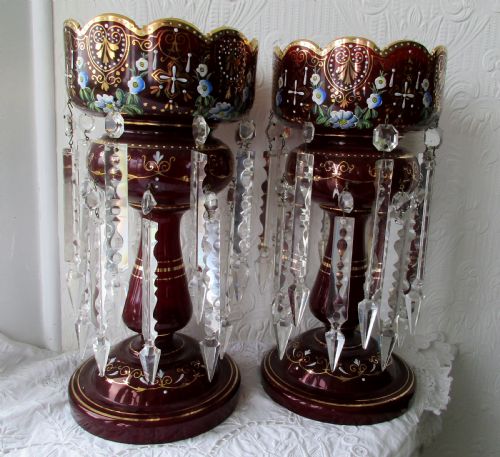
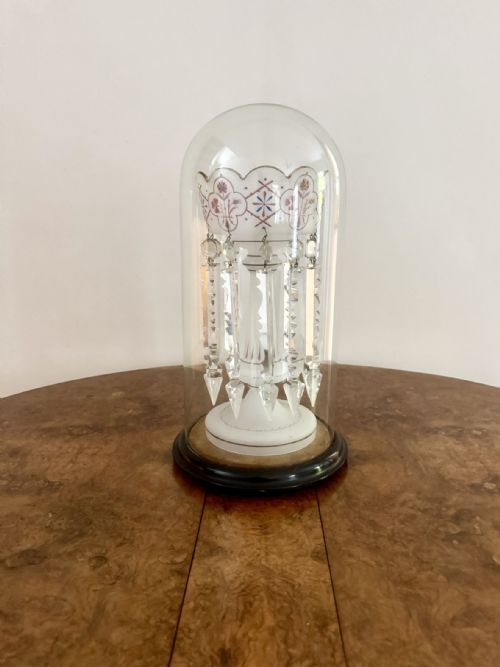
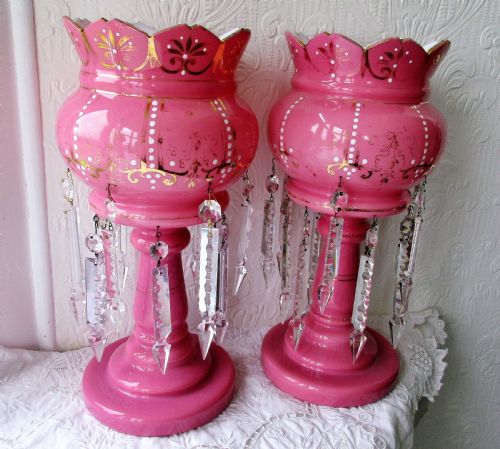
These Victorian glass prism vases, known as lustres, catch the candlelight and brighten a mantelpiece with hanging crystal drops.
Victorian Glass Prism Vase
When you search for a victorian glass prism vase, you are looking at nineteenth-century table and mantel lustres designed to reflect light in candlelit rooms. The pieces available here span the Victorian period and the year 1900, appearing as single items or balanced pairs.
Makers shaped these vessels in vibrant coloured glass, including ruby, cranberry, green, pink, yellow, and opaline varieties. Many examples feature delicate enamel and gold leaf decoration alongside Bohemian overlay or flash glass techniques.
The distinguishing feature of these vases is the crown of hanging cut crystal prisms suspended from the rim. These glass drops capture and refract the ambient light, creating the characteristic sparkle collectors expect from the form.
Materials and methods
Artisans worked molten lead crystal and coloured glass into bulbous or shaped vase forms, frequently employing overlay or flash glass methods to create contrasting surface layers. The bodies were then hand-finished and sometimes gilded with gold leaf or painted with enamel details.
Prisms were separately hand-cut from high-clarity crystal to maximise light refraction and then suspended from the vase rim using metal wires or pins. This combination of heavy blown glass and intricate cutting defines the physical structure of each lustre.
Victorian Glass Prism Vase Retail Price Guide 2026
Typical asking prices for victorian glass prism vase among the pieces listed under this phrase on Sellingantiques today, from the lower quarter to the upper quarter. They describe what is for sale here now, not the wider market.
Listings feature nineteenth-century materials including ruby glass, cranberry glass, opaline, and gold leaf.
Judging quality in glass lustres
The depth and saturation of the coloured glass set the foundation, with rich ruby, cranberry, and layered Bohemian overlays sitting at the upper end of the craft. Clarity and precision in the hand-cut facets of the hanging prisms determine how brightly the piece catches the light.
The completeness and originality of the crystal prism fringe matter significantly, as replacements alter the integrity of the object. Fine hand-painted enamel work and crisp gilding further separate standard production pieces from the finer examples.
The Victorian Glass Prism Vase Glossary
- Lustre
- An ornamental glass vase fitted with hanging crystal prisms designed to reflect light. These vessels sat on mantelpieces and tables during the nineteenth century.
- Prism
- A cut crystal pendant hung from the rim of a lustre. Each prism is shaped with multiple facets to refract light.
- Overlay glass
- A technique where a layer of coloured glass is fused over a clear or contrasting glass body. Artisans then cut through the top layer to reveal the contrasting colour underneath.
- Flash glass
- A thin layer of coloured glass applied over a colourless glass base before being cut or etched. This method allowed makers to achieve deep colour saturation with greater economy.
- Opaline glass
- An opaque, pale glass with a milky appearance, popular in nineteenth-century decorative pieces. It often served as a smooth ground for delicate enamel painting.
Victorian Glass Prism Vase: Frequently Asked Questions
What is a glass lustre?
A glass lustre is a nineteenth-century ornamental vase decorated with hanging crystal prisms around the rim. They were designed to sit on mantelpieces and tables to catch and reflect candlelight.
Unlike standard flower vases, lustres served primarily as decorative objects that added sparkle and colour to Victorian rooms before the widespread use of electric lighting.
How do I clean a lustre?
Cleaning requires removing the hanging crystal prisms individually and washing them in warm, soapy water. The main glass body should be wiped gently with a soft cloth to avoid damaging any enamel or gold leaf decoration.
Care must be taken with the wire fixings that hold the prisms, as original connectors can be fragile and prone to snapping if bent repeatedly.
Are these pieces always sold in pairs?
While many nineteenth-century lustres were manufactured as balanced pairs to adorn either end of a mantelpiece, single examples also appear in the listings. Pairs generally command more attention from collectors seeking symmetrical arrangement.
Single lustres still function effectively as standalone decorative objects on smaller tables or shelves.
How can I tell the period?
Dating relies on examining the manufacturing techniques, glass colours, and the style of the cut crystal prisms. Nineteenth-century pieces often display characteristic pontil marks on the base and heavier lead crystal composition.
Enamel motifs and overlay methods also shift across the decades, helping to narrow down whether a piece originates from the mid-Victorian era or around 1900.