



Antique Mantle Lustre Vase
These antique mantle lustre vase pieces catch the light and the eye with dangling crystals, offering a brilliant focal point for any room.
Antique Mantle Lustre Vase
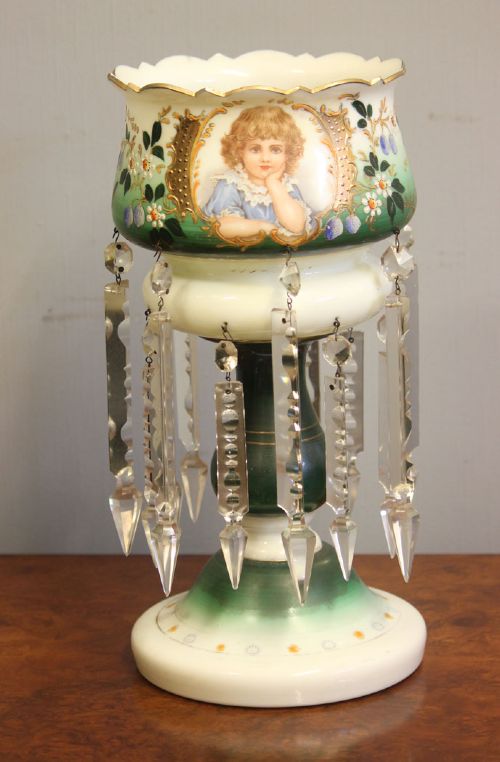
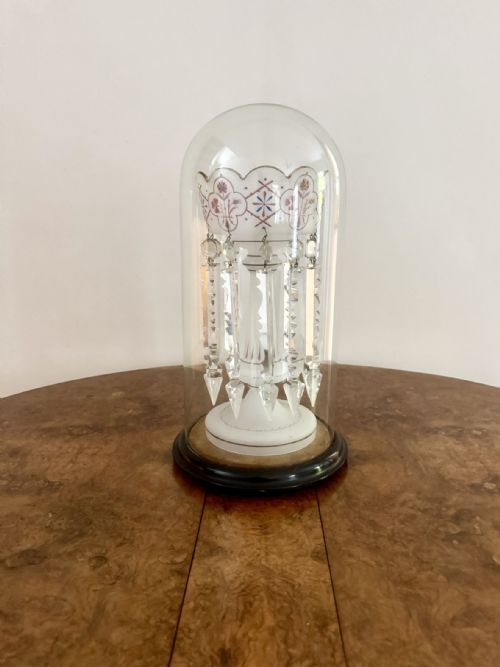
An antique mantle lustre vase stands out as a decorative glass vessel designed for Victorian interiors, frequently arranged on a mantelpiece or table. These pieces usually feature a central vase body fitted with a removable rim that suspends long glass drops.
The versions most commonly met on this page date from the nineteenth century, including specific decades such as the eighteen sixties, eighteen eighties, and eighteen nineties. Makers produced both single examples and matched pairs in this striking form.
Collector interest centres on the interplay between the coloured glass body and the hanging crystal prisms. The Victorian style dominates these listings, showing clear origins in English and Bohemian workshops.
How they were made
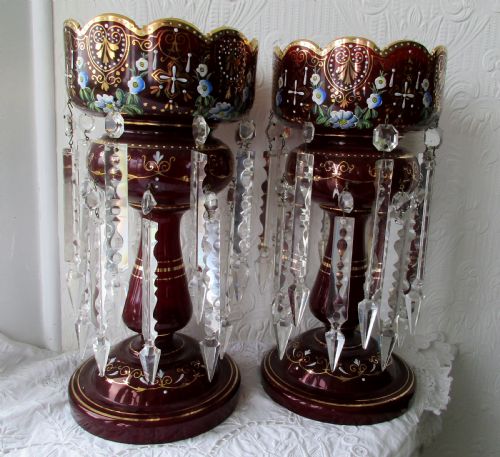
Glassmakers utilised lead crystal and flash glass techniques to build rich colour depth, applying ruby or cranberry hues over clear glass bases. Artisans then shaped these vessels into distinct forms, sometimes incorporating shaped profiles or table bases.
Decoration relied heavily on enamel and gold leaf to embellish the glass surface above the hanging prisms. Cut crystal drops completed the construction, suspended from the rims to refract candle or daylight.
Antique Mantle Lustre Vase Retail Price Guide 2026
Typical asking prices for mantle lustre vase among the pieces listed under this phrase on Sellingantiques today, from the lower quarter to the upper quarter. They describe what is for sale here now, not the wider market.
What varies in quality
The standard of an antique mantle lustre vase depends on the depth and saturation of the coloured glass, alongside the crispness of any cut crystal elements. Rich ruby and cranberry tones show superior glasshouse chemistry and finishing.
Execution of the gilt and enamel surface decoration separates standard examples from finer works. The presence of matching pairs and complete sets of original hanging prisms elevates the overall character of the piece.
The Antique Mantle Lustre Vase Glossary
- Lustre
- A decorative glass vase fitted with hanging crystal prisms designed to catch and refract light. These pieces became hugely popular during the Victorian period for mantelpiece display.
- Flash glass
- A method where a thin layer of coloured glass is fused over a colourless glass body before being cut away to reveal the contrast. This technique created the deep ruby and cranberry effects seen on many Victorian pieces.
- Prism
- A cut glass pendant suspended from the rim of a lustre vase. They dangle in a ring around the central vessel to create a sparkling visual effect.
- Gilt
- A thin layer of gold applied to the surface of the glass for decoration. Artisans often combined this with enamel painting.
- Cranberry glass
- A rich pinkish-red glass produced by adding gold chloride to the molten mixture. It remains a hallmark of nineteenth-century decorative glassware.
Antique Mantle Lustre Vase: Frequently Asked Questions
What is an antique mantle lustre vase?
An antique mantle lustre vase is a nineteenth-century decorative glass vessel featuring a central body and hanging crystal prisms. Victorians placed them on mantelpieces to catch and reflect the flickering light of candles or lamps.
These pieces combine coloured glass bodies, such as ruby or cranberry, with elaborate enamel and gold leaf detailing. They were produced primarily as decorative ornaments rather than functional containers for flowers.
How do I date a glass lustre?
Dating relies on examining the manufacturing techniques, glass colours, and stylistic traits recorded across the nineteenth century. Pieces from the eighteen sixties often display deep ruby glass, while later decades introduce varied shapes and tones.
The presence of Victorian stylistic markers helps narrow the production era. Comparing the cut of the crystal prisms and the application of gilt provides further chronological clues.
Were these lustres made in pairs?
Makers produced both single vessels and matched pairs to suit mantelpiece symmetry. Pairs allowed homeowners to balance fireplace displays during the Victorian era.
Single examples also appear frequently, often intended for central table placement or smaller decorative settings. Both formats share the characteristic hanging crystal drops.
How should I clean my lustre vase?
Cleaning requires gentle handling of the delicate glass body and the suspended crystal prisms. Warm soapy water and a soft cloth suit the main glass surface, avoiding harsh abrasives that might damage the gilt.
Prisms should be removed individually and washed separately to prevent chipping against the vase body. Ensure all parts are completely dry before reassembly.