


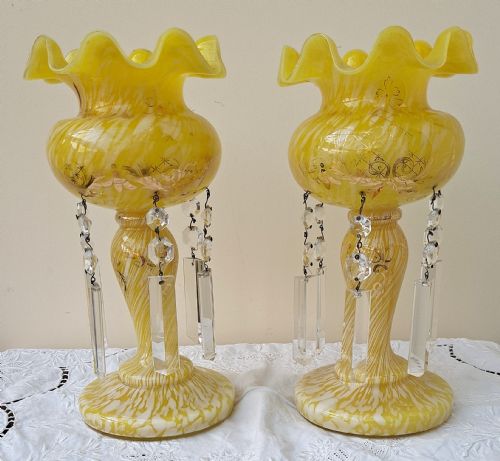


Antique Glass Drop Vase
An antique glass drop vase, most often found as a Victorian lustre, brings light and reflective brilliance to a room.
Antique Glass Drop Vase
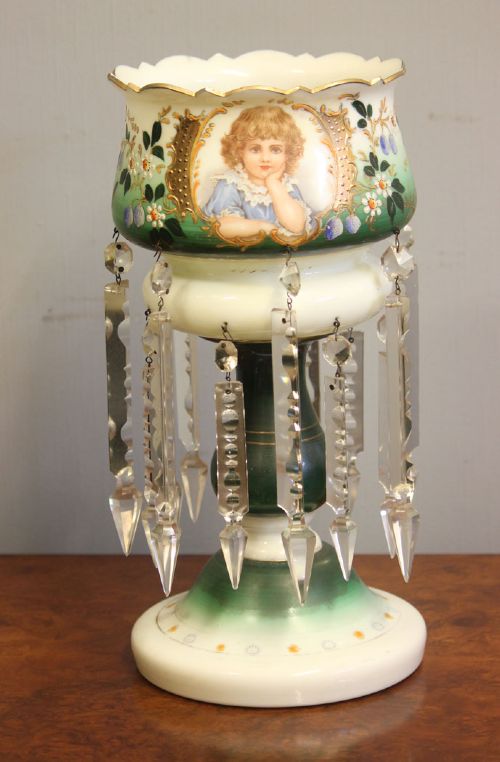
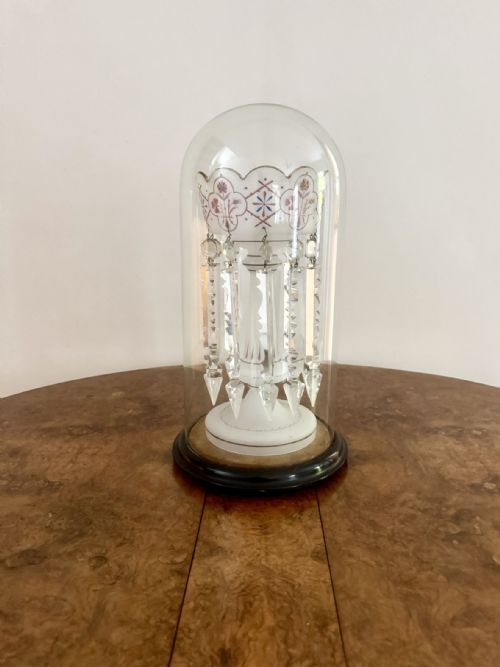
When you search for an antique glass drop vase, you are looking at nineteenth-century table and mantel ornaments designed to hold hanging crystal prisms. These pieces appear in the evidence primarily as mantel lustres and table lustres from the Victorian period.
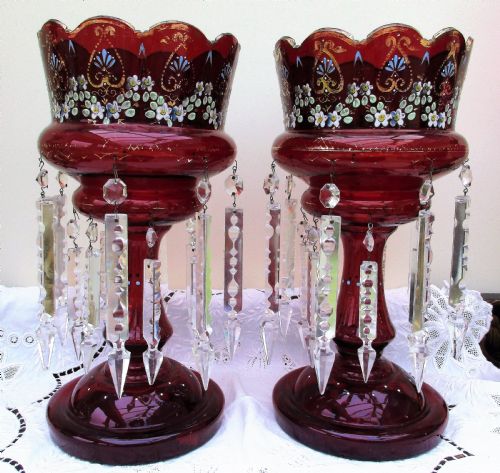
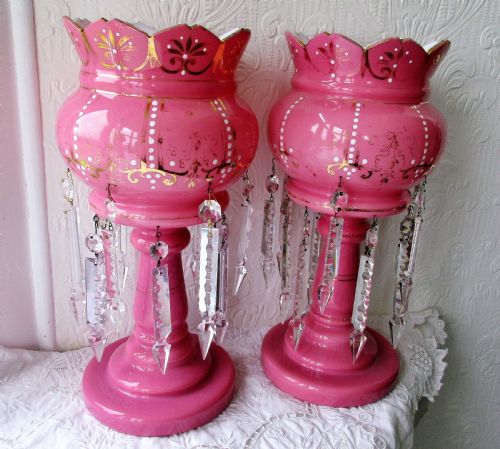
The versions you are most likely to meet on this page date from the nineteenth century, spanning decades such as eighteen sixty, eighteen seventy-five, eighteen eighty, and nineteen hundred. They take the form of single vessels or matched pairs in colours including ruby, green, pink, yellow, and cranberry glass.
Makers and manufacturers produced these decorative glass objects in England and Bohemia. They combine a central vase-like body with a spreading foot and a rim hung with cut glass drops.
How They Were Made
The physical evidence shows these vessels formed from crystal, ruby glass, cut glass, and cranberry glass. Makers shaped the molten material into distinct vase and lustre forms before applying surface enrichment.
Decoration often includes gold leaf, enamel work, and gilt details applied to the coloured glass body. Cut crystal drops hang from the upper rim by means of metal wires or pins fitted through drilled holes.
Techniques range from plain blown glass to flash glass construction, where a thin layer of coloured glass covers a clear base before cutting through to reveal the layer underneath.
Antique Glass Drop Vase Retail Price Guide 2026
Typical asking prices for glass drop vase among the pieces listed under this phrase on Sellingantiques today, from the lower quarter to the upper quarter. They describe what is for sale here now, not the wider market.
Pairs of ruby glass lustres once sat on Victorian mantelpieces to catch the flicker of gaslight through their hanging crystal drops.
What Varies in Quality
Quality in these pieces rests upon the depth and richness of the coloured glass body, whether ruby, cranberry, or green. The precision of the cutting on both the glass body and the hanging drops distinguishes the finer examples.
The application of gold leaf and enamel decoration shows significant variation in hand-painted skill and preservation. Complete sets of matching original cut glass drops elevate the standing of a lustre.
The Antique Glass Drop Vase Glossary
- Mantel lustre
- A decorative ornamental vase designed to sit on a fireplace mantelpiece, fitted with hanging glass prisms.
- Flash glass
- Glass made by coating a core of one colour with a thin layer of another colour, often cut away in patterns.
- Cranberry glass
- A rich pinkish-red transparent glass coloured with gold chloride, popular in nineteenth-century production.
- Cut crystal
- High-clarity glass shaped by grinding and polishing facets that refract light.
- Gold leaf
- Extremely thin sheets of beaten gold applied to the glass surface for ornamentation.
Antique Glass Drop Vase: Frequently Asked Questions
What is a glass drop vase?
A glass drop vase refers to nineteenth-century mantel and table lustres that feature hanging crystal prisms around the rim. These decorative vessels were designed to catch and refract candlelight in Victorian rooms.
The listings on this page demonstrate that these objects were commonly produced in matched pairs during the Victorian era. They combine coloured glass bodies with cut glass drops.
How were glass lustres used?
Victorian households placed these vessels on mantelpieces, side tables, and chests of drawers as decorative centrepieces. The hanging glass drops caught the flickering light of lamps and candles to brighten dark interiors.
While they take the form of a vase, their primary function was ornamental rather than holding floral arrangements. The presence of prism rings around the rim distinguishes them from standard vases.
How do I date Victorian glass?
Dating these pieces relies on stylistic markers, colour palettes, and manufacturing techniques recorded across the nineteenth century. Ruby, cranberry, and green glass variants appear frequently across periods spanning from eighteen sixty to nineteen hundred.
Examining the cut of the crystal drops and the application of gold leaf provides further clues to the manufacturing decade. English and Bohemian production methods evolved distinctly through this period.
Are glass lustres found in pairs?
The evidence shows that these decorative objects survive both as matched pairs and as single pieces. Pairs were originally intended to balance each other on either end of a mantelpiece or sideboard.
Single examples also appear in the listings, offering options for smaller spaces or mixed displays. Both formats maintain the characteristic vase body and hanging crystal drops.