
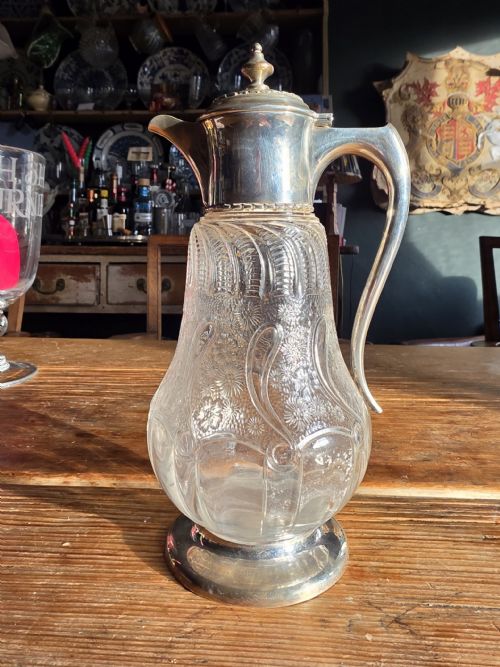
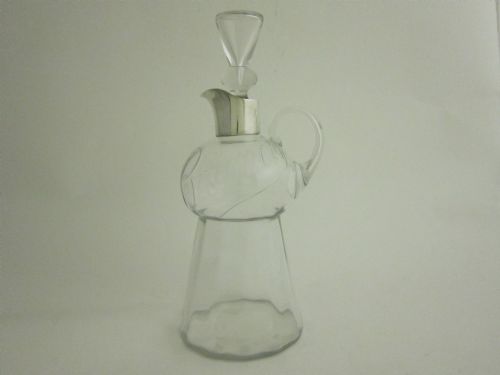
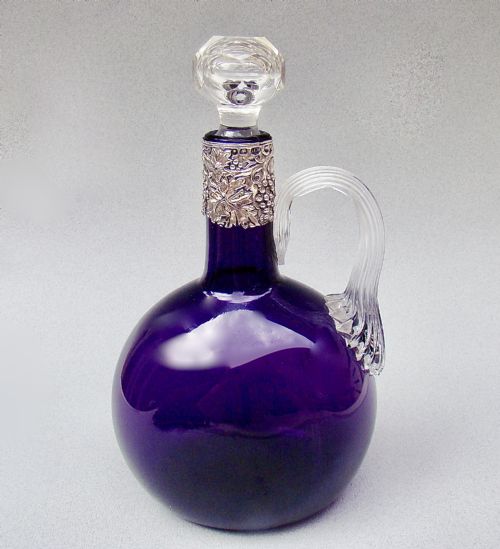
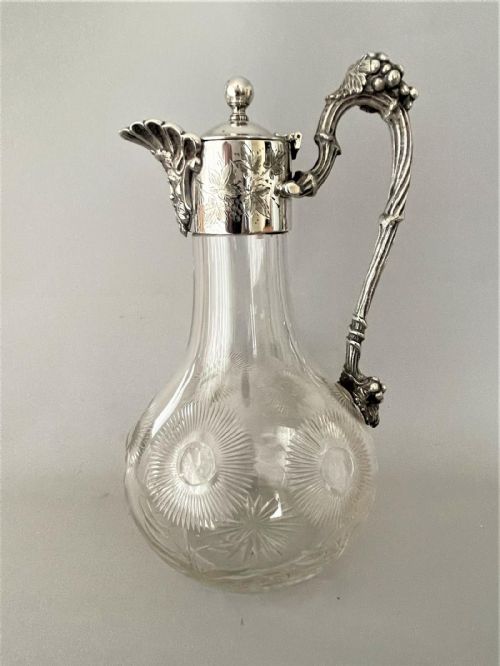


Victorian Glass Flagon
These Victorian glass flagons are serving vessels combining blown glass with silver or silver-plated mounts, prized for their colour and form on the dining table.
Victorian Glass Flagon
A victorian glass flagon is typically encountered as a decanter, claret jug, ewer or wine bottle produced during the nineteenth and early twentieth centuries. These vessels served wine, spirits and water at the table, combining functional storage with decorative presence.
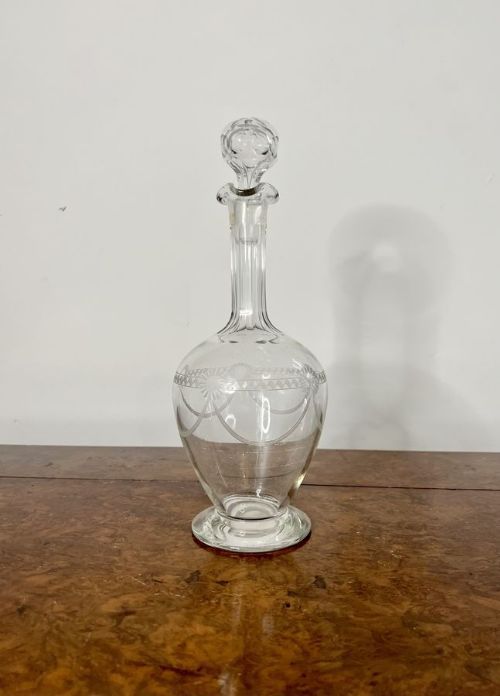
The material body ranges from clear cut crystal and lead crystal to coloured glass including green, blue, cranberry, amethyst and ruby overlay. Many examples feature fitted mounts of sterling silver, silver plate or Old Sheffield plate.
Forms vary from standard pillar shapes and novelty champagne bottles to animal figures and engraved ewers. The listings demonstrate production across English, Scottish, Bohemian and Scandinavian workshops.
Materials and Working Methods
Vessels are formed from hand-blown glass, incorporating techniques such as deep cutting, floral etching and overlay casing where a coloured glass layer is cut through to reveal clear metal underneath.
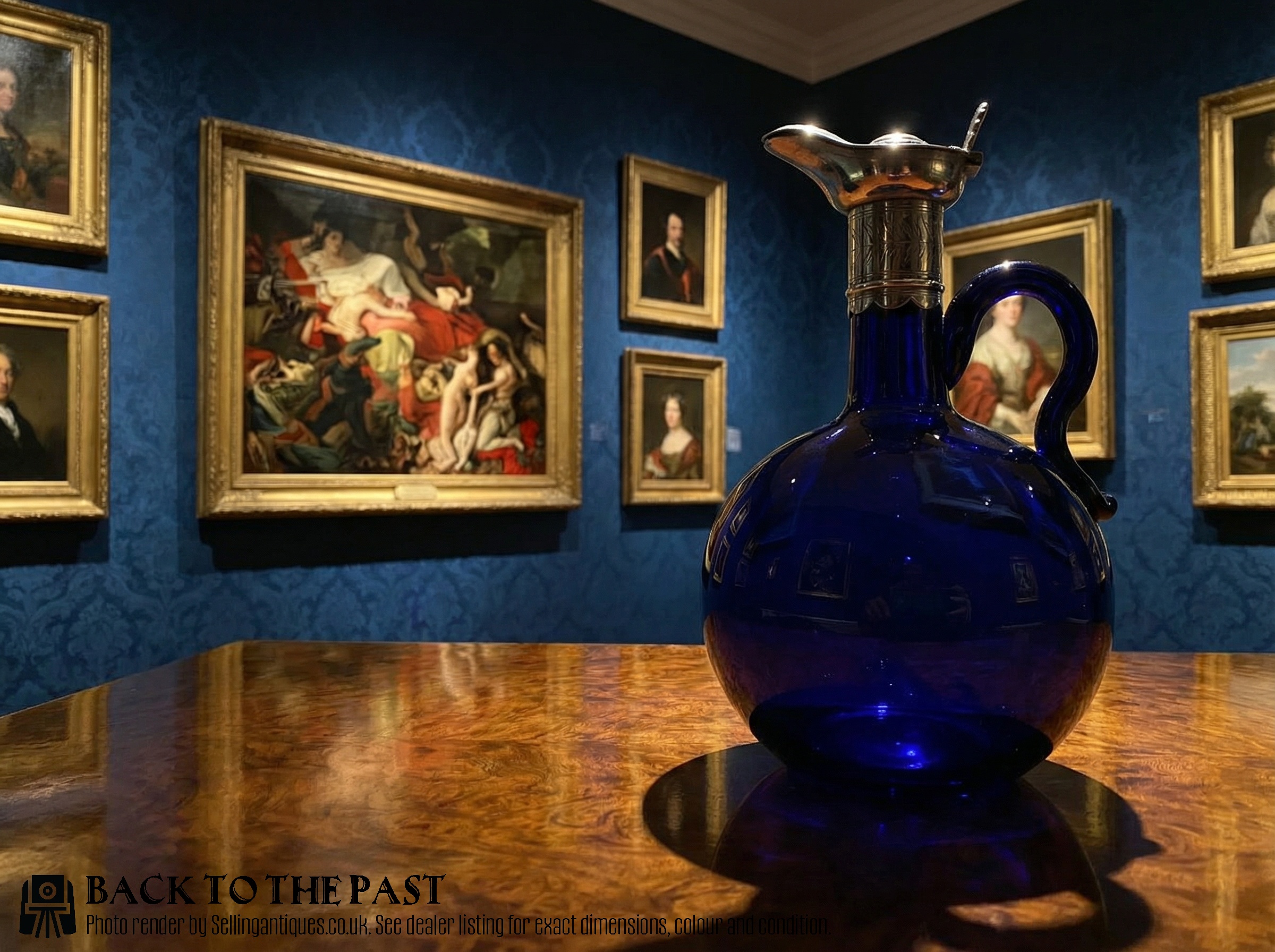
Metal mounts, hinged lids, handles and collars are fashioned from sterling silver or silver plate, often bearing hallmarks that date the piece and name makers such as William Comyns or Henry Matthews.
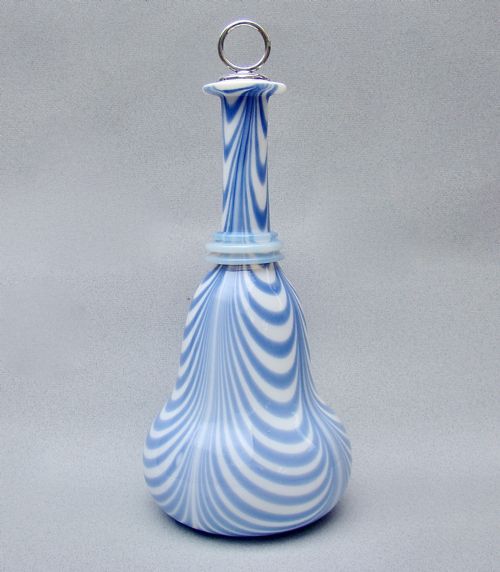
Specialist varieties utilise Bristol blue, green or cranberry glass, sometimes paired with Nailsea glass patterning or detailed engraving like the Prince of Wales feathers.
One exceptional vessel takes the form of a dog, while others mimic novelty champagne bottles and figurine tops.
Distinctions in Quality
Quality rests upon the weight and clarity of the glass, the depth and crispness of the wheel-cutting, and the richness of the coloured metal oxides used in blue, green or cranberry pieces.
The execution of the silver or silver-plated mounts distinguishes standard production from finer work, particularly where handles, hinged lids, and figural or shield finials are cast and chased with precision.
William Comyns·Henry Matthews
The Victorian Glass Flagon Glossary
- Claret jug
- A pouring vessel designed specifically for red wine, featuring a handle and a hinged metal lid.
- Ewer
- A large jug with a wide spout and curved handle, often used for water or wine service.
- Overlay
- A technique of casing one layer of coloured glass over another clear or contrasting layer before cutting away sections.
- Nailsea glass
- Glassware characterised by looped or splashed white enamel threads embedded within the coloured glass body.
- Old Sheffield plate
- A composite material made by fusing a thin sheet of silver to a copper base, common on earlier nineteenth-century mounts.
Victorian Glass Flagon: Frequently Asked Questions
What is a glass flagon?
A glass flagon is a pouring vessel designed for holding and serving wine or spirits at the table.
These pieces typically incorporate a glass body fitted with a handle, spout and hinged metal mount.
How do I date a flagon?
Dating relies on stylistic clues and metal hallmarks where silver mounts are present.
Makers' marks and assay office symbols provide specific years of production for the fitted metalwork.
Were these used for wine?
These vessels served various table drinks including claret, dessert wine, spirits and water.
Specific forms like claret jugs and spirit bottles indicate the intended beverage by their shape and capacity.
What colours of glass exist?
Colours seen in these vessels include Bristol blue, deep green, cranberry, amethyst and ruby overlay.
Clear cut crystal and lead crystal pieces also appear alongside these coloured glass varieties.