
Victorian Glass Desk Accessory
These victorian glass desk accessory pieces bring tactile weight and functional elegance to a study, combining glass with brass, silver plate, and hardwoods.
Victorian Glass Desk Accessory
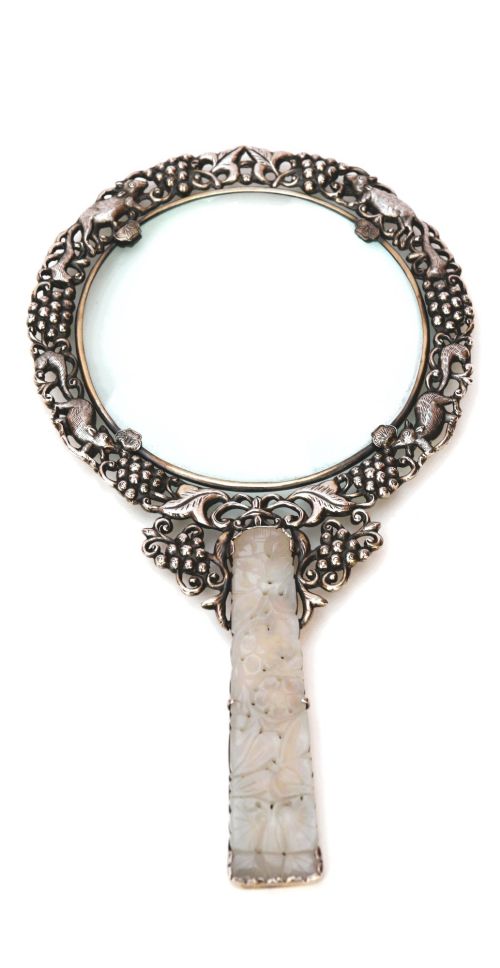
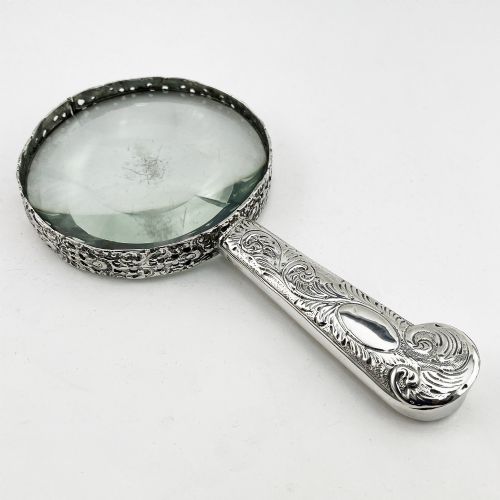
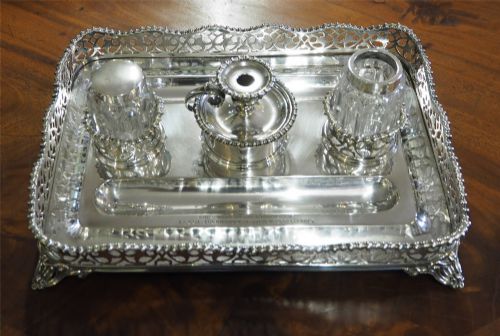
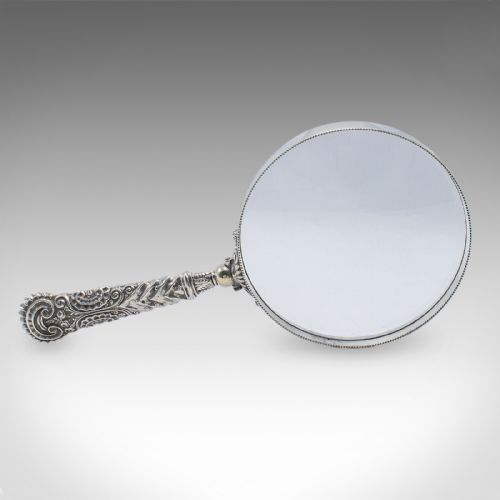
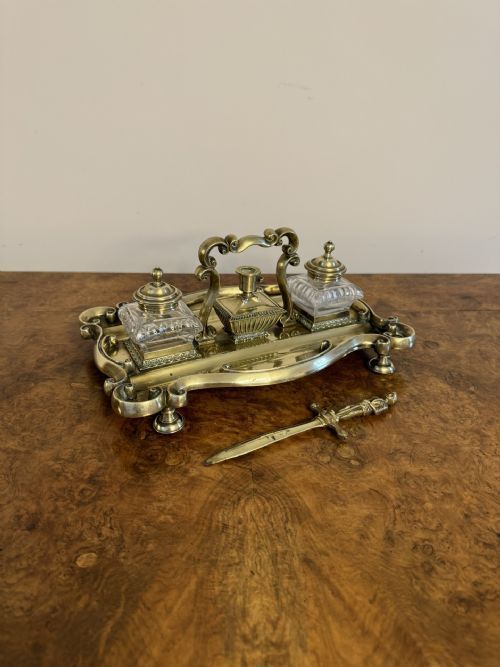
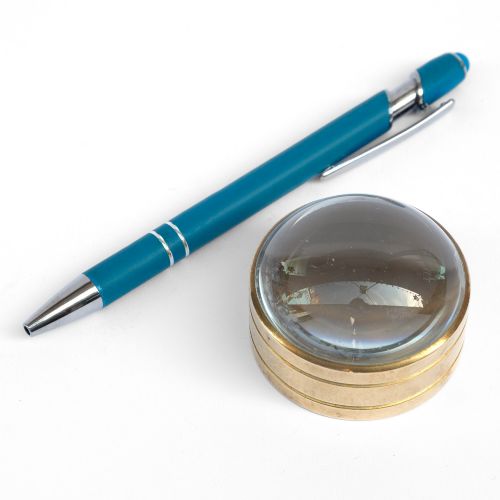
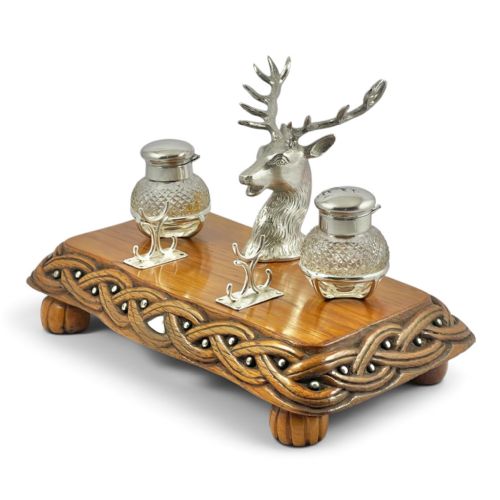
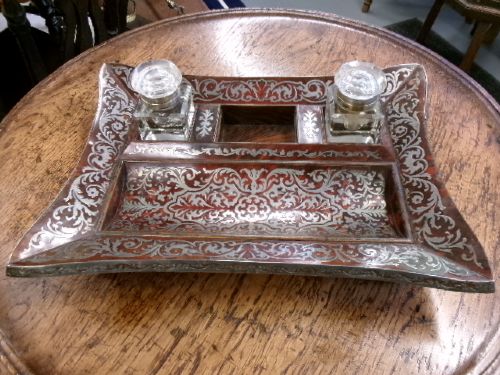
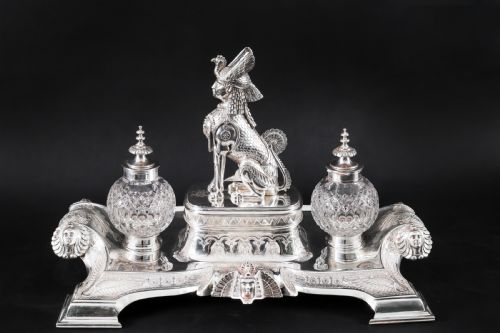
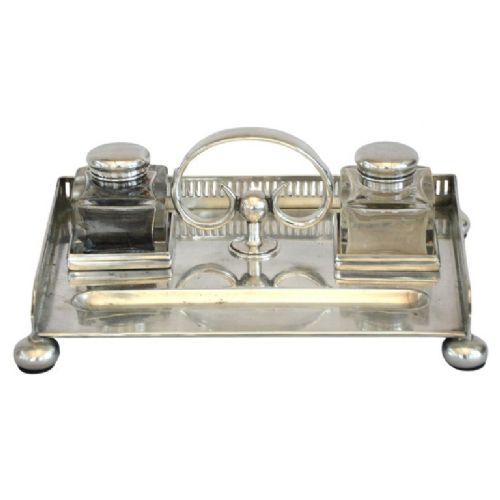
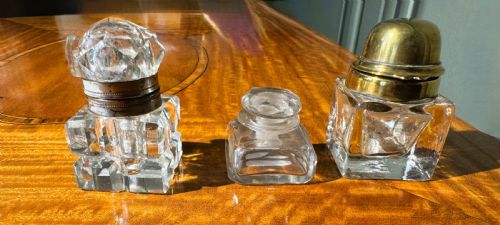
A victorian glass desk accessory encompasses practical items designed for nineteenth-century correspondence, including inkstands, inkwells, magnifying glasses, paperweights, and rulers. The examples on this page range from modest travel inkwells to substantial double inkstands fitted with cut glass vessels.
Most items emerge from the Victorian period alongside Edwardian and mid-nineteenth-century alternatives. Collectors encounter portable travel pieces alongside heavy desk sets intended for stationary use in libraries and studies.
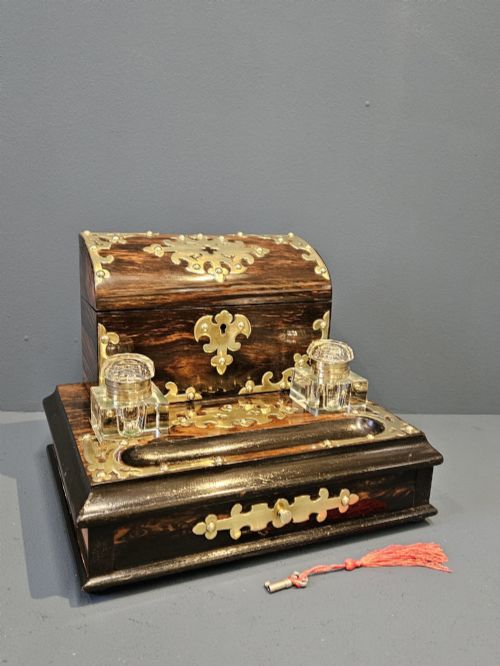
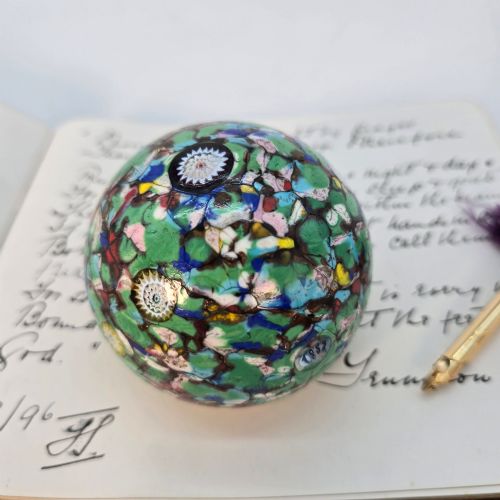
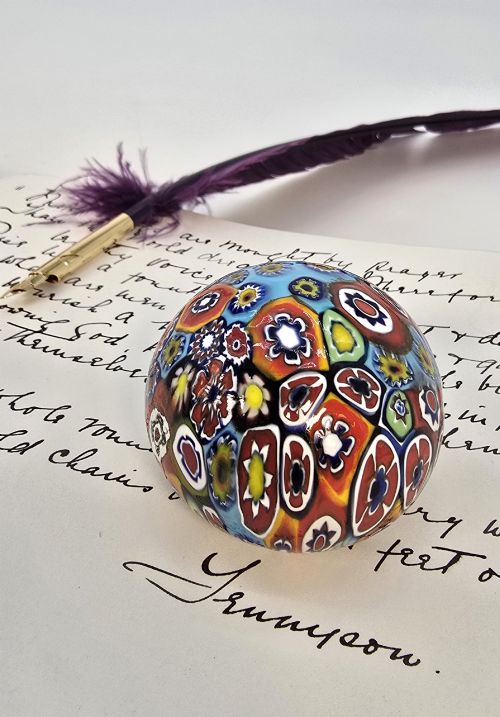
Materials span beyond simple glass to incorporate brass mounts, sterling silver, silver plate, and various woods such as oak, coromandel, and walnut. Glass serves as the primary medium for inkwells, paperweights, and magnifying lenses, frequently shaped through facet cutting or millefiori techniques.
Materials and construction
Makers combined heavy crystal or moulded glass with structural frames of brass, silver plate, or hardwoods like coromandel and walnut. Glass components were often facet-cut to catch the light on a writing desk.
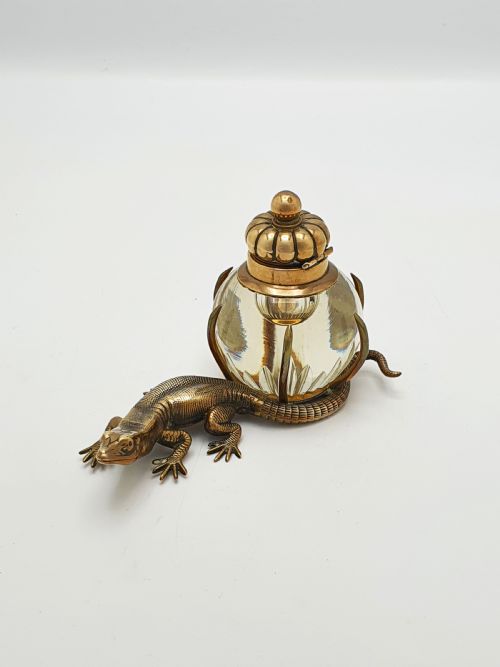
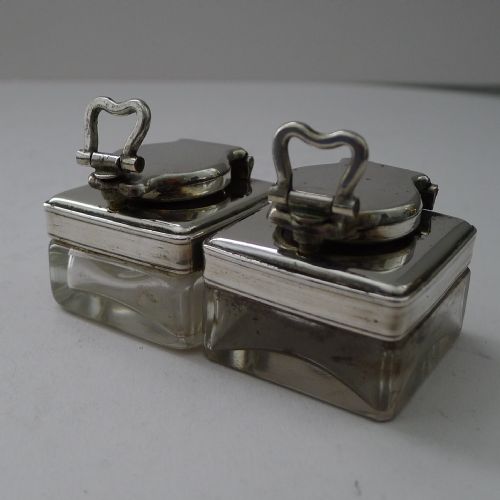
Metal mounts, hinges, and collars in brass or silver plate were cast and secured to wooden or glass bodies, supporting hinged lids on inkwells and strengthening desk stands.
Listings feature items spanning the Victorian era, Edwardian period, and mid-nineteenth century, incorporating glass, brass, silver plate, and hardwoods.
Assessing quality and craftsmanship
Quality rests in the weight and clarity of the glass, the precision of metal mounting, and the selection of cabinet woods. Superior pieces display crisp facet cutting, substantial silver plate or brass mounts, and intact fitted interiors.
The integration of materials dictates the overall standing of an accessory, where mixed mediums like tortoiseshell, boulle work, or enamel elevate standard desk equipment into decorative objects.
Elkington·Wilkinson And Co·Walker And Hall
The Victorian Glass Desk Accessory Glossary
- Inkstand
- A fitted tray or stand holding one or more inkwells, often incorporating pen rests and sanders.
- Cut glass
- Glass shaped by grinding and polishing facets into the surface, creating reflective geometric patterns.
- Millefiori
- A glasswork technique producing distinctive multicoloured mosaic patterns, frequently seen in paperweights.
- Standish
- An alternative term for a portable inkstand or desk accessory set used for writing materials.
- Guilloche enamel
- Metalwork decorated with precise engine-turned patterns beneath a translucent layer of coloured enamel.
Victorian Glass Desk Accessory: Frequently Asked Questions
How do I clean antique glass inkwells?
Wash glass components gently in warm soapy water using a soft cloth, avoiding harsh abrasives that might scratch the surface.
Dry thoroughly before reassembling metal collars and lids to prevent moisture damage.
What is the difference between an inkstand and an inkwell?
An inkstand is a larger tray or stand that holds one or more inkwells, often alongside space for pens and stamps.
An inkwell is simply the individual lidded vessel designed to contain liquid ink.
How can I date my desk accessory?
Examine the materials, manufacturing techniques, and any visible hallmarks or maker stamps.
Styles such as Gothic Revival, Egyptian Revival, or specific wood choices like coromandel point to distinct decades within the nineteenth century.
Were these items used for daily writing?
Writing accessories were essential tools in nineteenth-century households and offices for correspondence and record-keeping.
Desk sets remained stationary in libraries, while smaller travel versions accompanied writers on journeys.