
Victorian Gentleman Artwork
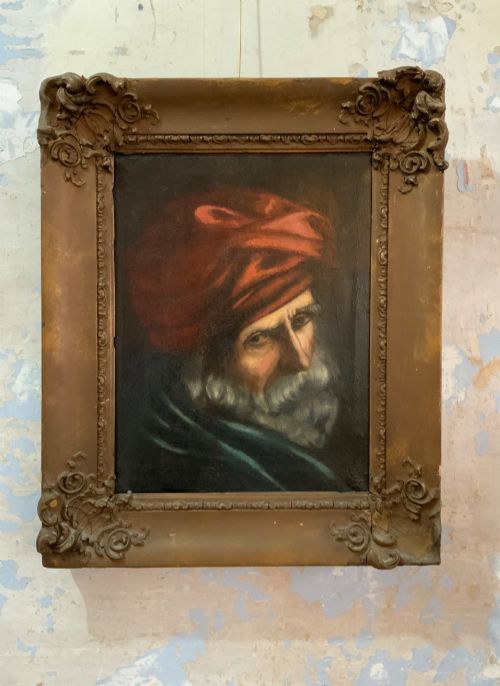
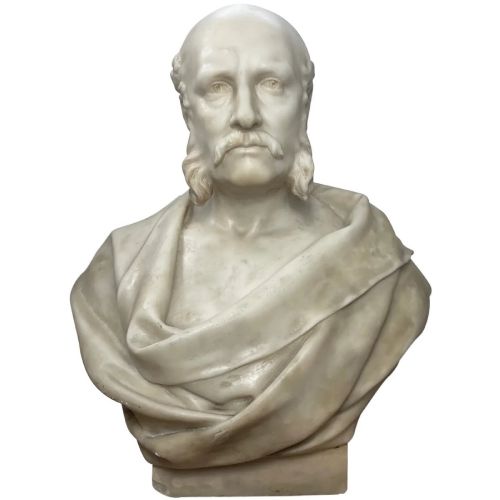
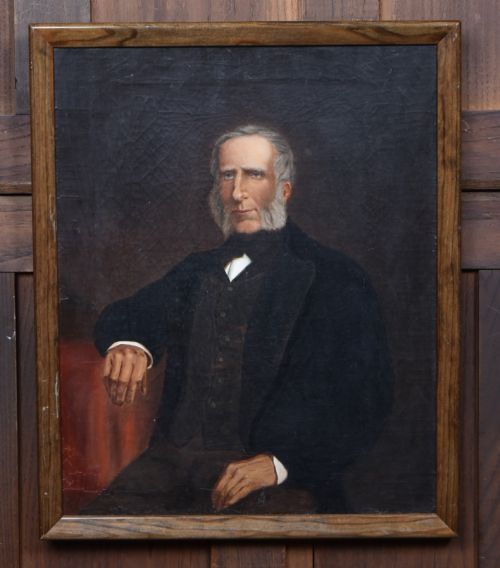
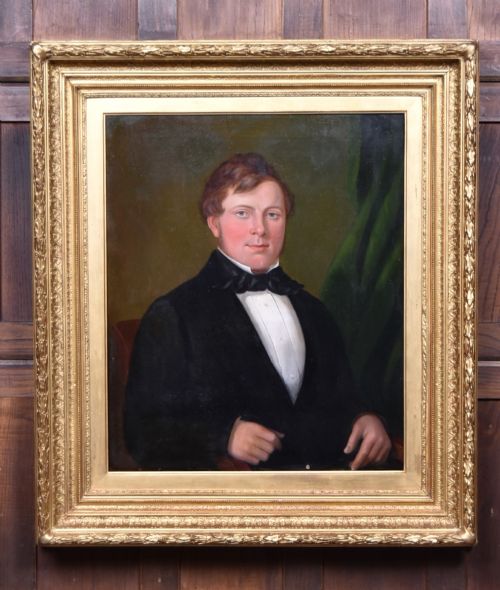
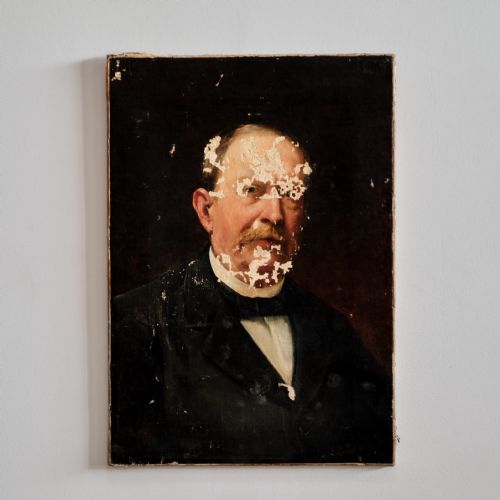
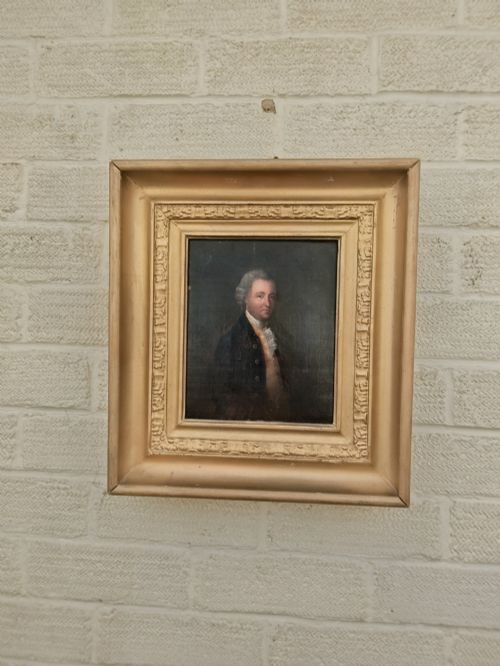
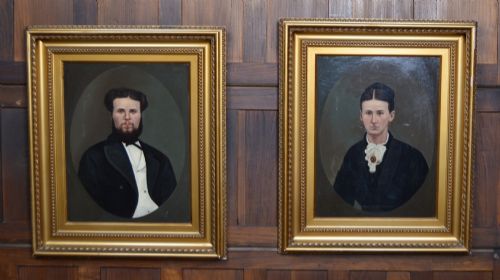
Victorian gentleman artwork comprises portrait paintings and drawings capturing male subjects from the nineteenth century.
Victorian Gentleman Artwork
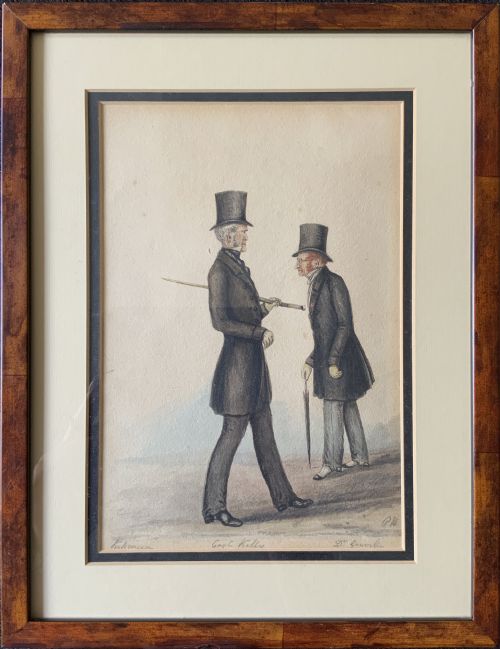
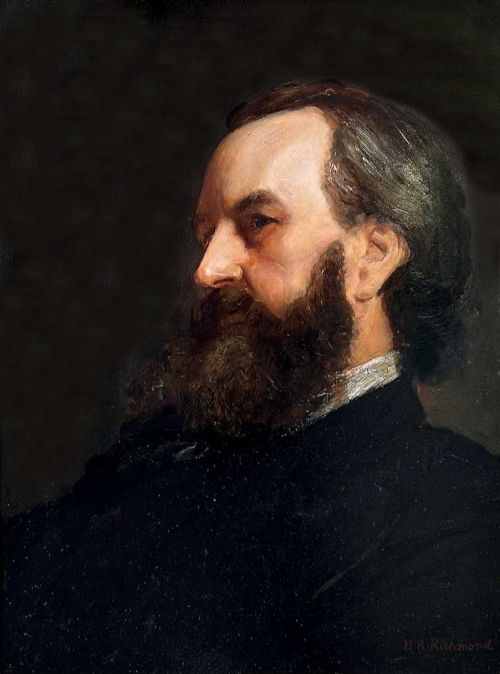
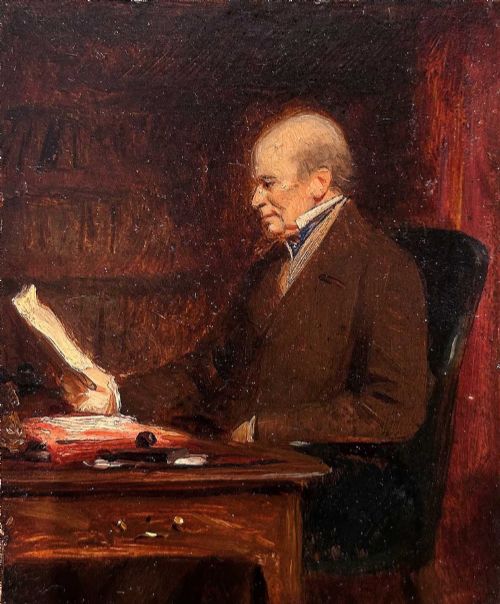
Victorian gentleman artwork encompasses oil paintings, watercolours, charcoal drawings and prints depicting male figures primarily from the nineteenth century. These pieces range from intimate miniature watercolours on glass to monumental oil portraits on canvas.
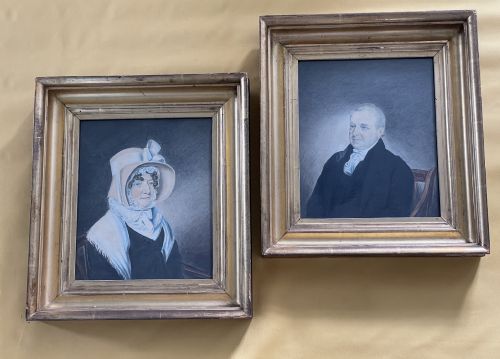
The selection on this page centres on portraits from the Victorian, Regency and Edwardian periods, including works executed in oil paint, canvas, paper and board. Formats extend from single framed portraits to pairs and larger sets of historical character studies.
Materials and construction
Makers utilised oil paint on stretched canvas or wooden board, applying pigment to build layered portraits with depth and texture. Watercolour on paper and glass forms another primary medium for detailed character studies.
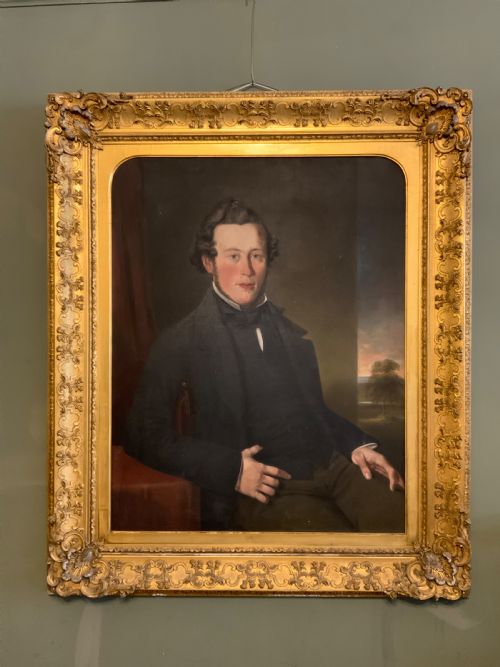
Framing often involves giltwood and gilt gesso surrounds that complement the tonal qualities of the painted or drawn surface.
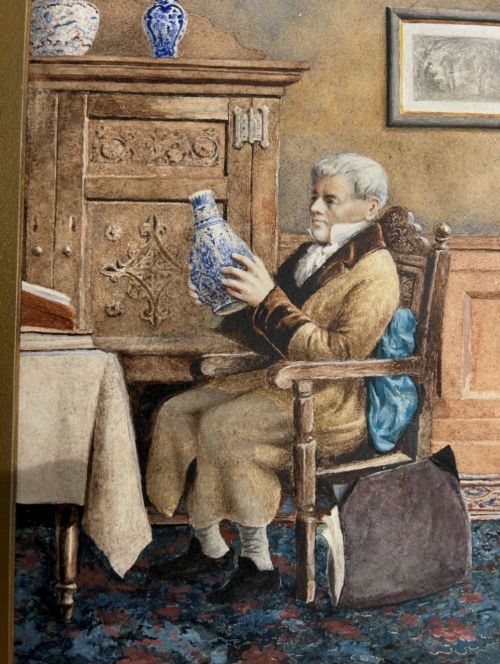
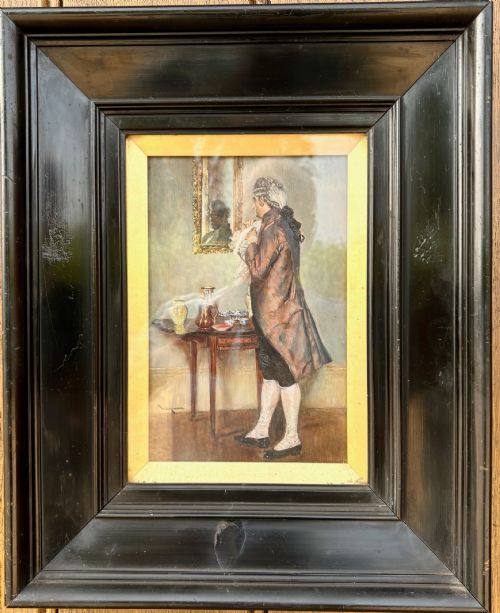
A gentleman examining a blue vase shares space here with military figures and a dandy.
Quality differences in the range
Execution and handling of the subject separate the standard works from finer examples, particularly in the rendering of facial expression and fabric texture. Finer pieces demonstrate confident brushwork or precise pencil control that brings presence to the sitter.
The integrity of the original frame and surface condition contribute significantly to the standing of a piece, with well-preserved works retaining stronger visual impact.
Henry Stacy Marks·Sir Joshua Reynolds·W.D. Almond·William Blake Richmond·Stephen Pearce·John Arthur Lomax·John Watkins Chapman·Sir Thomas Brock
The Victorian Gentleman Artwork Glossary
- Chromolithograph
- A multicolour planographic printing process used to produce flat, vibrant graphic images. Vanity Fair prints utilised this technique.
- Giltwood
- Wood carved and coated with gold leaf or a gold-coloured finish. This material frequently frames nineteenth-century portraits.
- Silhouette
- A solid dark profile image cut from paper or painted against a light background. Frederick Frith produced cut silhouettes during this era.
- Watercolour
- A painting method where fine pigment is suspended in a water-based solution on paper. Many nineteenth-century portrait studies use this medium.
Victorian Gentleman Artwork: Frequently Asked Questions
What periods do these artworks cover?
The listings span the nineteenth century, extending into the Regency, Victorian and Edwardian eras. Pieces date from the early nineteenth century through to the early twentieth century.
Most items originate from the Victorian period, reflecting the era's strong tradition of portraiture and character representation.
What mediums were used for these portraits?
Artists employed oil paint on canvas, board and paper to create detailed character and likeness studies. Watercolour, charcoal, graphite and pencil also appear frequently across the selection.
Some works incorporate glass, bronze or print methods such as chromolithography.
How are the subjects typically depicted?
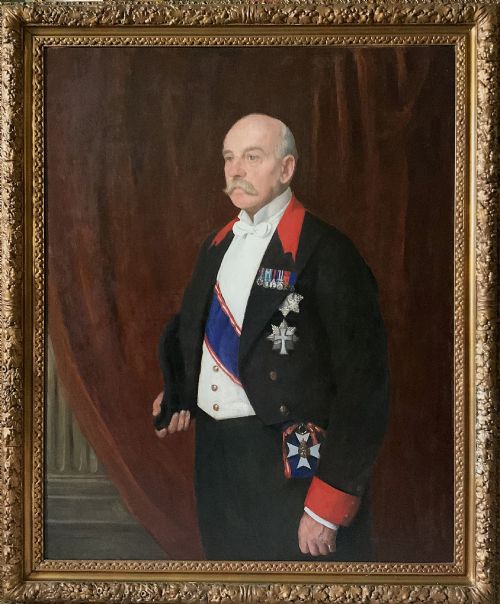
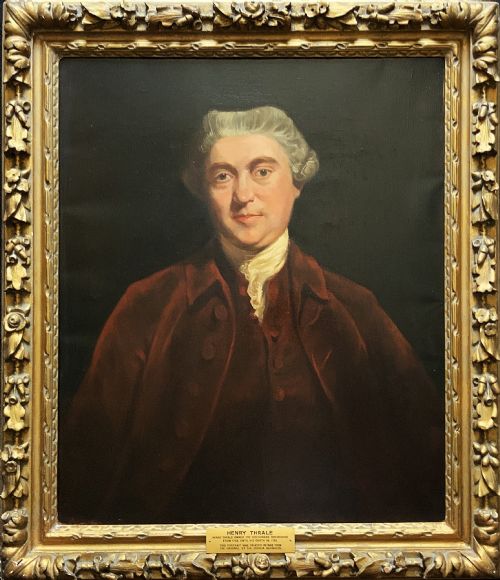
Subjects include individual gentlemen, military officers, historical figures and character studies captured in bust or seated poses. Titles occasionally identify specific sitters or the artistic circle of origin.
Expressions and attire range from formal civic portraits to relaxed illustrative representations.