


Victorian Gateleg Side Table
A victorian gateleg side table brings folding practicality and rich timber grain to any room, offering versatile surface space when open and a slim profile when closed.
Victorian Gateleg Side Table
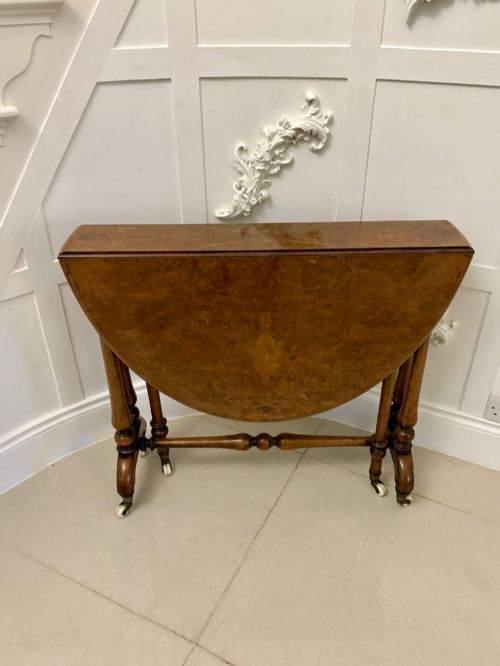
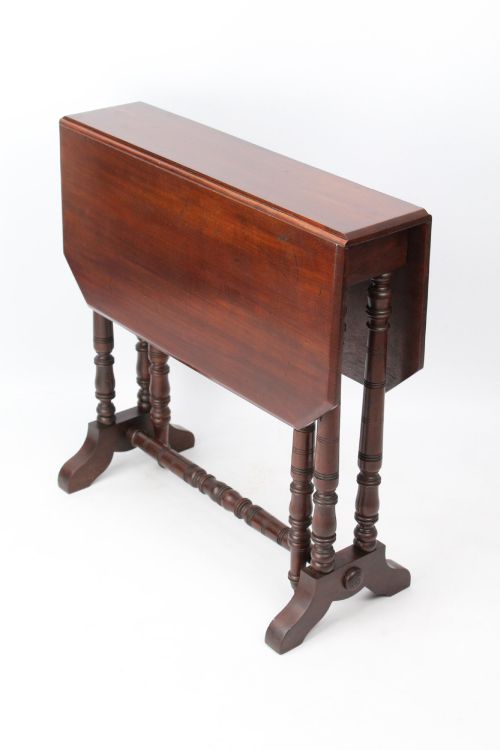
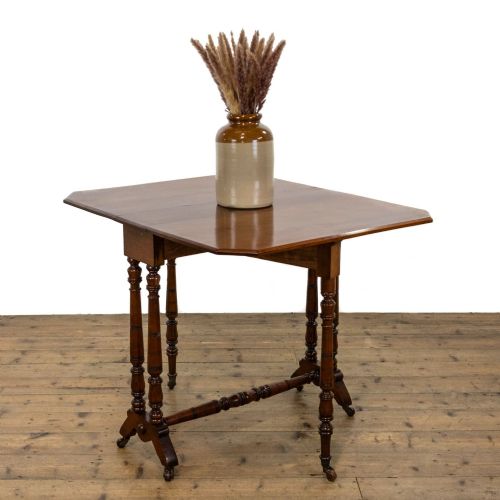
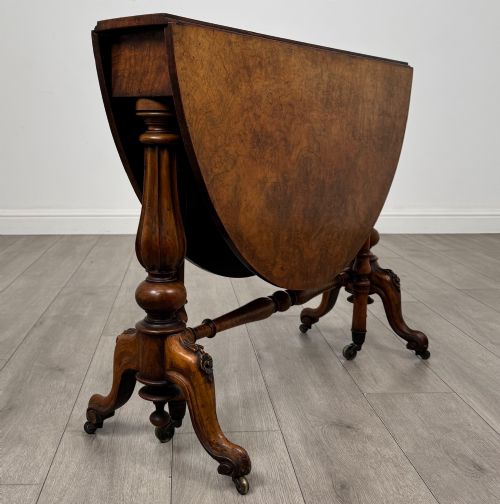
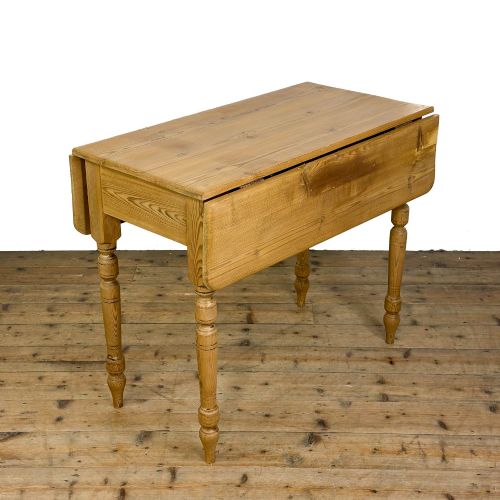
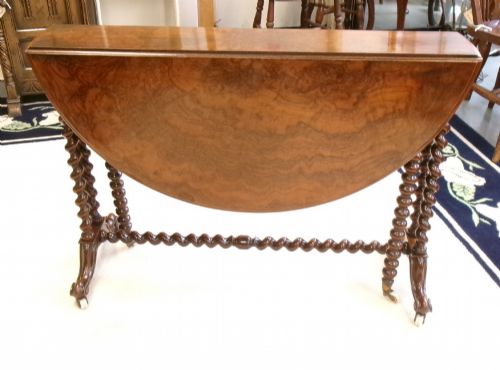
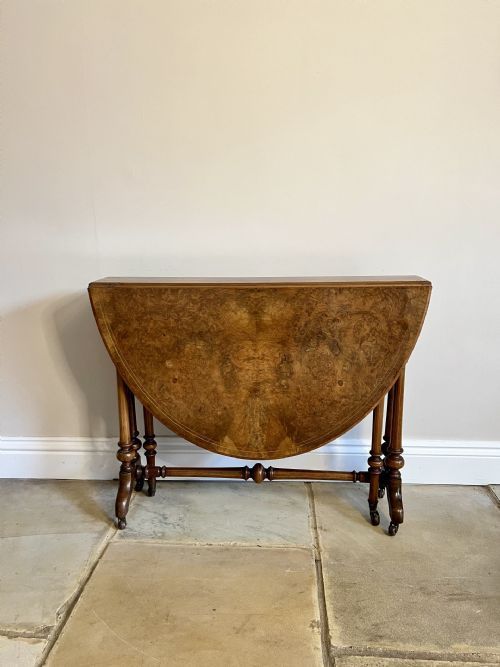
A victorian gateleg side table primarily appears across these listings in the specific form of the Sutherland table, a narrow drop-leaf design patented during the nineteenth century. These pieces function as occasional tables, tea tables, or compact side surfaces that expand on pivoting leg frames known as gates. Most examples date from the Victorian and Edwardian periods, stretching from mid-century decades through to nineteen hundred.
Makers constructed these tables to sit neatly against a wall or beside seating until needed for afternoon tea or casual entertaining. The drop leaves drop sharply downward when not in use, leaving a very slender central frame that takes up minimal floor space. Walnut, burr walnut, and mahogany dominate the forms, frequently shaped into oval tops supported by bobbin or barley twist legs.
Materials and Joinery
Cabinetmakers relied heavily upon figured timbers such as burr walnut and rich mahogany, often embellishing surfaces with satinwood inlay, marquetry, and delicate stringing. Solid woods formed the structural underframes, gate legs, and stretchers, while veneered panels provided the striking grain patterns seen on the folding leaves.
The characteristic drop leaves hang from hinged joints attached to a fixed central top, demanding precise carpentry so the surfaces meet level when raised. Gate legs swing outward on wooden pivots or brass hinges to support the extended flaps, distributing weight evenly across the undercarriage.
Listings feature oak, mahogany, walnut, burr walnut, satinwood, and pine alongside ceramic and metal fittings.
Distinctions in Grade and Execution
Superior examples separate themselves through the selection of highly figured burr timber and the crispness of inlaid satinwood or marquetry details. Lesser pieces rely on plain mahogany or simple pine without decorative banding or refined turning on the legs.
Structural integrity in the gate mechanism and hinge fittings dictates everyday utility, distinguishing robustly jointed items from those with loose pivots and sagging leaves. Finer workshops invested time in hand-turned bobbin or barley twist supports and well-fitted brass castors.
The Victorian Gateleg Side Table Glossary
- Sutherland table
- A narrow drop-leaf table with hinged flaps that fold almost vertically, supported by swinging gate legs. This specific form makes up the vast majority of gateleg tables from the period.
- Gateleg
- A table with legs on a hinged frame that swing outward to support a drop leaf. The moving leg acts as a gate opening and closing beneath the extended surface.
- Burr walnut
- A prized timber cut from walnut tree growths, displaying swirling, highly decorative grain patterns. Cabinetmakers used burr veneers on prominent table tops to catch the light.
- Marquetry
- Decorative patterns formed by fitting small pieces of veneer into a wood background. This technique created floral or geometric motifs on tabletop surfaces.
- Barley twist
- A spiral turning carved into table legs or stretchers resembling a twisted rope. This style enjoyed great popularity during revival periods in the nineteenth century.
Victorian Gateleg Side Table: Frequently Asked Questions
What is a Sutherland table?
A Sutherland table is a narrow drop-leaf table where the leaves fold down almost flat, leaving a very slim central frame.
Invented during the nineteenth century, these pieces function as versatile tea tables or occasional surfaces that expand quickly when guests arrive.
How do the gate legs work?
The legs are mounted on a pivoting frame that swings outward like a gate to catch the underside of the dropping leaf.
When you lift the flap, you swing the leg out to lock the surface in a horizontal position.
Where should I place one?
These compact tables fit effortlessly beside a sofa, against a hallway wall, or as a lamp table in a corner.
Because the leaves drop away, you can keep them closed for a narrow profile or open one leaf to use as a writing surface.
How do I spot a Victorian piece?
Look for traditional timber choices like solid mahogany, burr walnut veneers, and hand-turned structural elements such as bobbin or barley twist legs.
Construction details like older brass hinges, hand-cut dovetails, and traditional polish help confirm nineteenth-century origins.