






Victorian Garden Scene Artwork
Victorian garden scene artwork captures pastoral tranquility and domestic life, offering a charming window into nineteenth-century horticulture and leisure.
Victorian Garden Scene Artwork
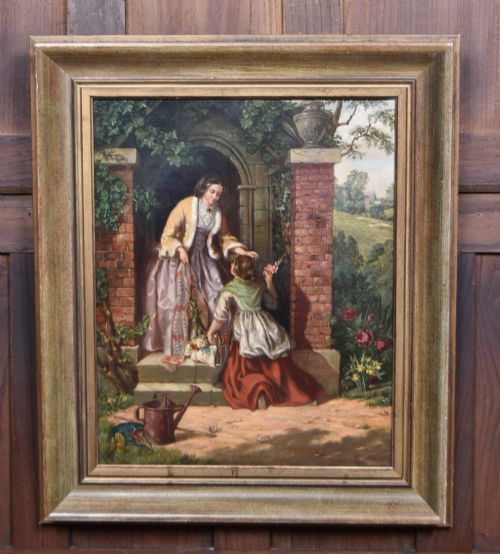
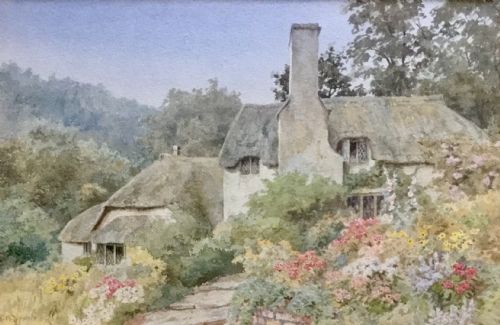
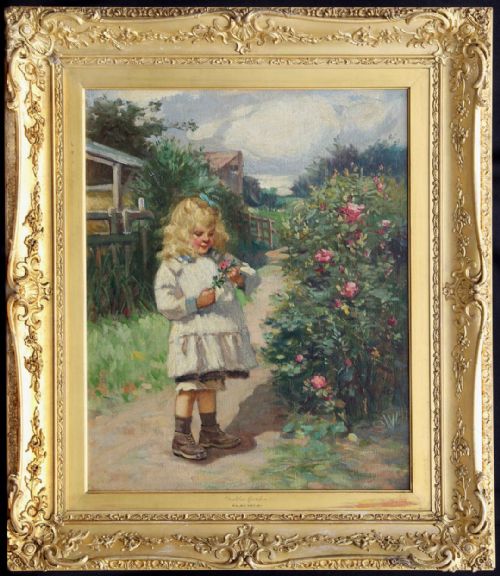
Victorian garden scene artwork encompasses paintings and framed works depicting rural landscapes, cottage gardens, and outdoor domestic moments. These pieces range from detailed watercolours to accomplished oil paintings on canvas.
Buyers encountering this selection will find works spanning the nineteenth century into the early twentieth century. Common subjects include children and pets in gardens, gardeners at work, and floral borders beside historic properties.
The objects take several forms, including traditional oil paintings, delicate watercolours on paper, and chrystoleum under convex glass. Each piece reflects the era's fascination with pastoral life and domesticity.
Materials and techniques
Artists of this period relied primarily upon oil paint on canvas and watercolour on paper to capture outdoor light and botanical detail. Some works utilise traditional framing in wood and gilt wood to complement the imagery.
Specialised techniques such as chrystoleum combine hand-coloured prints with glass and oil paints to create layered depth. Painters employed careful brushwork to render foliage, stone, and human figures with descriptive precision.
Victorian Garden Scene Artwork Retail Price Guide 2026
Typical asking prices for victorian garden scene artwork among the pieces listed under this phrase on Sellingantiques today, from the lower quarter to the upper quarter. They describe what is for sale here now, not the wider market.
Listings include works from the nineteenth century up to 1920, executed in oil paint, watercolour, and chrystoleum.
Evaluating quality
Quality rests upon the artist's ability to handle light, texture, and anatomical proportion within an outdoor setting. Stronger works demonstrate confident draughtsmanship in figures and convincing atmospheric depth in landscape backgrounds.
The sophistication of the medium execution, whether the fluid transparency of watercolour or the rich application of oil paint, distinguishes accomplished pieces from simpler decorative examples. Framing and condition further influence the overall standing of an artwork.
Thomas Faed RA·Arturo Orselli·Paul Viry·Thomas Nicholson Tyndale·Arthur Claude Strachan·Benjamin D. Sigmund·Edgar Bundy·Edmund Alphonse Andre·Belisario Gioja·William Greaves·Ralph Hedley RBA·John F. Pasmore
The Victorian Garden Scene Artwork Glossary
- Watercolour
- A painting method where fine pigment is suspended in water-based solution, typically applied to paper. This medium allows for translucent washes and delicate botanical details.
- Canvas
- A heavy woven fabric stretched across a wooden frame to serve as a sturdy support for oil paint. It provides a textured surface that holds layered pigment effectively.
- Chrystoleum
- A historic technique involving a hand-coloured photograph or print placed under convex glass and meticulously painted from behind with oil or watercolour.
- Gilt wood
- Wood carved and coated with a thin layer of gold leaf or metallic powder. This treatment creates a bright, reflective border suited to traditional frames.
- Convex glass
- Curved glass manufactured with an outward bulge, frequently utilised in nineteenth-century framing to protect and magnify delicate paper works or chrystoleums.
Victorian Garden Scene Artwork: Frequently Asked Questions
What subjects appear in these scenes?
These artworks typically show cottage gardens, domestic farm life, and figures engaged in outdoor leisure or maintenance. Common motifs include children playing, hens feeding, and gardeners tending to lawns and herbaceous borders.
Backgrounds often feature traditional English architecture, rural churches, and mature planting. The focus remains on the peaceful interaction between people and their cultivated natural surroundings.
How do oil paintings and watercolours differ?
Oil paintings utilise pigments bound in drying oils applied to canvas, producing rich colours and visible brush texture. Watercolours employ water-soluble pigments on paper, offering lighter and more translucent atmospheric effects.
Both mediums were popular during the nineteenth century but served different aesthetic goals. Watercolours were prized for delicate botanical precision, while oils allowed for deeper tonal range and durability.
Where should I hang these artworks?
These pieces suit traditional sitting rooms, studies, or hallways where their pastoral subjects complement classic interior schemes. They benefit from placement away from direct sunlight to protect sensitive watercolours and pigments.
Pairing them with appropriate wooden or gilt frames helps integrate them into period or country house decor. Proper wall placement ensures the detailed brushwork remains easily visible.
How are periods identified?
Dating relies upon artist signatures, stylistic movements such as British Impressionism or Pastoral genres, and framing materials. Inscriptions on the reverse or paper often record dates and locations.
Examinations of canvas types, paper watermarks, and glass styles provide further clues regarding the era of production. Documentation within the artwork's history helps confirm its nineteenth or early twentieth-century origins.