



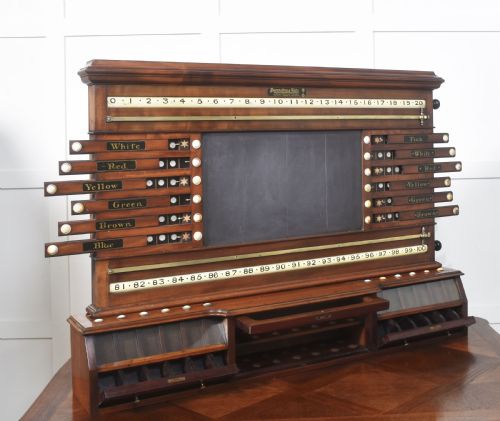

Victorian Games Table Board
These victorian games table board pieces bring parlour pastimes into daily life with built-in chess and backgammon surfaces.
Victorian Games Table Board
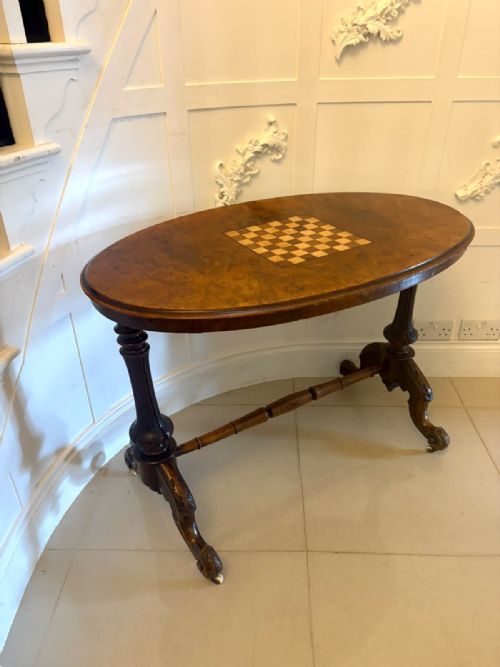
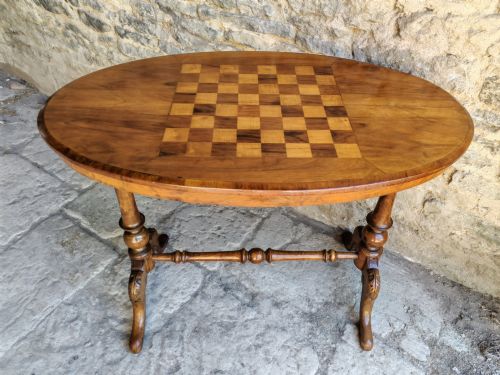
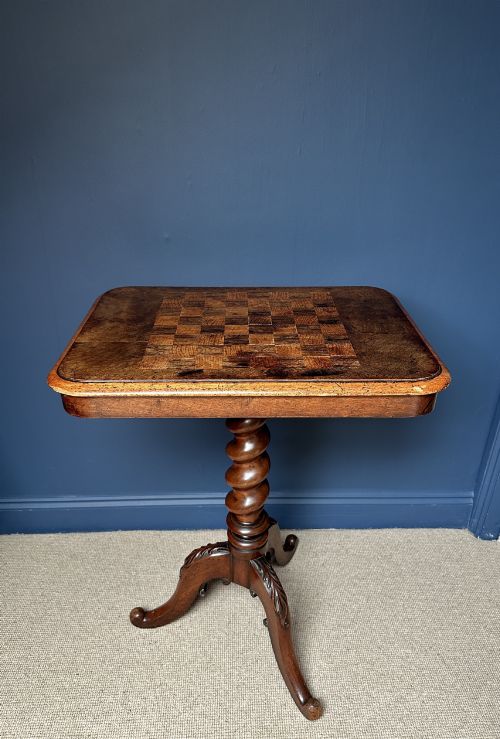
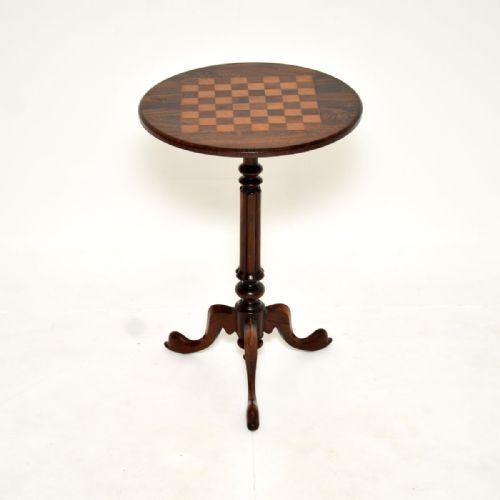
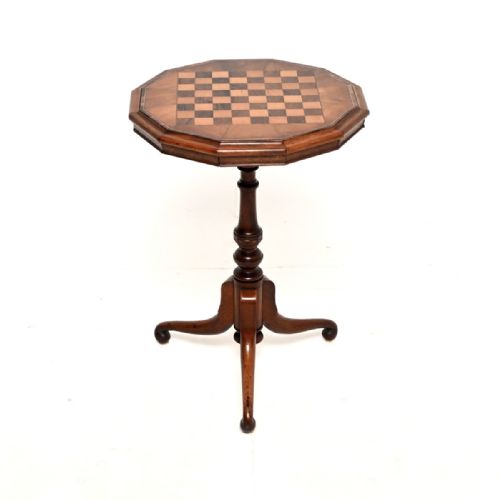
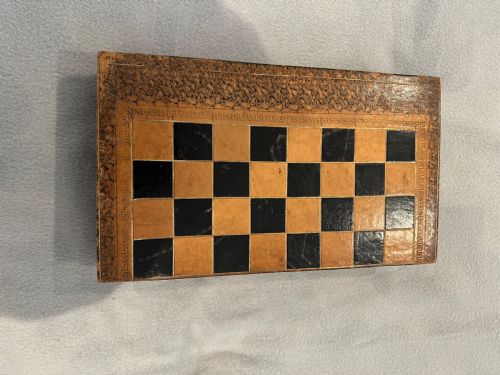
A victorian games table board serves as both an occasional piece of furniture and a dedicated surface for nineteenth century pastimes such as chess and backgammon. Buyers encounter various forms on this page, ranging from tripod pedestals and trumpet shapes to folding occasional tables and portable leather-bound books.
Most examples date from the nineteenth century, particularly the middle and later decades, drawing on styles spanning standard Victorian to Anglo-Indian. Alongside dedicated tables, the selection includes compendiums, scoreboards, and individual boards intended for parlour use.
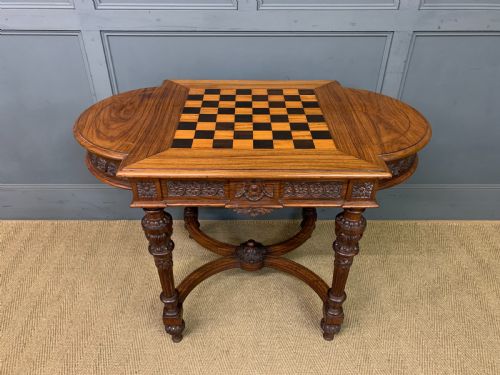
Cabinetmakers designed these objects to function as normal furniture until evening, when sliding tops, reversible panels, or hinged leaves revealed integrated boards. Walnut, burr walnut, and rosewood dominate the surviving inventory, frequently paired with contrasting boxwood inlay.
Quality variations
Finer examples display superior timber selection with highly figured burr walnut and precise, tight boxwood inlay that remains flush with the surrounding wood. Lower tiers typically feature plain mahogany or simpler veneers with wider tolerances in the joinery.
The complexity of the internal mechanism separates standard pieces from the best of the range, particularly tables that open to reveal multiple hidden boards for chess, backgammon, and cribbage alongside fitted workboxes.
Listings feature woods such as walnut, burr walnut, mahogany, rosewood, and boxwood.
A British Chess Company
The Victorian Games Table Board Glossary
- Burr walnut
- A figured wood veneer taken from the wart or burl growths of the walnut tree, prized for its swirling patterns. Cabinetmakers used it extensively on mid nineteenth-century table tops.
- Chequer-board
- A squared grid pattern of alternating dark and light tiles used for games like chess and draughts. On these tables, the squares are usually inlaid in woods such as boxwood and walnut.
- Compendium
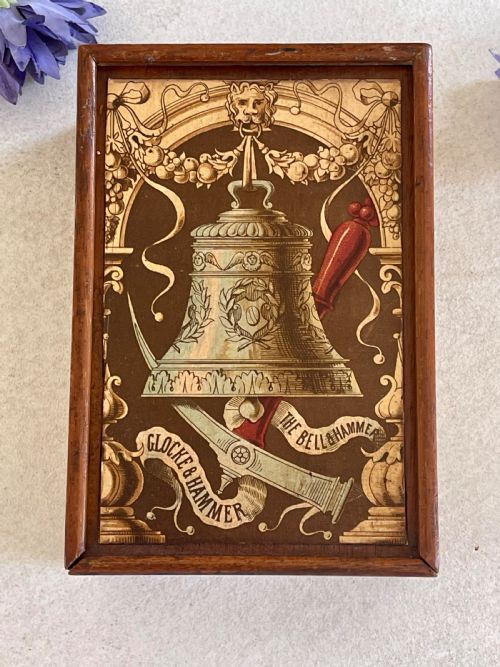
- A single fitted box containing equipment and boards for multiple different parlour games. These portable sets often include dice, counters, and folding boards.
- Tripod table
- A small occasional table supported by a pillar above three spreading legs. This form provided a stable base for chess tops without taking up excessive floor space in a Victorian parlour.
- Bagatelle
- A cue sport played on a miniature billiard table with holes, popular in nineteenth-century homes. Tables designed for this game feature wooden scoreboards and baize surfaces.
Victorian Games Table Board: Frequently Asked Questions
How do I use a games table today?
These pieces function well as standard occasional or side tables in a living space while offering a usable surface for chess or cards when needed. Many include hidden compartments that store modern playing pieces or correspondence.
Opening the top to reveal integrated backgammon or cribbage boards adds an interactive element to a room without dominating the interior design.
Were these tables made for specific games?
Most examples incorporate a chess or draughts board permanently inlaid into the upper surface, though some feature reversible panels with leather writing inserts or backgammon layouts. Multi-game tables often include sliding sections that uncover cribbage tracks and dice areas.
Specialist pieces like bagatelle tables or billiard scoreboards served more singular athletic pursuits within the Victorian home.
How can I tell the period of a table?
Dating relies on timber choices, leg profiles, and the complexity of the internal mechanisms. Pieces from the mid nineteenth century frequently exhibit rich burr walnut veneers and carved tripod pedestals.
Later Victorian examples often show simpler structural lines or specific regional influences like Anglo-Indian rosewood carving. Maker labels, where present, help narrow down the exact decade.
What is the difference between a table and a board?
A games table is a piece of furniture with legs and a built-in playing surface designed to remain in a parlour or hall. A board or compendium is a portable item, sometimes bound in leather like a book, meant to be stored on a shelf and brought out for play.
Both categories utilise similar inlay techniques and woods, but tables double as occasional furniture when closed.