


Victorian Frosted Shade Lamp
A victorian frosted shade lamp brings soft, diffused lighting and rich period character to a room through textured glass and polished metal.

Victorian Frosted Shade Lamp
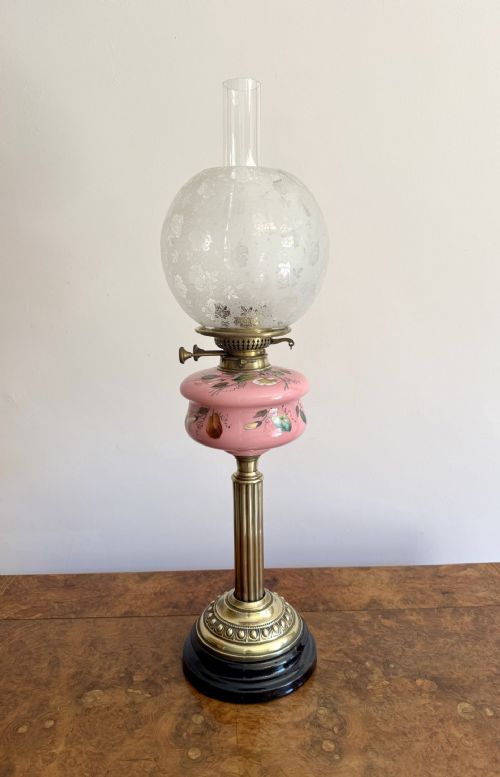
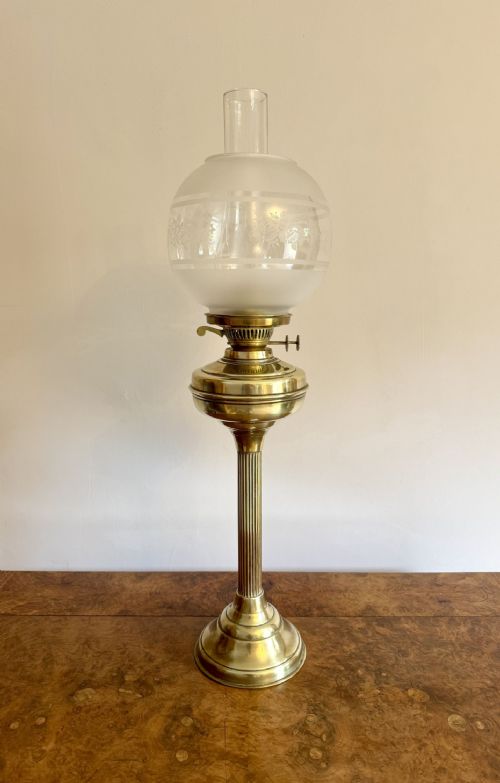
A victorian frosted shade lamp combines period metalwork with textured glass designed to soften brilliant illumination. The listings on this page show these pieces spanning the Victorian era through to the early twentieth century, incorporating later Edwardian and Art Nouveau examples alongside core nineteenth-century designs.
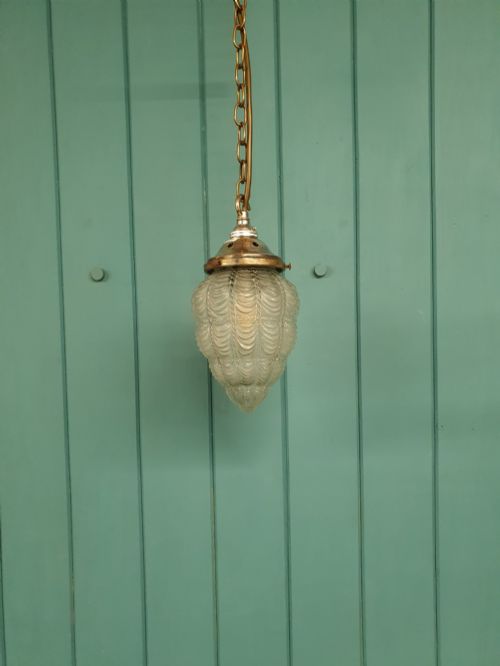
The primary forms found here are oil lamps, table lamps, pendant lights, and specific lamp shades or globes. Many survive as functional oil or paraffin burners, while others appear converted for electrical use.
Origins represented in the inventory include English and French manufacture, alongside German and British pieces. Buyers encounter everything from simple brass desk standards to elaborate telescopic columns and figural bronze bases.
How they were made
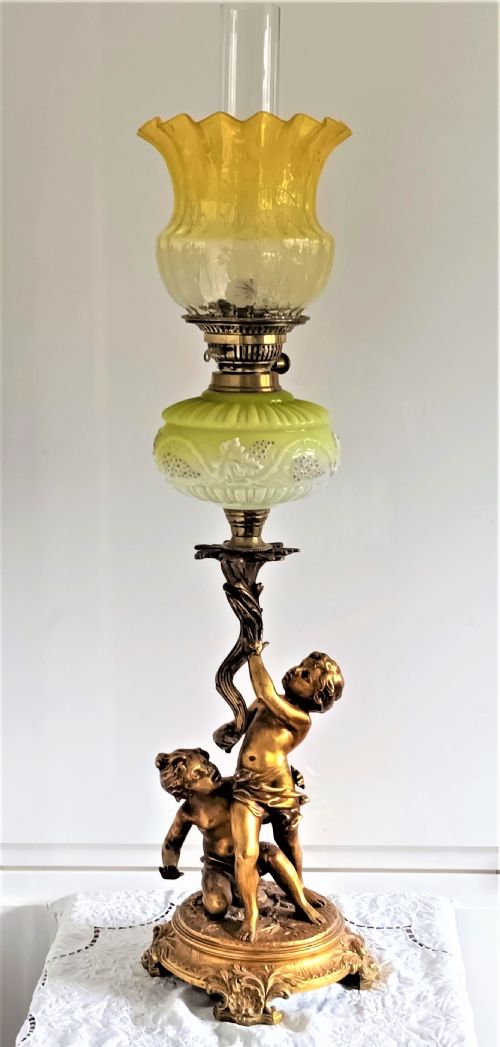
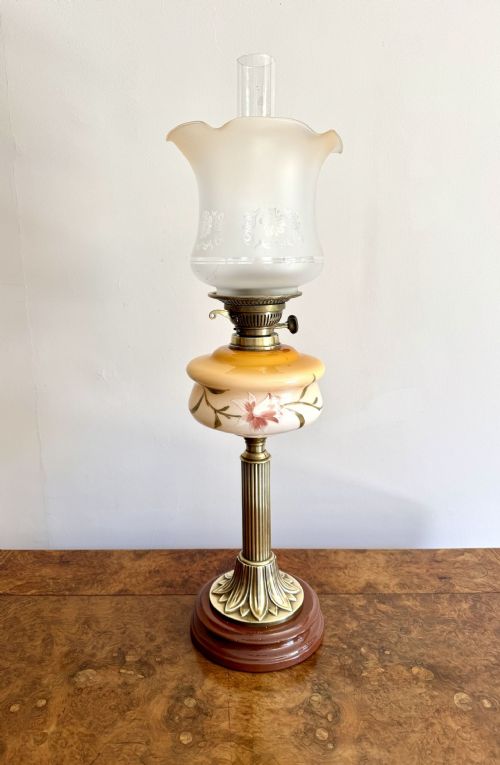
Makers constructed the structural elements of these lamps using brass, silver plate, bronze, and spelter, often pairing heavy metal stands with delicate ceramic or porcelain fonts. Brass columns frequently feature reeded detailing, while metalwork surfaces are cast, chased, or gilded.
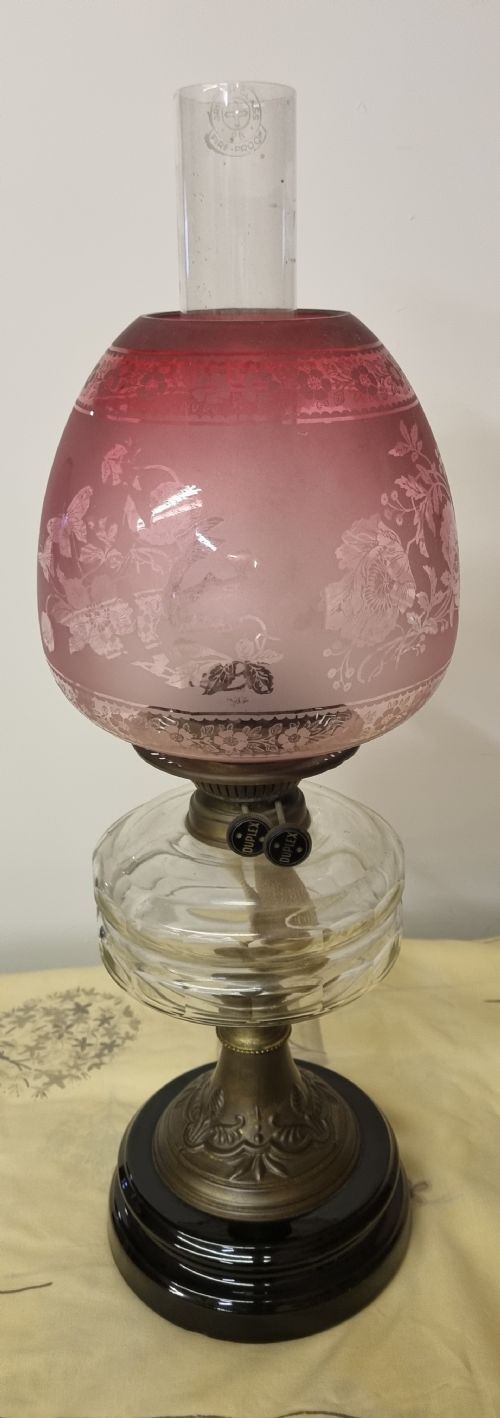
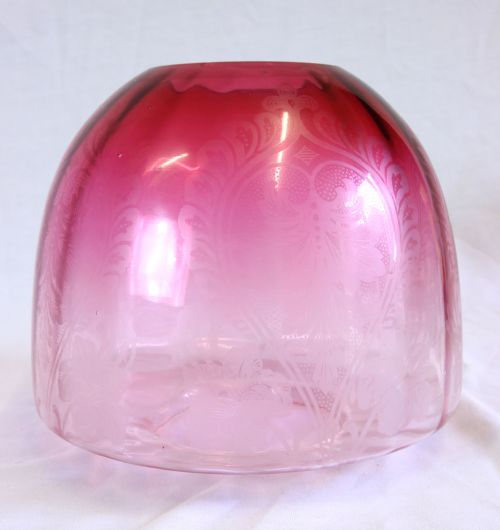
The shades themselves rely on specialised glassmaking techniques, utilising frosted glass, cranberry glass, opal glass, and etched designs. Molten glass was blown into moulds or manipulated by hand to achieve the characteristic opaque surface texture that diffuses light.
Several heavy brass lamps come equipped with cherub arms holding up the light.
What varies in quality
Quality in these lamps rests upon the weight of the metal casting and the crispness of the chased or reeded details on the column. Superior pieces maintain robust structural integrity, utilising heavy gauge brass or substantial bronze rather than thin, light alloys.
The distinction between standard and exceptional examples also lies in the glass shade, where fine etching, deep cranberry coloration, or sophisticated opalescent qualities elevate the piece. Maker attribution, such as signed burners or established firm stamps, further separates ordinary production from the finest surviving specimens.
Sitzendorf·Messengers·Harrods·Young's Special
The Victorian Frosted Shade Lamp Glossary
- Font
- The oil reservoir of a lamp, usually positioned above the base and beneath the burner. Fonts are frequently made from coloured glass, ceramics, or polished metal.
- Duplex burner
- A specific double-wick burner mechanism common on nineteenth-century oil lamps designed to produce a brighter flame. These burners often bear maker stamps on the thumbwheels.
- Spelter
- A zinc alloy used as a cheaper substitute for bronze in lamp bases and figural mounts. It is usually painted or electroplated to simulate more expensive metals.
- Opalescent glass
- Glass that displays milky, translucent colour variations, shifting in tone between transmitted and reflected light. This material diffuses illumination evenly across the room.
- Telescopic lamp
- An adjustable standard lamp mechanism allowing the height of the burner and shade to be raised or lowered on a sliding central column.
Victorian Frosted Shade Lamp: Frequently Asked Questions
Are these lamps still safe to use with oil?
Many period oil lamps retain their original burners and fonts, though safety checks on the wick mechanisms and collar seals are necessary before burning paraffin.
Buyers frequently choose to have these pieces professionally converted to electricity for daily household use while retaining the antique fittings.
How do I identify a Victorian shade?
Victorian frosted and coloured shades typically exhibit hand-etched motifs, heavy glass walls, and specific fitter rim dimensions designed to sit securely in a brass gallery.
Earlier examples often display subtle imperfections from mouth-blowing, distinguishing them from twentieth-century pressed glass reproductions.
Can I adjust the height of a floor lamp?
Certain floor and table models feature telescopic brass columns that allow you to alter the vertical reach of the light source.
These adjustable mechanisms rely on thumbscrews or internal friction collars which require careful handling to preserve the original threads.
What is the difference between brass and bronze?
Brass is an alloy of copper and zinc, yielding a bright golden appearance that polished well in Victorian interiors. Bronze contains copper and tin, offering a heavier, darker metal base suited for detailed figural castings.