

Victorian French Style Desk
These victorian french style desk pieces bring continental elegance to British interiors, offering graceful curves and detailed mounts that collectors prize.
Victorian French Style Desk
When you search for a victorian french style desk, you encounter nineteenth century writing furniture shaped by continental revivals. These pieces draw on Louis XV and Rococo aesthetics, translated through Victorian cabinet making.
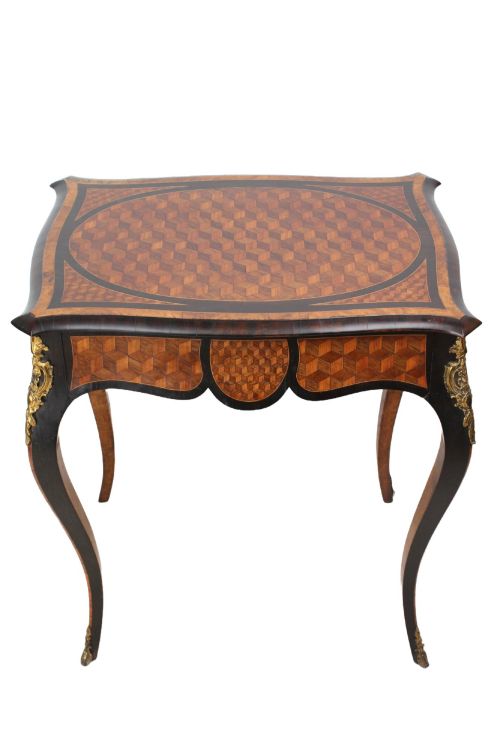
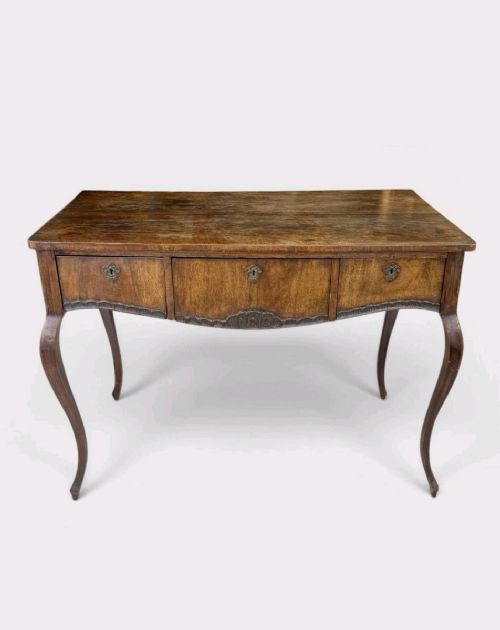
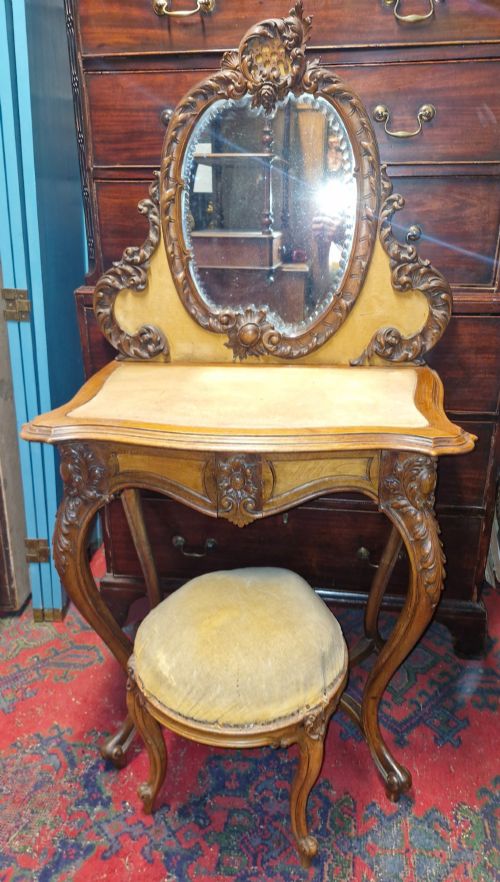
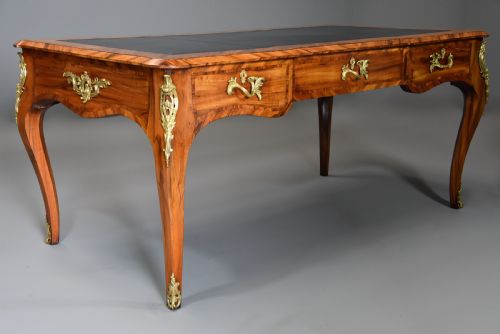
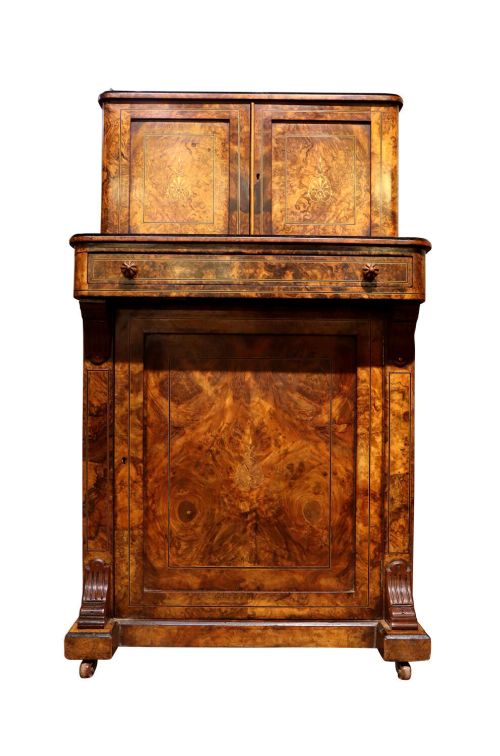
You meet various forms on this page, including kidney shaped tables, bureau plat designs, and compact bureau de dame examples. Walnut, kingwood, and burr walnut dominate the selection, often enriched with marquetry or parquetry.
The origins span English workshops adopting continental modes as well as imported French pieces. Surviving examples reflect the high Victorian appetite for decorative writing furniture with cabriole legs and gilt bronze mounts.
How they were made
Cabinet makers utilised dense hardwoods such as walnut, mahogany, and kingwood as foundations for intricate veneers. Marquetry and parquetry patterns were meticulously cut and fitted into the surfaces of writing tables and bureaus.
Ormolu and gilt bronze mounts were cast and chased to accentuate the sweeping contours of the frame. These metal ornaments were secured to corners, legs, and aprons to echo eighteenth century models.
Leather writing surfaces were frequently inset into the top, tooled with gold leaf to provide a durable and refined workspace. Brass inlay and stringing further highlighted the geometric layout of drawers and tabletops.
Listings feature nineteenth century writing furniture in walnut, burr walnut, mahogany, and kingwood, paired with ormolu mounts and leather tops.
What varies in quality
The standard of timber selection and veneer matching defines the upper tier of these writing surfaces. Superior pieces display continuous grain alignment and finely executed floral marquetry rather than plain stained substitutes.
The crispness and weight of the ormolu mounts separate exceptional work from ordinary production. Hand chased bronze elements with sharp relief contrast against simpler, softer cast metal fittings.
Internal construction details, such as dovetailed drawer linings and original locks, indicate the original maker's commitment to durability. Finer desks retain their fitted interiors and integrated leather inserts without modern intervention.
JAS Shoolbred·Edmé Samson·Durand·Blake London·Pickford of London
The Victorian French Style Desk Glossary
- Bureau plat
- A freestanding double sided writing table without a superstructure, commonly fitted with drawers in the frieze. These tables originated in France and sit comfortably in the middle of a room.
- Ormolu
- Gilt bronze ornamentation applied to furniture and clocks during the eighteenth and nineteenth centuries. The technique involves coating cast bronze with a mercury and gold amalgam before heating.
- Marquetry
- The art of forming decorative patterns on woodwork by fitting together small pieces of veneer. Craftsmen use various coloured woods to create floral or geometric pictures across tabletops.
- Cabriole leg
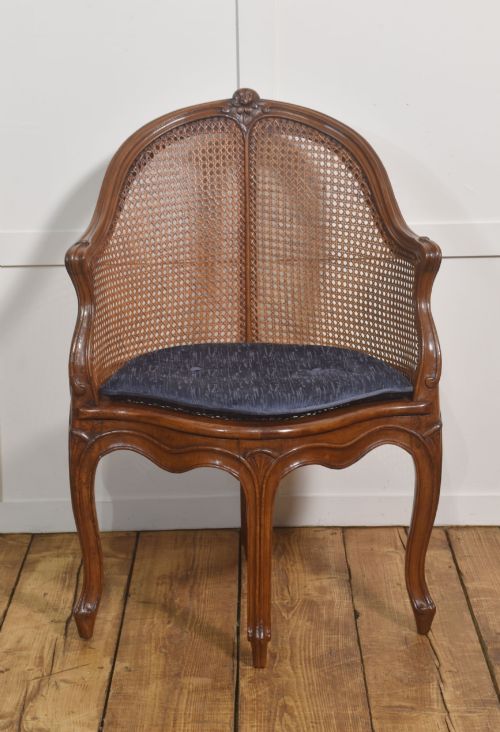
- A furniture leg that curves outward at the knee and tapers inward at the ankle, ending in a pad or scroll foot. This shape derives from ancient animal forms and characterises Rococo revival design.
- Cartonnuer
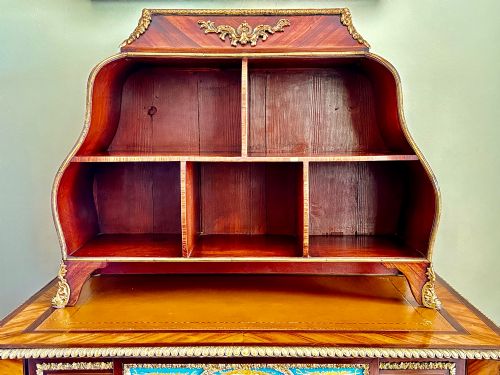
- A modular set of tiered document boxes or compartments designed to sit atop a desk. These structures kept correspondence and papers organised in nineteenth century studies.
Victorian French Style Desk: Frequently Asked Questions
What is a bureau de dame?
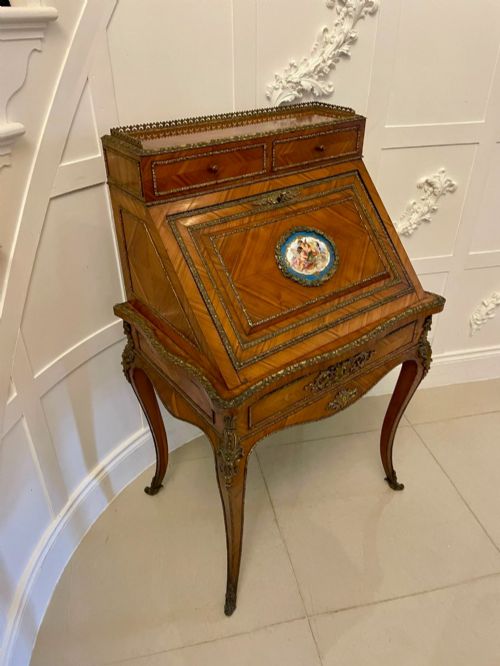
A bureau de dame is a small ladies desk, often featuring a sloping lid or a superstructure with pigeonholes and small drawers. These compact pieces served domestic correspondence in nineteenth century drawing rooms.
Cabinet makers decorated them with fine veneers, brass inlay, and porcelain plaques. Their diminutive scale made them suitable for private sitting rooms rather than grand libraries.
How do I identify Louis XV revival pieces?
Louis XV revival pieces are marked by asymmetrical curves, naturalistic leaf carving, and the distinct absence of straight lines. Look for cabriole legs, serpentine aprons, and prominent ormolu mounts.
Victorian interpretations of this French style often combine native timber frames with continental decorative motifs, producing robust writing furniture with an ornate profile.
Are these desks suitable for daily use?
These writing tables function well for modern laptop use and correspondence when fitted with sturdy leather tops. Their solid timber construction handles regular writing tasks comfortably.
Care should be taken to protect antique polish from moisture and direct heat. Using blotters preserves the original leather inserts and delicate veneer surfaces.