

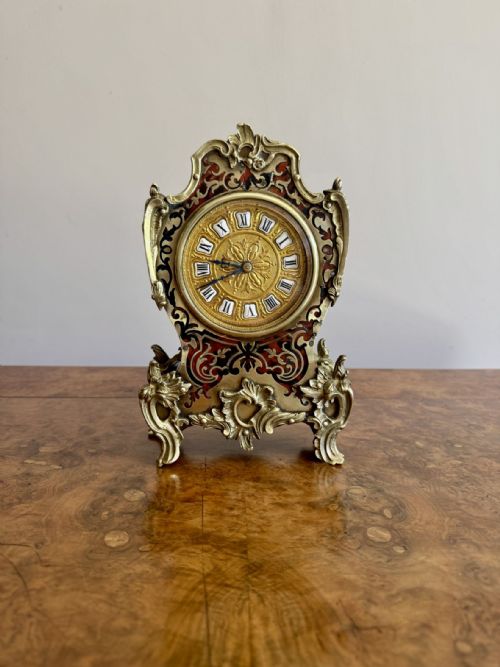


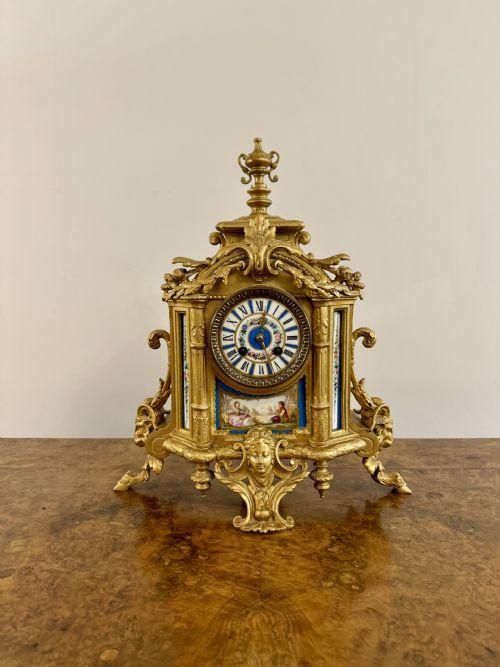


Victorian French Ornate Clock
A victorian french ornate clock brings heavy metal and porcelain into a room, combining architectural form with mechanical precision.

Victorian French Ornate Clock
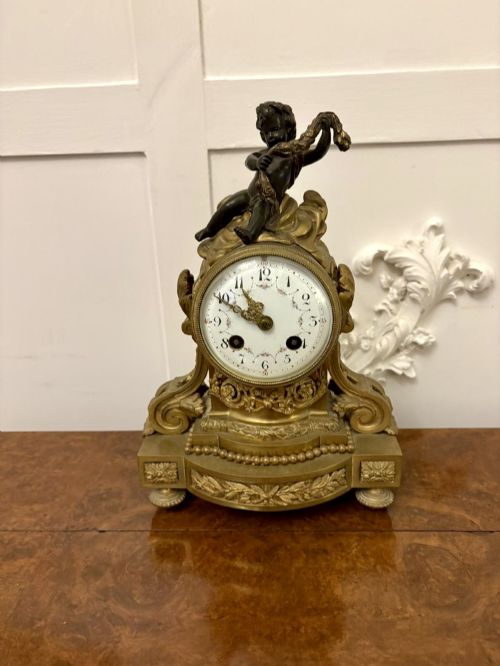
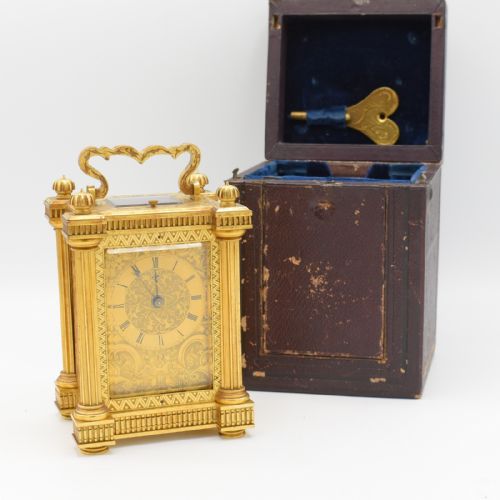
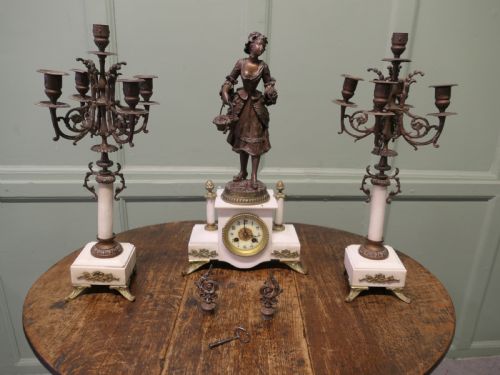
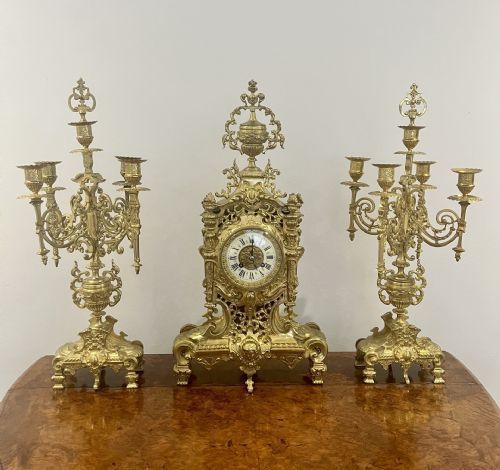
A victorian french ornate clock usually appears as a mantel clock, a carriage clock, or part of a larger clock garniture set featuring matching side ornaments. These pieces span production dates across the nineteenth century, most frequently appearing from the decades between eighteen fifty and nineteen hundred.
Buyers encounter distinct stylistic revivals within this group, including French Rococo, Louis XVI, and Second Empire designs. These styles manifest through cast brass, gilt bronze, marble, and porcelain elements assembled to create heavy, decorative objects.
Materials and construction
Makers utilised cast brass, ormolu, gilt bronze, and solid marble to form the structural cases of these clocks. Enamel dials and painted porcelain panels frequently decorate the front and side plates, providing contrasting colour against the metal bodies.
Movements within these cases rely on mechanical brass gear trains, often incorporating platforms for escapements and striking mechanisms for hours and half hours. Glass panels enclose many carriage clocks, allowing the internal escapement and gear movement to remain visible from multiple sides.
Listings incorporate carriage clocks, mantel clocks, and multi-piece clock garnitures formed from marble, porcelain, brass, and gilt bronze.
Evaluating craftsmanship
The refinement of the cast metal ornamentation dictates the visual hierarchy of these clocks. Crisp chasing on ormolu and bronze surfaces, deep relief work in Rococo scrolls, and finely painted enamel dials separate standard production from superior pieces.
The complexity and execution of the internal movement also define quality, with signed mechanisms by established French makers demonstrating superior mechanical engineering compared to unmarked movements.
Howell & James London·Brunelot·Gontard & Bolviller Paris·Samuel Marti·Japy Freres·A D Mougin France
The Victorian French Ornate Clock Glossary
- Garniture
- A matching set comprising a central clock flanked by side ornaments such as urns or candelabra.
- Ormolu
- Gilt bronze created by applying a finely ground mercury and gold amalgam to a bronze base and heating the object.
- Escapement
- The internal mechanism that controls and regulates the rotation of the gear train in a mechanical clock.
- Carriage clock
- A portable spring-driven timepiece designed for travel, housed in a brass case with glass panels and a carrying handle on top.
Victorian French Ornate Clock: Frequently Asked Questions
How do I wind a mechanical clock?
Most of these mechanical movements require a specific key inserted into the winding arbors located on the dial face. Turn the key gently until resistance indicates the mainspring is fully tensioned.
Avoid overwinding the spring, as excessive force can damage the internal gearing. Ensure you note whether the movement is an eight-day or single-day train to establish the correct winding schedule.
Where should I place a heavy mantel clock?
Select a stable, level surface such as a heavy wooden mantelpiece or a sturdy sideboard. The weight of marble and bronze cases requires solid support to prevent tipping.
Keep the clock away from direct sunlight and draughty windows to protect delicate enamel dials and painted porcelain panels from temperature fluctuations.
What is a clock garniture set?
A clock garniture set consists of a main mantel clock accompanied by two matching side pieces, typically designed as decorative urns or candelabra. These matched items create a unified decorative arrangement for a mantelpiece.
The entire set shares identical materials, such as ormolu, marble, or porcelain, and mirrors the specific sculptural style of the central clock.