



French Putti Mantel Clock
These heavy, gilded objects are french putti mantel clock designs, combining lively figures with precise horology to anchor a grand room.

French Putti Mantel Clock
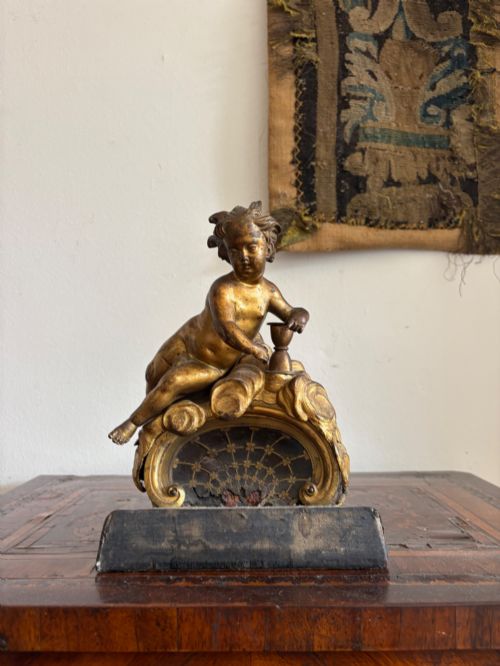
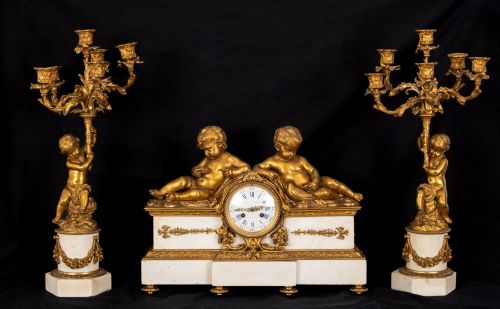
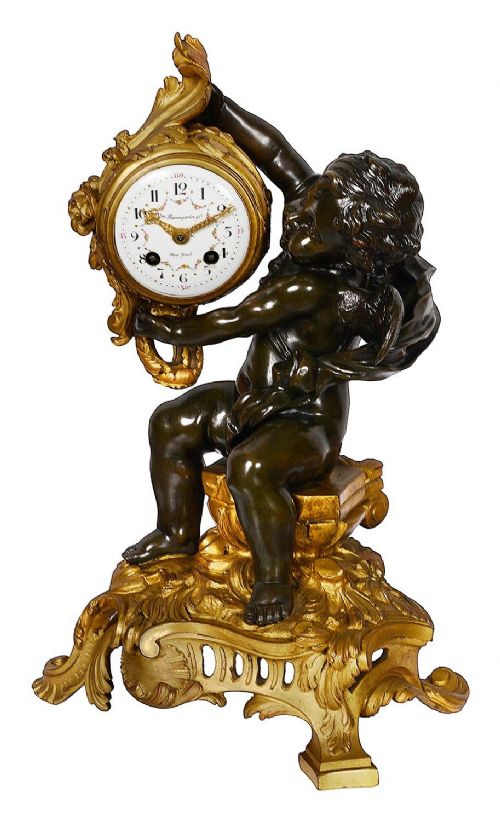
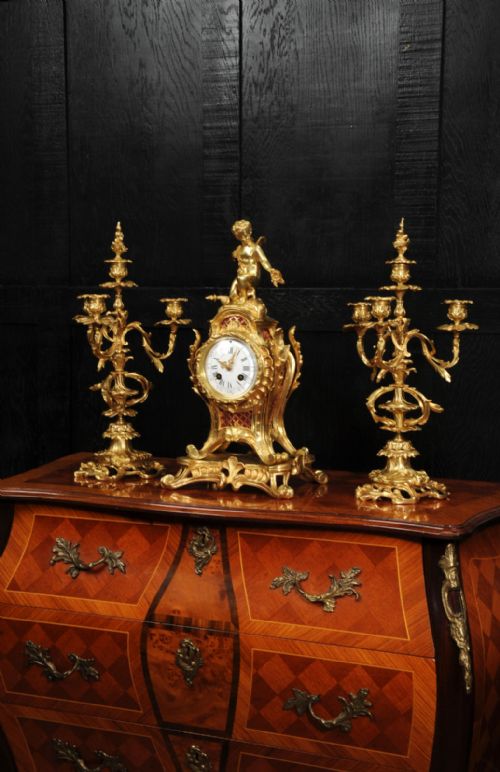
A french putti mantel clock centres on cast metal figures of cherubs, cupids or putti interacting with the clock case or accompanying candelabras. The typical version met here dates from the nineteenth century, spanning Victorian decades from the eighteen-fifties through to nineteen-hundred, and takes the form of mantel clocks or complete clock garnitures.
Most examples lean towards French Rococo Revival, Louis XVI style, or classical proportions. These pieces frequently pair figural sculpture with functional timepieces, often accompanied by matching side ornaments to create a balanced display upon a fireplace.
Makers and retailers ranging from provincial Parisian workshops to London houses produced these works, using themes of classical mythology and romantic cherubic play. The physical forms vary from compact table clocks to grand architectural sets incorporating candelabras.
Materials and construction
The construction relies heavily on ormolu and gilt bronze, applied over cast metal frames to produce a bright, enduring metallic lustre. White marble, red marble, and black slate frequently serve as heavy plinths and bases, anchoring the weight of the metalwork.
Dials often feature hand-painted details or enamel cartouches, protected beneath glass bezels. Intricate ornamental mounts, cast putti figures, and decorative bezels are assembled by hand, securing the mechanical movements within heavy bronze and marble housings.
Several cherubs carry musical instruments, suggesting that silence in the Victorian parlour was strictly optional.
Judging the work
Quality reveals itself in the crispness of the bronze casting and the depth of the gilding. Superior examples display sharply chased details on the putti figures, where hair, wings, and facial expressions remain distinct rather than softened by excessive wear or poor finishing.
The integration of materials distinguishes finer pieces from simpler ones. Heavy, solid marble bases fitted neatly with substantial bronze mounts and well-finished mechanical movements represent the upper tier of production.
Le Roy Paris·Leon Message·Jollet et Cie·Phillipe H Mourey·Bellenot Paris·John Bennett Cheapside London
The French Putti Mantel Clock Glossary
- Ormolu
- Gilded bronze produced by applying a mixture of gold and mercury to a bronze base, then heating to drive off the mercury. This technique creates a durable, golden surface characteristic of fine nineteenth-century French metalwork.
- Putti
- Plural of putto, representing plump, naked infant cherubs or cupids derived from classical art. They populate these clock cases in playful or musical poses.
- Garniture
- A set of matched ornamental objects designed to be displayed together on a mantelpiece, usually comprising a central clock flanked by two matching candelabras or vases.
- Fusee
- A conical pulley used in clock movements to maintain an even pull on the gear train as the mainspring unwinds. This mechanism improves the timekeeping accuracy of the movement.
- Rococo Revival
- A nineteenth-century design style mimicking the asymmetrical curves, scrolls, and naturalistic motifs of the eighteenth-century French Rococo period.
French Putti Mantel Clock: Frequently Asked Questions
What is a clock garniture?
A clock garniture is a matched set consisting of a central clock accompanied by two side pieces, such as candelabras or urns. These sets were designed to sit together across a mantelpiece as a unified decorative scheme.
They became popular during the nineteenth century in French and English interiors, providing both symmetry and utility.
How do I wind the clock?
Winding requires a matching key inserted into the winding holes on the dial face. Turning the key tensions the mainspring inside the movement.
Care should be taken not to overwind the mechanism, stopping as soon as resistance is felt.
Are these clocks accurate timekeepers?
Nineteenth-century mechanical movements can keep reliable time when properly serviced and adjusted. They rely on pendulum regulation, which requires the clock to stand level on a firm surface.
Periodic cleaning by a professional horologist ensures consistent performance.