
Victorian French Carriage Clock
These robust and portable timepieces combine fine continental movement with polished brass and glass cases.
Victorian French Carriage Clock
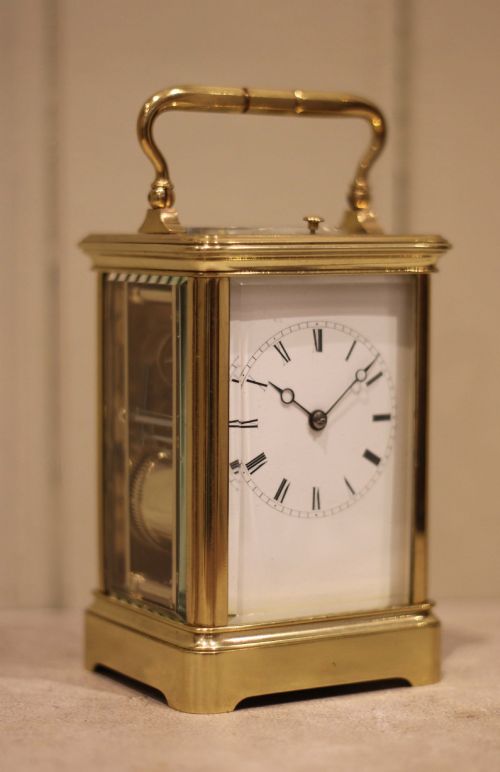
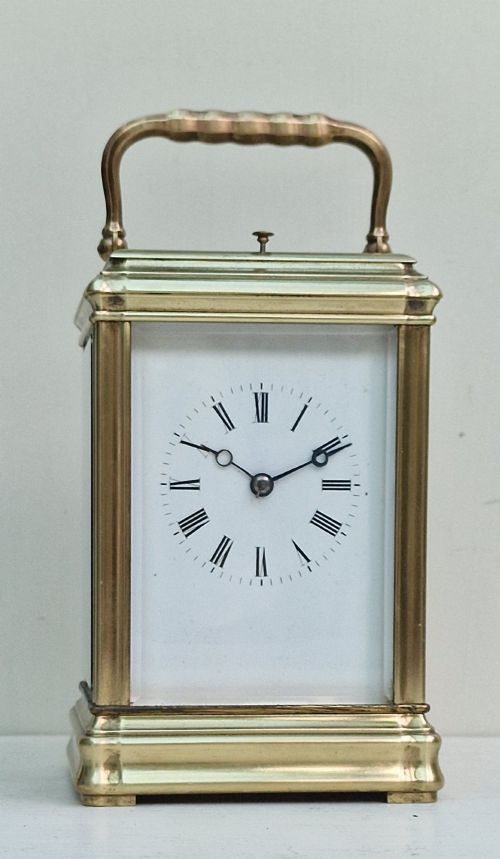
A victorian french carriage clock is a portable mechanical timepiece designed for travel, housing an eight-day movement within a glazed brass framework. Most examples seen here date from the nineteenth century, spanning periods from the eighteen-fifties to nineteen hundred.
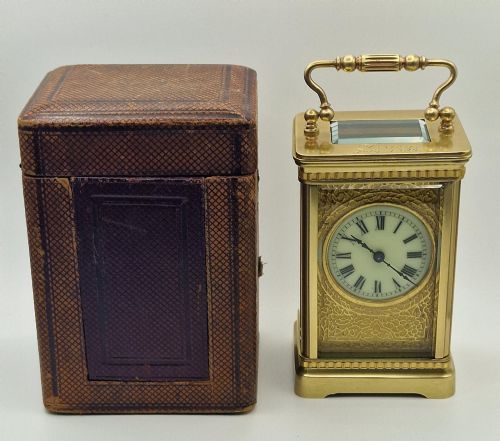
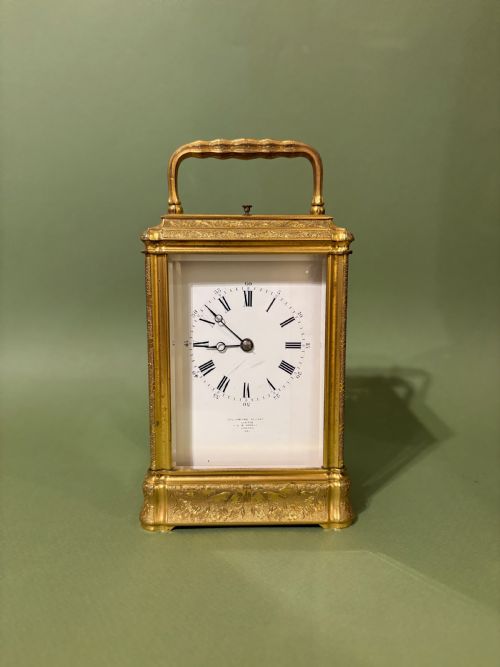
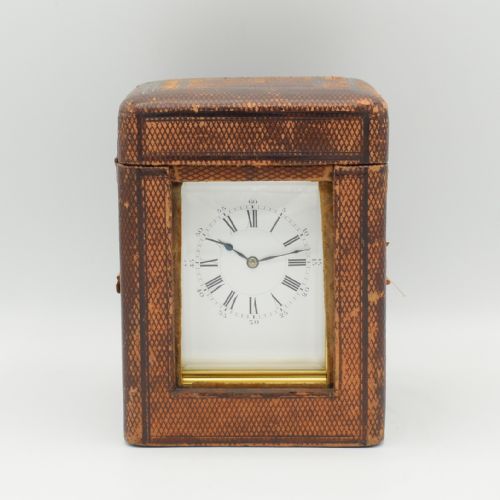
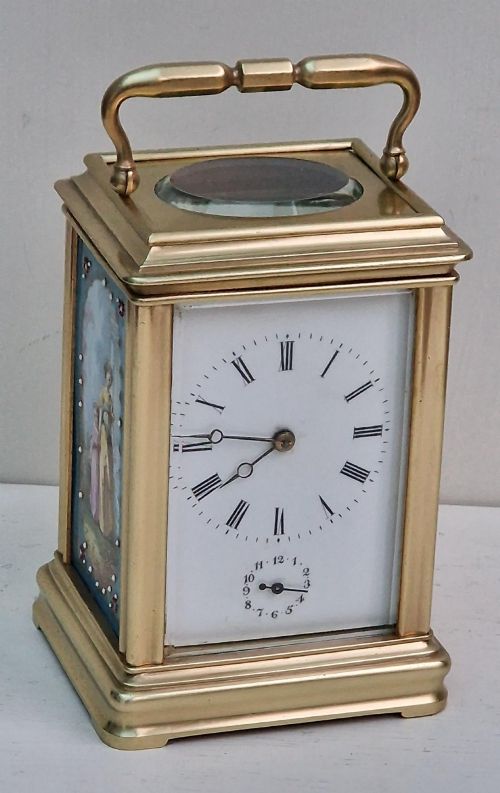
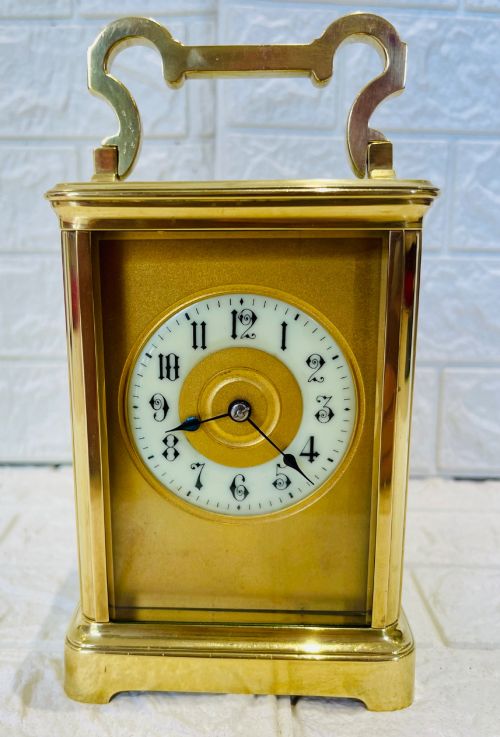
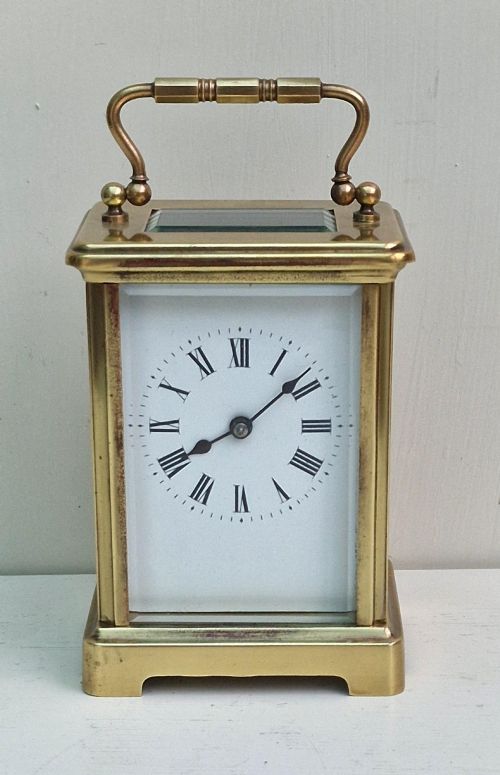
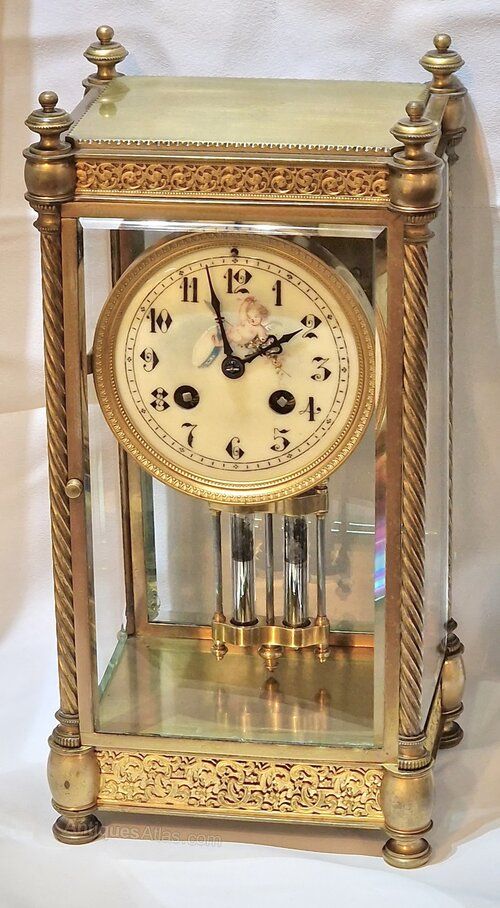
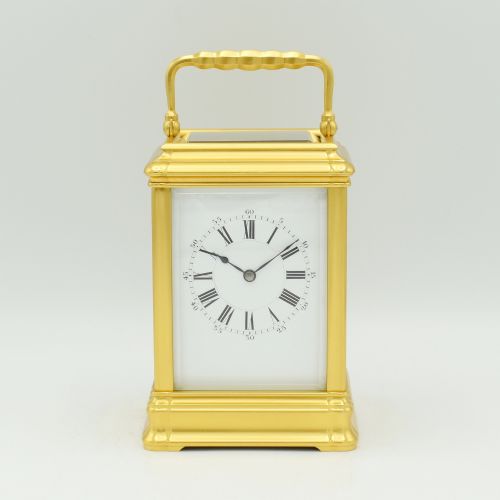
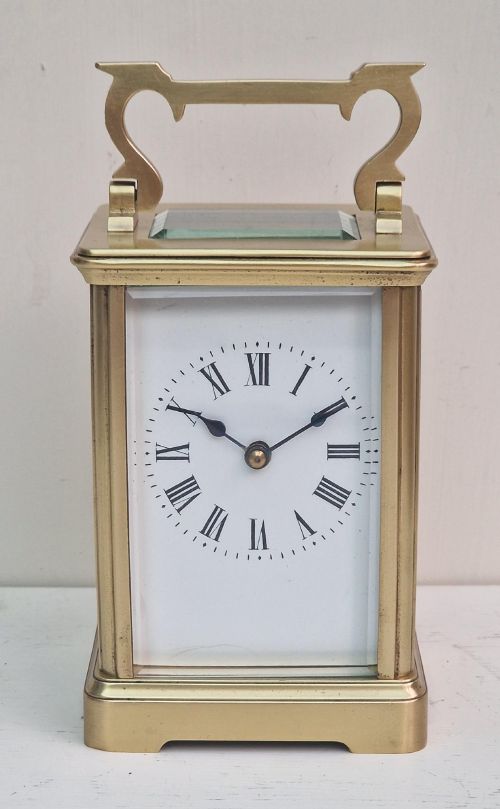
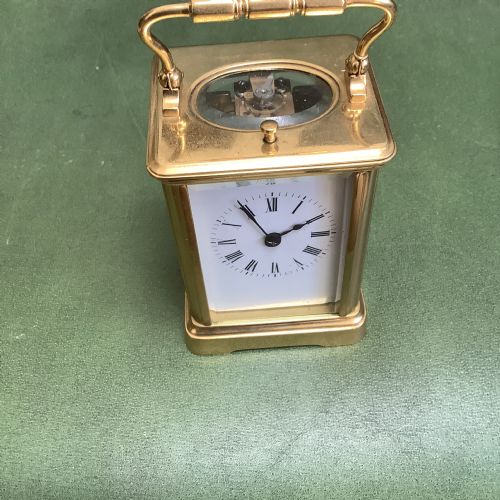
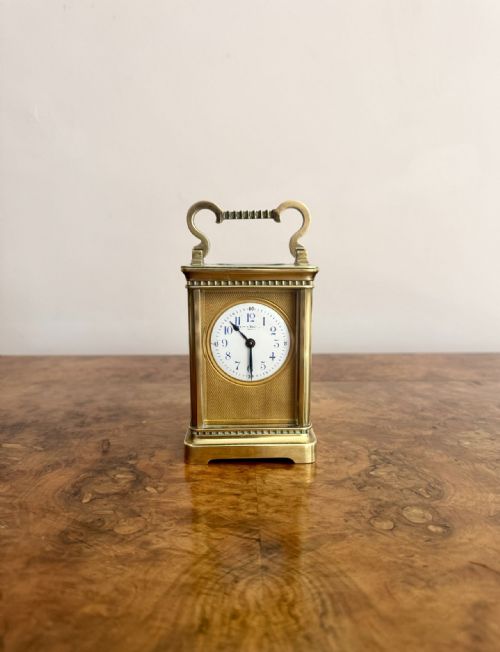
The standard format utilises a gorge or corniche brass case fitted with bevelled glass panels to display the escapement. Variations range from plain brass timepieces to ornate models featuring enamel dials, porcelain panels, and original leather travel cases.
Materials and construction
Cases are formed predominantly from brass or gilt brass, cast and machined to support heavy bevelled glass panels on all four sides and the top. Many incorporate steel components within the movement and delicate enamel or painted porcelain dials.
Movements are driven by a mainspring and regulated by a balance wheel rather than a pendulum, allowing the clock to maintain accuracy while travelling. Superior models incorporate striking mechanisms, repeaters, or alarms housed in the same compact brass housing.
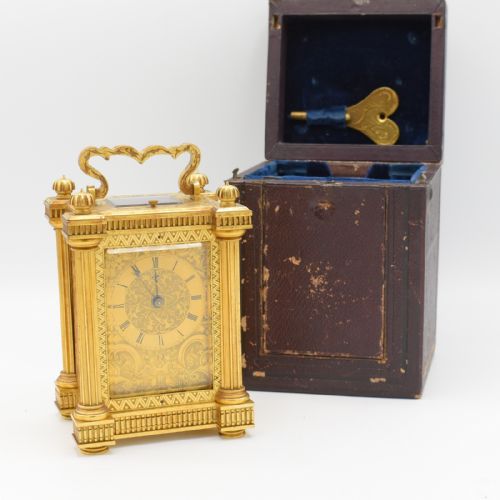
Several travel cases retain their tiny original winding keys tucked neatly into bespoke velvet-lined internal compartments.
Factors of quality
The refinement of the movement sets exceptional pieces apart from standard timepieces, particularly those featuring repeating complication mechanisms or bell striking. Maker attribution also influences standing, with signed Parisian works commanding greater attention than unmarked examples.
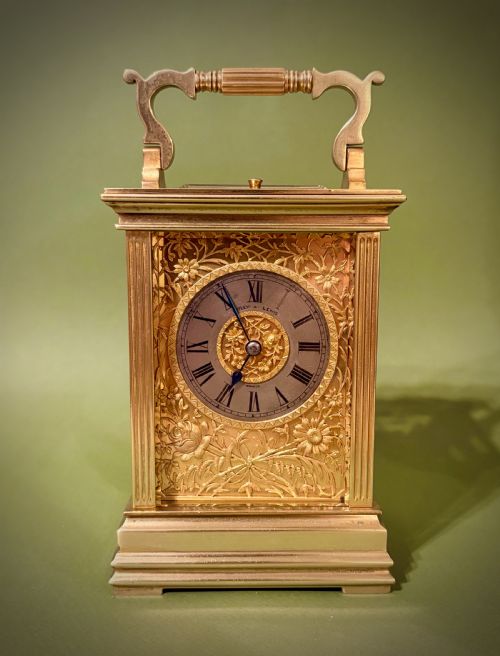
Case execution dictates visual appeal, from simple cast brass frames to fully engraved gilt surfaces decorated with champleve enamel or porcelain panels. The presence of an original leather travelling case adds considerable merit to a surviving piece.
Henri Jacot·Pickford of London·Drocourt Paris·C. Detouche Paris·Antoine Redier of Paris·Margaine Of France·Brunelot·Duverdry and Bloquel·Mappin and Webb
The Victorian French Carriage Clock Glossary
- Carriage clock
- A portable spring-driven timepiece designed for travellers during the nineteenth century. These clocks typically feature a rectangular brass case with bevelled glass windows and a handle on top.
- Repeater
- A mechanism that chimes the hours and quarters on demand when a button or cord on the case is pressed. This complication allowed owners to check the time in the dark.
- Gorge case
- A specific brass case style characterised by stepped mouldings at the top and base. It represents a classic French housing design for better-quality movements.
- Escapement
- The internal mechanism that controls the release of power from the mainspring to the gear train. It translates the unwinding spring into regulated ticking movements.
- Champleve
- An enamelling technique where troughs are carved into the brass surface and filled with vitreous enamel. The metal is then fired, polished, and gilt.
Victorian French Carriage Clock: Frequently Asked Questions
How do you wind a carriage clock?
Most models utilise a key inserted into arbors located on the underside or backplate of the movement. Care must be taken not to overwind the mainspring.
Some variations feature a butterfly key permanently attached to the movement, allowing winding without a separate tool.
What is a striking carriage clock?
A striking mechanism causes the clock to automatically sound the hours and half-hours on a small internal bell or gong. This acoustic feature served as a functional alarm or time signal in domestic settings.
Many striking movements also include a silent lever or a repeating button for added versatility.
Why do some have travel cases?
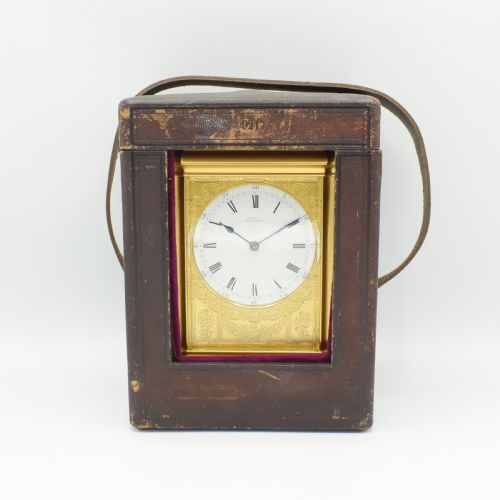
Original leather outer cases, often called travelling cases with sliding viewing windows, protected the delicate brass and gilt finish during transit. They preserve the surface condition and indicate that the timepiece travelled with its owner.
Finding a piece with its original fitted case is uncommon and sought after by collectors.
How do you date a carriage clock?
Dating relies on stylistic clues such as case shape, dial decoration, escapement type, and maker signatures recorded in movement archives. Plain gorge cases often point to the mid-nineteenth century, while more ornate engraved examples frequently align with later decades.
Serial numbers stamped on the backplate can also help narrow down the production period.