


Antique Carriage Clock Case
When you seek an antique carriage clock case, you are looking at nineteenth and early twentieth century brass, gilt brass, and leather housings designed for portable timekeeping.
Antique Carriage Clock Case
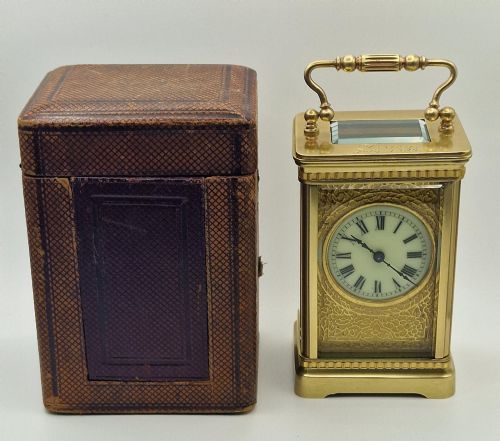
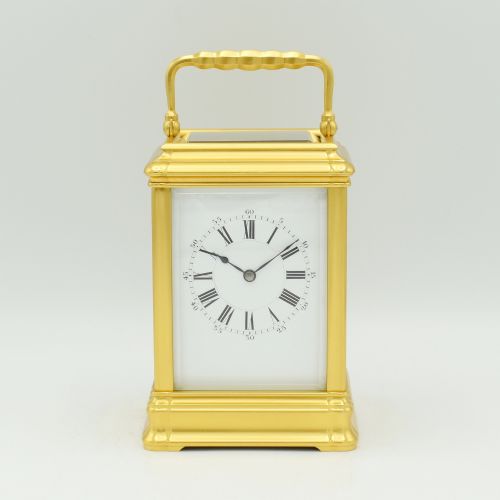
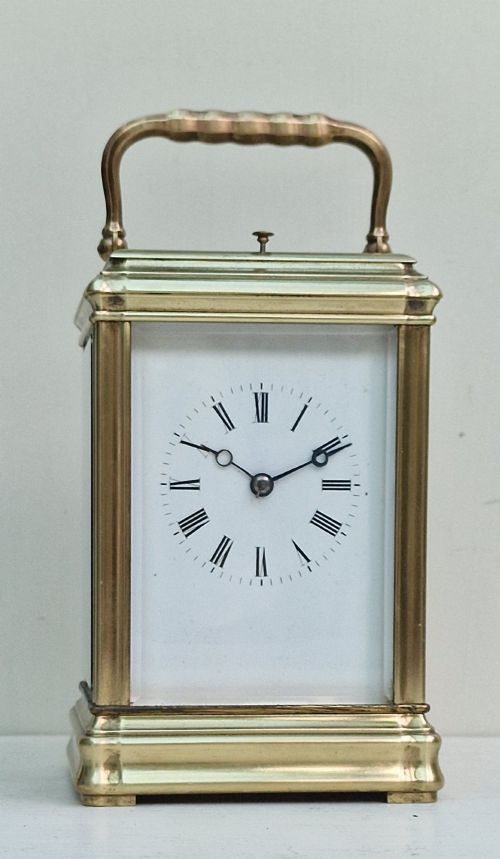
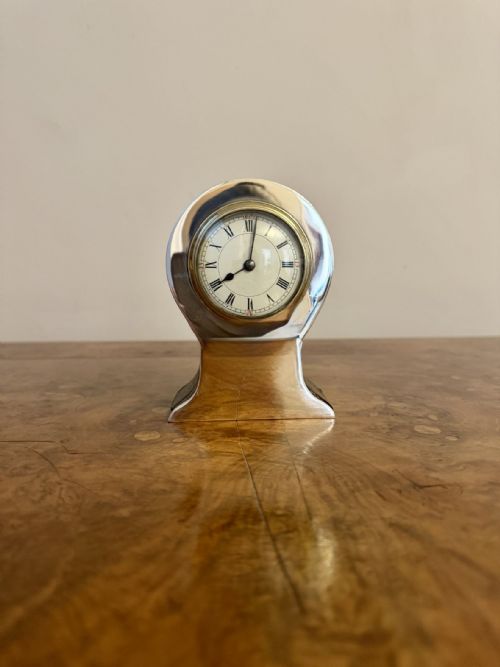
An antique carriage clock case is the protective and decorative housing built to enclose portable timepieces used by travellers during the nineteenth and early twentieth centuries. These housings appear frequently in brass, gilt brass, and silver, often accompanied by original leather travel cases.
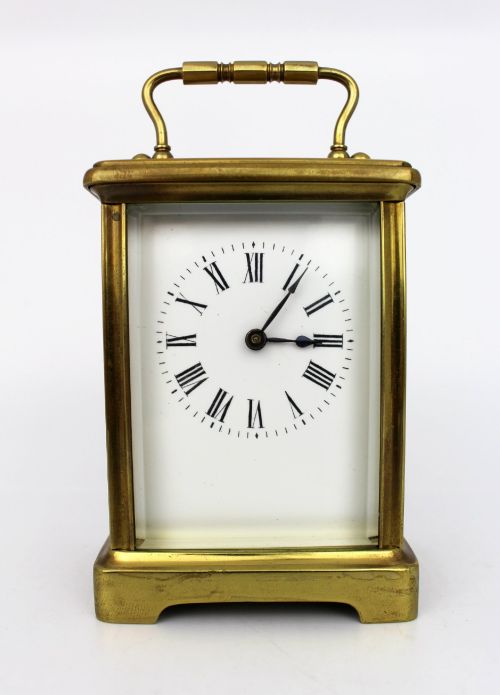
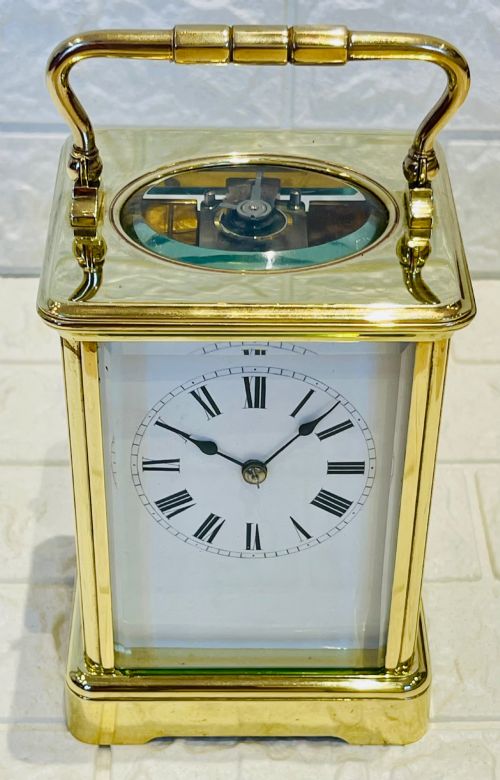
The styles span French nineteenth century designs, Victorian productions, and Edwardian pieces, featuring distinct forms such as gorge cases, doucine cases, and four-glass enclosures. Many incorporate glass panels that allow visibility of the movement within.
Makers and retailers such as Henri Jacot, Drocourt, and Pickford of London produced these pieces during periods ranging from the eighteen-sixties to nineteen-ten. They survive both as standalone enclosures and as fitted pairs with their original travelling luggage.
How They Were Made
Metalwork forms the foundation of these pieces, utilising cast and polished brass, gilt brass, and silver, alongside steel components in the internal framing. Makers shaped these metals into heavy, architectural brass frames fitted with bevelled glass panels to protect the delicate mechanisms.
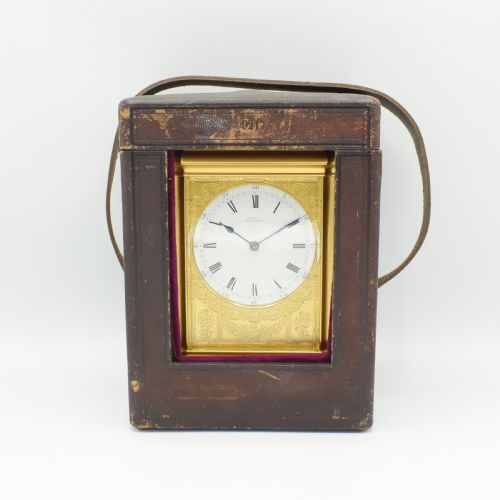
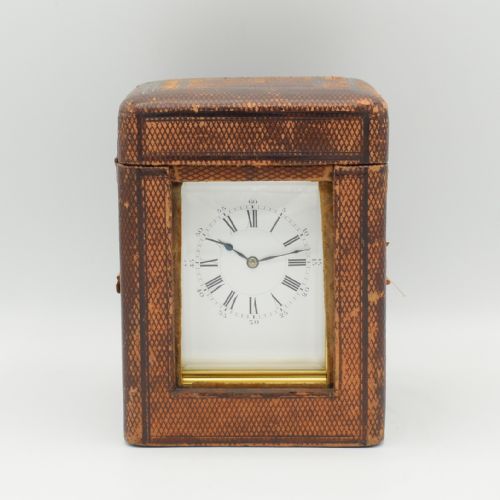
Surface ornamentation involved hand engraving, parcel gilding, and enamel panel insertion, creating detailed floral or geometric patterns across the metal frames. Leather was employed for outer travel cases, often lined with velvet or silk to cushion the brass housing during transit.
Listings feature nineteenth and early twentieth century pieces in brass, gilt brass, silver, and leather, spanning Victorian and Edwardian periods.
What Varies in Quality
The standard of execution in the metalwork and engraving defines the upper tier of these pieces, separating standard production models from workshop-signed examples. Deep, crisp hand engraving across a heavy gilt brass frame indicates superior craftsmanship compared to cast pieces with soft or shallow detail.
The survival of original elements such as matching leather travel cases, winding keys, and enamel dial panels elevates a piece. Complete survival of the original gilding and undamaged bevelled glass panes distinguishes the finest examples from those with replacement components or worn surfaces.
Henri Jacot·Drocourt·Pickford of London·Antoine Redier·Margaine·Samuel Marti·Paul Garnier
The Antique Carriage Clock Case Glossary
- Gorge case
- A distinct rectangular brass carriage clock case style characterised by stepped mouldings to the top and bottom plates and a sturdy handle above.
- Doucine case
- A case profile featuring concave, sweeping curves along the vertical pillars, popular in French carriage clock design during the nineteenth century.
- Four glass
- A style of mantel or carriage clock case featuring glass panels on all four sides and the top, allowing full visibility of the movement.
- Gilt brass
- Brass coated with a thin layer of gold or gold-coloured alloy to impart a bright, reflective finish that resists tarnishing.
- Travel case
- A fitted outer protective container, typically made of leather with a velvet or silk lining, designed to shield the clock during journeys.
Antique Carriage Clock Case: Frequently Asked Questions
What is a gorge case?
A gorge case is a classic rectangular brass housing style defined by stepped mouldings at the top and bottom frames, topped with a sturdy swinging handle.
This form was widely utilised by nineteenth century French makers and remains one of the most recognisable silhouettes encountered in portable timepieces.
Why did they have travel cases?
Original leather travel cases were constructed to protect the heavy brass clock housings and their delicate internal movements from the bumps and knocks of nineteenth century carriage journeys.
These outer containers were typically lined with velvet or silk and fitted with openings for the winding key, allowing transport without removing the clock.
How do I identify French pieces?
French carriage clock cases from the nineteenth century are frequently identified by specific case geometries like the doucine or gorge profile, alongside maker signatures stamped on the backplate.
Stylistic markers such as finely engraved gilt brass frames and accompanying numbered keys further point towards Parisian workshops of the period.
What materials were used?
The primary structural material is heavy cast brass, often finished with fire gilding or gold plating to create a bright surface. Bevelled glass panels are set into the sides and top, while outer travel cases are fashioned from leather with textile linings.