


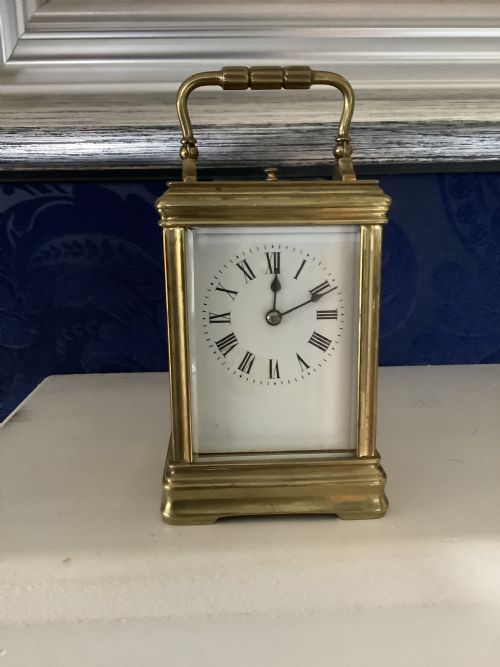


Cased Miniature Carriage Clock
A cased miniature carriage clock is a portable timepiece housed in a protective travelling case, combining precision mechanics with decorative cabinet work.
Cased Miniature Carriage Clock
When you search for a cased miniature carriage clock, you are looking at small portable timepieces designed for travel or boudoir use, originating primarily from the nineteenth and early twentieth centuries. These diminutive clocks measure just a few inches high and frequently retain their original fitted leather or travelling cases.
The versions you are most likely to meet on this page belong to the Victorian and Edwardian periods, with French examples featuring prominently alongside British pieces. Styles range from plain brass frames to fully engraved gilt brass and silver cases with floral enamel details.
Carriage clocks of this scale often include eight-day movements or alarm functions, reflecting the high standards of nineteenth-century horology packed into a compact form. The survival of an original case alongside the clock adds considerable interest for collectors of the period.
How they were made
These clocks were constructed using cast and polished brass or sterling silver frameworks glazed with bevelled glass panels to reveal the escapement and gear train within. Metalwork techniques included chasing, engraving, and gilding to decorate the exterior surfaces of the brass or silver frames.
Dials were frequently executed in white enamel with delicate painted numerals, while more decorative examples utilised guilloche enamel or floral motifs across the silver bodies. Travelling cases were fashioned from sturdy leather fitted tightly to the contours of each individual clock.
Some tiny travelling clocks measure under three inches high, ready to be packed into a trunk for a Victorian railway journey.
What varies in quality
The distinction between standard production and superior quality lies in the depth and crispness of the hand-chased or engraved decoration across the gilt brass and silver cases. Clocks featuring fully engraved frames or complex enamelling demand greater skill from the maker than plain brass housings.
The survival and original condition of the accompanying travelling case also influence the overall character of the piece, as fitted cases protect the delicate glass and metalwork over generations. Movement complexity, such as the inclusion of an alarm or an eight-day duration, further separates basic timepieces from higher-grade examples.
Richard co
The Cased Miniature Carriage Clock Glossary
- Carriage clock
- A small spring-driven timepiece designed for travel during the nineteenth century. These clocks typically feature a rectangular brass or silver case with glass panels.
- Guilloche enamel
- A decorative technique involving precise mechanical patterns engraved beneath a translucent layer of enamel. It adds depth and colour to silver carriage clock cases.
- Gilt brass
- Brass coated with a thin layer of gold to provide a rich, warm surface finish. This material was widely used on French carriage clocks of the nineteenth century.
- Boudoir clock
- A small decorative timepiece intended for private rooms rather than public spaces. These often incorporate finer silver or enamel work than standard travelling clocks.
- Escapement
- The internal mechanism that controls the release of power in a clock and maintains the swing of the balance wheel. Visible glass panels on carriage clocks allow this mechanism to be seen.
Cased Miniature Carriage Clock: Frequently Asked Questions
What is a cased miniature carriage clock?
A cased miniature carriage clock is a portable timepiece built on a small scale, usually housed in its own protective leather travelling case. These pieces were designed for personal travel or domestic use in the nineteenth and early twentieth centuries.
They combine intricate mechanical movements with decorative metal cases made from brass, gilt brass, or silver. The inclusion of glass panels allows the internal escapement to remain visible while protecting the delicate gears.
How do I date a carriage clock?
Dating these clocks involves examining the materials, decorative styles, and any maker signatures recorded on the movement or dial. Nineteenth-century examples often feature heavier brass framing, whilst Edwardian pieces may show lighter silver and enamel work.
The presence of an original leather travelling case also helps establish the period of use. Comparing the engraving style and dial layout to dated examples provides a reliable guide to origin.
Where were carriage clocks made?
The majority of miniature carriage clocks from this era originated in France, particularly in Paris, alongside contributions from British makers. French workshops dominated the production of gilt brass and engraved timepieces during the nineteenth century.
British makers also produced and retailed high-quality silver boudoir clocks and travelling timepieces. Imported French movements were frequently encased and sold by British firms.
How should I care for my clock?
Careful handling and stable environmental conditions preserve both the exterior metalwork and the internal mechanical movement. Keeping the clock in its original travelling case when moving it prevents accidental damage to the glass panels.
Professional servicing by a qualified horologist ensures the brass gears and escapement continue to function correctly. Avoid using harsh chemical polishes on gilt brass or silver surfaces to protect the original finish.