





Victorian Footstool Box
These victorian footstool box pieces combine seating and concealed storage, offering a practical antique solution for modern rooms.
Victorian Footstool Box
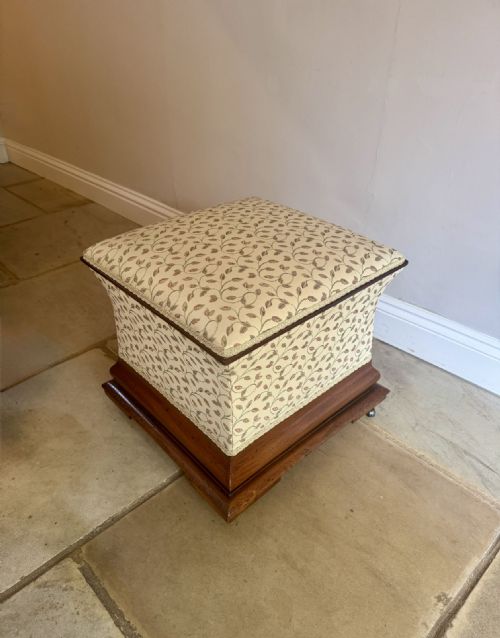
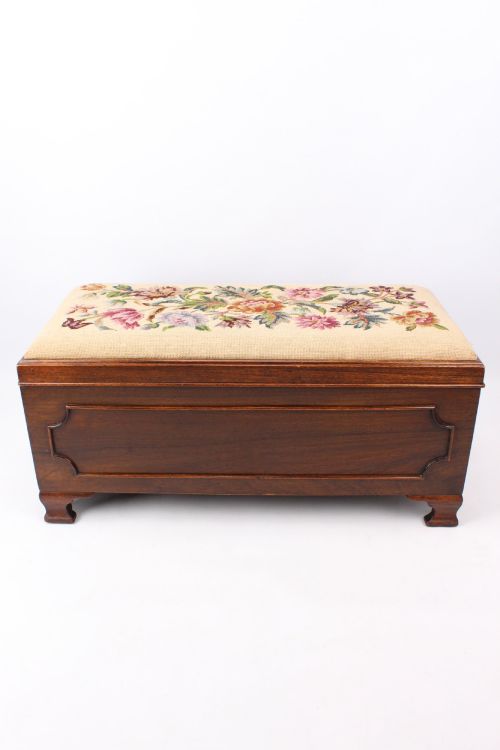
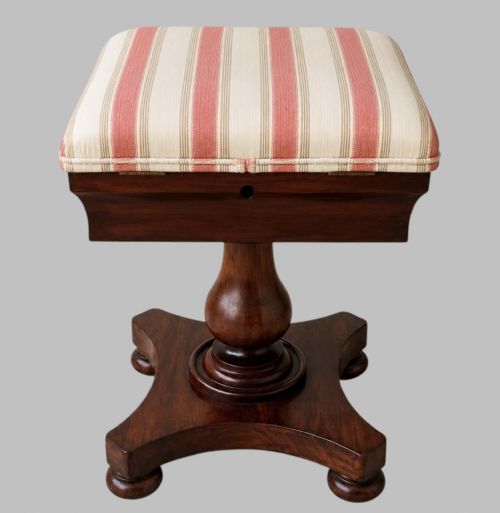
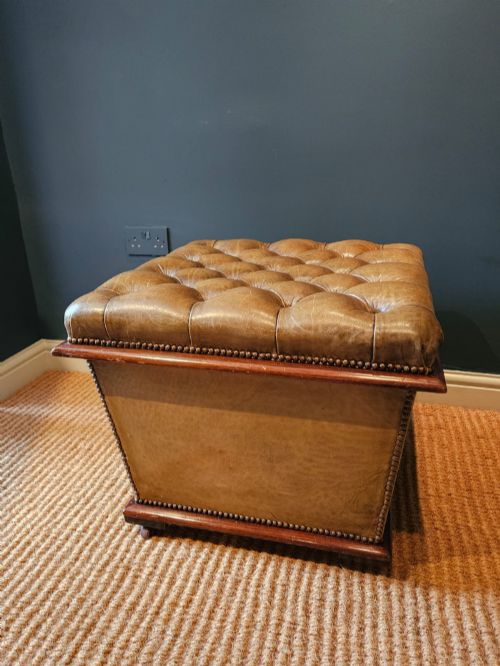
A victorian footstool box provides an upholstered seat above a compartment for storage or sewing implements. The pieces appearing here span the nineteenth century, including Regency and William IV iterations alongside standard Victorian examples.
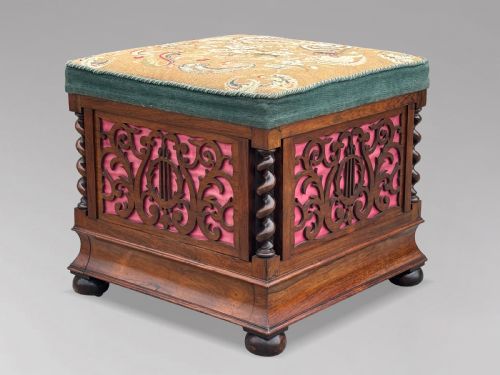
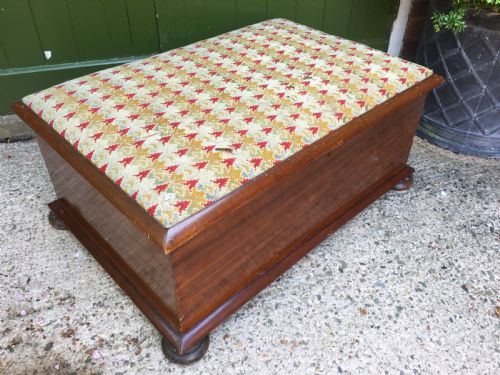
Most entries function as ottomans, blanket boxes, or work tables with hinged lids. Mahogany and rosewood form the primary wooden frames, while various textiles cover the seats.
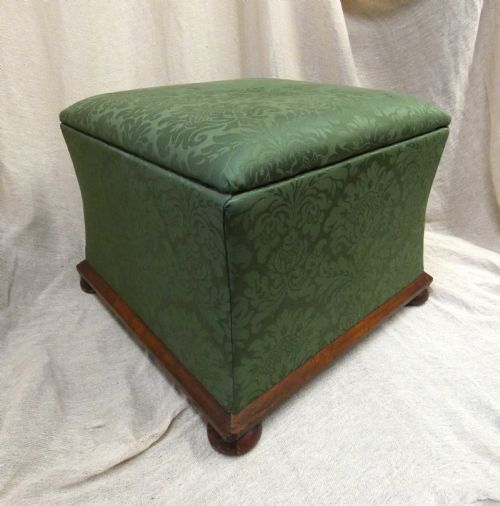
Makers and workshops range from country house makers to Liberty fabric applications. Buyers frequently encounter rectangular and waisted formats designed to serve dual purposes in a drawing room or bedroom.
Materials and construction
Makers utilised dense timbers such as mahogany, rosewood, walnut, and oak to construct the structural boxes and frames. These woods were often polished to a deep lustre.
Upholstery techniques involved traditional stuffing methods beneath textile coverings like leather, velvet, wool, and needlework. Brass hardware frequently secured the hinges and feet.
Victorian Footstool Box Retail Price Guide 2026
Typical asking prices for victorian footstool box among the pieces listed under this phrase on Sellingantiques today, from the lower quarter to the upper quarter. They describe what is for sale here now, not the wider market.
A sewing box stool ensures your hidden mending pile remains entirely outrunning of inquisitive guests.
Differences in quality
The sophistication of the timber grain and the complexity of the box joinery separate standard examples from finer pieces. Rosewood and mahogany frames with shaped concave sides or intricate turned supports indicate higher workshop standards.
The execution of the top upholstery, whether needlework, gros-point, or hand-dyed leather, impacts the overall integrity. Original fabric finishes and robust internal compartment construction elevate the standing of a piece.
Hallett & Sons
The Victorian Footstool Box Glossary
- Ottoman
- An upholstered seat or footstool without a back or arms, typically featuring a hinged lid that opens to reveal storage space inside.
- Gros-point
- A heavy woollen stitch used in needlework tapestry, creating durable textured patterns often found on nineteenth century seat covers.
- Waisted
- A description for furniture where the sides curve inward toward the centre, creating a narrower profile.
- Regency
- An architectural and design style spanning the early nineteenth century, characterised by classical restraint and elegant proportions.
Victorian Footstool Box: Frequently Asked Questions
What is a victorian footstool box used for?
These pieces served multiple functions in nineteenth-century interiors, acting as comfortable footrests while concealing internal space for blankets, sewing gear, or household items.
The lidded design allowed owners to keep rooms tidy without sacrificing seating options.
How do I identify a Regency piece?
Regency items generally pre-date the Victorian era, displaying neoclassical influences and lighter wood tones or simpler, refined lines.
They often incorporate rosewood or mahogany with understated brass mounts rather than heavy ornamentation.
Are the upholstery fabrics original?
Some pieces retain period coverings such as gros-point needlework or hand-dyed leather, though many have been reupholstered over time to ensure structural integrity.
Listings specify details like Liberty fabric or original needlework when documentation or physical evidence supports it.
Where should I place an ottoman box?
These boxes suit living rooms as coffee table alternatives or footrests, and bedrooms at the foot of a bed for extra storage.
The compact footprint allows them to fit easily into smaller spaces while providing hidden utility.