




Victorian Flower Ring
A victorian flower ring gathers clustered gems into petal shapes, offering a tangible piece of nineteenth-century sentiment for daily wear.
Victorian Flower Ring
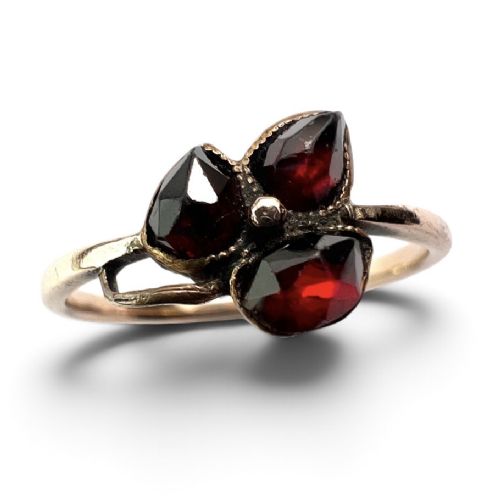
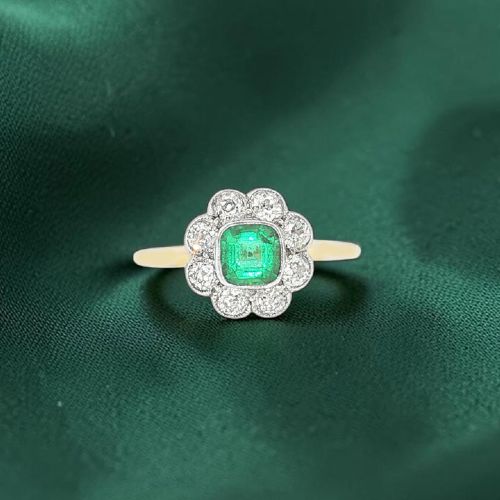
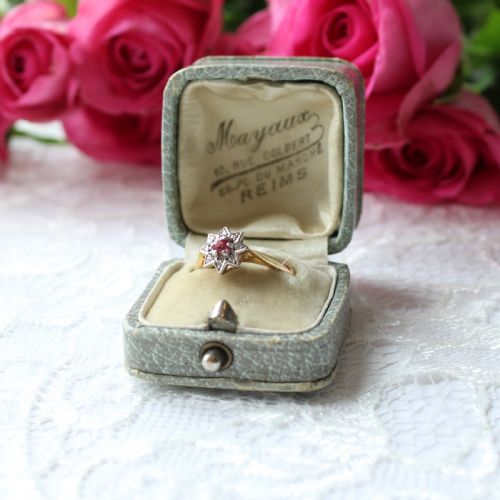
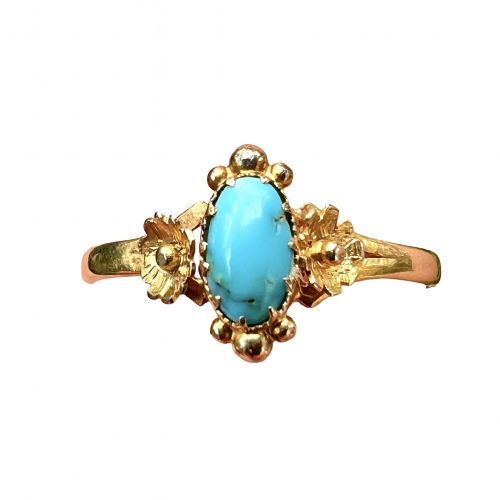
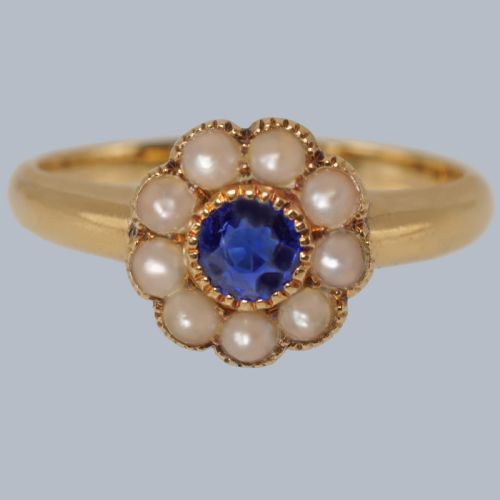
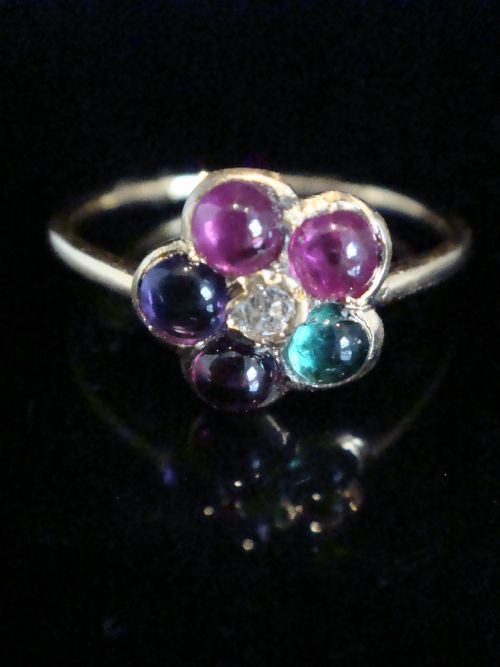
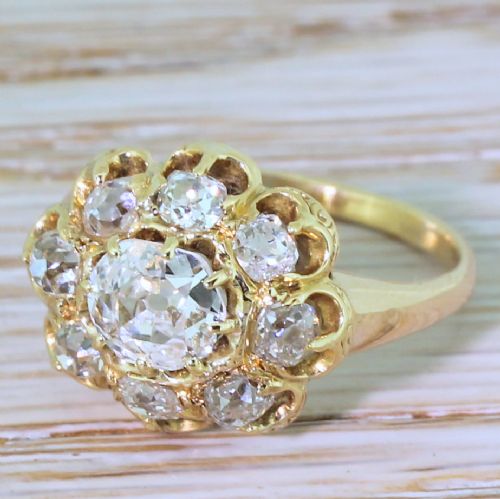
A victorian flower ring is typically formed as a cluster of gemstones arranged to resemble a botanical bloom, with a central stone encircled by smaller gems acting as petals. The selections found here include turquoise, garnet, pearl, ruby, emerald, sapphire, and diamond set in yellow gold.
Beyond finger rings, the broader selection incorporates posy holders, earrings, and oil paintings depicting floral themes from the nineteenth century. The core focus remains on cluster rings that utilise traditional floral geometry.
Most examples originate from the Victorian period, though Edwardian and mid-century interpretations also appear alongside pieces echoing earlier designs. These items cross both fine jewellery and decorative table objects.
How they were made
Goldsmiths worked primarily in various karats of yellow gold, alongside silver settings for specific diamond clusters to enhance stone brilliance. Stones were predominantly hand-cut in forms such as rose-cut, old mine-cut, and old European cut.
Gemstones like turquoise, pearl, garnet, and sapphire were secured in collet or claw settings arranged symmetrically to form naturalistic petals around a distinct heart or centre stone.
Tiny seed pearls curl into microscopic petals, proving that Victorian artisans could garden in miniature.
What varies in quality
Quality rests in the harmony of the stone grouping and the integrity of the gold work, where finer pieces display precise symmetry in the petal arrangement and well-matched natural stones. The selection of cut for diamonds and the depth of colour in rubies, sapphires, or emeralds dictate the visual impact.
Wear across the settings and the retention of original pearls or fragile turquoise cabochons distinguish untouched survivals from heavily altered examples.
The Victorian Flower Ring Glossary
- Cluster ring
- A ring featuring a central gemstone surrounded by a border of smaller stones. This layout forms the structural basis of most floral designs.
- Old mine cut
- An early hand-cut diamond shape with a square or cushion outline, high crown, and small table facet. These stones display deep facets characteristic of nineteenth-century work.
- Rose-cut
- A gemstone cut characterised by a flat base and a domed crown covered in triangular facets. It imparts a soft, translucent gleam rather than modern brilliance.
- Cabochon
- A gemstone shaped and polished with a smooth convex surface rather than faceted. This cut is common for opaque stones such as turquoise and garnet.
- Toi et Moi
- French for you and me, denoting a ring design featuring two main stones side by side. It represents a union in antique jewellery.
Victorian Flower Ring: Frequently Asked Questions
What is a victorian flower ring?
A victorian flower ring is a piece of antique jewellery featuring gemstones clustered into a floral motif. These designs emulate natural blossoms through concentric circles of stones.
Most examples employ a central diamond, ruby, or sapphire encircled by pearls, turquoise, or garnets acting as petals.
How do I date a flower ring?
Dating relies on hallmarks, gold karats, and stone-cutting techniques. Nineteenth-century pieces often utilise lower gold karats like 15ct alongside hand-cut stones such as rose-cuts.
Later Edwardian or twentieth-century revivals exhibit different claw structures and platinum integration alongside old-cut diamonds.
Are pearls fragile in old rings?
Natural pearls used in antique clusters can be sensitive to moisture, cosmetics, and harsh cleaning agents over time. Care involves avoiding immersion in water and storing them safely away from harder gems.
Many surviving rings retain their original pearls, testifying to careful past ownership.
What stones represent flower petals?
Turquoise, seed pearls, and small garnets frequently serve as petals due to their colour and scale. Sapphires and rubies also form colourful petal borders around central diamonds.
Combinations often followed sentimental colour codes popular during the Victorian era.