




Victorian Floral Canvas
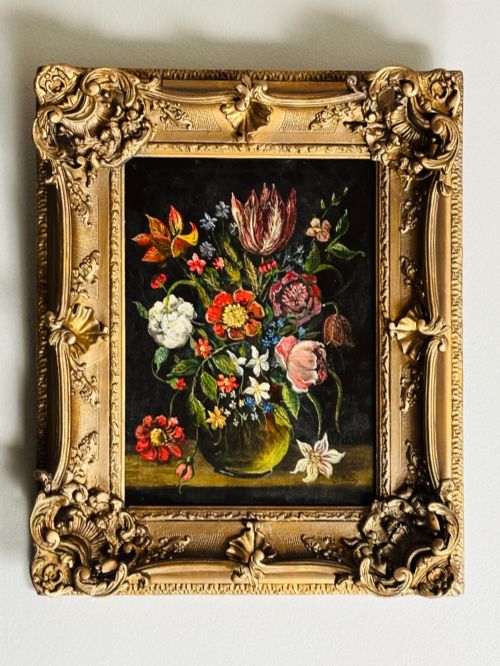
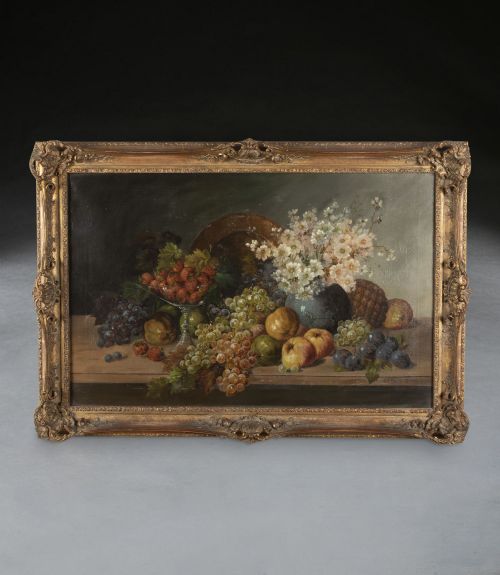
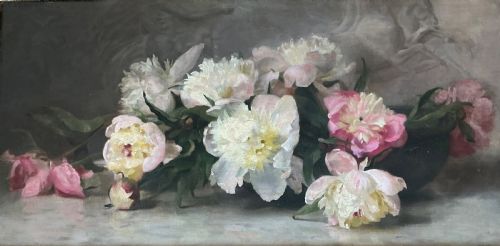
Victorian floral canvas works bring botanical studies and rich still life compositions into a room, offering the dense colour of nineteenth-century oil painting.
Victorian Floral Canvas
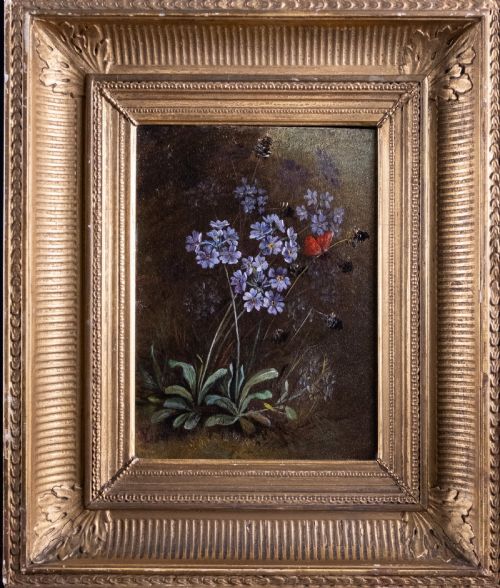
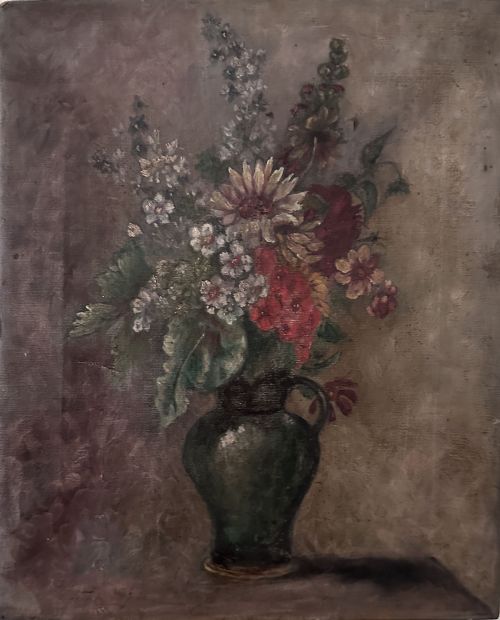
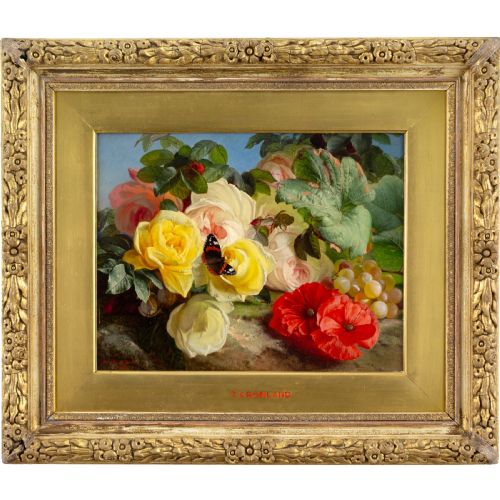
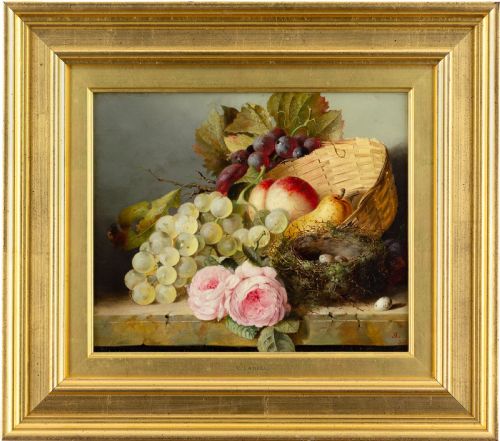
A victorian floral canvas comprises nineteenth-century oil paintings and room dividers depicting natural subjects, primarily still life studies of garden flowers, roses and fruit. These works originate from British, European and American hands, spanning the Victorian and Edwardian periods up to the mid-twentieth century.
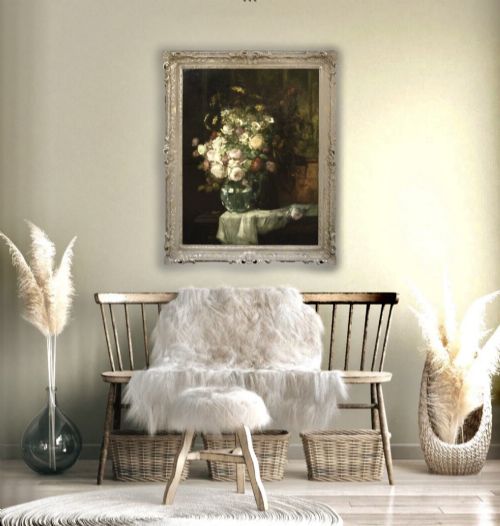
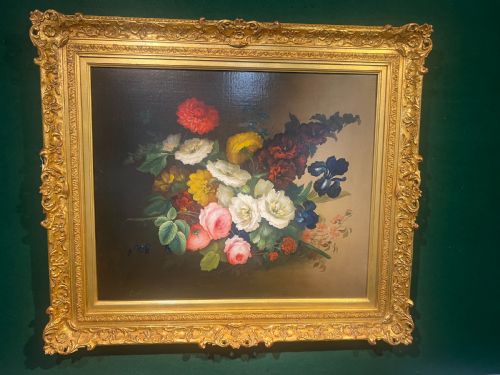
The buyer meets traditional framed oil paintings alongside larger decorative folding screens and painted panels. Most pieces focus on botanical arrangements in vases or baskets, occasionally accompanied by butterflies, birds' nests or garden backdrops.
The selection extends from intimate cabinet pieces to large country-house folding screens. Subjects range from strict botanical realism to looser impressionistic brushwork.
Materials and Technique
Artists painted primarily with oil paint applied to stretched woven canvas, building up rich layers of pigment to capture the texture of petals and leaves. These canvases are housed within wooden frames finished with gesso and gold leaf or giltwood.
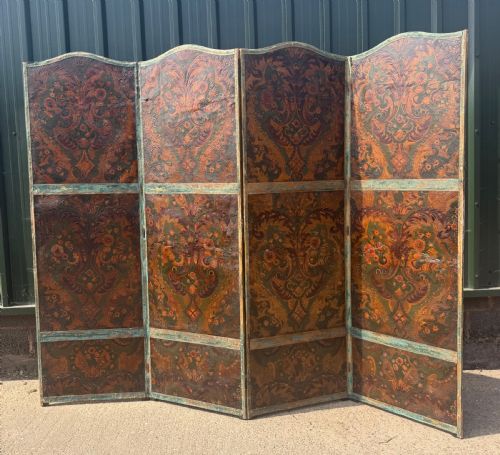
Larger decorative pieces incorporate multiple hinged panels of canvas over wood frames, often utilising polychrome decoration to imitate older Dutch tooled leather surfaces. The physical construction relies on traditional joinery for the wooden stretchers and screen frames.
Victorian Floral Canvas Retail Price Guide 2026
Typical asking prices for victorian floral canvas among the pieces listed under this phrase on Sellingantiques today, from the lower quarter to the upper quarter. They describe what is for sale here now, not the wider market.
Several floral canvases feature unexpected garden visitors, hiding caterpillars, bumblebees and stray butterflies among the rose petals.
Quality and Distinction
The distinction between ordinary decorative works and superior examples rests upon the dexterity of the brushwork and the naturalism of the botanical arrangement. Finer pieces demonstrate precise control over light, shadow and colour harmonies within the petals and foliage.
The integrity of the original canvas and the preservation of the paint surface dictate the standing of a piece. Finer works retain their original gilded wood frames and show minimal intervention, whereas lesser examples display heavy surface craquelure or later overpainting.
Jean Baptiste Robie·Theude Gronland·Edward Ladell·Edwin Steele·Konstantin Stoitzner·Gertrude Hayes·Thomas Bromley Blacklock·Sir George Reid·Jane Maria Bowkett·James Stuart Park·Emily Selinger·Edgar Bundy·Katherine Bourne·Ralph Hedley·Oliver Clare
The Victorian Floral Canvas Glossary
- Canvas
- A heavy woven fabric stretched across a wooden frame to serve as a support for oil painting. It provides the foundational texture visible beneath the layers of pigment.
- Gesso
- A plaster-like mixture applied to wooden frames as a smooth base before gilding. It allows for crisp carved details to be built up around the edge of the canvas.
- Impressionism
- A style of painting emphasising loose brushstrokes and the play of natural light over fine detail. It appears in later nineteenth and early twentieth-century works.
- Still life
- An artwork depicting inanimate subject matter, typically commonplace objects such as cut flowers, fruit and vessels. These compositions form the core of floral canvas studies.
Victorian Floral Canvas: Frequently Asked Questions
What is a victorian floral canvas?
A victorian floral canvas is an original oil painting or painted screen from the nineteenth or early twentieth century depicting flowers, plants and garden scenes.
These works range from small intimate still life studies to large decorative room dividers created by artists across Europe.
How do I date a floral canvas?
Dating relies on stylistic clues, framing materials and artist signatures recorded on the work. Realist pieces usually point to the mid-nineteenth century, while looser brushwork often indicates the Edwardian era.
Examine the back of the stretcher bars and the canvas weave for further indicators of age.
Where were these paintings displayed?
These works hung in nineteenth-century drawing rooms, parlours and dining spaces as a way to bring botanical specimens indoors. Larger painted screens functioned as room dividers in country houses.
Today they suit both traditional period interiors and modern spaces requiring rich colour.
How should I care for an oil painting on canvas?
Keep the canvas away from direct sunlight and heavy moisture to protect the oil paint and underlying organic fibres. Dust the surface gently with a soft, dry brush without applying pressure.
Ensure the room maintains a stable temperature to prevent the wood frame and canvas from warping.