






Dark Floral Wall Art
Dark floral wall art brings deep mood and botanical detail into a room through centuries of oil paintings and carved panels.
Dark Floral Wall Art
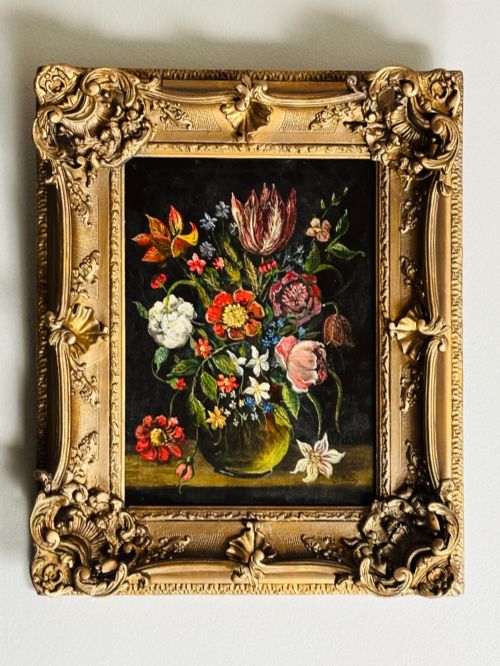
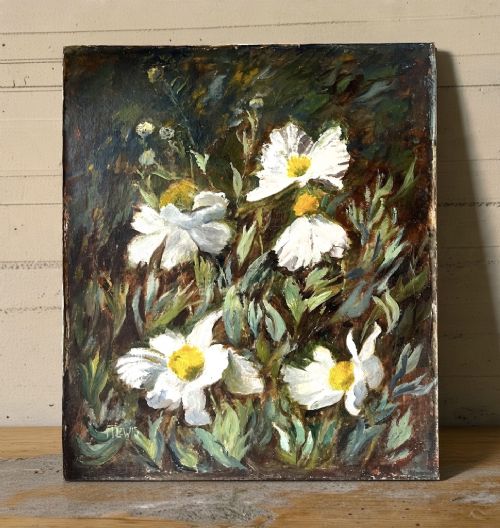
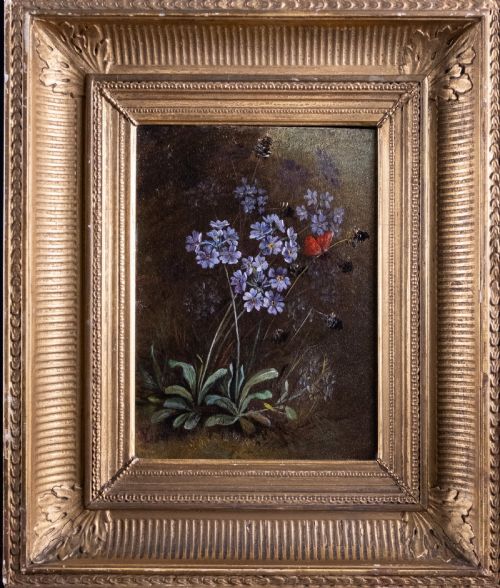
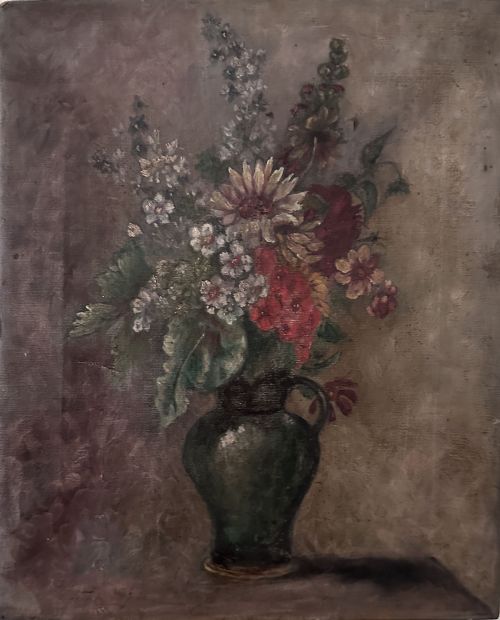
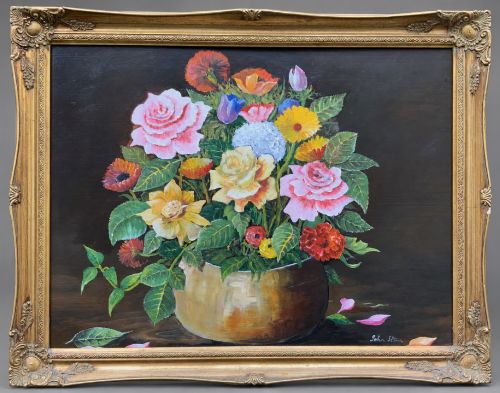
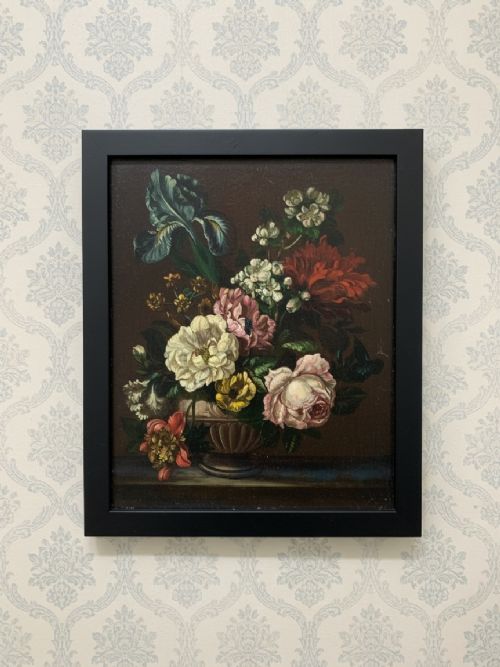
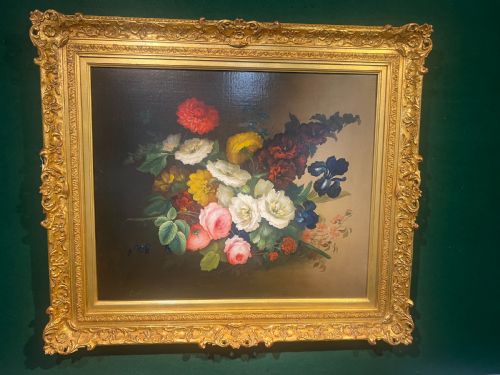
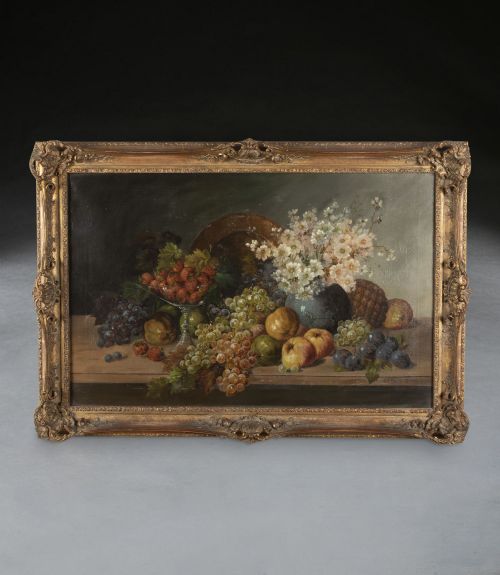
Dark floral wall art primarily takes the form of oil paintings on canvas and panel, capturing blooms against moody, shadowed backgrounds. These pieces span from the eighteenth century through the mid-twentieth century, encompassing British, French, and Dutch schools of still life painting. Buyers frequently encounter works depicting roses, poppies, and summer flowers arranged in vases or baskets.
Alongside traditional paintings, this category includes carved wooden panels and framed needlework pictures with botanical motifs. Nineteenth-century examples often combine deep oak frames with detailed floral subjects, creating a heavy, textured presence on the wall.
Materials and construction
Artists built these works using oil paint applied to stretched canvas, wooden panels, or paper, often layered over gesso preparations to create depth in the dark backgrounds. Canvases are frequently housed in heavy gilt or wood frames that complement the sombre palette of the subjects.
Carved pieces utilise dense hardwoods such as oak, shaped into panels or wall cabinets with deep relief work. Needlework examples employ textiles framed behind glass, while embroidered textiles on velvet introduce varied tactile surfaces.
Dark Floral Wall Art Retail Price Guide 2026
Typical asking prices for dark floral wall art among the pieces listed under this phrase on Sellingantiques today, from the lower quarter to the upper quarter. They describe what is for sale here now, not the wider market.
Current listings range from eighteenth-century oil paintings to mid-twentieth-century British still lifes on canvas and wood.
Judging quality in dark floral pieces
Quality rests in the handling of light and shadow, where superior artists manage to make petals glow against impenetrable dark backgrounds. Weaker works flatten the composition, losing the tension between the bright floral subject and the recessive ground.
In carved and textile pieces, the depth of relief and precision of botanical forms determine the standard. Finer execution shows in the naturalistic rendering of stems and leaves rather than stiff, repeating patterns.
Jean Baptiste Robie·John Stone·Edwin Steele·Owen Bowen·James Stuart Park·Margaret Evangeline Wilson·William Thomas Wood·Herbert Davis Richter·Terence Loudon
The Dark Floral Wall Art Glossary
- Still life
- A painting or drawing depicting inanimate subject matter, typically commonplace objects which may be either natural or man-made.
- Gesso
- A plaster mix used as a base for painting on canvas or wood panels to prepare the surface.
- Oil on panel
- A painting executed on a flat wooden board rather than stretched canvas.
- Gilt
- Covered thinly with gold leaf or gold paint, frequently seen on period frames.
Dark Floral Wall Art: Frequently Asked Questions
What periods do these paintings come from?
The works span from the eighteenth century up through the mid-twentieth century. Most examples cluster in the nineteenth and early twentieth centuries.
Earlier pieces often reflect Dutch and Flemish traditions, while later works show British impressionist and post-impressionist influences.
How should I hang heavy wooden panels?
Carved oak panels and framed oil paintings require secure wall anchors rated for their specific weight. Solid wood and gesso frames add considerable heft to canvas works.
Ensure fixings engage directly with wall studs or use appropriate cavity fixings for plaster walls.
Are all these pieces oil paintings?
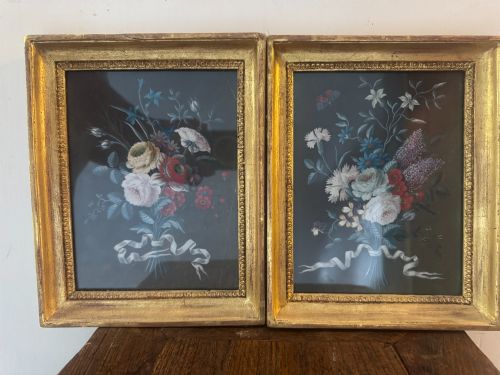
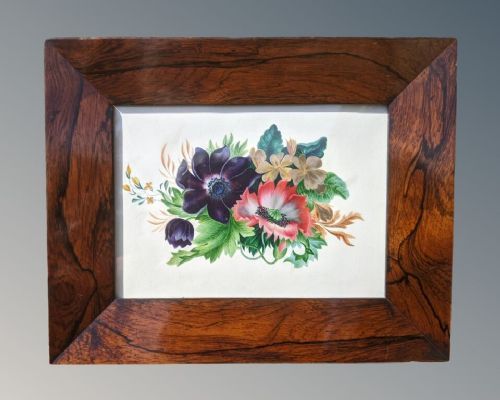
While oil on canvas and oil on panel form the majority of the selection, the category also includes gouache on paper and embroidered textiles. Carved hardwood panels represent a sculptural alternative to flat wall art.
Needlework pictures framed under glass offer another textural variation of the botanical theme.
How do I care for antique oil paintings?
Keep paintings away from direct sunlight and sources of rapid temperature change to protect the canvas and paint layers. Dust gently with a dry, soft brush without applying pressure to the surface.
Avoid using water or chemical cleaners on the paint or the gilt frames.