




Glass Vase Still Life
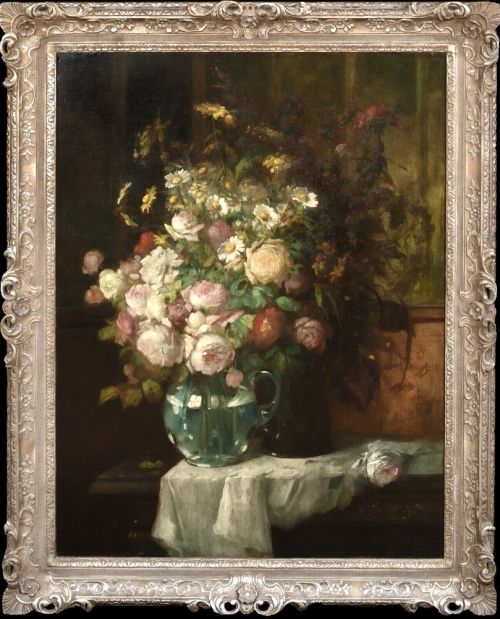
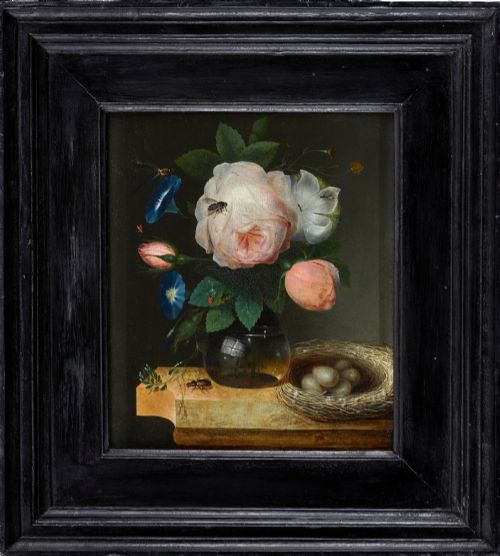
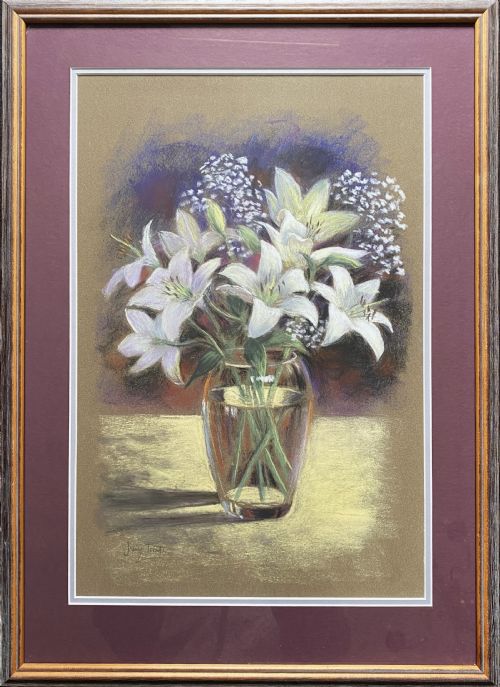
Glass vase still life works capture the delicate play of light through transparent vessels and petals across centuries of painting traditions.
Glass Vase Still Life
A glass vase still life brings together botanical studies and domestic interiors, spanning from Flemish Baroque compositions to mid-century British and European interpretations. These artworks record specific floral arrangements through the lens of various historical movements, including 19th Century Impressionism, Edwardian Realism, and Mid-Century Modernism.
Buyers examining this selection encounter diverse formats ranging from oil paintings on canvas and wood panel to delicate watercolour pigments on paper. Works rendered in tempera and pastel also appear alongside oil on board studies, framed in materials such as gilded wood, oak, and other timber frames.
The subjects focus heavily on floral displays within transparent containers, showing roses, lilies, chrysanthemums, carnations, and summer flowers. Mid-century examples and earlier 20th century pieces sit alongside 17th and 19th century canvases, offering a broad spectrum of stylistic approaches to the same domestic subject.
Materials and methods
Artists built these compositions primarily using oil paint, watercolour pigment, and tempera applied to canvas, wood panels, prepared boards, and paper supports. The handling of these media determines how the transparency of the glass vase and the texture of the petals emerge from the background.
Framing forms an integral part of the physical object, with historical pieces utilising carved and gilded wood or solid oak surrounds. These frames protect the edges of canvases and boards while providing a structured boundary for the painted domestic scene.
Listings include works executed in oil paint, watercolour pigment, tempera, and pastel across canvas, board, paper, and wood.
Assessing quality in painted studies
Quality rests upon the artist's command of light passing through transparent glass and the convincing rendering of botanical forms. Stronger works demonstrate purposeful brushwork and tonal control that distinguish the refraction in the vase from the soft edges of the flowers.
The integration of the subject with its support dictates the visual success of the piece. Works that balance the opacity of the paint with the luminosity of the underlying canvas or paper show greater depth than flatly rendered decorative studies.
Konstantin Stoitzner·Gaspar Peeter Verbruggen·William Edward Fox·Stuart Armfield·Jennifer Toombs·Owen Bowen·Terence Loudon·Charles-Gilles Dutillieu·William Greaves·Olive Higginbottom·James Stuart Park·Margaret Chapman·Franz Xaver Pieler
The Glass Vase Still Life Glossary
- Still life
- A painting or drawing depicting inanimate subject matter, typically commonplace objects such as flowers in a vessel. These arrangements allow artists to focus on light, colour, and texture.
- Tempera
- A permanent, fast-drying painting medium consisting of coloured pigment mixed with a water-soluble binder entity, usually egg yolk. It produces a flat, matte surface.
- Canvas board
- A stiff board made of paperboard or wood composite with primed canvas glued to its surface. This support offers a rigid alternative to stretched canvas.
- Flemish Baroque
- The art style associated with 17th century Flanders, known for rich detail, dramatic lighting, and naturalistic textures. Works in this tradition often feature elaborate floral arrangements.
- Impressionism
- A 19th century art movement characterised by relatively small, thin, yet visible brush strokes and an emphasis on accurate depiction of light. Painters in this style prioritised open compositions.
Glass Vase Still Life: Frequently Asked Questions
What periods do these paintings span?
The selection covers centuries of artistic production, ranging from 17th century Baroque works to mid-20th century modernist interpretations. Painters from the Edwardian era and the 19th century are also represented.
Buyers will find that each period brings distinct conventions in palette, framing, and brushwork to the depiction of flowers and glassware.
Which materials are commonly used?
Oil paint on canvas, board, and wood panel forms the majority of the works, alongside watercolour pigment on paper. Tempera and pastel also appear across mid-century examples.
Supports are frequently paired with period frames made from gilded wood, oak, or decorative timber.
How do I care for an antique painting?
Keep works out of direct sunlight and away from damp environments to protect both the paint surface and the wooden or paper supports. Stable room temperatures prevent the cracking of oils and warping of panels.
Dust frames gently with a dry cloth and avoid touching the painted surface of canvases or works on paper.
What subjects feature besides glass vases?
The primary focus remains botanical studies featuring cut flowers such as roses, lilies, chrysanthemums, carnations, and seasonal blooms. The glass vase serves as the central vessel holding the arrangement.
Backgrounds are typically simple interior settings that allow the interplay of light on petals and glass to dominate the composition.