

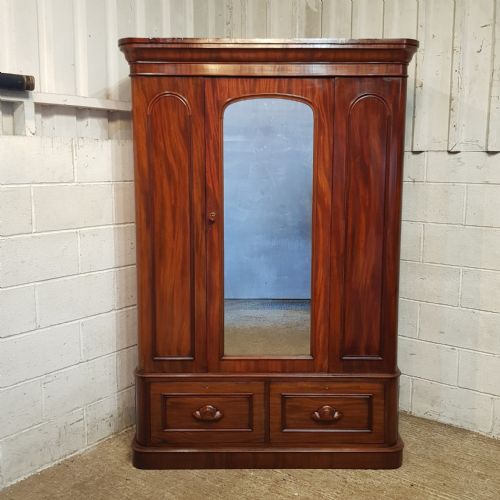
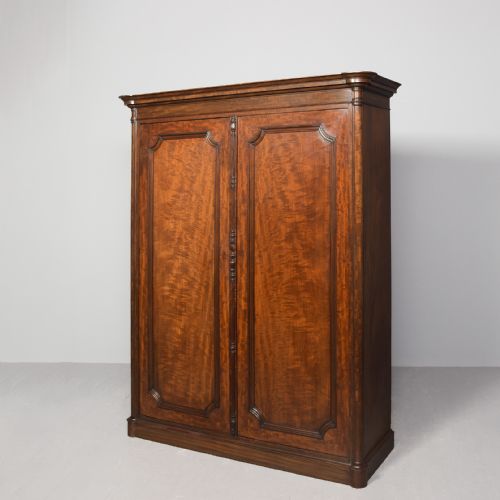

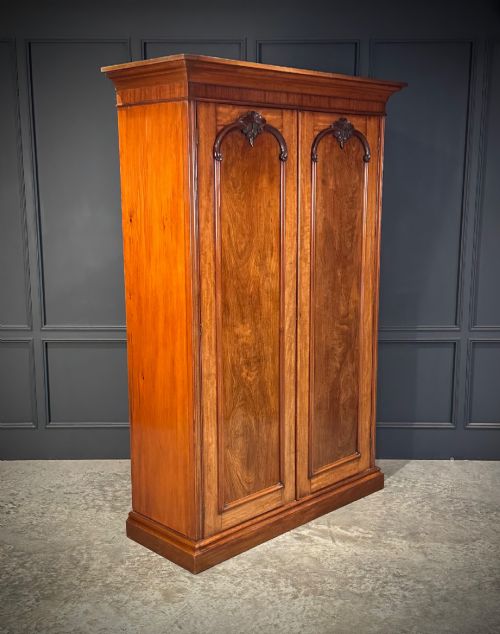
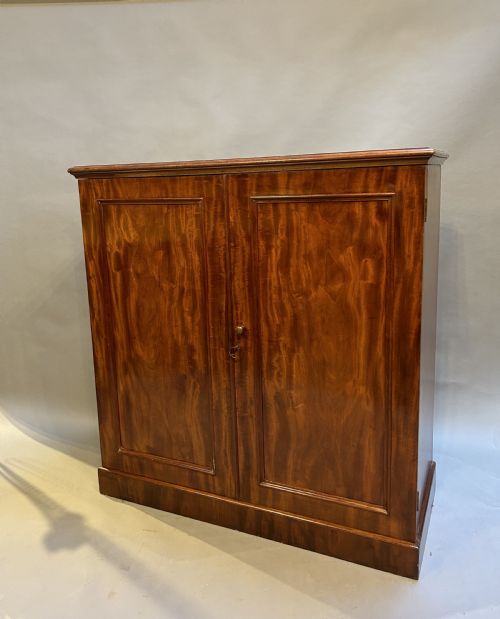
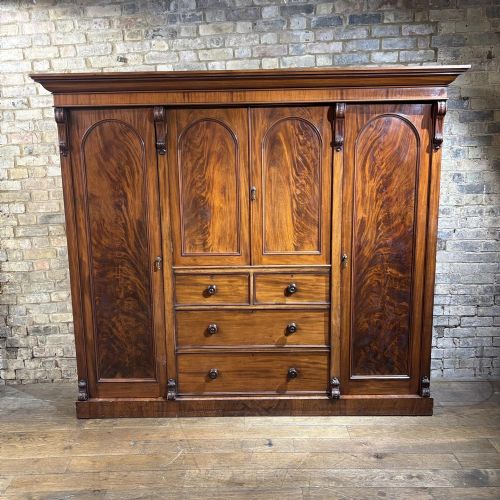


Victorian Flame Mahogany Wardrobe
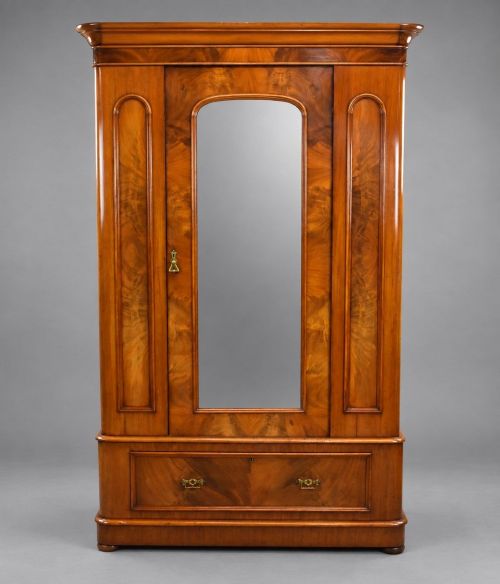
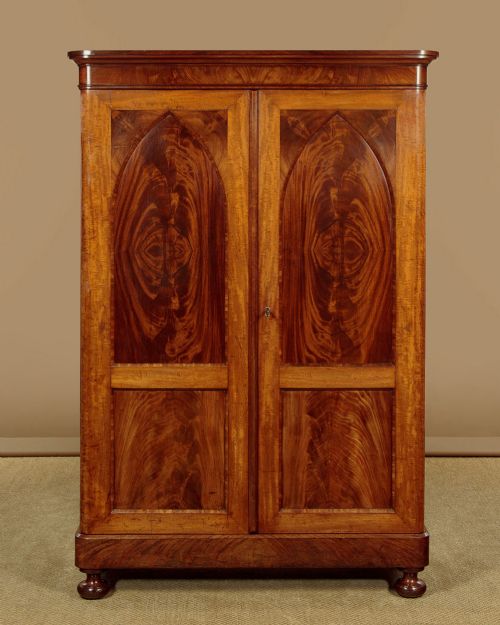
A victorian flame mahogany wardrobe offers substantial bedroom storage governed by rich, figured wood grain and nineteenth-century proportions.
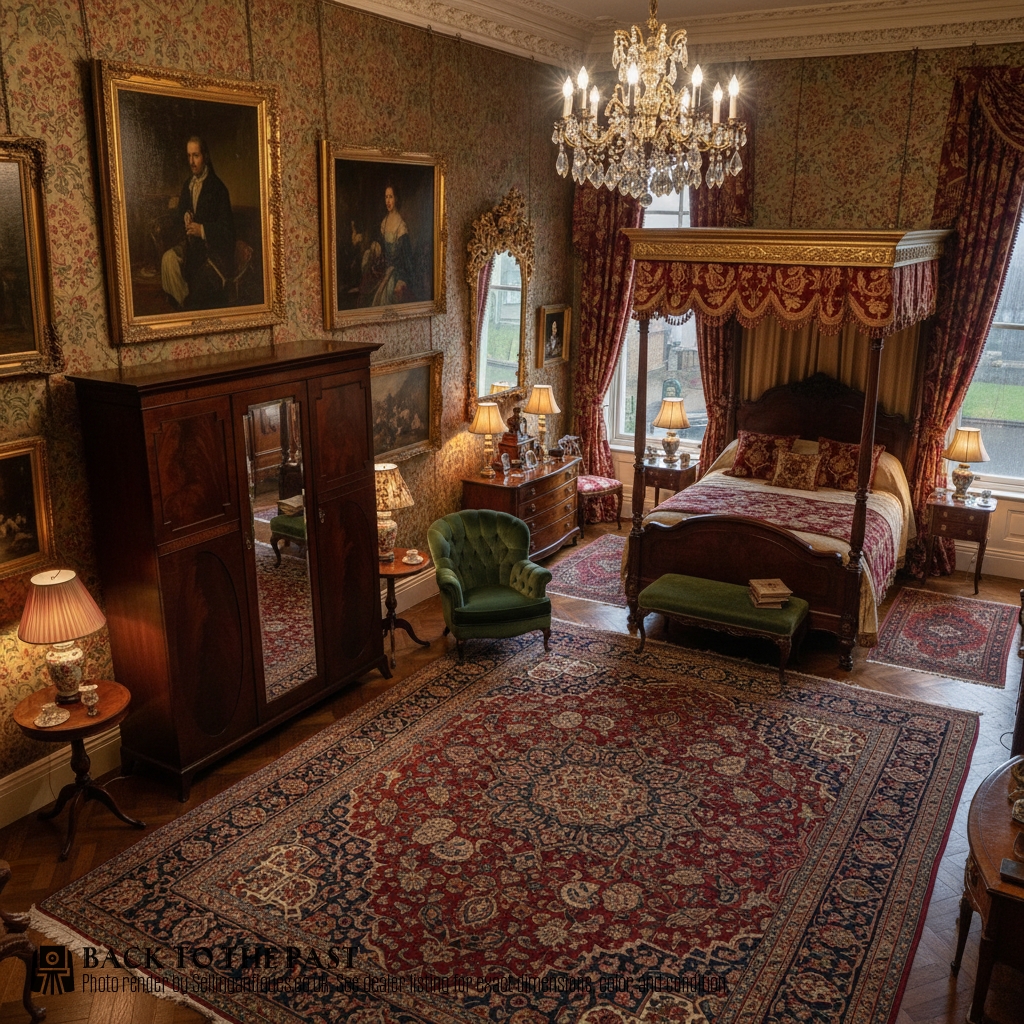
Victorian Flame Mahogany Wardrobe
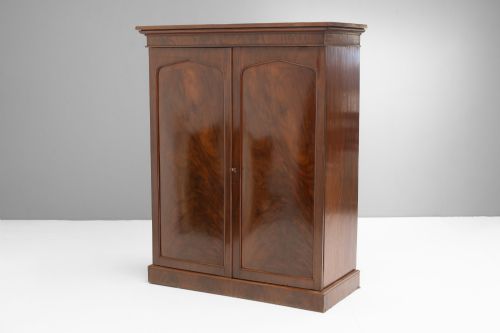
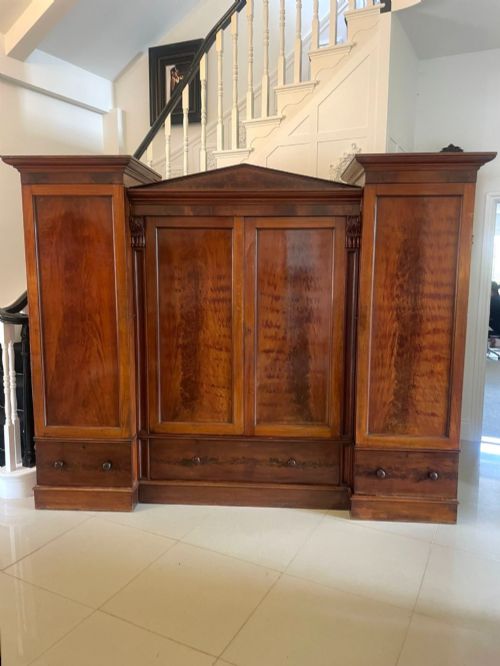
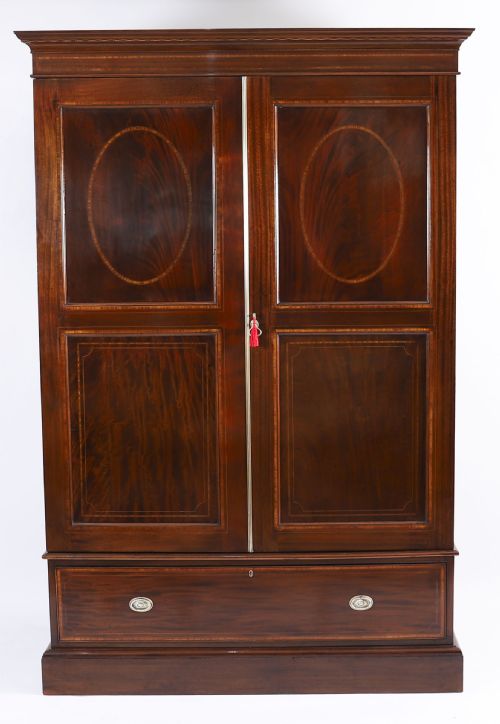
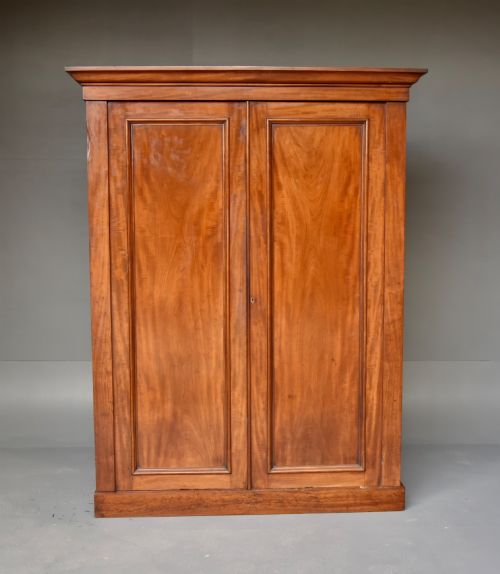
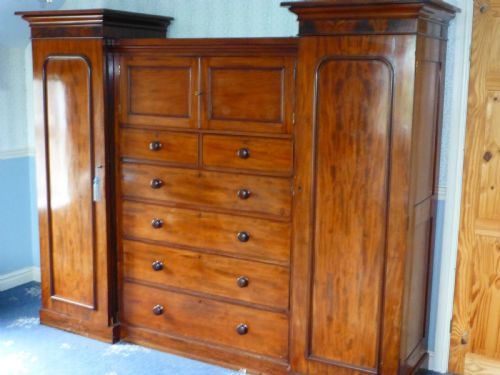
A victorian flame mahogany wardrobe is typically encountered as a double, triple, or breakfront piece spanning the nineteenth century, including William IV and Edwardian variations.
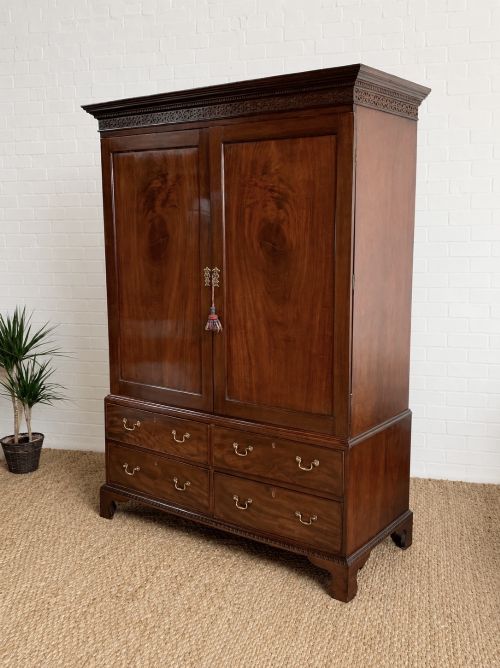
These items manifest as tall hanging cupboards, linen presses with sliding trays, or multi-section compactums designed for comprehensive garment storage.
Makers and workshops across Britain utilised dense timber to build these large architectural storage units for period domestic interiors.
Materials and Construction
Makers applied figured flame mahogany veneer over secondary woods like pine, often pairing the striking grain with solid mahogany mouldings and brass hardware.
Interiors incorporated satinwood or plain mahogany for drawer linings and sliding trays, while larger breakfront and compactum designs required modular assembly for transport.
Victorian Flame Mahogany Wardrobe Retail Price Guide 2026
Typical asking prices for victorian flame mahogany wardrobe among the pieces listed under this phrase on Sellingantiques today, from the lower quarter to the upper quarter. They describe what is for sale here now, not the wider market.
The listings demonstrate that nineteenth-century makers combined flame mahogany veneer with structural pine, brass fittings, and secondary satinwood interiors.
Judgement of Quality
Quality rests upon the symmetry and book-matching of the flame veneer across the primary doors, alongside the crispness of applied cornices and panel details.
Internal configuration also separates standard hanging cupboards from sophisticated compactum wardrobes containing fitted linen slides and graduated drawers.
maples & co·Gillows·S & H Jewell·Heals·Robert Strahan of Dublin
The Victorian Flame Mahogany Wardrobe Glossary
- Flame mahogany
- A timber veneer displaying a distinct torch-like or flame pattern derived from the branch junctions of the mahogany tree. This figured grain forms the visual centrepiece of the wardrobe doors.
- Compactum
- A fitted wardrobe combining hanging space, sliding trays, and internal drawers within a single architectural unit. It offers multi-purpose storage for various garments.
- Linen press
- A tall cupboard featuring upper sliding shelves or trays for folded textiles above a base of lower drawers. These pieces frequently pre-date or parallel standard hanging wardrobes.
- Breakfront
- A piece of furniture where the central section projects forward from the flanking outer wings. This architectural arrangement creates depth and shadow on large triple wardrobes.
- Cornice
- The decorative moulded projection running along the top of the wardrobe. Cornices range from plain classic profiles to ornate blind fretwork designs.
Victorian Flame Mahogany Wardrobe: Frequently Asked Questions
How do I dismantle a large wardrobe?
Most nineteenth-century wardrobes separate into distinct modular sections consisting of a cornice, a base, flanking wings, and central doors held together by internal bolts or screws.
Marking the components during disassembly ensures the panels reassemble correctly without straining the original timber frame.
What is the difference between a wardrobe and a compactum?
A standard wardrobe focuses primarily on vertical hanging space behind large panelled doors for coats and dresses.
A compactum integrates hanging compartments alongside dedicated banks of internal drawers and sliding linen trays within the same footprint.
Will a full wardrobe fit in a modern bedroom?
Nineteenth-century wardrobes were built for high-ceilinged rooms and typically stand well over two metres tall with significant depth.
Measuring both ceiling clearance and stairway access is essential before introducing these substantial timber structures into contemporary homes.
How do I care for flame mahogany veneer?
Protect the polished surfaces by keeping the timber away from direct heat sources and strong sunlight that can dry out the historic wood.
Applying a traditional beeswax polish maintains the depth of the grain without building up synthetic residues on the finish.