
Victorian Flame Mahogany Furniture
Victorian flame mahogany furniture brings together rich timber figures and solid nineteenth-century cabinetmaking.
Victorian Flame Mahogany Furniture
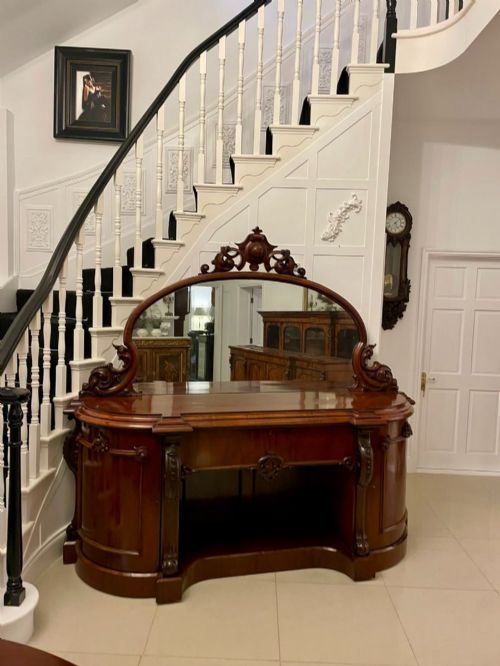
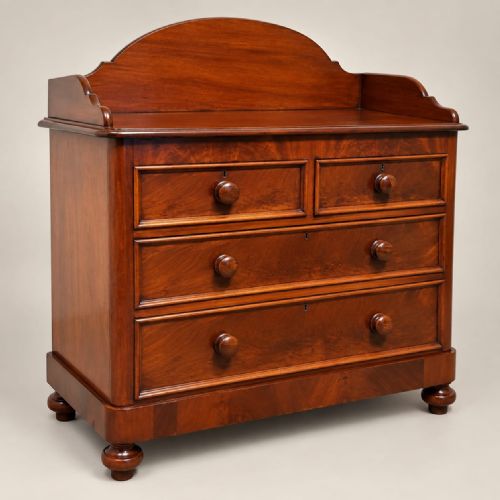
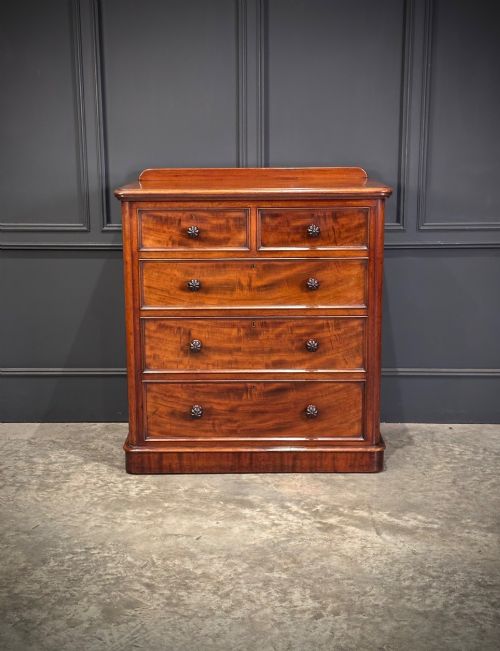
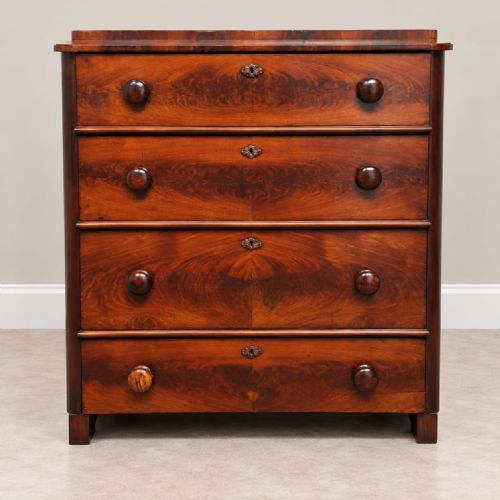
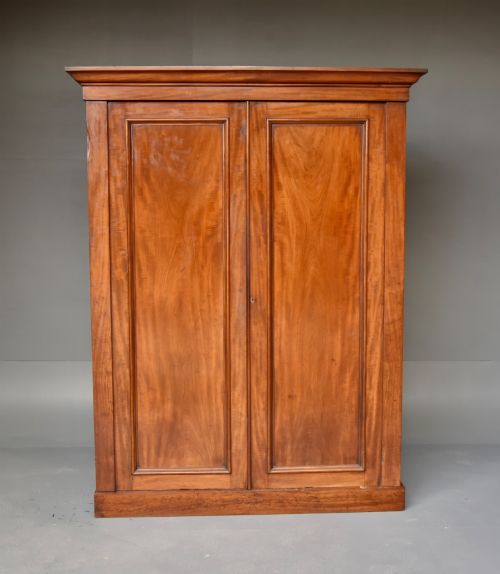
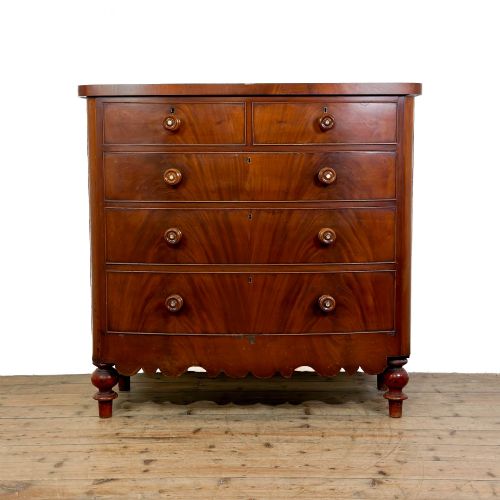
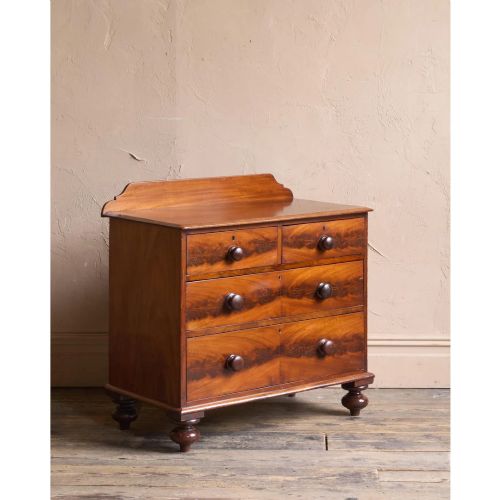
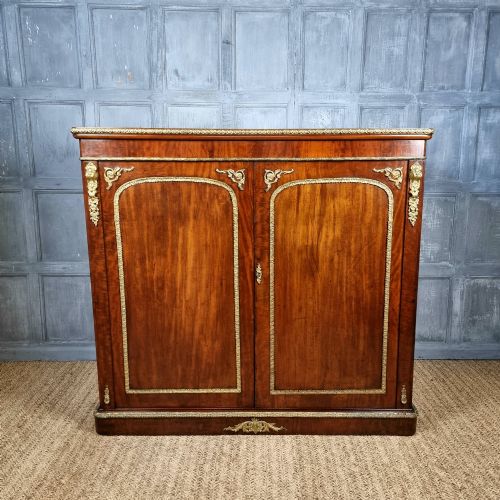
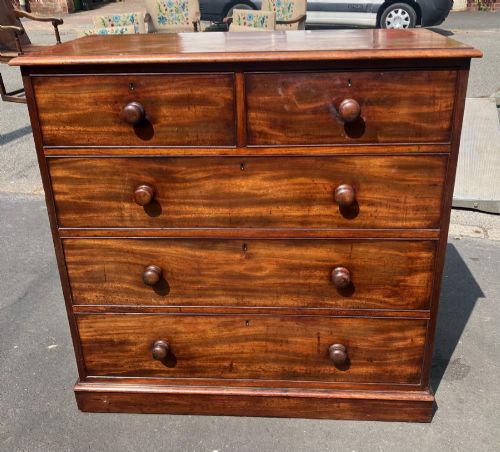
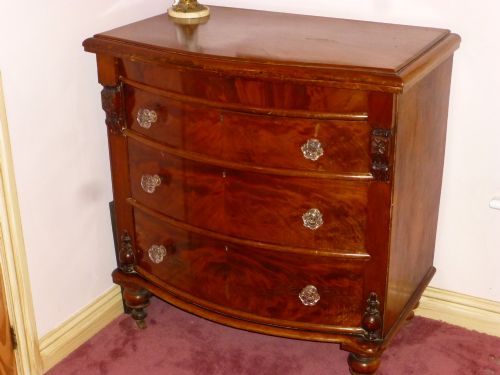
Victorian flame mahogany furniture consists largely of storage pieces and case goods designed during the nineteenth century. Chests of drawers appear most frequently on this page, alongside wardrobes, bookcases, and side tables.
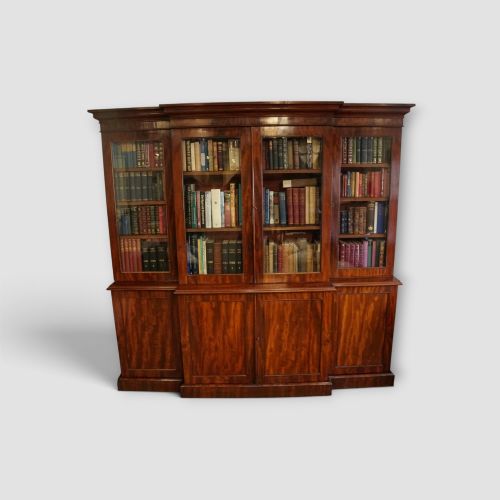
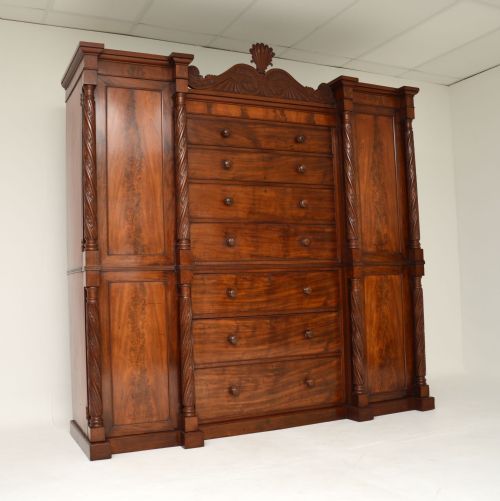
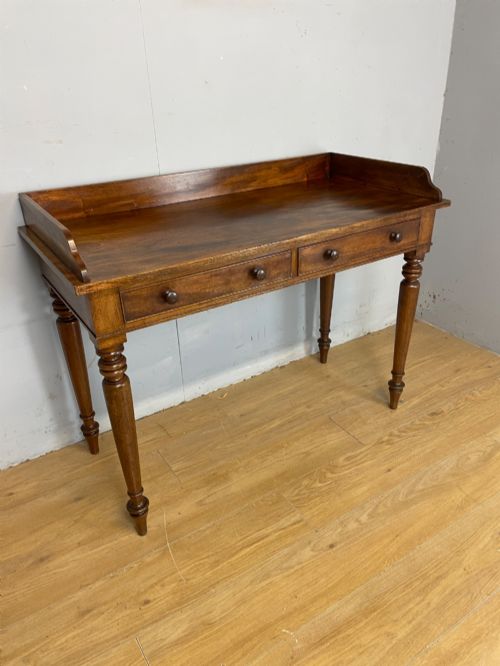
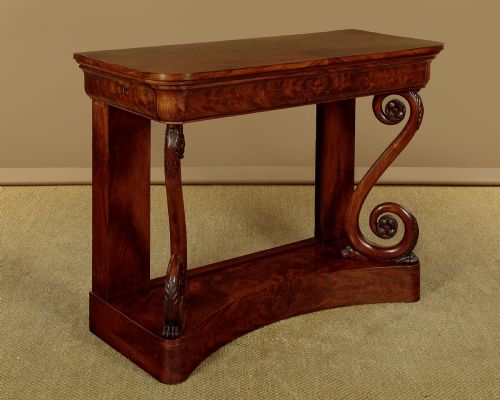
The objects span styles from William IV to the later Victorian period, reflecting changing domestic tastes across the nineteenth century. Pieces range from large breakfront bookcases and compactum wardrobes to smaller work tables and console tables.
Makers and workshops of the era utilised dense timber figures to create functional domestic items. The selection demonstrates how cabinetmakers applied dramatic wood veneers to standard forms like bow-front and Scotch chests.
Materials and construction
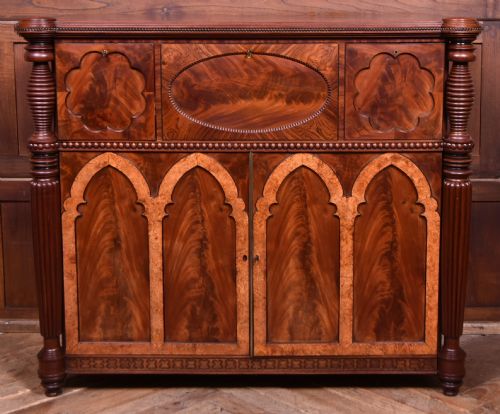
Makers applied thin veneers of flame mahogany over secondary woods such as pine to achieve striking grain patterns on drawer fronts and door panels. Carved solid mahogany elements supported these veneered surfaces on larger items like sideboards and wardrobes.
Secondary materials like brass handles, glass doors, and leather inserts complemented the timber construction. Joinery techniques relied on traditional dovetailed drawer construction and solid internal framing to ensure structural durability.
Several chests conceal hidden drawers tucked secretly beneath the top moulding.
Evaluating quality
Quality depends on the selection and matching of the flame mahogany veneer across prominent surfaces. Finer items display symmetrical grain patterns that flow evenly across multiple drawers or cabinet doors.
Construction details distinguish workshop standards, seen in the precision of the dovetail joints and the weight of the timber used in carcases. Original brass hardware and well-fitted internal drawers indicate higher grade production.
Gillows·S & H Jewell
The Victorian Flame Mahogany Furniture Glossary
- Flame mahogany
- A veneer cut from the fork of the mahogany tree where the branch meets the trunk. This method produces a flickering, flame-like grain pattern prized for decorative surfaces.
- Compactum
- A large fitted wardrobe containing compartmentalised storage, sliding trays, and hanging space. These pieces represent advanced nineteenth-century domestic organisation.
- Wellington chest
- A tall, narrow chest of drawers secured by a hinged vertical locking strip on one side. The design originated in the early nineteenth century for secure storage.
- Secretaire
- A cabinet incorporating a fitted writing drawer with a drop-front desk surface. These hybrid forms combine desk functionality with drawer or cupboard storage.
Victorian Flame Mahogany Furniture: Frequently Asked Questions
How do I identify flame mahogany?
Flame mahogany shows a distinctive feather-like or flickering grain pattern caused by the intersection of branches and the main trunk. Cabinetmakers selected these dramatic veneers for the most visible surfaces of nineteenth-century case pieces.
Under closer inspection, the grain reflects light differently depending on the viewing angle. This chatoyant quality separates matched flame veneers from simpler straight-grained timber.
What is a Scotch chest?
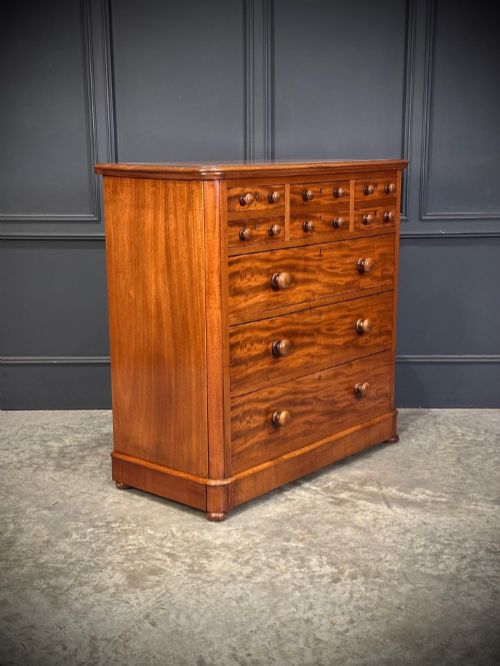
A Scotch chest is a heavy nineteenth-century chest of drawers typically featuring a deep top drawer flanked by smaller concealed or cushion drawers. These regional forms offer substantial storage capacity and robust proportions.
Cabinetmakers built these pieces using thick mahogany veneers over sturdy carcases. They often sit on low bracket feet or plinth bases to support the considerable weight.
Where were these pieces used?
These items furnished principal rooms in nineteenth-century homes, including bedrooms, libraries, and formal reception spaces. Wardrobes and dressing chests served private quarters, while bookcases and sideboards occupied entertaining areas.
Their practical designs met specific domestic requirements for storage and display. The rich timber tones complemented the dark interiors popular during the Victorian era.
How do I care for Victorian mahogany?
Victorian mahogany requires stable indoor humidity levels and protection from direct sunlight to prevent timber warping and veneer cracking. Regular dusting with a dry cloth maintains the polished surface without chemical buildup.
Applying traditional beeswax occasionally helps nourish the antique finish. Avoid placing these items near direct heat sources to preserve the original polish.