



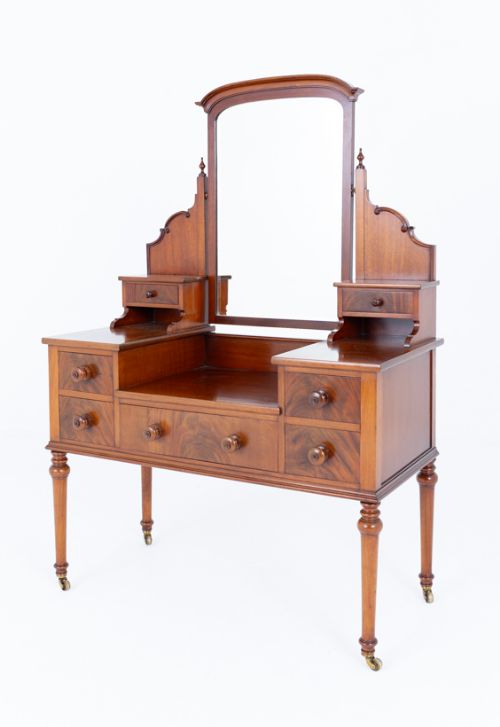


Victorian Flame Mahogany Desk
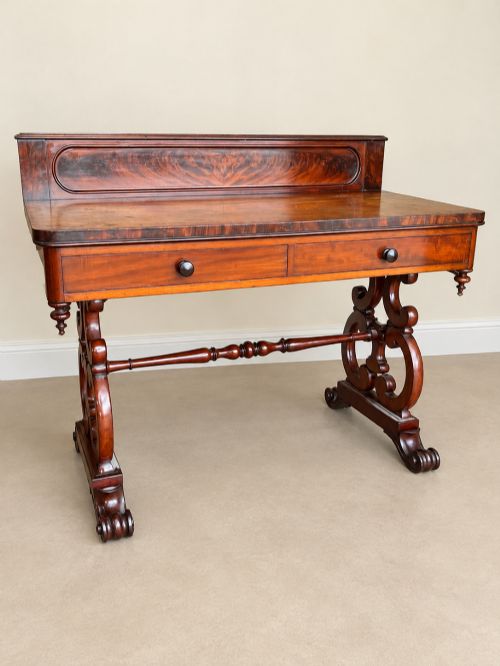
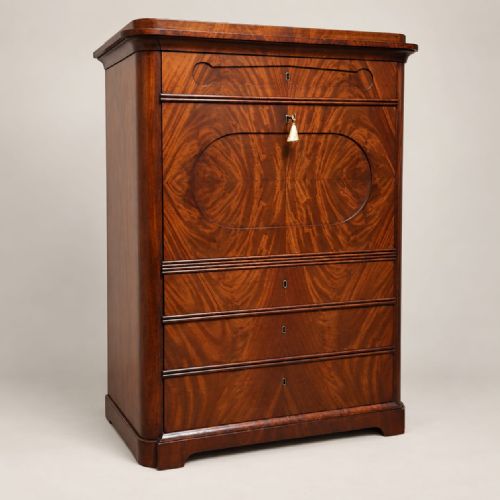
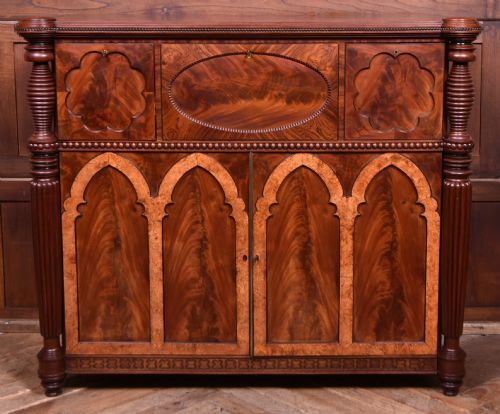
A victorian flame mahogany desk brings rich, figured wood and practical writing surfaces into a room.
Victorian Flame Mahogany Desk
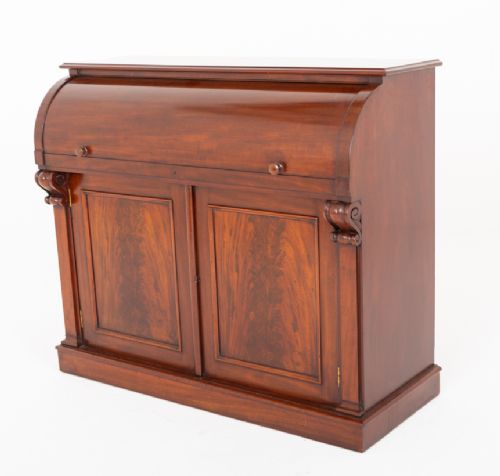
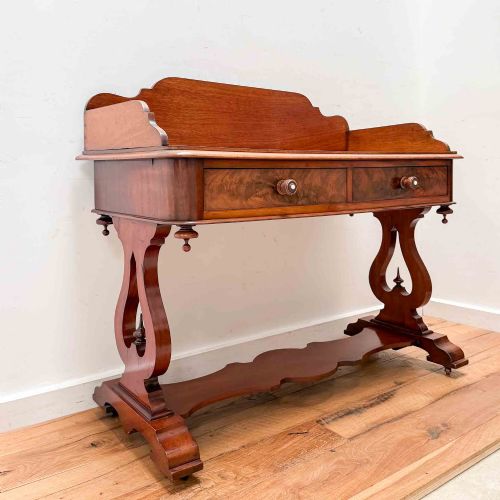
A victorian flame mahogany desk encompasses pedestal desks, partners desks, and smaller writing tables dating across the nineteenth century. These pieces range from compact davenports and cylinder desks to large partners desks designed for use from both sides.
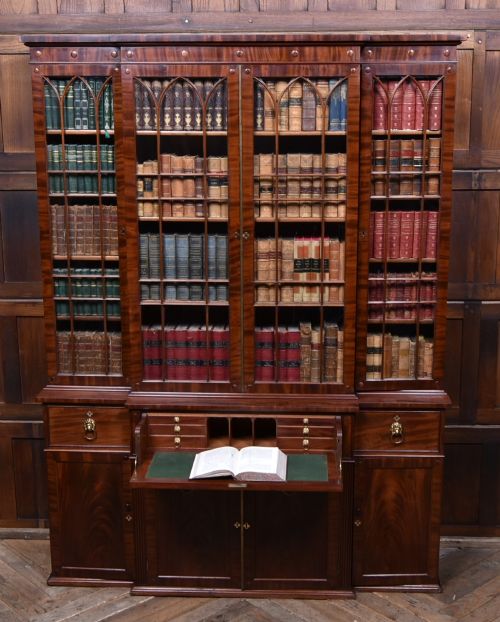
The materials centre on mahogany and flame mahogany veneer, often accompanied by leather or baize writing inserts and brass hardware. Cabinet forms also integrate bookcases and secretaire drawers into the construction.
Buyers meet examples spanning the Victorian period alongside related Regency, William IV, and nineteenth-century pieces. The common thread is the use of rich timber grains shaped into functional writing furniture.
How they were made
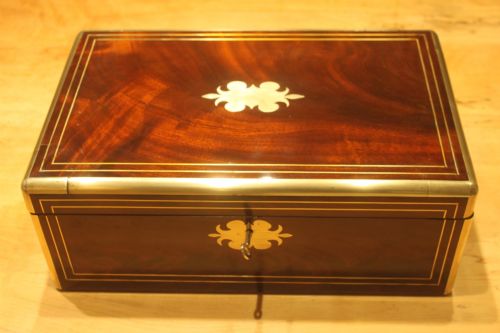
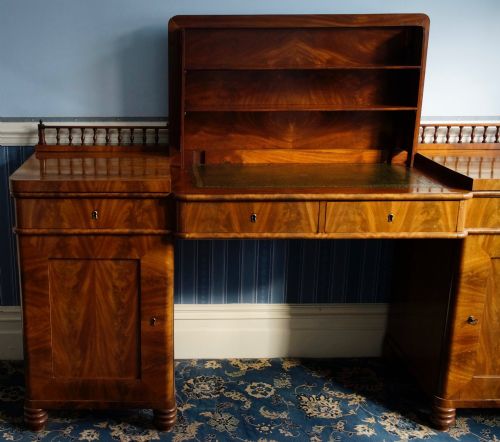
Cabinet makers applied thin veneers of flame mahogany over secondary timbers to create striking, rippling grain patterns on drawer fronts and pedestals. Crossbanding and inlay work frequently bordered these figured surfaces.
Working areas utilised inset panels of leather or baize, tooled with gold leaf, fixed to the writing surfaces. Brass handles, knobs, and locks secured the drawers and doors across pedestal and partner configurations.
Victorian Flame Mahogany Desk Retail Price Guide 2026
Typical asking prices for victorian flame mahogany desk among the pieces listed under this phrase on Sellingantiques today, from the lower quarter to the upper quarter. They describe what is for sale here now, not the wider market.
Some partners desks carry tales of banking transactions from institutions like the Bank of England.
What varies in quality
The choice and symmetry of the flame mahogany veneer dictate much of the visual impact, with book-matched figuring marking out superior cabinet work. The depth of the timber selection and the crispness of crossbanding show the maker's hand.
Internal construction, including solid mahogany drawer linings and the retention of original brass hardware and leather tops, separates standard production from exceptional library furniture.
Gillows·Holland & Sons
The Victorian Flame Mahogany Desk Glossary
- Flame mahogany
- Timber veneer cut from the fork of the mahogany tree where branches meet the trunk, producing a rippling, flame-like grain pattern. This highly decorative wood defines the visual appeal of many nineteenth-century desks.
- Partners desk
- A large pedestal desk designed with drawers and cupboards on both sides so two people can work facing each other. These substantial pieces often feature leather writing surfaces.
- Secretaire
- A cabinet or desk featuring a pull-down or sliding front that conceals a fitted interior of small drawers and pigeonholes. It combines a writing surface with enclosed storage.
- Pedestal desk
- A form comprising two freestanding drawer pedestals supporting a wide desktop, often with a central kneehole drawer. They provide substantial weight and storage capacity.
- Crossbanding
- A border technique where strips of veneer are laid perpendicular to the main grain of the furniture surface. It frames panels of flame mahogany with contrasting grain direction.
Victorian Flame Mahogany Desk: Frequently Asked Questions
What is a partners desk?
A partners desk is built with functional drawers and storage accessible from both sides, allowing two people to sit opposite each other.
These large tables were traditionally used in libraries, banks, and private studies where multiple workspace users needed independent access.
How do cylinder desks work?
Cylinder desks feature a quarter-circle rotating wooden shutter that rolls back to reveal a fitted writing slide and pigeonholes.
Pushing the writing surface forward or pulling the cylinder down encloses the entire internal desktop arrangement.
What is flame mahogany?
Flame mahogany is a decorative veneer sliced from the junction where branches meet the main tree trunk.
This specific cut yields a distinctive, rippling grain pattern that resembles flickering flames across drawer fronts and desk surfaces.
How do I care for leather desk tops?
Leather writing surfaces benefit from gentle cleaning and occasional conditioning to prevent the material from drying out.
Keeping moisture away from the gold tooling preserves the original finish of the writing insert.