
Victorian Flame Mahogany Chest
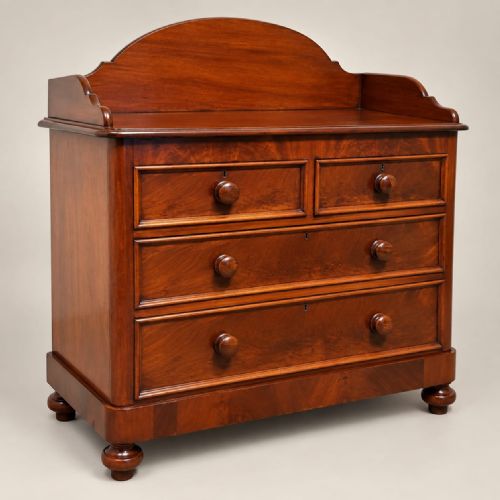
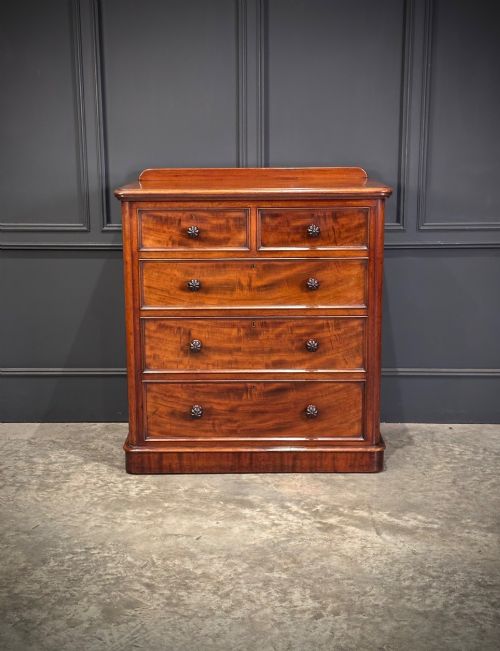
A victorian flame mahogany chest brings deep figured timber and robust nineteenth century construction into a bedroom or study.
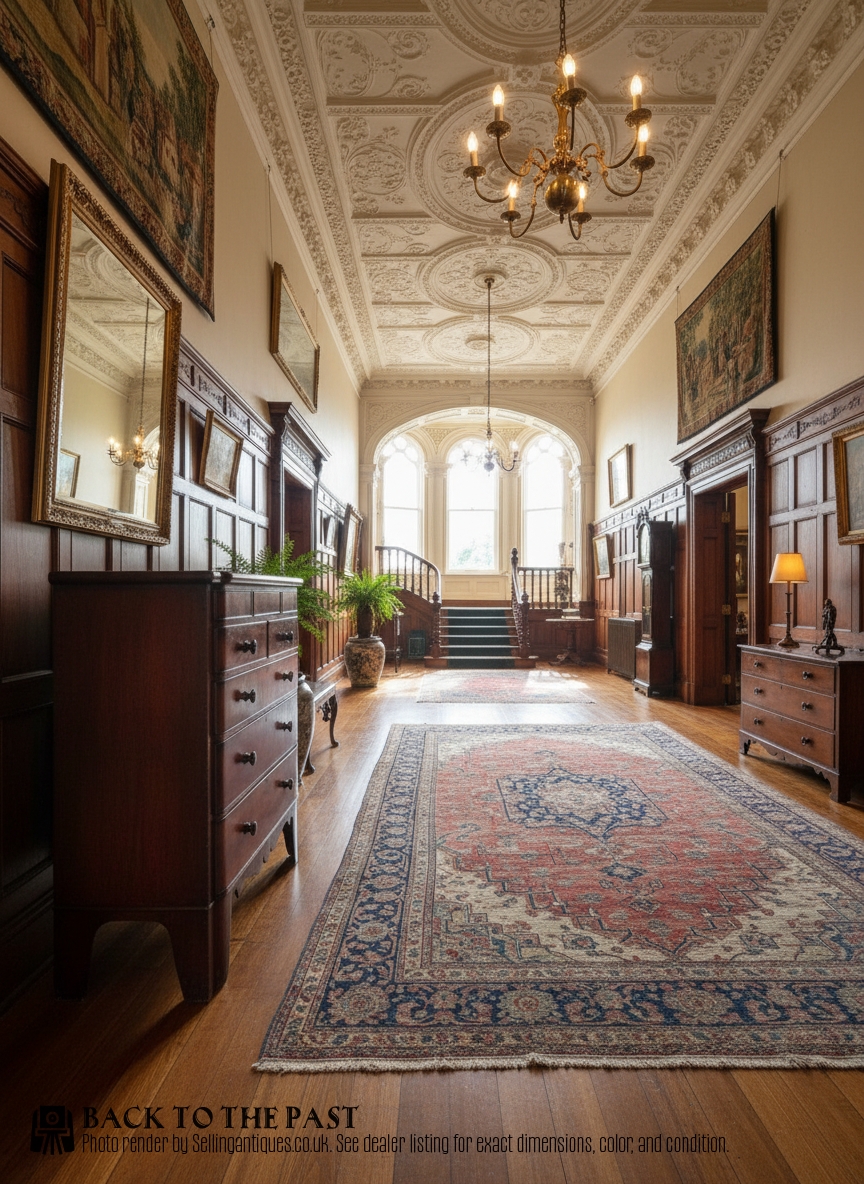
What a victorian flame mahogany chest is
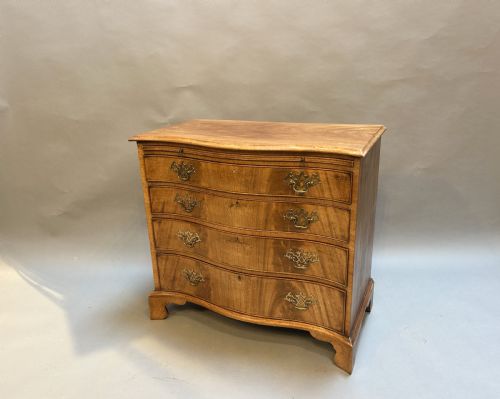
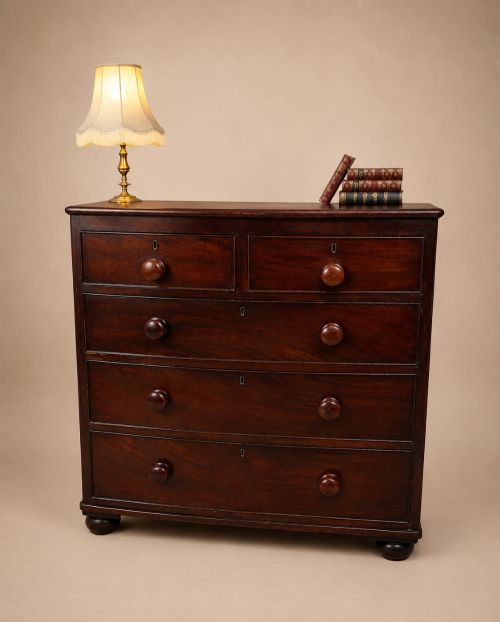
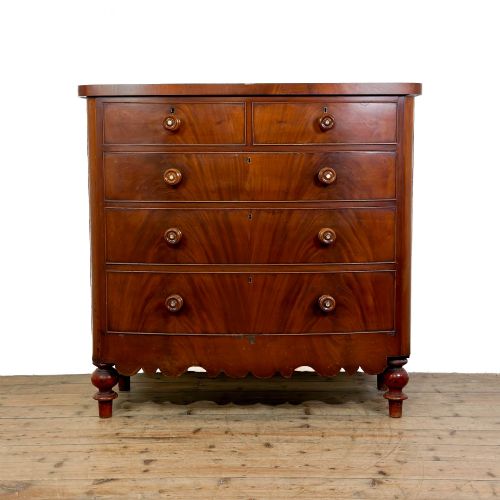
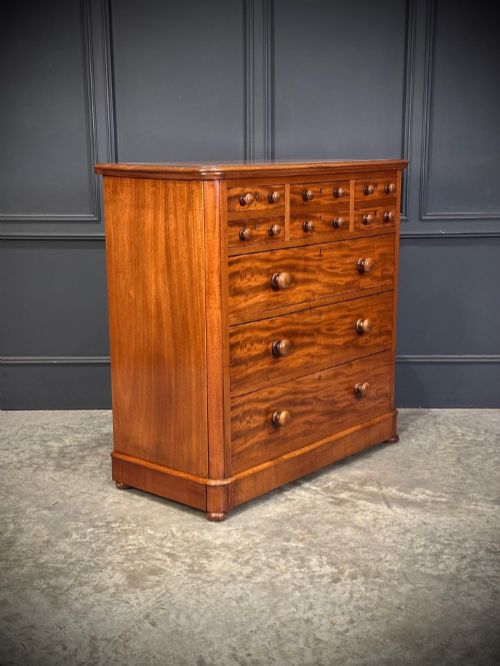
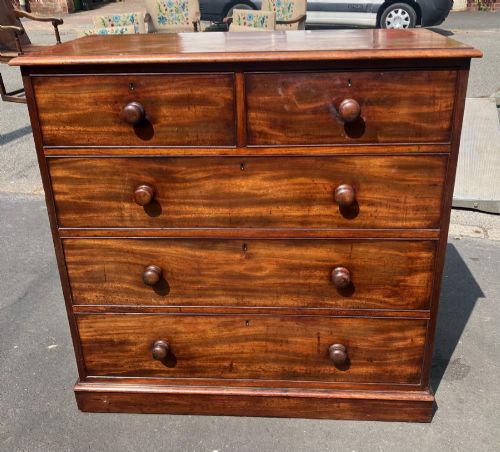
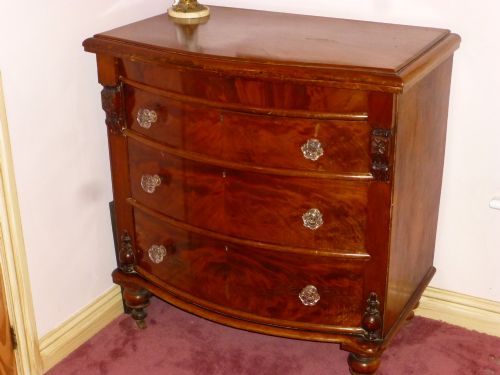
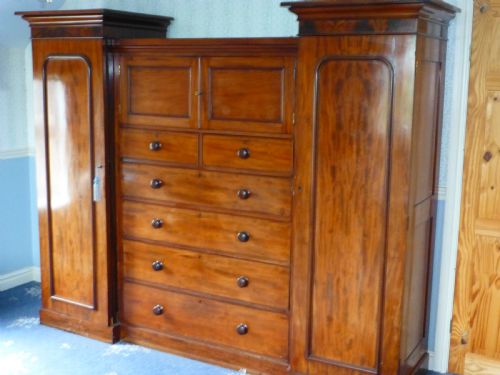
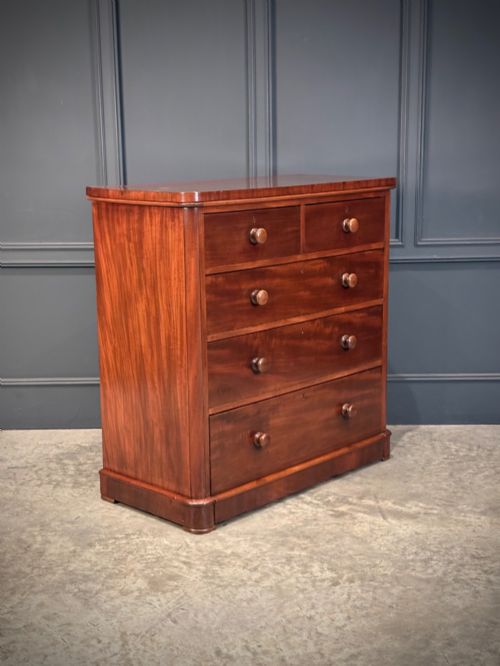
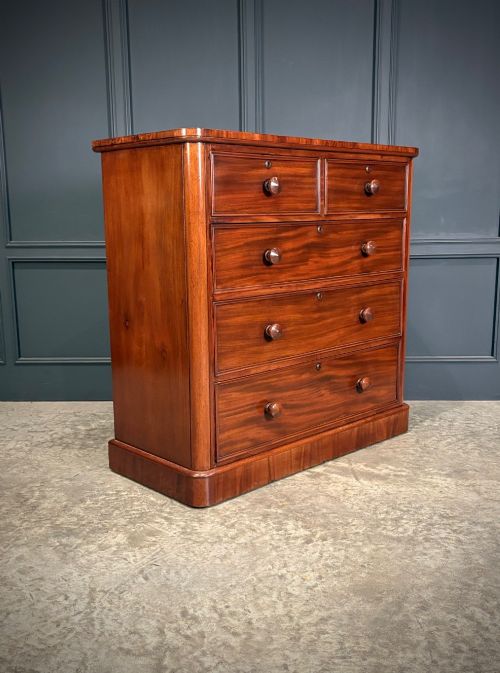
A victorian flame mahogany chest is a substantial storage piece built during the nineteenth century, most commonly appearing as a chest of drawers or a tall Scottish chest. These items frequently display prominent drawer counts ranging from five to eight, occasionally incorporating specialist forms like bow fronts or bedside chests.
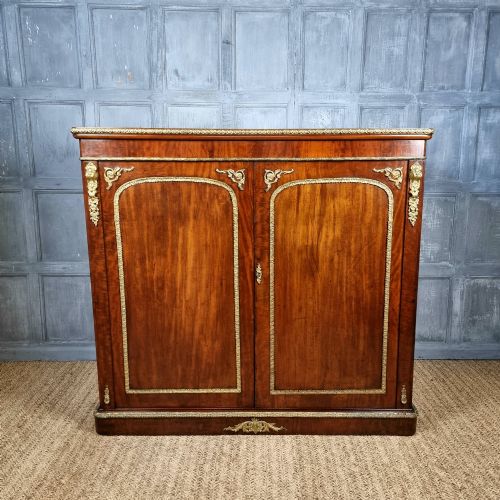
The evidence shows these pieces originating across the Victorian period, with specific dates spanning from eighteen sixty to nineteen hundred. Alongside standard drawer configurations, variations include commodes, cabinets, and shoe box ottomans utilising the same timber vocabulary.
Materials and construction
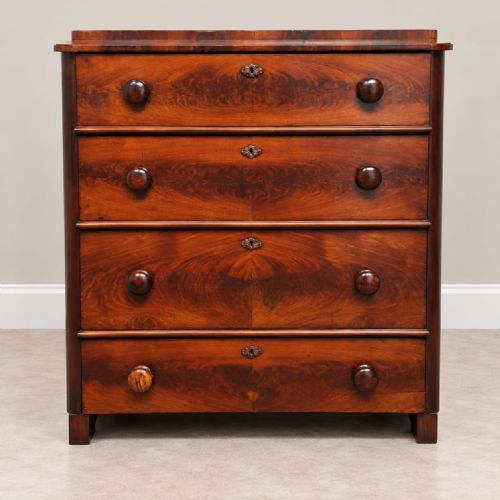
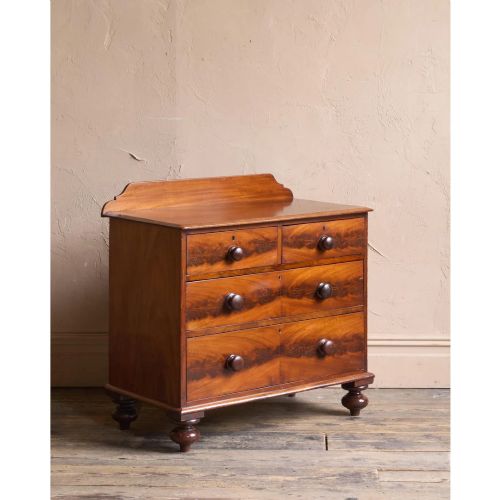
Makers utilised solid mahogany and flame mahogany veneer applied over secondary woods such as ash, creating the characteristic swirling grain patterns across the drawer fronts. Brass hardware and turned wooden handles provide the primary functional pulls.
Structural framing often incorporates turned legs or bobbin turned details, particularly on Scottish examples. Surfaces receive finishes that accentuate the natural movement of the flamed veneer.
Retail Price Guide 2026
Typical UK retail prices for victorian flame mahogany chest, calculated from the Sellingantiques database of over a million retail prices indexed since 2003. This retail price guide relies exclusively on Sellingantiques data; no external sources or auction records are used, so the figures do not describe the wider market.
Listings demonstrate forms ranging from compact bedside chests to grand Scottish chests with up to eight drawers.
Factors of quality
Quality rests in the intensity and symmetry of the flame mahogany veneer selected for the principal facades. Master craftsmen matched the swirling grain across multiple drawer tiers to create a cohesive visual statement.
Proportion and secondary details also dictate standing, where substantial proportions, fine turning on legs, and intact ash linings elevate certain items above standard utilitarian drawers.
The Victorian Flame Mahogany Chest Glossary
- Flame mahogany veneer
- A thin slice of wood cut from the fork of the mahogany tree to produce a dramatic, flame-like figure. This highly decorative surface defines the aesthetic of the best nineteenth-century case pieces.
- Scottish chest
- A tall, grand chest of drawers originating in Scotland during the Victorian period. These pieces often feature numerous deep drawers and elaborate column or bobbin turnings.
- Bow front
- A convex curved front facade popular on nineteenth-century case furniture. This shape enhances the play of light across the figured wood veneer.
- Commode
- A low cabinet or chest designed for bedroom use during the Victorian era. It provides enclosed storage below a flat working surface.
- Bobbin turned
- A style of furniture leg or decoration shaped with a series of rounded, spool-like swellings. This technique adds rhythmic texture to the frame.
Frequently Asked Questions
How do I date a flame mahogany chest?
Dating relies on stylistic markers recorded in the evidence, such as turned legs, bow fronts, and specific Victorian construction methods spanning the nineteenth century.
Secondary woods like ash and the presence of brass or wooden handles help narrow the manufacturing window between eighteen sixty and nineteen hundred.
What is a Scotch chest?
A Scotch chest is a taller Victorian variant featuring a bank of five, six, or eight drawers, often flanked by columns.
These grand Scottish pieces offer significantly more vertical storage than standard low chests while displaying intense flame grain veneers.
Are bedside chests common?
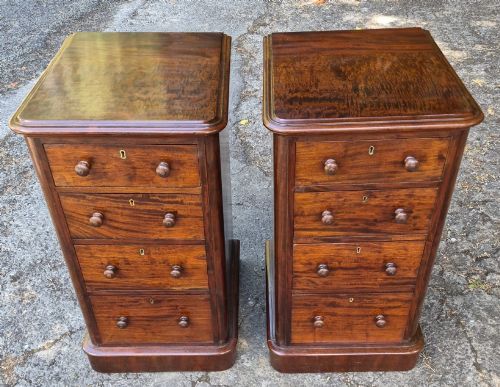
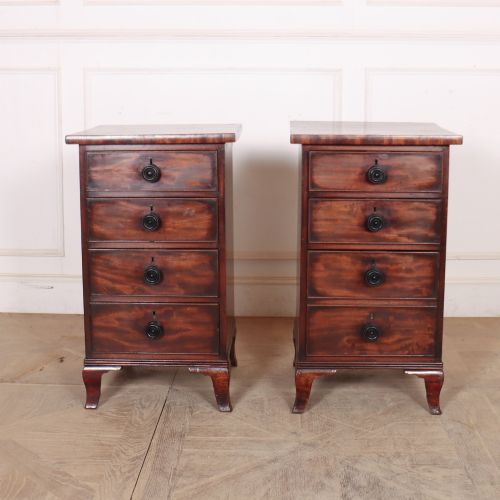
Pair listings show that smaller bedside chests were produced in matching sets during the Victorian period.
They utilise the same flame mahogany veneer and solid timber construction as their larger counterparts.
How do I care for the veneer?
Flame mahogany veneer requires stable humidity levels and protection from direct sunlight to prevent drying and fading.
Routine maintenance involves gentle dusting with a dry cloth without harsh chemical polishes.