

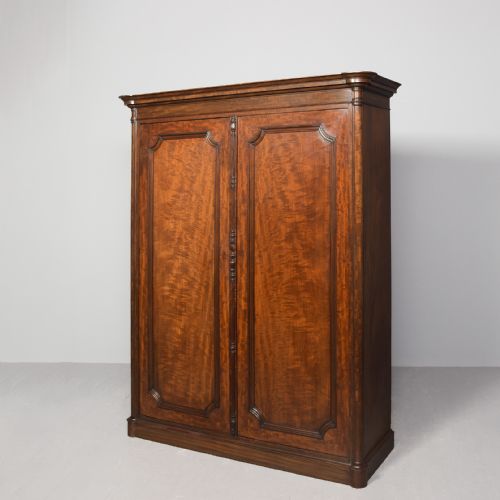


Victorian Flame Armoire
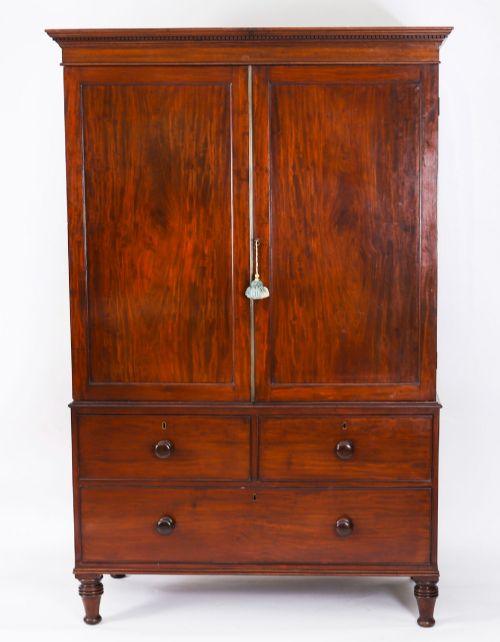
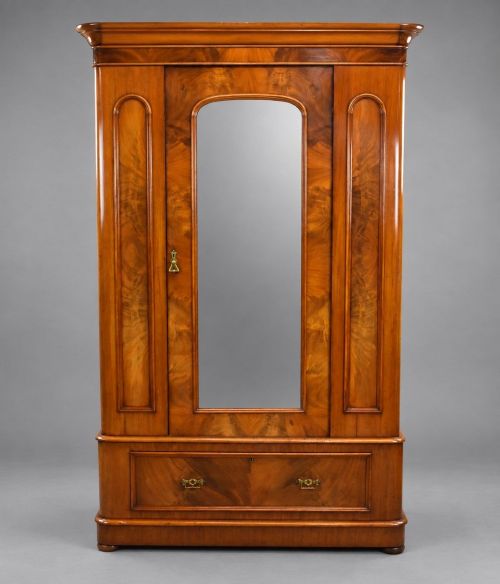
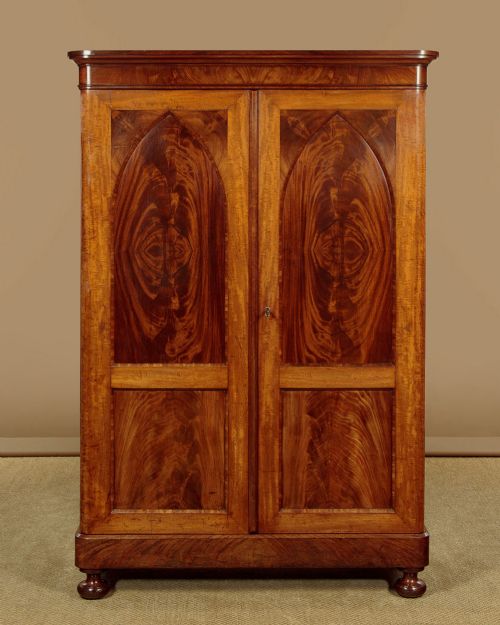
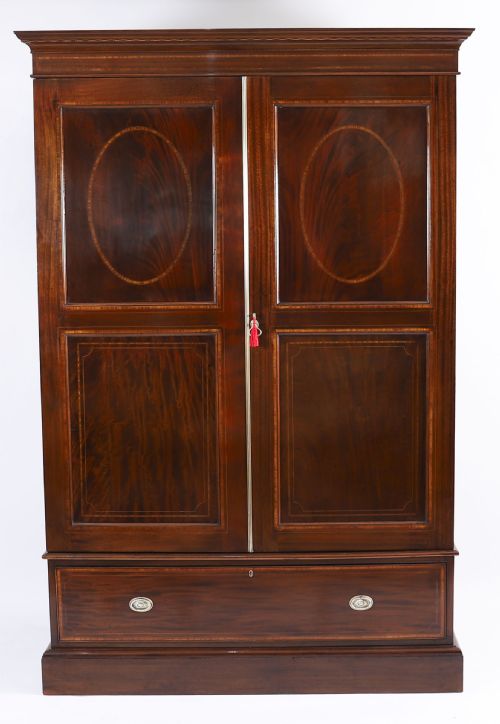
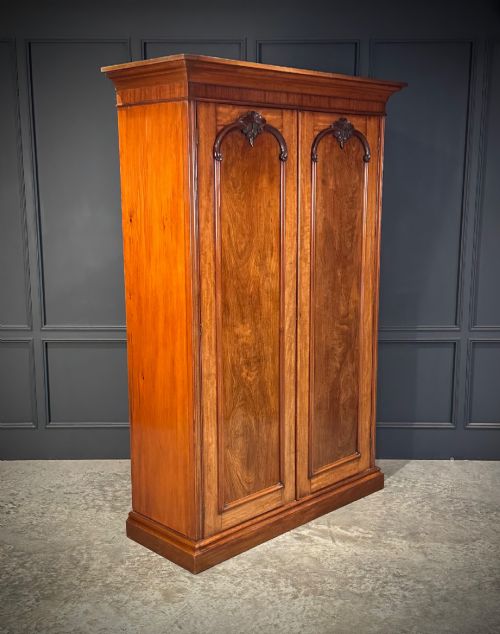
A victorian flame armoire is a large bedroom storage piece displaying dramatic wood grain.
Victorian Flame Armoire
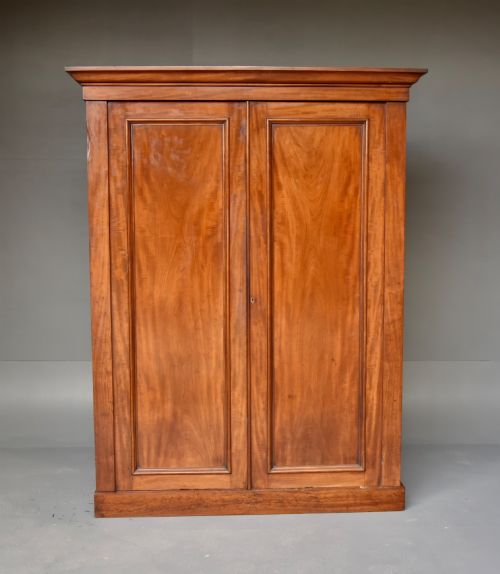
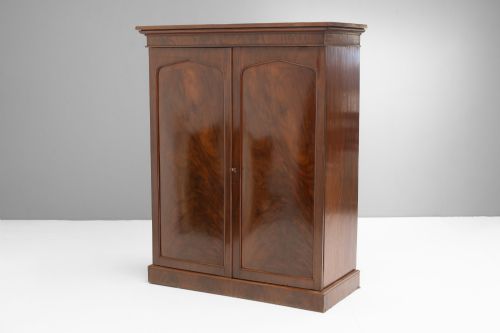
A victorian flame armoire encompasses large wardrobes, compactum pieces, and linen presses produced during the nineteenth century. These items serve primary storage functions in bedrooms while presenting substantial architectural presence.
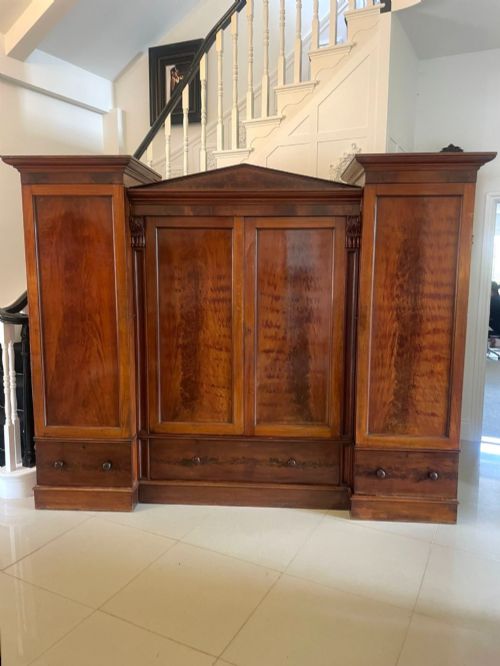
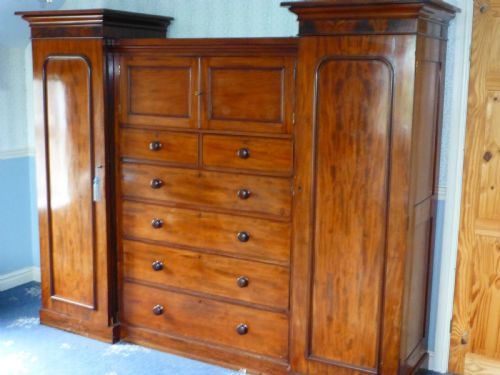
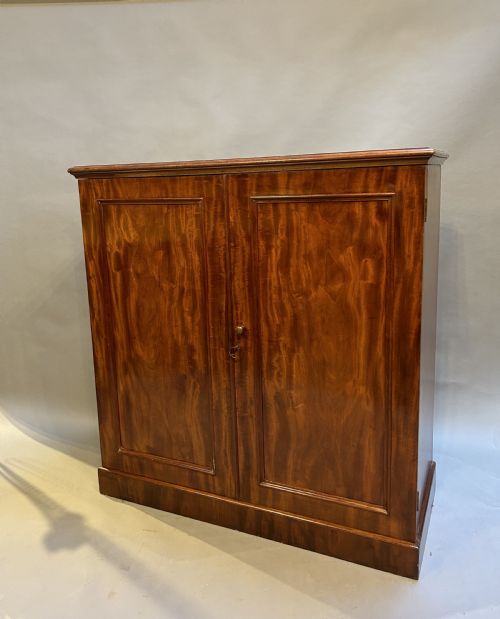
The pieces appearing on this page span the Victorian and Edwardian eras, with significant representation from the middle decades of the nineteenth century. Forms range from single door cupboards to large multi-door breakfront combinations.
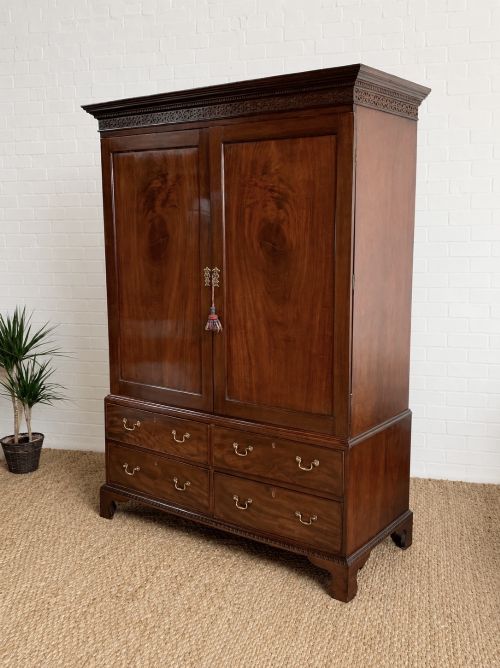
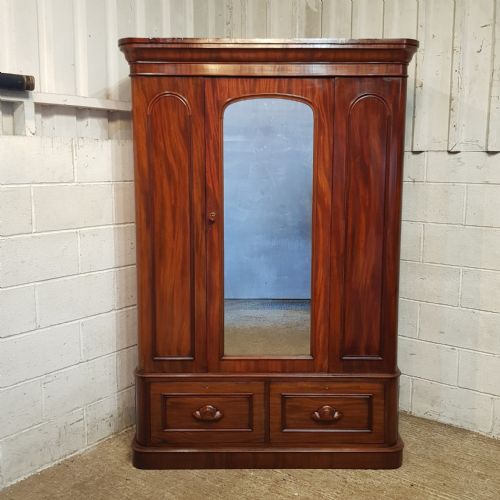
Makers and regional workshops across Britain and Ireland produced these items in mahogany, incorporating flame veneer patterns that define their visual character. Buyers encounter variations including linen presses with sliding trays and hanging wardrobes with drawer bases.
How they were made
Cabinet makers utilised solid mahogany and pine carcasses overlaid with figured flame mahogany veneer to achieve striking surface patterns. Secondary woods such as satinwood and brass hardware appear in specific internal fittings and decorative mounts.
Construction techniques involve hand-cut joinery, panelled doors, and applied architectural details like blind fretwork cornices. Larger pieces incorporate modular breakfront designs and compactum internals to organise clothing and linen.
Victorian Flame Armoire Retail Price Guide 2026
Typical asking prices for victorian flame armoire among the pieces listed under this phrase on Sellingantiques today, from the lower quarter to the upper quarter. They describe what is for sale here now, not the wider market.
Listings include mahogany, satinwood, and brass across Victorian, Edwardian, and Biedermeier styles.
What varies in quality
The visual impact of the timber grain separates standard examples from exceptional pieces. Symmetrical book-matched flame veneer across large door panels indicates superior selection by the cabinet maker.
Structural complexity also defines the range, moving from simple two-door cupboards to intricate breakfront combination wardrobes with internal drawers and linen slides. Maker attribution adds notable distinction to documented pieces.
maples & co·Gillows·S & H Jewell·Heals·Robert Strahan of Dublin
The Victorian Flame Armoire Glossary
- Flame mahogany veneer
- A decorative wood slice cut from timber fork or branch junctions to create swirling, flame-like patterns. This veneer forms the primary visual feature on doors and panels.
- Compactum
- A fitted wardrobe designed to provide multiple types of storage including hanging space, drawers, and shelves within a single unit. These efficient pieces often feature internal partitioning.
- Linen press
- A traditional storage item featuring upper sliding trays for folded textiles above a base of lower drawers. Early versions date to the Georgian period and continued through the Victorian era.
- Breakfront
- A cabinet design where the central section projects forward from flanking wings. This configuration adds architectural depth to large wardrobes and bookcases.
- Blind fretwork
- Carved ornamental patterning applied to cornices or friezes without piercing through the wood. It provides subtle texture along upper architectural mouldings.
Victorian Flame Armoire: Frequently Asked Questions
How do I use an armoire today?
These large timber pieces provide substantial storage for modern bedrooms, accommodating hanging garments, folded clothes, or linens. Their internal configurations often include original sliding trays or drawer banks.
Placing one in a room requires measuring ceiling height and floor space carefully, as nineteenth-century dimensions are generous. Ensure the room allows doors to open fully to access internal fittings.
What is a compactum wardrobe?
A compactum is a multi-functional wardrobe designed to house various types of clothing within a single footprint. They combine hanging space, shelves, and internal drawers.
This fitted approach makes them versatile for modern bedroom storage without requiring multiple separate furniture items.
Are these wardrobes easy to move?
Nineteenth-century wardrobes are heavy items constructed from solid mahogany and dense veneers. Many larger formats, including breakfront and combination pieces, dismantle into sections for transport.
Professional removal helps protect fragile veneer surfaces and ensures safe assembly within the room.