


Victorian Fitted Dressing Box
A victorian fitted dressing box is a portable chest designed to hold grooming gear, scent bottles, and jewellery during travel.
Victorian Fitted Dressing Box
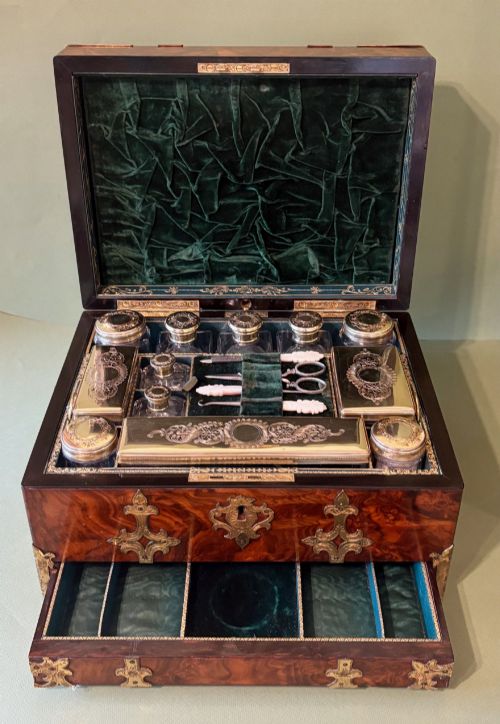
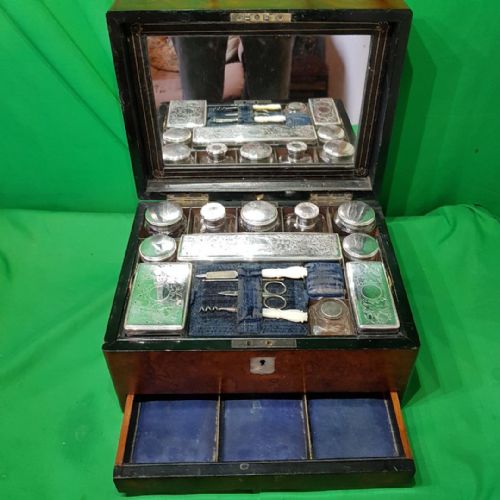
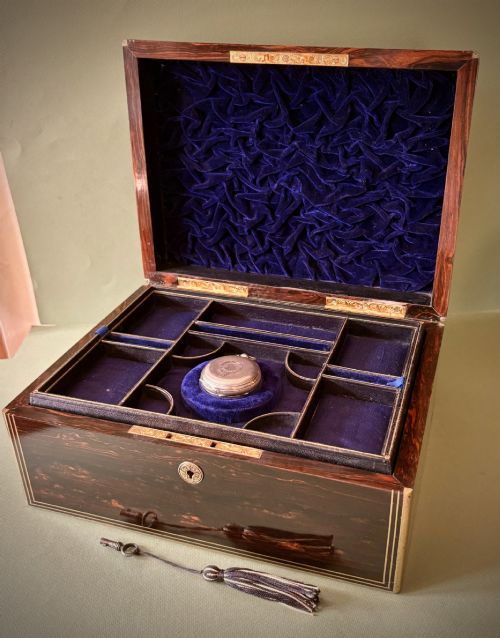
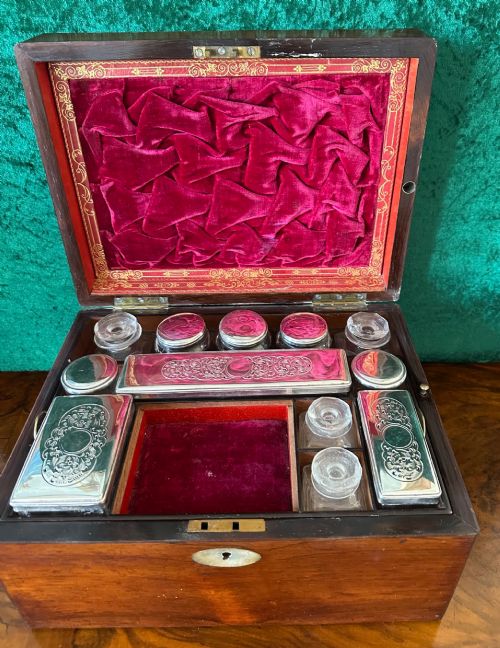
A victorian fitted dressing box is a portable case designed for travel and personal grooming, appearing most often in sturdy timbers such as burr walnut, coromandel, and rosewood. These pieces range from compact jewellery chests to substantial ladies and gentlemen travelling sets equipped with internal mirrors, trays, and compartments.
The interiors are organised to secure personal items securely, frequently housing cut glass bottles, silver lids, and velvet linings. Examples span the nineteenth century, including Edwardian iterations and French designs.
Makers integrated secret drawers and lift-out trays alongside structural brass banding to protect the timber during transit. The primary focus remains the internal arrangement of fitted compartments designed to hold daily requisites.
How They Were Made
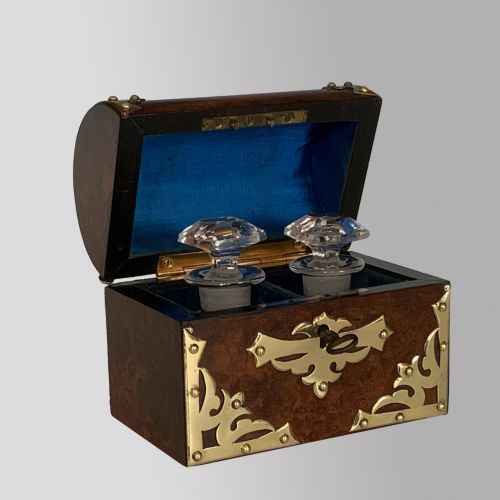
Cabinet makers utilised dense exotic timbers like coromandel and burr walnut over solid bases, applying brass banding and mounts to reinforce corners and edges. Interiors relied on silk, velvet, and leather to line compartments and secure delicate glassware.
Glass bottles and jars were cut and fitted with sterling silver or silver-gilt tops, often bearing hallmarks to date the metal components. Locks and hinges were brass, requiring precision fitting to ensure proper closure of the box and any secret drawers.
Some boxes hide secret drawers activated only by pressing unseen wooden pins.
What Varies in Quality
The distinction between tiers rests upon the density of the grain in woods like burr walnut and coromandel, alongside the integrity of the brass inlay and mounts. Superior pieces retain matching sets of cut glass bottles and original velvet or silk linings.
The execution of the internal mechanism, such as a smoothly dropping mirror or a spring-loaded secret drawer, separates standard production from workshop pieces by notable makers. Complete sets with matching silver components demonstrate a higher initial commission.
F. West·H Mitchell·Asprey·Parkins & Grotto·Edwards
The Victorian Fitted Dressing Box Glossary
- Coromandel wood
- A dense, heavy timber from Asia featuring dark brown stripes, utilised for high-end nineteenth-century cases. It provides a durable and decorative exterior surface.
- Burr walnut
- Timber taken from the root growth of the walnut tree, showing intricate swirling patterns. Cabinet makers prized this wood for decorative veneers on luxury boxes.
- Ormolu
- Gilded bronze mounted to the exterior of boxes for decoration. This technique adds metallic contrast to the timber surfaces.
- Sterling silver
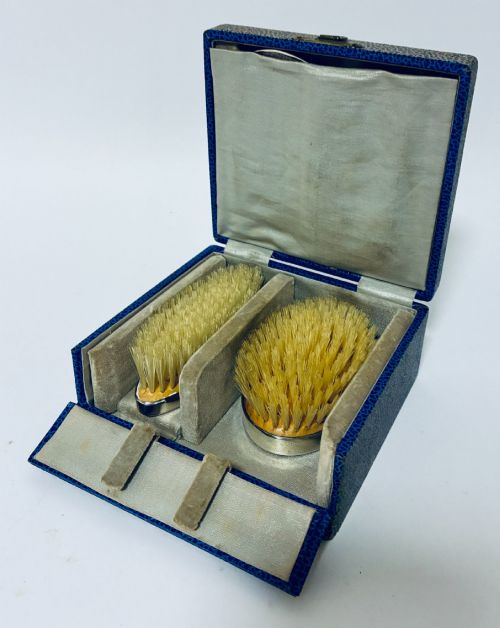
- A silver alloy comprising mass proportions of silver and other metals, utilised for bottle tops and brush backs inside dressing cases.
- Secret drawer
- A concealed compartment accessed through a hidden spring or removable panel. These spaces kept valuables secure during travel.
Victorian Fitted Dressing Box: Frequently Asked Questions
What is inside a victorian fitted dressing box?
These boxes contain fitted interiors with compartments designed for grooming tools, small personal items, and jewellery. Many include lift-out trays, mirrors, and cut glass bottles with silver tops.
Lower tiers often reveal secret drawers or space for correspondence and writing materials. The layout varies depending on whether the case was intended for a gentleman or a lady.
How do I date a dressing box?
Dating relies on the style of the timber, construction methods, and any hallmarks found on the silver bottle lids or internal mounts. Victorian examples frequently feature brass banding and specific lock stamps from the nineteenth century.
Edwardian and later pieces show subtle shifts in internal velvet colours and manufacturing techniques. Maker stamps on the leather linings or wooden edges also help narrow the timeline.
Were these boxes used for travel?
Travel was the primary purpose, as affluent Victorians needed to transport their personal grooming gear safely between residences and hotels. Sturdy exterior timbers and brass reinforcement protected the contents during carriage journeys.
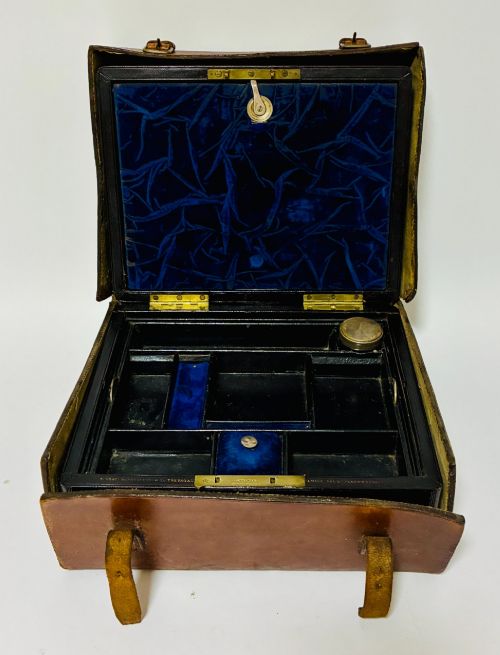
Inside, secure velvet channels and fitted slots kept glass bottles and silver items from shifting in transit. Many boxes include original leather outer cases designed for extra protection.
How do I care for the timber?
Timber surfaces such as coromandel and burr walnut require gentle cleaning with a soft, dry cloth to remove dust. Avoid excess moisture and direct sunlight, which can dry out the wood and fade the grain.
Leather and velvet linings benefit from gentle airing and protection from damp environments. Keeping the brass hardware clean helps maintain the overall condition of the box.