




Victorian Fireside Nursing Chair
A victorian fireside nursing chair offers low-slung, upholstered comfort designed for the parlour and bedroom.
Victorian Fireside Nursing Chair
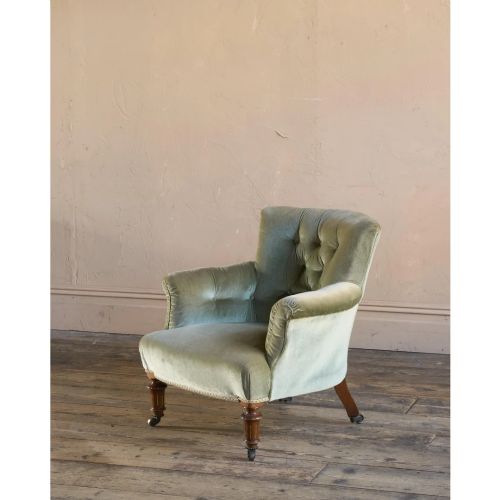
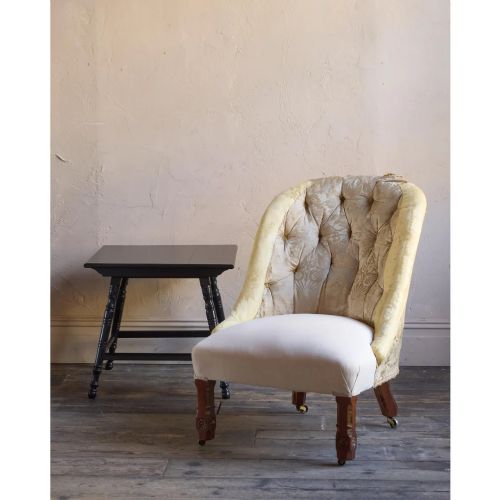
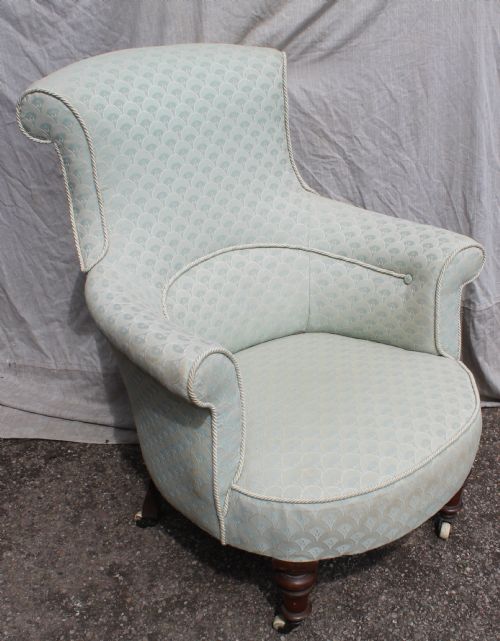
A victorian fireside nursing chair sits low to the floor, traditionally designed to allow comfortable seating near a hearth or for childcare tasks. These pieces frequently appear under titles such as nursing chair, slipper chair, and salon armchair.
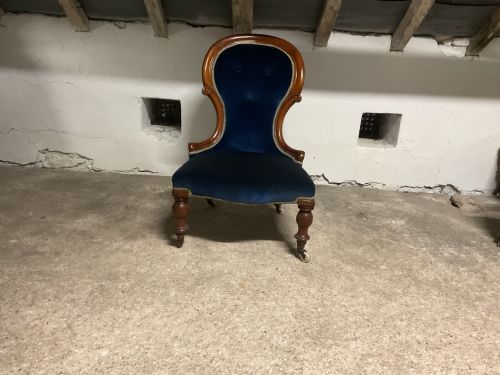
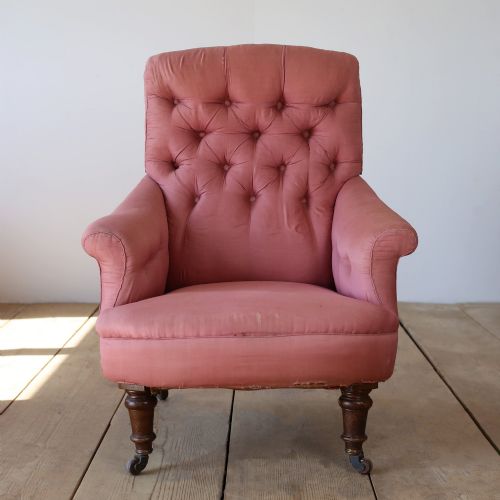
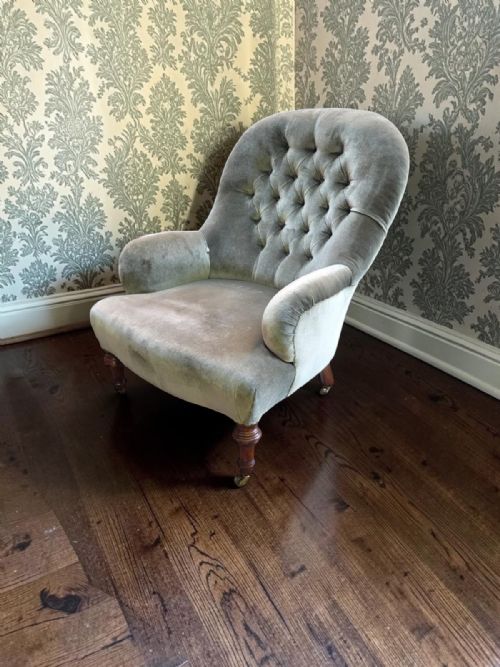
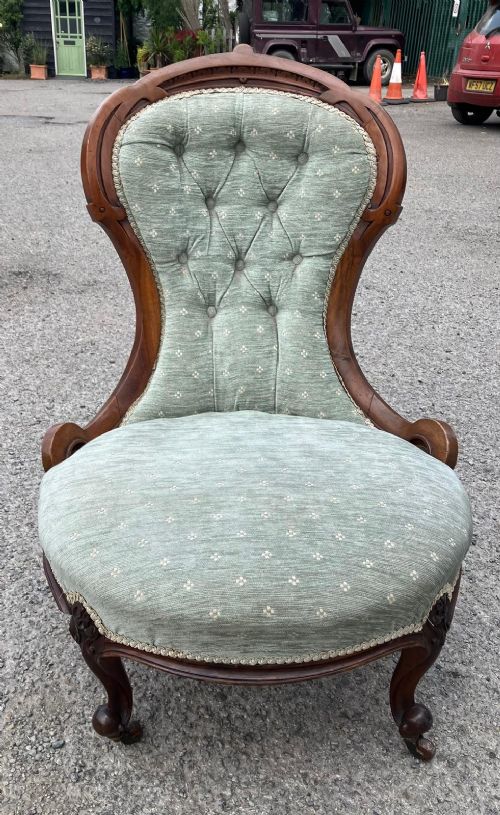
Most examples found here date from the nineteenth century, spanning early Victorian to late Victorian periods, alongside related Edwardian pieces from the early twentieth century. Forms include button back, spoon back, and scroll back designs with diminutive or petite proportions.
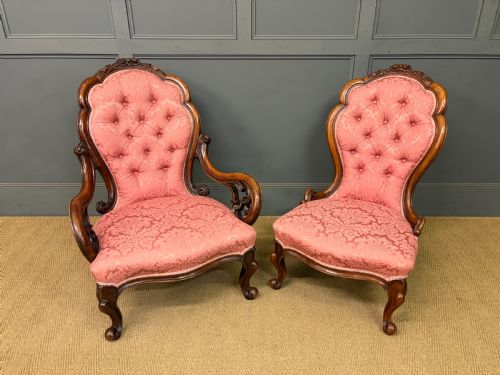
Makers and workshops of the era produced these chairs in various regional British and continental styles, including Aesthetic Movement and Victorian Rococo Revival. They function today as accent chairs and fireside seating in period and modern interiors alike.
Materials and construction
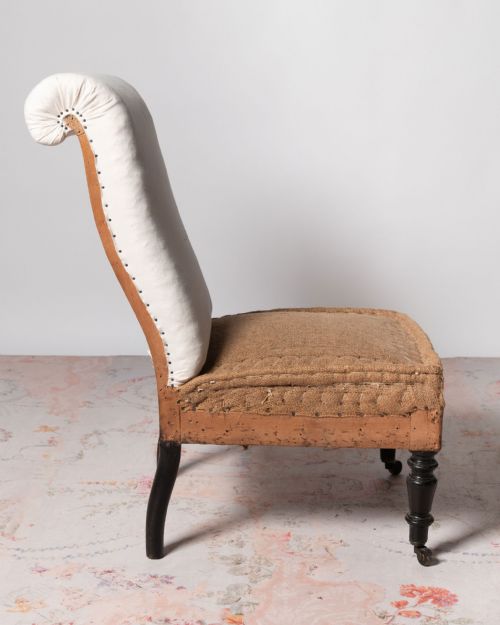
Frames are constructed from solid timbers such as mahogany, walnut, rosewood, and general wood, frequently featuring turned, barley twist, or bobbin legs. Some examples incorporate iron or brass structural elements and castors for mobility.
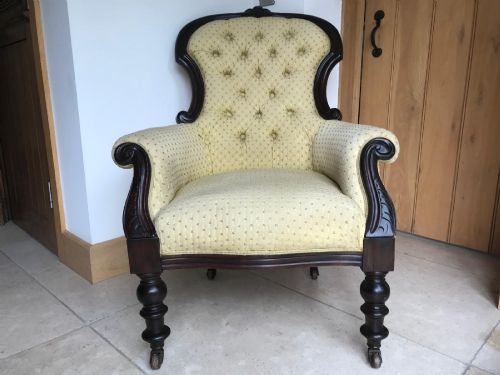
Upholstery relies on traditional textiles, incorporating fabric, velvet, leather, and ceramic components within buttoned and tufted backrests. Show wood frames display hand-carved details, notably in spoon-back and scroll-back configurations.
Current listings feature Victorian and Edwardian periods, utilising walnut, mahogany, brass, leather, velvet, and ceramic materials across diverse armchair forms.
Evaluating quality and proportion
Quality rests upon the crispness of the timber carving and the integrity of the frame construction, whether executed in walnut, mahogany, or rosewood. Superior pieces exhibit refined proportions, such as well-balanced diminutive scales and elegant spoon backs.
The sophistication of the upholstery work defines the upper tier, particularly deep buttoning that maintains structural tension and symmetrical pleating. Maker attribution, such as work associated with Gillows or Howard and Sons, elevates the standing of an individual chair.
Gillows·Howard and Sons
The Victorian Fireside Nursing Chair Glossary
- Button back
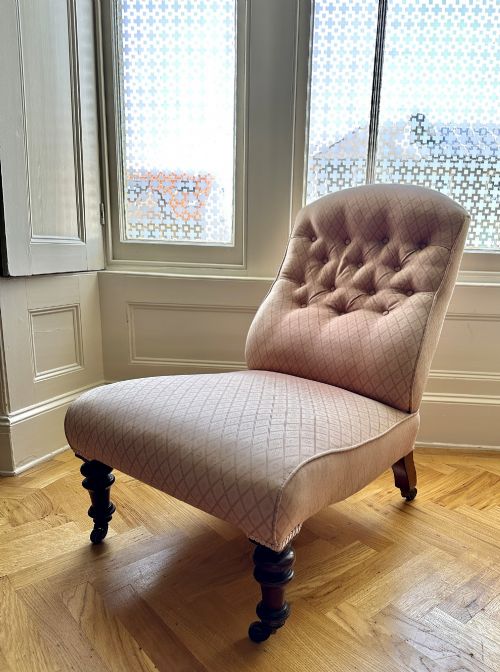
- A style of upholstery where depressions are formed in the padding by pulling buttons tight into the backrest, creating a tufted pattern. This technique provides both structural support and decorative depth.
- Spoon back
- An oval chair back shaped distinctly like the bowl of a spoon, curving inward to cradle the sitter. It is a hallmark of mid nineteenth-century parlour seating.
- Slipper chair
- A low-seated upholstered chair originally designed for bedrooms to aid in dressing or putting on shoes. They share the low profile characteristic of nursing chairs.
- Show wood
- Exposed polished timber framing on an upholstered chair, contrasting with fully covered frames. Walnut and mahogany were frequently utilised for this purpose.
- Bobbin leg
- Furniture legs turned on a lathe to resemble a series of wooden bobbins or spools end-to-end. This decorative turning style appears frequently on nineteenth-century seating.
Victorian Fireside Nursing Chair: Frequently Asked Questions
What is a nursing chair?
A nursing chair is a low-slung Victorian armchair designed historically for comfort near the hearth or for feeding infants.
Their compact scale and absence of high arms made them practical for domestic tasks in bedrooms and parlours.
How do I date a chair?
Dating relies on timber choices like rosewood and early mahogany versus later walnut, alongside stylistic shifts from early Victorian scroll backs to late Victorian aesthetic forms.
Turned leg styles, such as barley twist or bobbin legs, also help narrow down the decade of manufacture.
Where should I place one?
These compact chairs suit bedrooms, dressing rooms, and fireside settings where standard armchairs might overwhelm the floor space.
Their low profile makes them effective as decorative accent seating in living areas.
Are slipper chairs different?
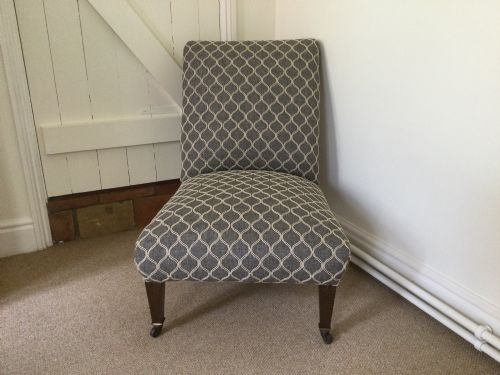
Slipper chairs and nursing chairs share a similar low-to-the-ground construction intended for bedroom use.
Historical terminology often overlaps between the two forms in nineteenth-century listings.