
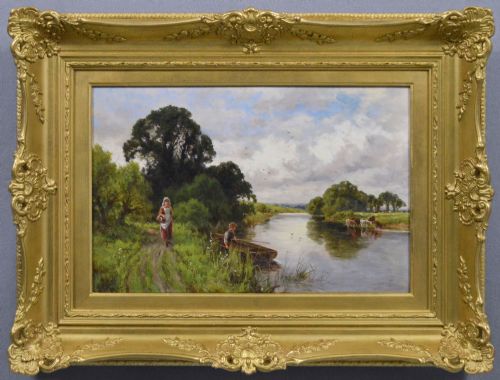
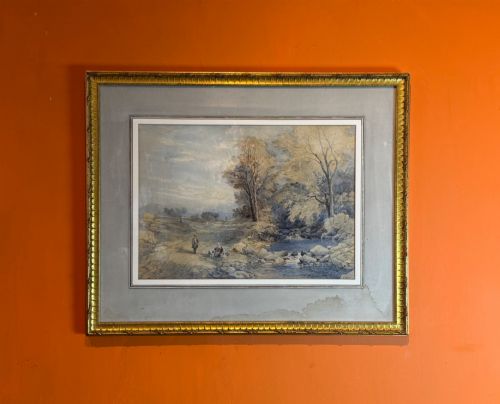

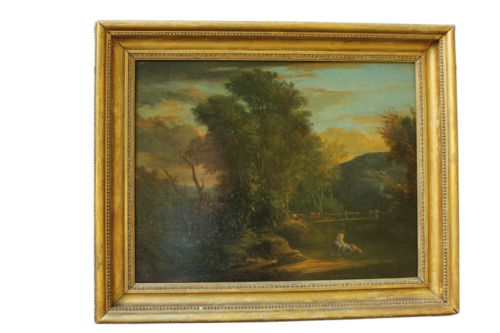

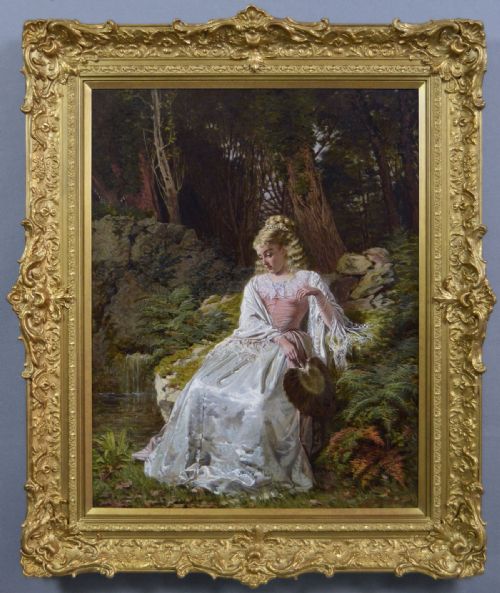


Victorian Figures Landscape Art
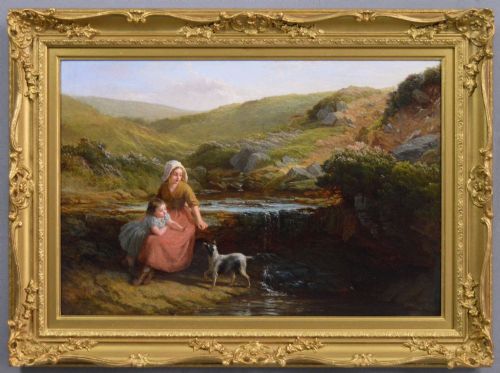
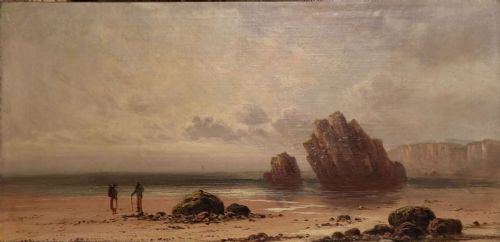
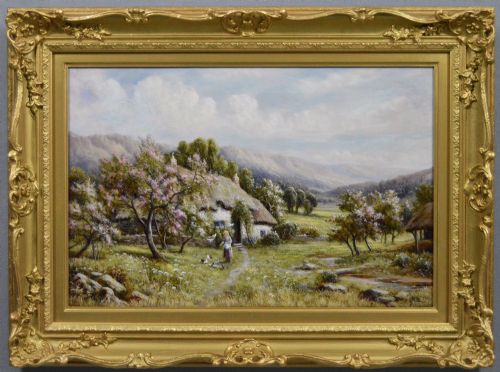
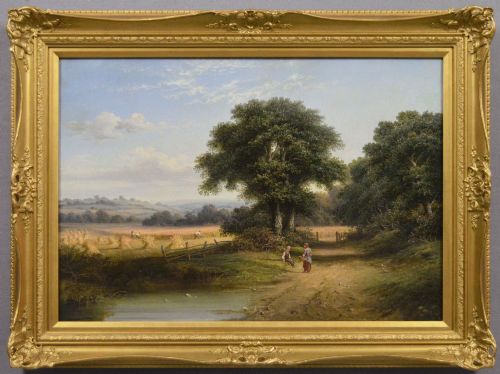
Victorian figures landscape art encompasses paintings capturing rural scenes, riversides and coastal views populated by people, offering a glimpse into nineteenth-century life.
Victorian Figures Landscape Art
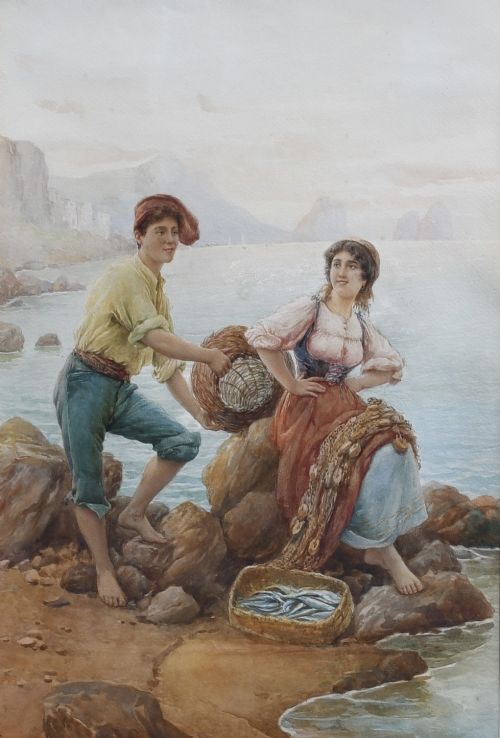
Victorian figures landscape art displays the natural world interwoven with human activity, typically placing travellers, farm workers, or fisherfolk within pastoral, coastal, or river settings. These works record the scenery and rural habits of the nineteenth century, ranging from quiet woodland pools to bustling harvest fields.
The version most frequently met here is the oil painting on canvas or watercolour on paper, originating from British and European schools across the nineteenth century and into the early twentieth century. Examples often showcase specific locales such as the Thames, Welsh valleys, or Dutch streets alongside local inhabitants.
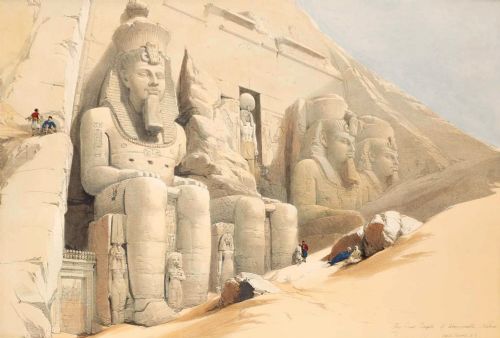
Subjects stretch from intimate pastoral idylls to broader topographical views, capturing a spectrum of Victorian artistic interests from realism to orientalism. Each piece connects a specific landscape with the human scale, placing figures firmly within their environment.
Quality Variations
Quality rests upon the artist's ability to integrate human figures naturally into the surrounding topography, where superior works render anatomical proportion and lighting with acute precision.
The handling of atmospheric conditions, such as the play of light across water, sunset woodland tones, or winter frost, distinguishes masterwork compositions from standard topographical recordings.
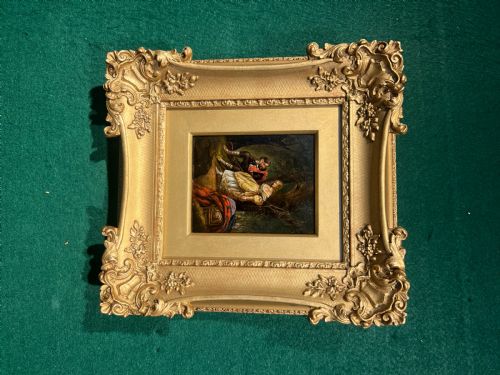
The preservation of the original canvas, pigment vibrancy and the integrity of the period giltwood framing directly influence the visual impact of the piece.
Monks fishing and cows sharing a riverbank quietly populate the nineteenth century alongside hardworking horses and carts.
Thomas W Lascelles·Robert John Hammond·Walter Heath Williams·David Roberts·Carlo Ferranti·Henry H Parker·David Cox·Honore Cavaroc·Thomas Baker of Leamington·Thomas Edward Roberts·Henry John Yeend King·Cornelis Christian Dommersen·Robert Thorne Waite·Colin H Greenwood·John A Houston·Frank Hyde·Frederick Waters Watts·Paul Jones·Will Anderson·Thomas Lound·George Turner·Harold Swanwick·William James Muller·Paul Viry·Henry Brittan Willis
The Victorian Figures Landscape Art Glossary
- Oil on Canvas
- Pigment mixed with drying oil applied to a stretched fabric surface. This combination allows for rich blending and textured impasto work.
- Watercolour
- Water-soluble pigment suspended in a solution applied to paper. It achieves translucent washes and delicate light effects.
- Giltwood
- Wood carved and coated with gold leaf or a gold-coloured finish. It provides a reflective decorative border popular in nineteenth-century framing.
- Pastoral
- A genre depicting rural life and idealized country scenes. These works often focus on agriculture, shepherds, and tranquil riverbanks.
- Realism
- An artistic movement focusing on everyday subjects and situations accurately and truthfully. It avoids theatrical embellishment in favour of factual observation.
Victorian Figures Landscape Art: Frequently Asked Questions
What defines Victorian figures landscape art?
These works combine natural scenery with human subjects, portraying everyday activities like harvesting, fishing, or travelling through the countryside.
They reflect nineteenth-century artistic approaches ranging from detailed realism to atmospheric watercolour studies.
Where were these paintings displayed?
In the nineteenth century, these artworks hung primarily in domestic parlours and drawing rooms as decorative centrepieces.
Collectors valued them for bringing the perceived tranquility of rural life indoors.
How do I care for an oil painting?
Keep paintings away from direct sunlight and dramatic temperature fluctuations to prevent the canvas and oil paint from cracking.
Dust the surface gently with a dry, soft brush without using liquid cleaners.
How do I identify the period?
Examine the framing materials, canvas preparation, and stylistic markers such as Victorian realism or pastoral composition.
Signatures, dealer labels on the reverse, and biographical details of artists like Thomas W Lascelles or Henry H Parker also help date the work.