

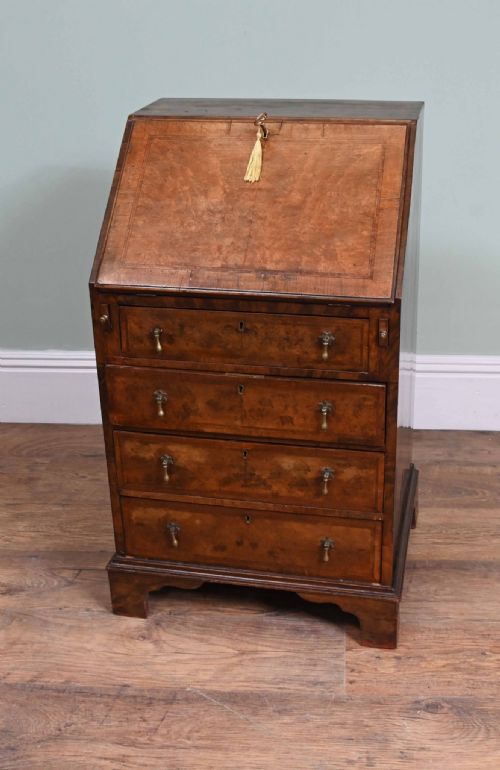


Victorian Fall Front Desk
A victorian fall front desk organises letters and papers behind a hinged writing surface that drops flat for use.
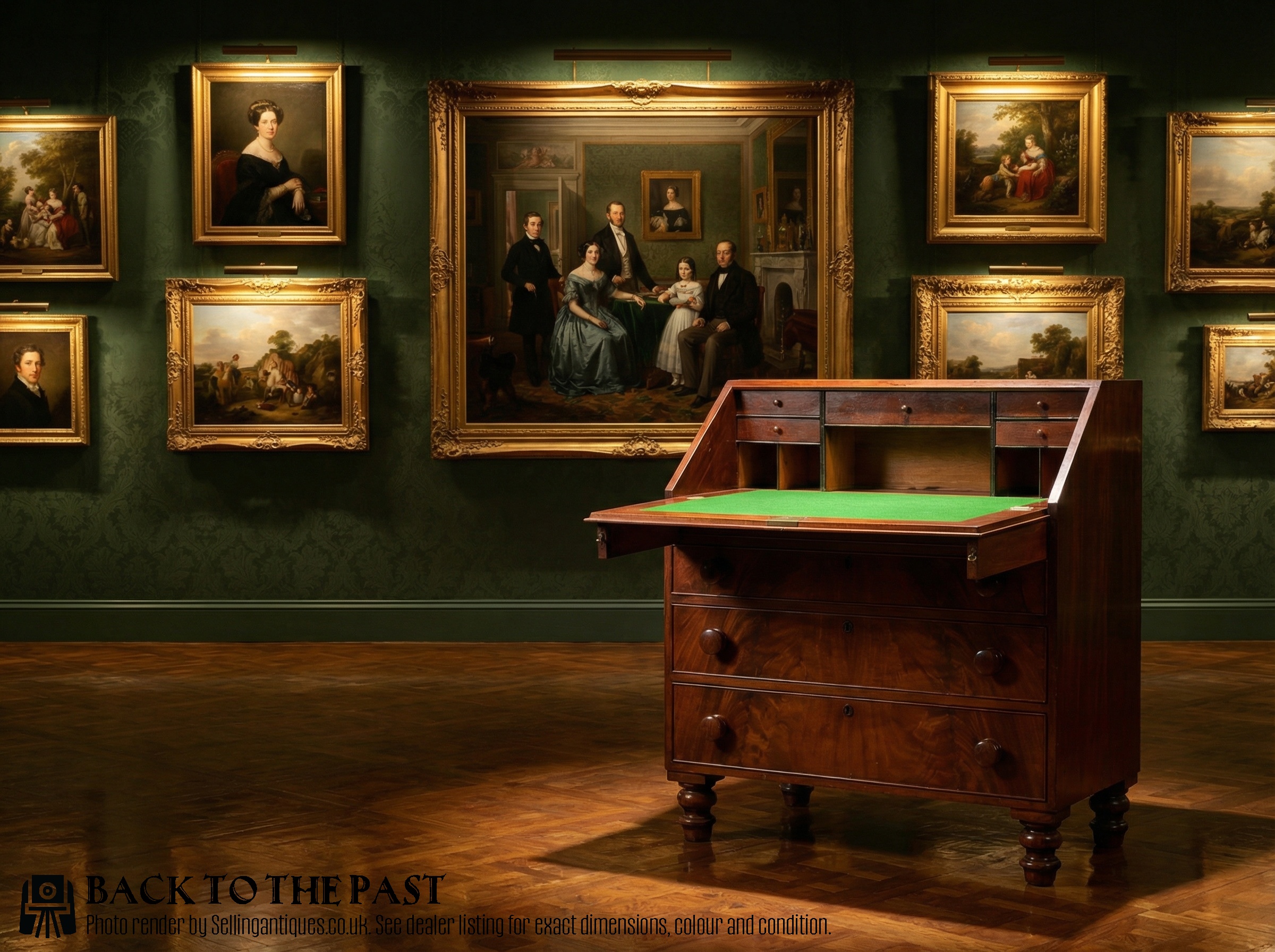
Victorian Fall Front Desk
A victorian fall front desk takes the form of a bureau, secretaire abattant, or bureau bookcase, designed primarily for household correspondence and record keeping. The hinged flap, or fall front, conceals internal pigeonholes and small drawers intended for stationery and documents.
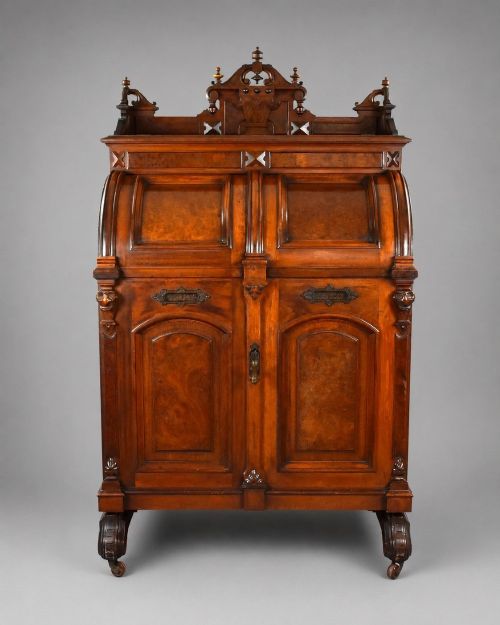
Mahogany, walnut, burr walnut, and oak dominate the selection, appearing across periods from the nineteenth century into the early twentieth century. Examples range from compact ladies writing desks to substantial bureau bookcases with glazed upper sections.
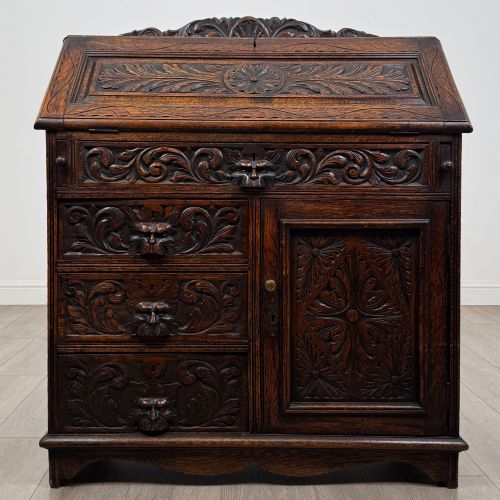
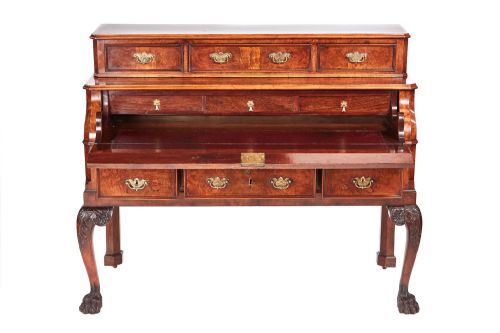
Regional and stylistic variations emerge through pieces finished with marquetry, brass inlay, or carved details such as paw feet and green man motifs. Makers and retailers including Gillows, Liberty of London, and Harris Lebus contributed specialised forms to the market.
How they were made
Cabinet makers utilised solid timbers alongside fine veneers like burr walnut, rosewood, amboyna, and satinwood applied to secondary woods such as pine and mahogany. Construction methods relied on dovetailed drawer boxes and mortise and tenon joints to support the weight of the dropping writing flap.
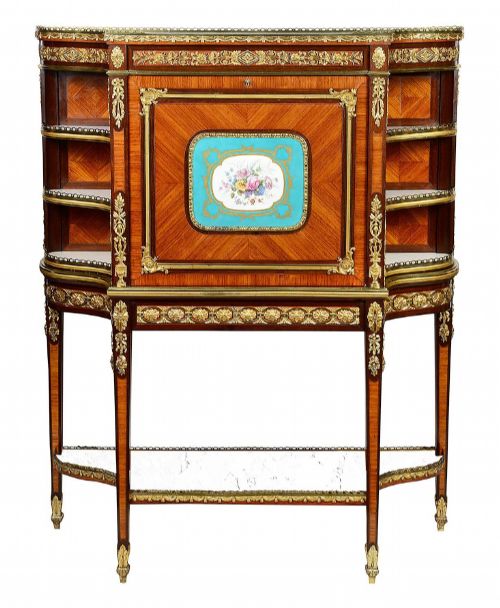
Surface decoration involved marquetry inlays, brass mounts, and polished finishes that highlighted the natural grain patterns of walnut and mahogany. Interiors frequently incorporated secret compartments, small concealed drawers, and pigeonholes constructed with meticulous joinery.
Certain pieces incorporate hidden compartments designed to guard secret letters from curious household guests.
What varies in quality
The choice of primary timber and veneer selection dictates the visual impact of each desk, with figured burr walnut and amboyna representing the upper tier of cabinet making. Richly detailed marquetry work and heavy brass inlay indicate workshops employing skilled artisans.
Internal complexity sets finer pieces apart, particularly those featuring purpose built secret drawers, intricate pigeonhole arrangements, and secondary locking mechanisms. The crispness of carved elements, such as paw feet or applied foliage, reflects the time invested by the maker.
Blake, London·Harris Lebus·Liberty of London·Gregory and Co·Morison of Edinburgh·Gillows
The Victorian Fall Front Desk Glossary
- Fall front
- A hinged panel that pulls down or folds forward to create a horizontal writing surface. It conceals internal compartments when closed.
- Secretaire abattant
- A tall vertical cabinet featuring a drop down writing flap over lower drawers or doors. This form originated in France.
- Bureau bookcase
- A writing bureau combined with an upper shelving or display section enclosed by glass doors. These pieces provide both storage and workspace.
- Marquetry
- Decorative patterns formed by fitting together small pieces of wood veneer. Artisans utilised contrasting timbers to create floral or geometric designs.
- Pigeonhole
- A small open compartment within the desk interior designed for sorting letters and papers. These compartments sit above the writing surface.
Victorian Fall Front Desk: Frequently Asked Questions
How do I identify the wood used?
Examining the grain patterns and colour helps distinguish between timbers like mahogany, walnut, oak, and rosewood. Burr walnut and amboyna display highly figured, swirling grain characteristics.
Secondary woods like pine often appear inside drawer linings or on the backs of pieces where decorative veneers were unnecessary.
Where were these desks placed?
Victorians placed these desks in studies, drawing rooms, and bedrooms depending on the scale and purpose of the specific piece. Compact bureau desks suited private chambers, while larger bureau bookcases occupied formal reception rooms.
Freestanding models allowed placement away from walls, though most traditional forms sat flush against room boundaries.
How do secret drawers work?
Secret drawers operate through hidden spring mechanisms, sliding panels, or removable partitions within the interior pigeonhole structure. Owners utilised these concealed compartments for storing valuables and private documents.
Cabinet makers designed these elements to blend seamlessly with the surrounding woodwork so they remained unnoticed by casual observers.