
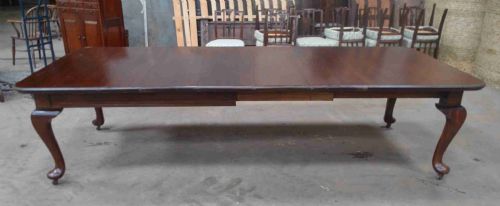
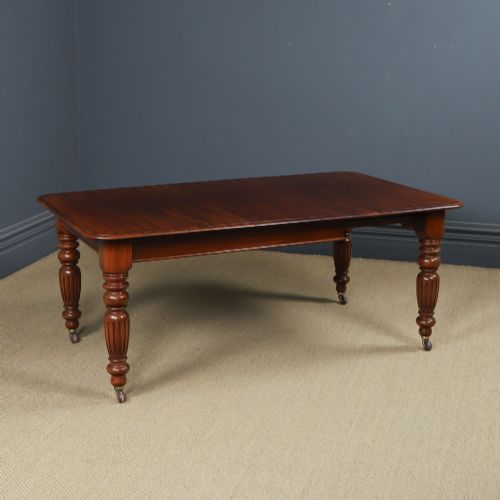
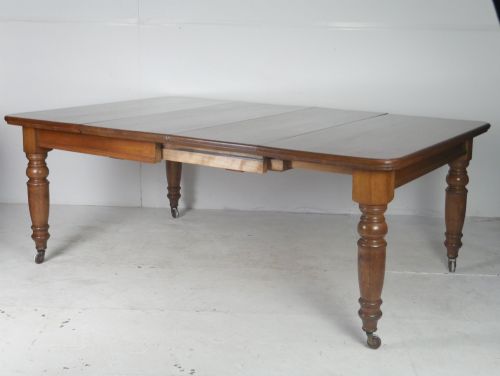
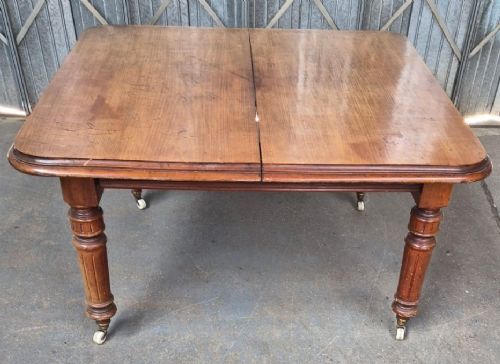
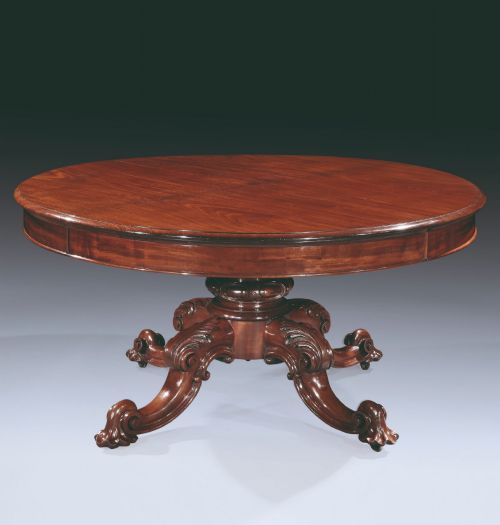


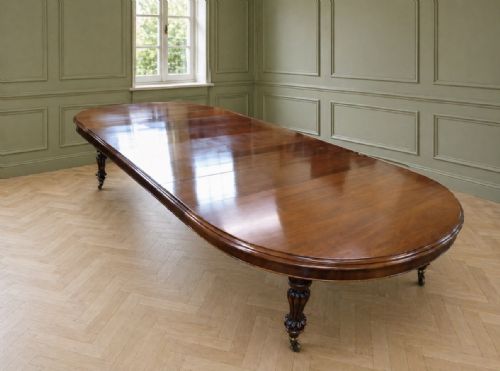


Victorian Expandable Dining Table
A Victorian expandable dining table brings generous proportions and clever engineering together, offering adaptable seating for gatherings of any size.
Victorian Expandable Dining Table
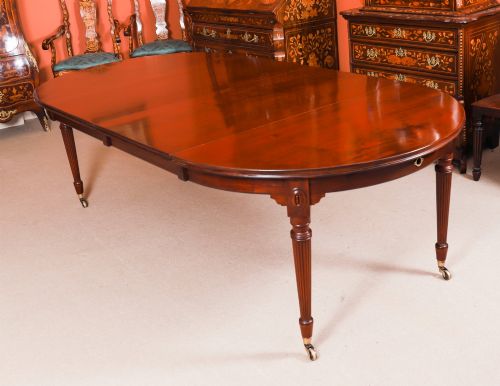
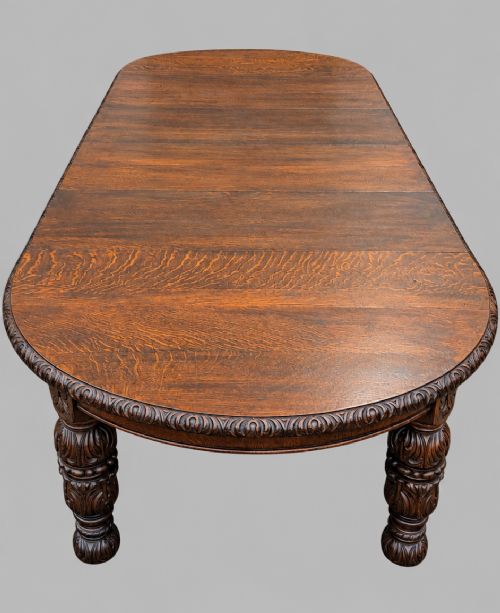
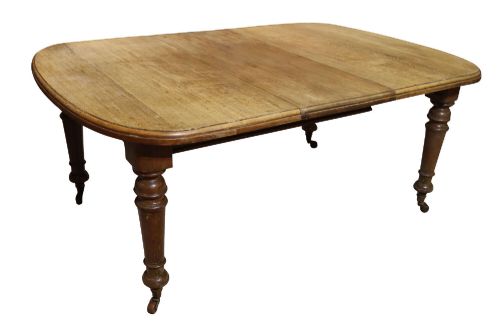
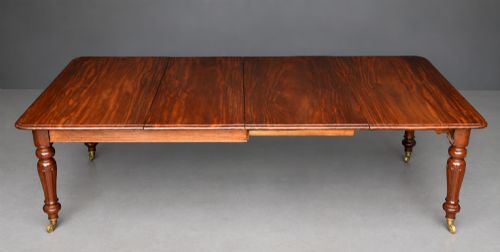
A Victorian expandable dining table is a functional domestic centerpiece designed to lengthen for larger dinner parties and contract for everyday family use. When searching for a Victorian expandable dining table, buyers primarily encounter pieces shaped from rich mahogany, oak, and flame mahogany, spanning the nineteenth century.
The most common forms on this page include wind-out tables operating with internal screw mechanisms and multi-leaf designs supported by sturdy pedestals or turned legs. These dining tables range from modest six-seater models up to grand boards seating over twenty guests.
Originating across the nineteenth century, these pieces reflect the shifting social demands of households that required adaptable furniture for formal dining. William IV and Victorian Gothic revival influences appear among the selections, demonstrating how cabinetmakers adapted classical forms to suit expanding Victorian homes.
How they were made
Cabinetmakers utilised dense native and imported timbers, notably solid mahogany and figured mahogany veneers, which were hand-polished to showcase deep grain patterns. Supporting structures frequently incorporated internal brass winder mechanisms, castors, and robust oak framing to handle the heavy weight of additional leaves.
Carved details such as claw and ball feet, turned legs, and pedestal bases required meticulous hand-tooling by skilled artisans. The mechanical ingenuity of the wind-out system relied on precise metal gear tracks that allowed smooth expansion without compromising the stability of the tabletop.
Many tables hide their brass winding handles away like lost keys, waiting for someone to unlock extra dinner guests.
What varies in quality
Quality rests upon the selection of timber figure, the integrity of the mechanical extension system, and the precision of the joinery in the leaves. Superior examples display seamless grain matching across multiple inserted leaves and smooth operation of the internal brass winding mechanism.
The sophistication of carved ornamentation, such as deep relief work on claw and ball legs, distinguishes finer workshop production from simpler utilitarian pieces. Original matching leaves and robust secondary timbers like oak also elevate the standing of a table.
The Victorian Expandable Dining Table Glossary
- Wind out
- A mechanical system using a detachable handle and internal screw threads to pull the table halves apart for inserting leaves. This invention defined nineteenth-century dining convenience.
- Leaf
- A removable section of timber inserted into the centre of an extending table to increase its overall length. Extra leaves allow a compact table to accommodate large dinner parties.
- Figured mahogany
- Timber exhibiting distinctive, highly decorative grain patterns such as flame or fiddleback. Cabinetmakers reserved these choice cuts for primary visible surfaces.
- Pedestal base
- A central support column resting on feet, often branching into multiple carved legs. This construction removes corner legs to maximise legroom for seated guests.
- Castor
- A small wheel fitted to the bottom of table legs to ease movement across floor surfaces. They allowed heavy mahogany and oak dining tables to be repositioned easily.
Victorian Expandable Dining Table: Frequently Asked Questions
How do I operate the winding mechanism?
Insert the winding handle into the designated socket underneath or on the side of the table rim. Turn the handle clockwise to separate the halves and create the gap needed for the leaves.
Once the gap matches the width of your leaves, drop them into place and turn the handle anticlockwise until the joints close tightly together. Ensure the surfaces align evenly before setting formal tableware.
How do I care for the mahogany surface?
Dust the timber regularly with a soft, dry cloth to prevent grit accumulation. Apply high-quality beeswax periodically to nourish the grain and maintain the polished sheen.
Avoid placing hot dishes or wet glasses directly onto the wood to prevent ring marks and heat blistering. Use protective mats and table pads during dining occasions.
How do I distinguish William IV from later Victorian styles?
William IV pieces often display heavy scrollwork, robust pillar supports, and architectural motifs dating from the early nineteenth century. Mahogany timber from this era tends to be exceptionally dense and dark.
Later Victorian tables frequently incorporate slimmer turned legs, Gothic revival influences, or more refined mechanical wind-out systems. Examining the leg profiles and underframe construction helps determine the precise era.