


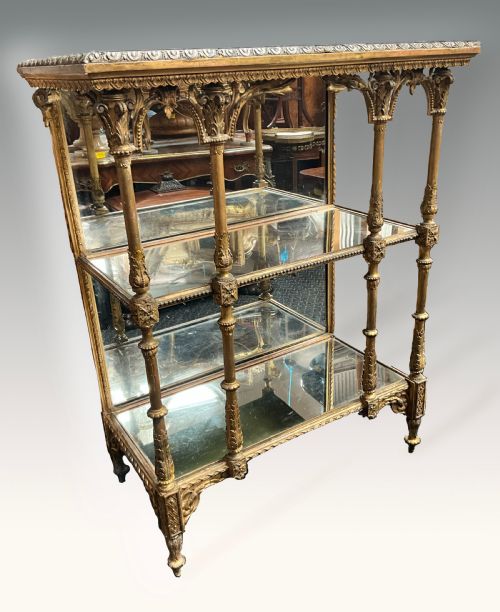


Victorian Etagere Mirror
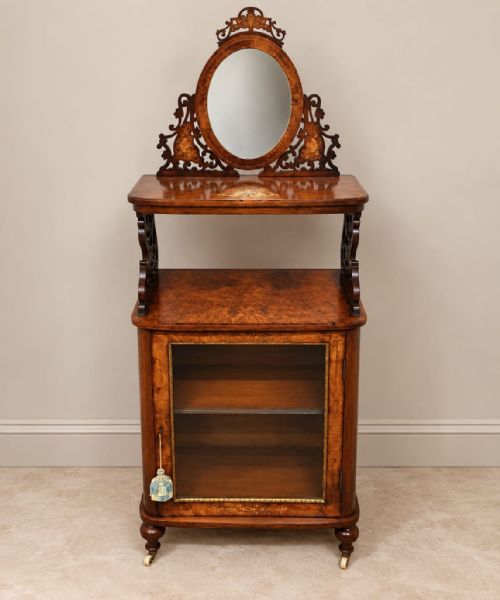
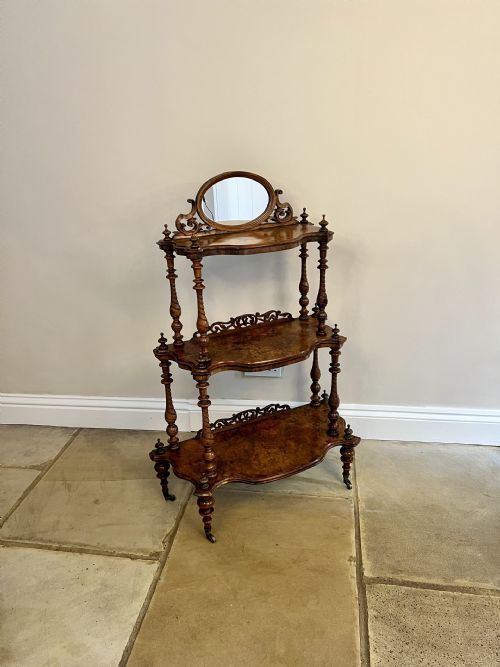
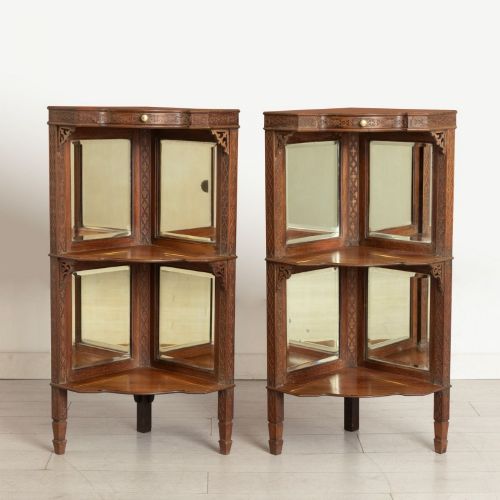
These pieces of a victorian etagere mirror combine open display shelving with reflective glass surfaces from the nineteenth century.
Victorian Etagere Mirror
A victorian etagere mirror brings together tiered shelving and integrated mirror glass, originating primarily from the nineteenth century across the Victorian era. These decorative items function as both display furniture and wall-hanging shelves, designed to hold small ornaments while reflecting light into a room.
The selections span various forms including whatnots, side cabinets, and wall shelves built during periods such as 1860, 1880, 1890, and 1900. Rosewood, mahogany, walnut, and burr walnut form the primary wooden structures supporting the glass elements.
Materials and construction
Cabinetmakers utilised rich timber species like rosewood, mahogany, and burr walnut, frequently enhancing surfaces with marquetry inlay and gilt wood or gesso details. Glass and mirror glass were carefully fitted into frames or integrated directly into the tiered shelving structures.
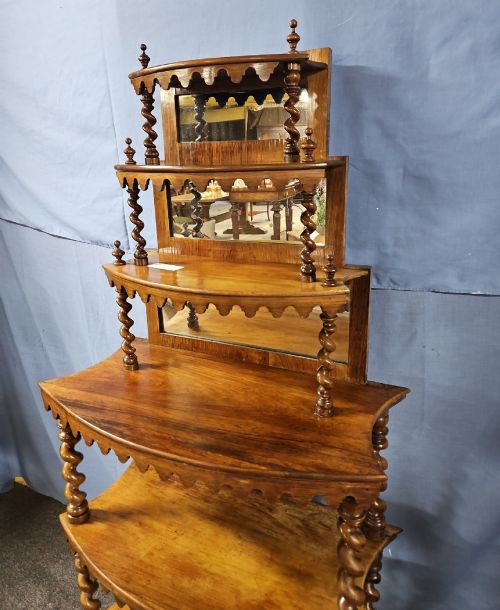
Some nineteenth-century makers incorporated hollow barley twists into multi-tier displays just to show off.
Assessing quality
The refinement of the woodwork largely dictates the standard of each piece, distinguishing simple turned supports from elaborately carved frames or intricate marquetry inlay. Superior examples often employ desirable timbers like burr walnut and rosewood paired with well-executed gilding or brass accents.
The integration of the mirror glass within the tiers and cabinets also affects the overall standard, where complex multi-tier configurations and fitted drawers demonstrate greater ambition in design and cabinetmaking skill.
Edwards & Roberts
The Victorian Etagere Mirror Glossary
- Etagere
- A piece of furniture consisting of a set of open shelves for displaying small objects or ornaments. These tiered structures often incorporate mirror glass.
- Whatnot
- An open multi-shelved piece of furniture used for storing or displaying bric-a-brac. Examples frequently date from the Victorian period.
- Marquetry
- Decorative veneer applied to furniture in geometrical patterns or pictorial designs using various woods. This technique appears on several nineteenth-century cabinets.
- Burr walnut
- A highly figured wood grain obtained from the wart-like growths on walnut trees. It was favoured by cabinetmakers for decorative panels.
- Gesso
- A plaster mixture used as a base for painting or gilding on wood surfaces. It provides a smooth ground for decorative gilt finishes.
Victorian Etagere Mirror: Frequently Asked Questions
What is a victorian etagere mirror?
A victorian etagere mirror is a tiered display shelf combined with mirror glass, originating from the nineteenth century.
These pieces were built to showcase decorative items while brightening rooms through reflected light.
How were these mirrors used?
Victorian households utilised these multi-tiered shelves for displaying small ornaments, ceramics, and prized possessions.
The integrated mirrors served to bounce natural light around sitting rooms and parlours.
Which woods were commonly used?
Cabinetmakers primarily worked with rich hardwoods including mahogany, rosewood, walnut, and burr walnut.
Some pieces also incorporated bamboo or oak depending on the specific style and period.
How do styles differ?
Styles range from standard Victorian designs to Aesthetic Movement pieces and Louis XVI Revival forms.
Decoration varies from plain polished timbers to elaborate marquetry inlay, barley twists, and gilt gesso finishes.
Where do these pieces fit in a modern home?
These wall shelves and etageres suit reception rooms and hallways where vertical display space is useful.
Their reflective panels help create a sense of depth and light in smaller interiors.