



Victorian Equestrian Pottery
Victorian equestrian pottery brings the pageantry of the nineteenth century into the room through earthenware horses, riders, and hunting scenes.
Victorian Equestrian Pottery
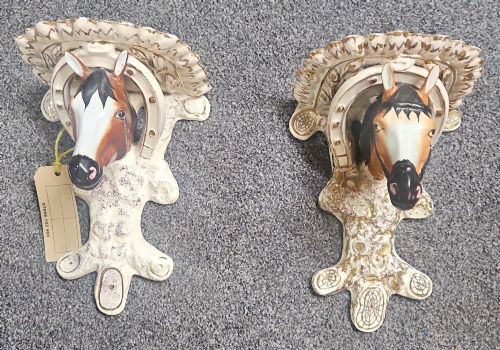
Victorian equestrian pottery encompasses nineteenth century earthenware figures, wall brackets, and mugs depicting horses, riders, and hunting subjects. Collectors encounter flatback figures designed for mantelpieces, pairs of mounted subjects, and functional vessels decorated with transfer-printed hunting scenes.
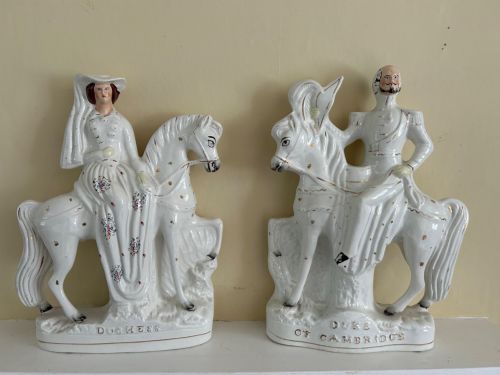
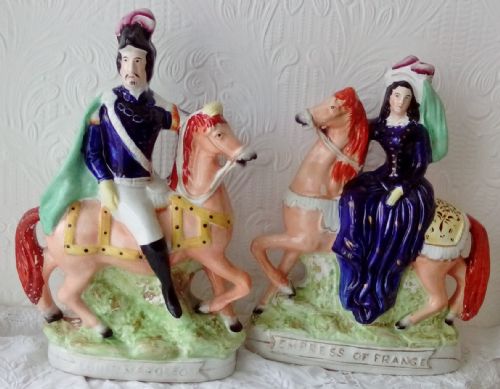
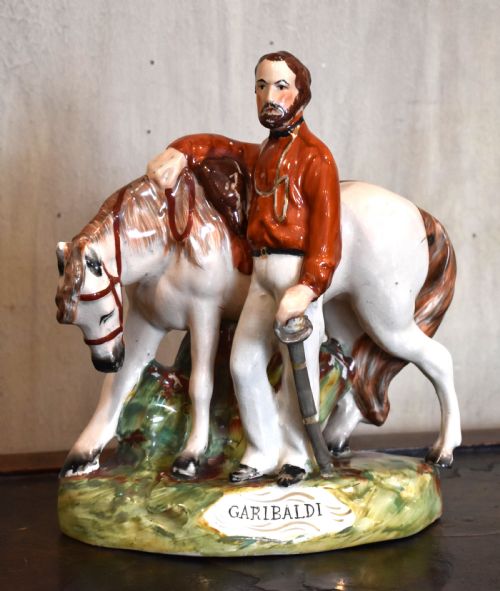
The most common form on this page is the Victorian Staffordshire flatback figure, often portraying historical or fictional riders on horseback. These pieces range from royalty and military heroes to Scottish Highlanders and jockeys.
Origins stretch across nineteenth century English potteries, with specific examples identified as Staffordshire or Scottish Portobello work. The visual language combines primitive folk art charm with the popular portraiture of the period.
Quality Variations
The standard of modelling defines the upper tier of these figures, separating crisp facial expressions and detailed equine anatomy from simpler, more generalised forms. Superior examples show careful hand-painting in the enamel colours and precise application of transfer printing.
Preservation of the original glaze and enamel surface influences desirability, as does the presence of clear factory characteristics or distinct portrait subjects. Pairs that survive intact without separation command particular attention from collectors.
Certain nineteenth century mugs hide ceramic frogs inside, ready to leap out at the drinker as the liquor empties.
The Victorian Equestrian Pottery Glossary
- Flatback
- A ceramic figure modelled with a finished front and a largely unglazed, flat reverse designed to sit flush against a wall. This construction saved clay and made the pieces lighter for mantelpiece display.
- Earthenware
- A porous type of pottery fired at lower temperatures, requiring a glaze to achieve watertightness. It forms the base material for the vast majority of nineteenth century figures.
- Transfer printing
- A decoration technique where an engraved metal plate transfers a design onto paper and then onto the ceramic surface before firing. This method allowed for intricate and repeatable scenes such as hunts.
- Lead glaze
- A glossy coating containing lead oxide applied to pottery to give a smooth, vitreous finish and waterproof seal. It enhances the brightness of the underlying colours.
- Pratt Ware
- A type of multicoloured earthenware associated with underglaze printing, particularly seen on decorative jars and containers from the nineteenth century. The technique produced distinct historical and pictorial scenes.
Victorian Equestrian Pottery: Frequently Asked Questions
What is a flatback figure?
A flatback figure is a ceramic piece moulded with a detailed front and a flat, unglazed back. Potters designed them this way so they could sit neatly on mantelpieces against walls.
This method also saved materials during production while maintaining a decorative appearance from the front.
How do I display these pieces?
These ceramic figures suit stable shelves, mantels, and wall brackets where they remain safe from knocks. Keeping them out of direct sunlight helps protect the painted enamel surfaces.
Pairs look best displayed together to preserve the symmetry intended by the original potters.
Are hunting scenes common?
Hunting scenes appear frequently on both figures and mugs from this era. Potters used transfer printing and painted enamels to depict riders, hounds, and quarry.
Some mugs even concealed small ceramic frogs inside as a surprise for the drinker.
How are dates identified?
Dates rely on stylistic clues, historical subjects, and occasionally impressed registry marks or date stamps on the pottery. Costumes, hairstyles, and specific political figures provide reliable clues to the decade of manufacture.
Most items date from the mid to late nineteenth century during the Victorian era.