
Victorian Entry Hall Furniture
Victorian entry hall furniture gathers the practical timber seating, coat stands and console tables that greeted visitors in nineteenth century homes.
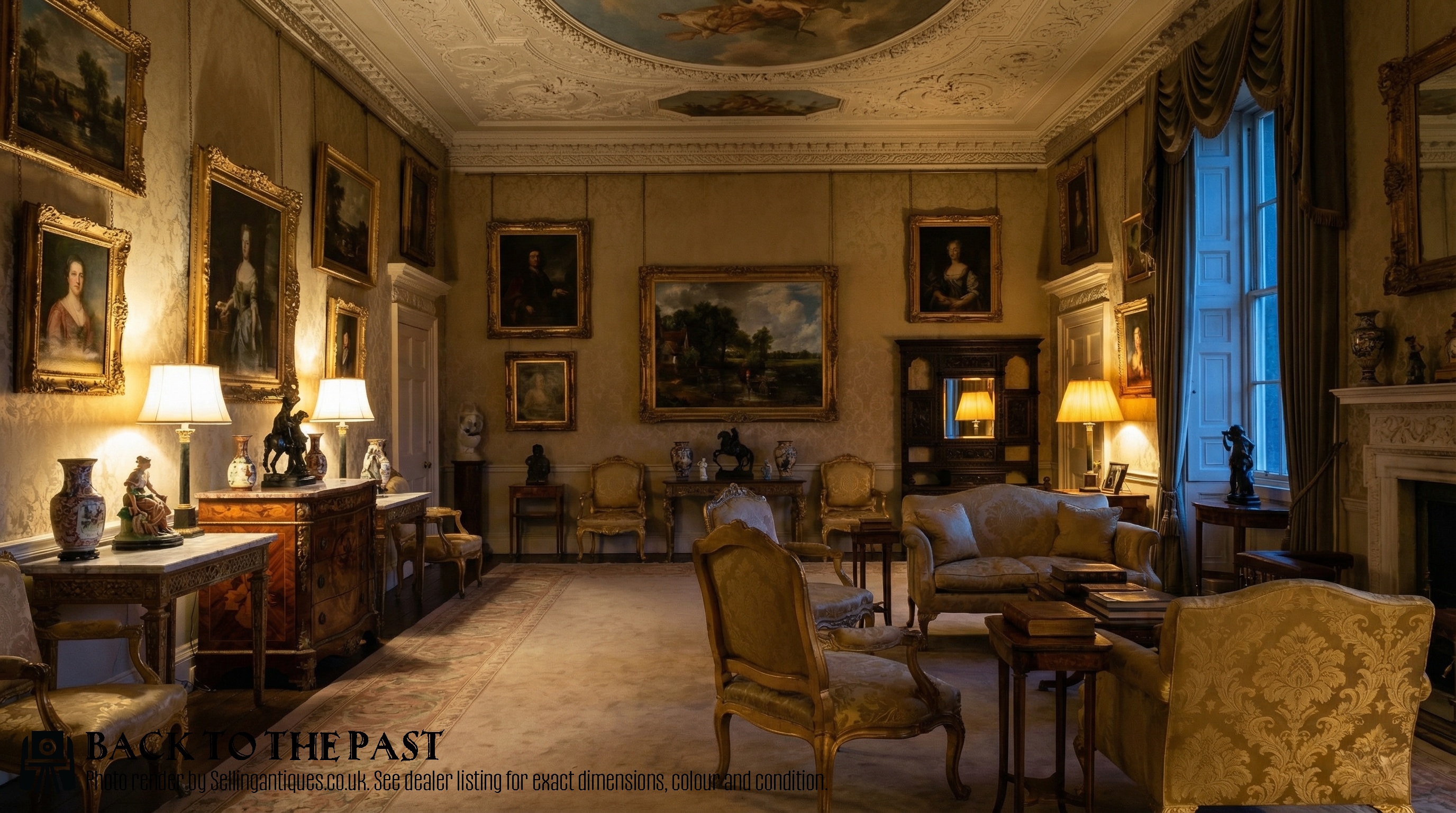
Victorian Entry Hall Furniture
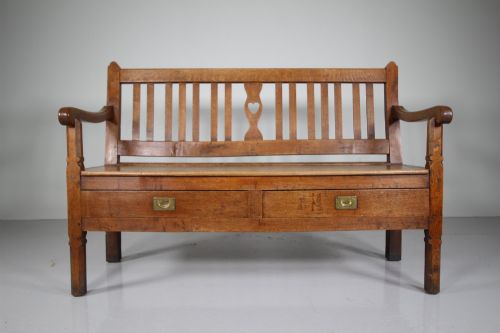
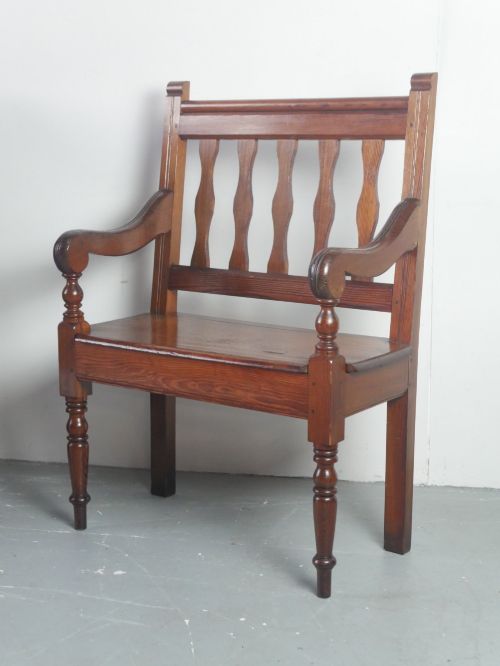
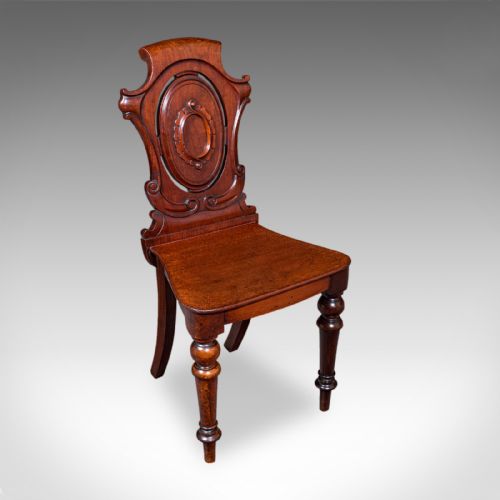
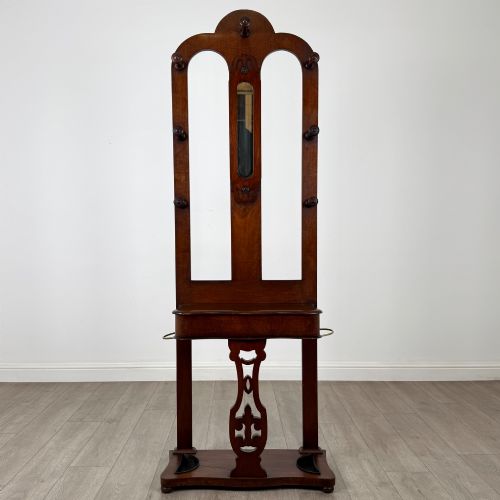
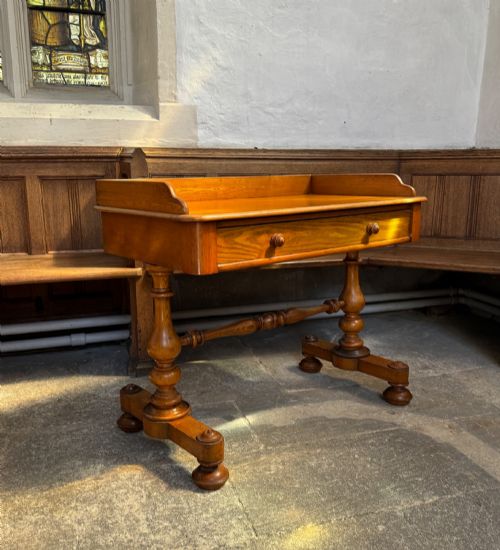
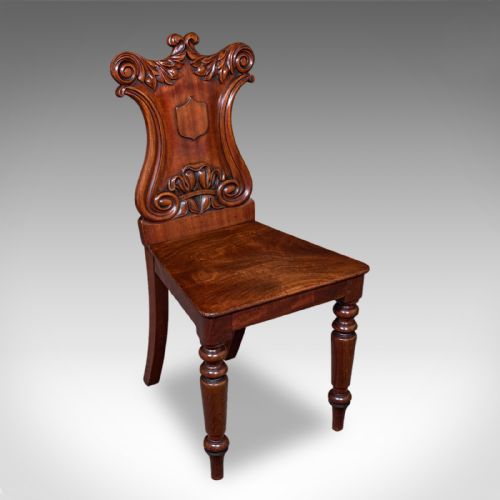
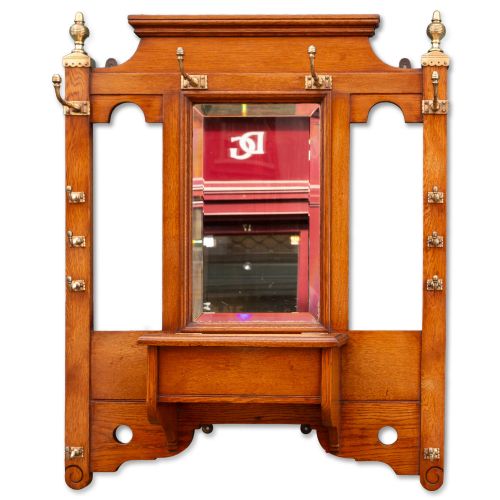
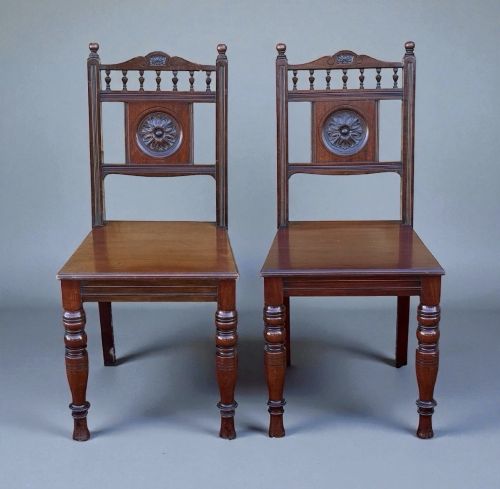
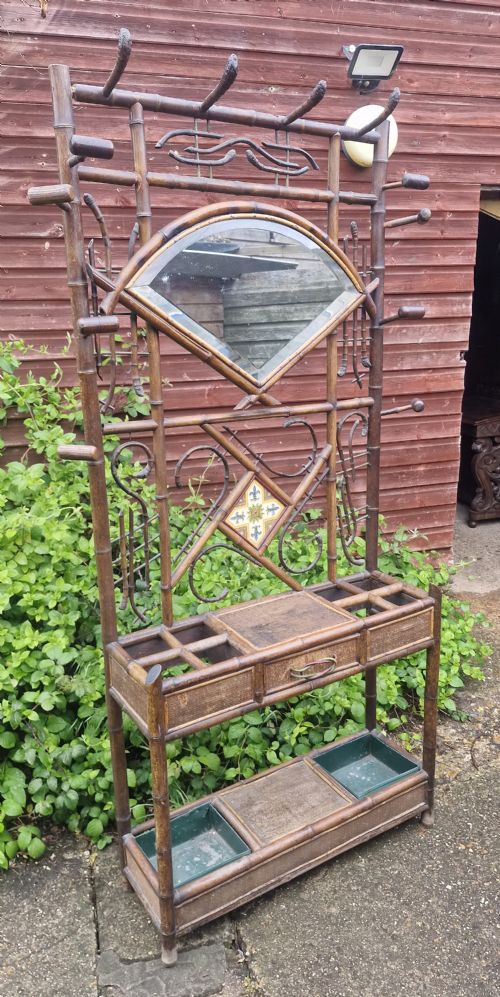
Victorian entry hall furniture includes sturdy oak hall benches, carved walnut hall chairs, mahogany hall stands and pine settles designed to equip nineteenth century vestibules and reception spaces. Pieces range from modest pine benches and bentwood coat stands to elaborate Gothic Revival oak stands fitted with mirrors and brass hooks.
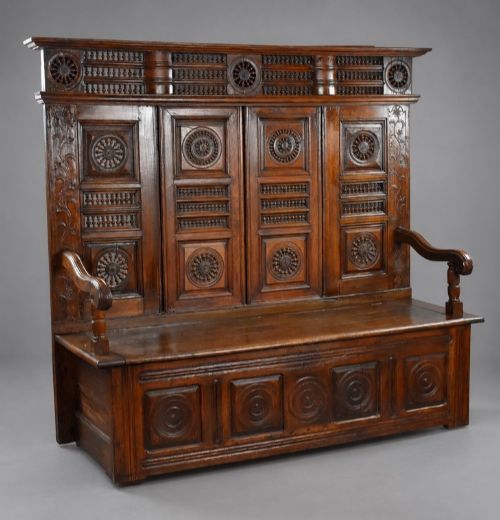
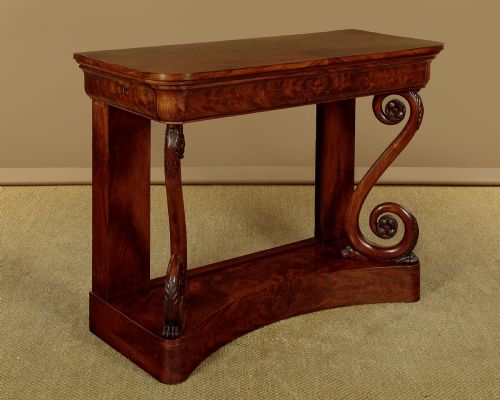
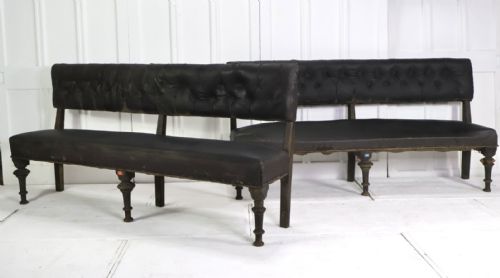
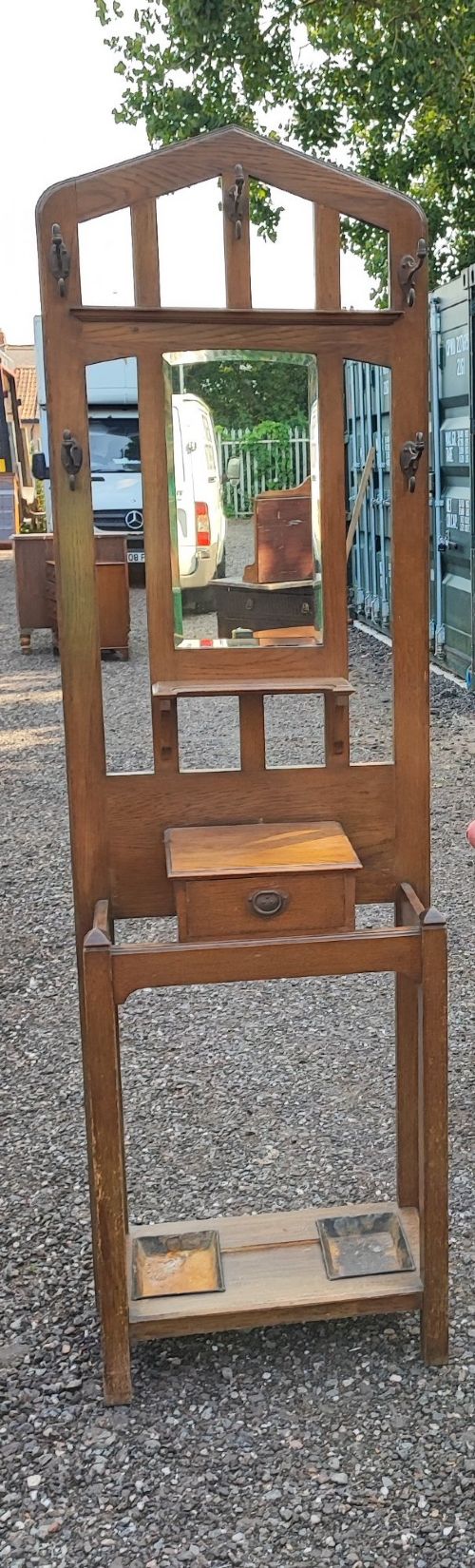
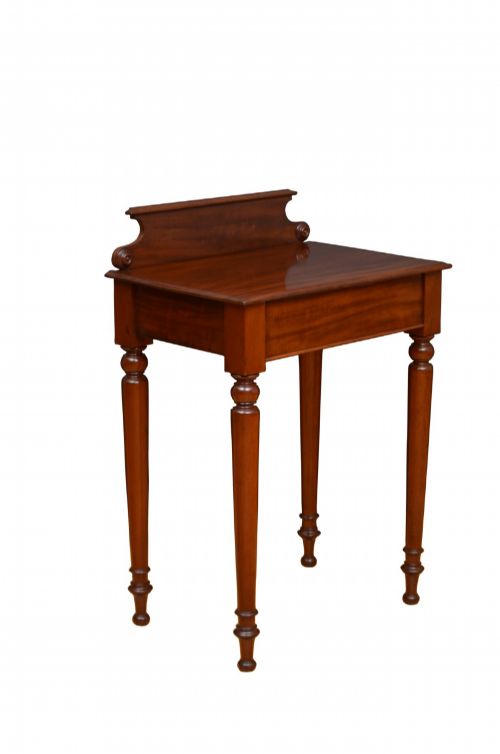
Buyers meet varied seating forms spanning simple side chairs with shield backs, pairs of Irish country house benches, and high back settles with lift up seats or storage boxes. Hall stands combine umbrella wells, drip pans and hat pegs, while console tables and washstands provide narrow surfaces for correspondence and calling cards.
Materials and Technique
Cabinet makers utilised domestic and imported timbers including solid oak, mahogany, walnut, pitch pine and rosewood, often shaping them with deep relief carving, linenfold panelling or applied barley twists. Structural joinery relies on pegged mortise and tenon joints for seating and heavy frames, ensuring stability for daily domestic use.
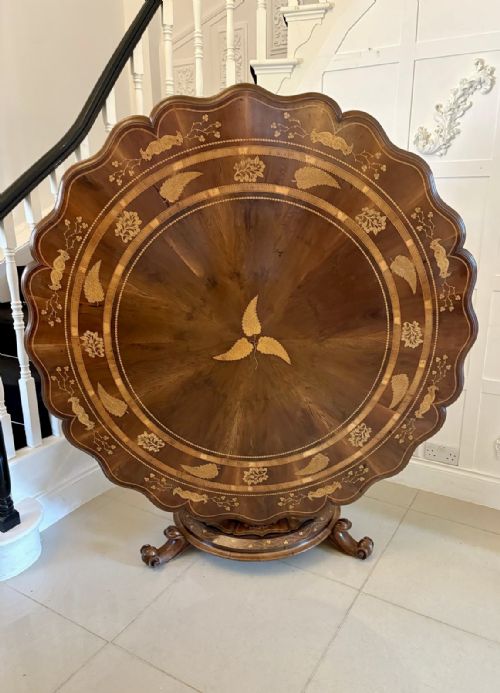
Accessory elements integrate functional metals such as cast iron hooks, brass rails and inset mirrors, alongside marquetry inlay and painted finishes on pine. Woods receive wax or polish treatments that highlight natural grain patterns across items like golden oak racks and yew wood centre tables.
Design styles represented include Gothic Revival, Jacobean Revival, Renaissance Revival, and Irish country vernacular.
Distinctions in Quality
Quality rests upon the depth and crispness of the timber carving, the selection of figured veneers or solid hardwoods, and the integrity of the original construction. Pieces featuring detailed Gothic tracery, Greenman motifs, or specialised marquetry display superior workshop proficiency compared to plain vernacular utility items.
Proportion and material consistency dictate distinction, such as matching timber selections across sets of hall chairs or robust framing in large mirror backed hall stands. Retaining original hardware, drip pans, and uncompromised structural surfaces elevates the standing of an item within the period.
Druce and Co·Egan Workshop
The Victorian Entry Hall Furniture Glossary
- Hall Stand
- A tall piece of furniture designed for entranceways, typically incorporating coat hooks, a mirror, and umbrella stands with metal drip trays. These items organise outerwear and greeting accessories.
- Settle
- A wooden wooden bench with a high back, solid arms, and frequently a box seat or chest beneath the hinged lid. It sheltered sitters from draughts in corridors and halls.
- Console Table
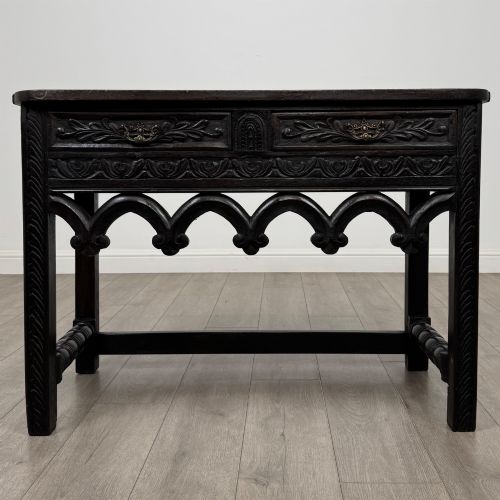
- A narrow table fixed against a wall, often supported by brackets or console legs, used in hallways for placing keys and calling cards. They frequently feature a single drawer.
- Gothic Revival
- An architectural and decorative style drawing inspiration from medieval design, marked by pointed arches, trefoils, and heavy carved tracery. This aesthetic appears frequently on nineteenth century oak seating.
- Marquetry
- The art of applying decorative veneer pieces of different woods and materials to a structure to form intricate pictorial designs. Examples include specialised yew wood reception tables.
Victorian Entry Hall Furniture: Frequently Asked Questions
What fits in a small hallway?
Narrow console tables, single hall chairs, and wall mounted coat racks provide functional surfaces without dominating limited floor space in compact entranceways.
Items with shallow depths allow comfortable passage while offering places to store hats, coats, and small daily items.
How were hall stands used?
Victorian households utilised these tall furnishings to receive visitors' outer garments, walking sticks, umbrellas, and hats upon immediate entry.
The integrated mirror allowed a final check of attire before stepping out through the front door.
Are hall benches comfortable?
Period hall benches were primarily constructed as sturdy seating for removing boots or waiting briefly, rather than for long lounging.
Many examples feature carved wooden seats, though some incorporate upholstered pads or loose cushions for added ease.
How do I identify Gothic Revival style?
Gothic Revival pieces display architectural motifs such as pointed arches, quatrefoils, heavy chamfered framing, and deep linenfold or floral carving.
This aesthetic appears predominantly in dark oak woodwork across benches, chairs, and hall stands.