


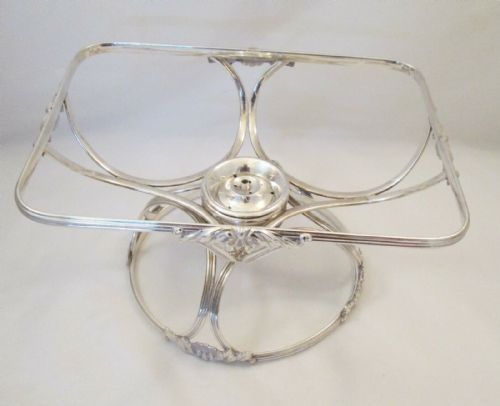
Victorian Entree Dish
A victorian entree dish brings heavy nineteenth-century silver plate to the dining table for serving grand meals.
Victorian Entree Dish
When you search for a victorian entree dish, you are looking at covered vessels designed to keep food warm at the dining table during the nineteenth century. These serving dishes appear in rectangular, double, and rotating forms, alongside related tureens and warming stands from the Victorian and Edwardian periods.
The version you are most likely to meet on this page is a silver plated piece dating from the mid to late nineteenth century, often found as a matched pair. Many of these server dishes show Regency style influences in their cast borders and handles, reflecting the transitional tastes of Victorian makers.
Materials and Technique
The majority of these table pieces utilise silver plate, electroplated nickel silver, or Old Sheffield plate applied over copper or base metal bodies. Manufacturers shaped these metals through rolling, stamping, and casting to create durable covers and bases that could withstand daily use.
Makers finished many items with applied cast borders, handles, and crests soldered onto the main body. Electroplating dominated the later nineteenth century, replacing earlier fusion methods with a smooth metallic coating over nickel silver or brass.
Assessing Quality
Quality in these serving vessels rests upon the crispness of cast decorative borders and the durability of the underlying metalwork. Better examples retain their original plating evenly across high-wear areas and feature substantial, well-balanced handles that remain rigid.
Hamilton and Inches·Mappin and Webb·Edward and John Barnard·Walker and Hall·Elkington·William Hutton and Sons·Dan Holy
The Victorian Entree Dish Glossary
- Silver Plate
- A thin layer of silver bonded or electroplated onto a base metal such as copper or nickel silver. This process provided the visual appeal of solid silver at a lower production cost.
- Electroplated Nickel Silver
- A copper, nickel, and zinc alloy coated with a layer of pure silver through an electrolytic process. It became the dominant base material for tableware from the mid-nineteenth century onward.
- Old Sheffield Plate
- A composite material made by fusing a thin sheet of silver to a thicker copper ingot before rolling them into sheets. This technique preceded modern electroplating and creates a distinctive warm tone.
- Entree Dish
- A covered serving vessel intended for the second course of a formal meal. These items often feature removable handles to allow the base to double as an extra platter.
- Tureen
- A deep covered bowl designed for serving soups, stews, or large portions of food at the table. In this selection, they appear alongside standard serving dishes.
Victorian Entree Dish: Frequently Asked Questions
How were entree dishes used on the Victorian table?
These covered vessels held hot food brought from the kitchen to the dining table for formal meals. Servants lifted the lids to serve portions directly onto individual plates.
Many designs included warming stands or compartments for hot water to keep food heated throughout long dining services. Some versions doubled as open platters when the covers were removed.
How do I care for silver plated serving dishes?
Wash these pieces gently in warm water with mild, non-abrasive soap after use. Dry them immediately with a soft cloth to prevent water spots.
Avoid harsh chemical dips that strip the silver plate over time. Polish infrequently using a dedicated silver cloth to maintain the shine without damaging the metal layer.
Can I still use antique entree dishes for serving food?
Most silver plated and electroplated nickel silver dishes remain safe for food service provided the plating is intact. You should check that the underlying base metal is not exposed on interior surfaces.
Hand washing is essential to preserve the vintage plating and soldered joints. Avoid storing acidic foods in these vessels for extended periods.
How do I distinguish Victorian from Edwardian pieces?
Victorian pieces generally date from the mid to late nineteenth century and often feature heavy, ornate decoration influenced by earlier Regency styles. Makers marks and date ciphers stamped into the metal help confirm the exact era.
Edwardian items tend to show lighter, more restrained proportions while utilising similar silver plating techniques. Examining the style of any engraved crests or monograms also provides clues to the date of manufacture.