





Victorian Enamelled Decanter
These Victorian enamelled decanters combine coloured glass and applied pigment, offering both practical service and decorative display for your sideboard.
Victorian Enamelled Decanter
A Victorian enamelled decanter is typically a glass vessel produced during the nineteenth century, finished with painted or fired enamel decoration. You will encounter various vessel forms on this page, including spirit decanters, wine jugs, ewers, and complete liqueur or tableware sets.
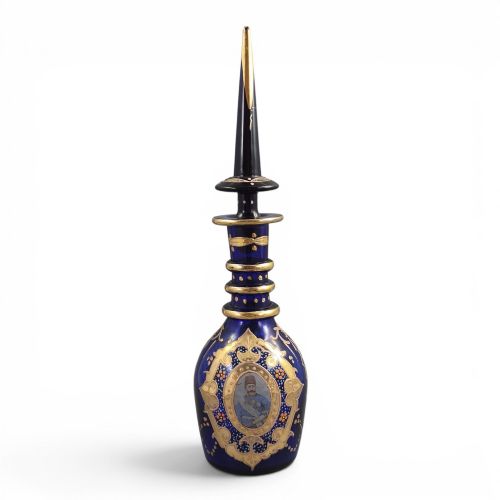
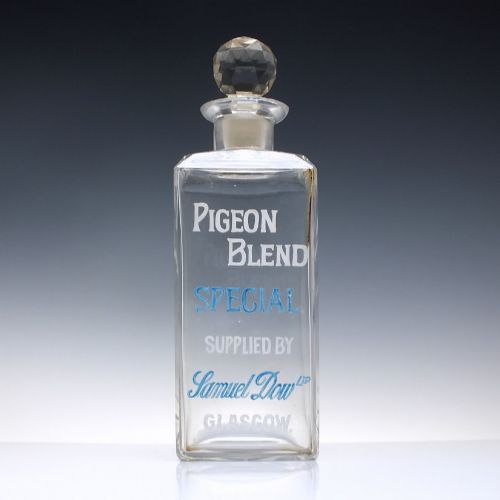
The coloured glass bodies include cranberry, cobalt, green, turquoise, and frosted glass, alongside clear glass examples. Decoration ranges from floral motifs and polychrome Dutch folk art scenes to specific Scottish whisky branding and export commissions for the Persian market.
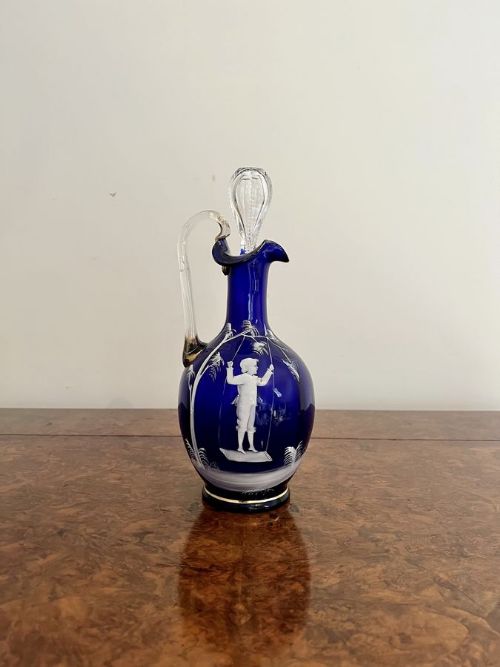
Many pieces bear the distinct white silhouette painting associated with Mary Gregory styles on coloured grounds. Other variants include pieces with gold leaf detailing or brass mounts, reflecting diverse stylistic influences from the period.
Materials and production techniques
Makers utilised free-blown or mould-blown glass as the primary substrate, imparting colour through metal oxides introduced to the molten batch to achieve deep cobalt, cranberry, and turquoise hues. Frosted effects were created by acid-etching or mechanical abrasion of the glass surface.
Enamel decoration involved applying finely ground coloured glass pastes mixed with an oily medium onto the cooled vessel, which was then fired in a kiln to fuse the pigments permanently to the surface. Selected pieces received supplementary gilding in gold leaf to highlight rims, collars, and figurative outlines.
Victorian Enamelled Decanter Retail Price Guide 2026
Typical asking prices for victorian enamelled decanter among the pieces listed under this phrase on Sellingantiques today, from the lower quarter to the upper quarter. They describe what is for sale here now, not the wider market.
Several nineteenth-century Scottish decanters are boldly labelled for specific regional blends like Pigeon Blend and Cattos Vosh.
Assessing craftsmanship and finish
Quality rests upon the precision and durability of the enamel work, where finer examples display crisp outlines, secure pigment fusion, and delicate brushwork rather than flat, opaque application. The weight and clarity of the base glass vessel also indicate production standards.
The complexity of the design influences the distinction between standard tableware and exceptional display items, particularly where multi-coloured palettes, gold leaf accents, or detailed figurative scenes such as Mary Gregory silhouettes are executed with control and balance.
The Victorian Enamelled Decanter Glossary
- Enamel
- A vitreous composition fused to the surface of glass through heat. It provides durable colour and opaque detail.
- Mary Gregory
- A style of decorative glass painting featuring white enamel silhouettes of children in natural settings. The technique gained popularity during the Victorian period.
- Ewer
- A large jug with a wide spout and arched handle, often used for water or wine rather than spirits.
- Cranberry glass
- Transparent red glass coloured by the addition of gold chloride to the molten batch. It is characteristic of nineteenth-century tableware.
- Cobalt glass
- Deep blue glass created by adding cobalt oxide to the glass mixture. It forms a rich ground for contrasting enamel painting.
Victorian Enamelled Decanter: Frequently Asked Questions
What is a Victorian enamelled decanter?
It is a nineteenth-century glass vessel intended for holding spirits or wine, decorated with painted and fired enamel designs.
These pieces reflect the diverse decorative tastes of the Victorian era, ranging from floral patterns to regional branding.
How do I clean a decanter?
Wash them gently by hand using warm water and mild detergent, avoiding harsh abrasives that could damage the enamel.
Submerging decorated glass for prolonged periods can risk softening old pigment or gilding.
What was the Mary Gregory style?
It is a decorative convention defined by white enamel silhouettes depicting children amidst foliage or outdoor scenes.
These designs appear on various coloured glass bodies from the nineteenth century.
Are these decanters safe for use?
While many remain structurally sound for holding liquids, historical enamel and glass can be sensitive to modern detergents and staining.
Many collectors prefer to use them for display rather than regular daily service.