


Victorian Enamel Pin
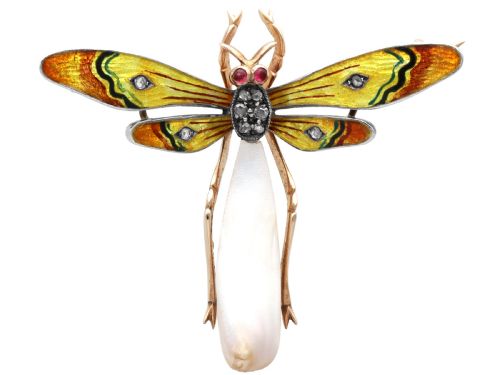
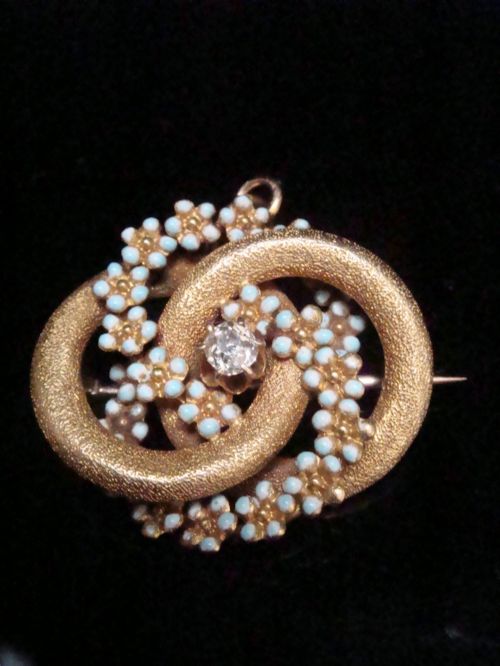
A victorian enamel pin brings miniature artistry to lapels through coloured glass fused to metal bases.
Victorian Enamel Pin
The objects most frequently met on this page span the Victorian, Edwardian, and Art Nouveau periods, often shaped in silver, gold, or silver gilt. Makers utilised translucent and opaque vitreous coatings to depict subjects in rich hues of blue, green, red, and pink, frequently embellished with pearls, diamonds, and garnets.
Materials and Techniques
Craftsmen built these items using a foundation of 18ct gold, 925 silver, or silver gilt, upon which they applied powdered glass. This vitreous substance was fired at high temperatures to fuse permanently with the metal base, creating a glossy and durable decorative surface.
Detailing often included specialised techniques such as guilloche engraving beneath translucent layers, plique-a-jour, and hand-painted enamel elements. Pieces were then finished with settings for diamonds, natural pearls, amethysts, and rubies to enhance the central design.
Distinctions in Quality
The standard of a piece rests heavily on the complexity of the metalwork and the precision of the vitreous fusing. Superior examples show intricate hand-engraved patterns beneath translucent layers and secure, flush settings for accompanying gemstones.
Artisanal skill dictates the finesse of the finished object, separating standard production from exceptional works by notable designers. The harmony between the enamel colour and the accompanying pearls or diamonds further elevates the overall execution.
Gustav Gaudernack·Mappin And Webb·Edward Souter Barnsley
The Victorian Enamel Pin Glossary
- Guilloche
- A decorative technique involving precise mechanical engraving cut into a metal surface under translucent enamel. This method creates repeating geometric patterns that catch the light.
- Plique-a-jour
- An enamelling technique resembling miniature stained glass where the vitreous material has no backing metal. Light passes directly through the transparent coloured sections.
- Silver Gilt
- Silver that has been coated with a thin layer of gold through chemical or electrochemical processes. This finish provides the warm tone of gold while utilising a silver base.
Victorian Enamel Pin: Frequently Asked Questions
How do I date a victorian enamel pin?
Dating relies on examining the metal purity hallmarks, fastening mechanisms, and stylistic clues inherent to the design. Pieces from the early nineteenth century often exhibit different construction methods compared to later Art Nouveau examples.
Assay marks and registration numbers stamped on the reverse provide precise documentation. Comparing the motif and setting style with dated examples in the archive helps narrow the period of origin.
What materials make up these pins?
Construction involves precious metals such as 18ct yellow gold, 14k gold, silver, and silver gilt. Vitreous enamel forms the colourful decorative body of each item.
Additional embellishments frequently include natural pearls, diamonds, rubies, amethysts, and garnets. Glass components also appear in specific decorative scent bottles and decorative items.
How were these brooches worn originally?
Victorian ladies fastened these ornaments to the collars or bodices of dresses, cloaks, and hats. Stick pins secured cravats and neckties for both men and women during the period.
Versatile pieces often featured integrated loops, allowing the owner to wear the item interchangeably as a pendant or a brooch.
Are these items suitable for daily wear?
Regular use remains possible provided the owner exercises care regarding impacts and moisture. Vitreous enamel shares properties with glass and can chip under sharp blows.
Storing pieces individually prevents scratching against other jewellery. Gentle cleaning with a soft cloth preserves the metallic lustre and the enamel surface.