




Victorian Embossed Table Box
These victorian embossed table box examples are compact receptacles for keepsakes, prized for their ornate chased surfaces and tactile presence.
Victorian Embossed Table Box
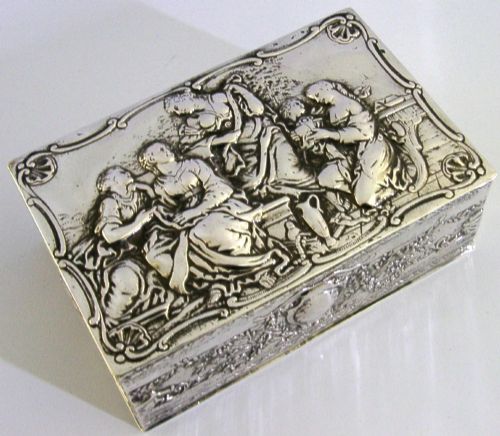
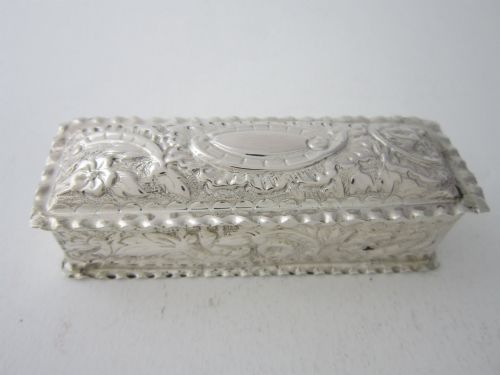
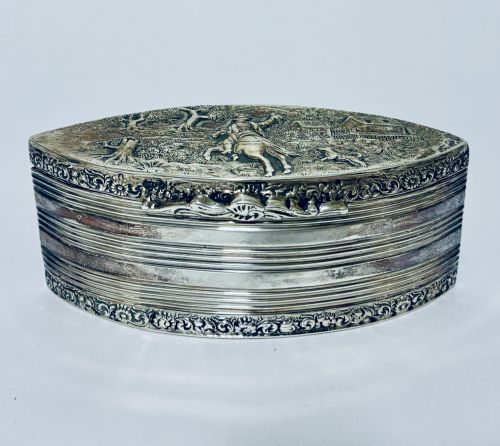
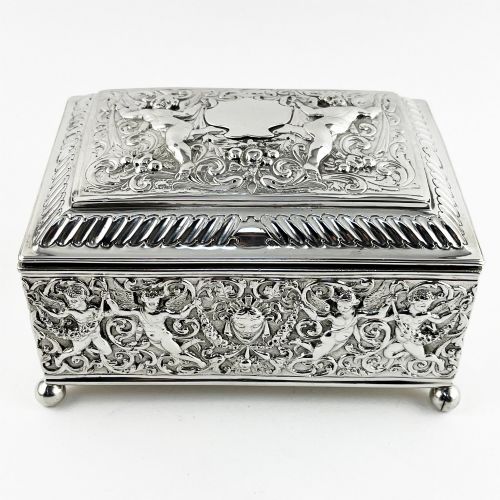
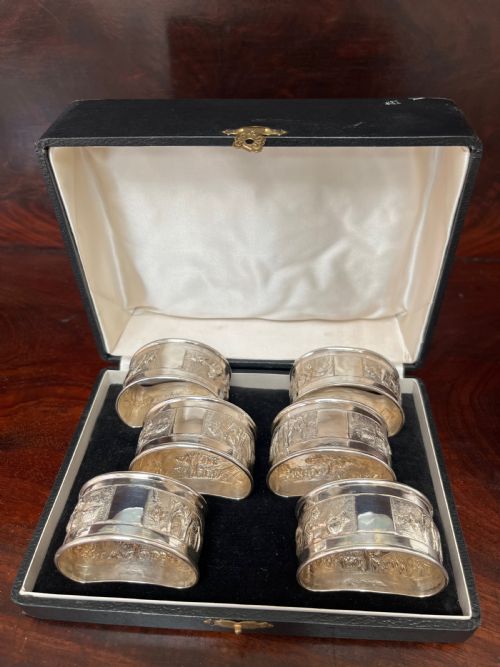
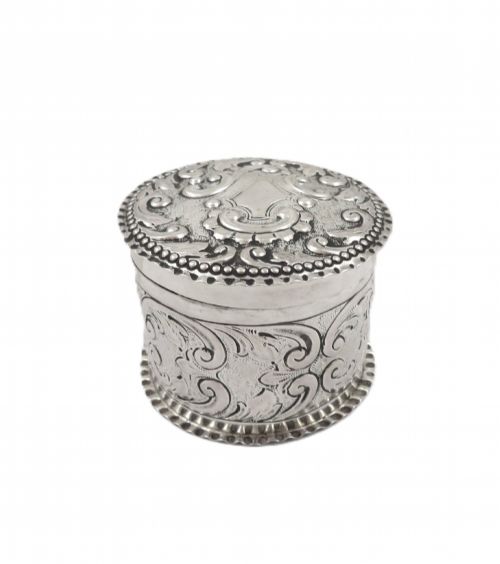
A victorian embossed table box serves primarily as a resting place for personal ornaments, jewellery, snuff, or small keepsakes on a surface. The pieces appearing here span the Victorian era, the Edwardian period, and stretch into the early twentieth century, taking the form of trinket boxes, jewellery caskets, snuff boxes, and vanity pots.
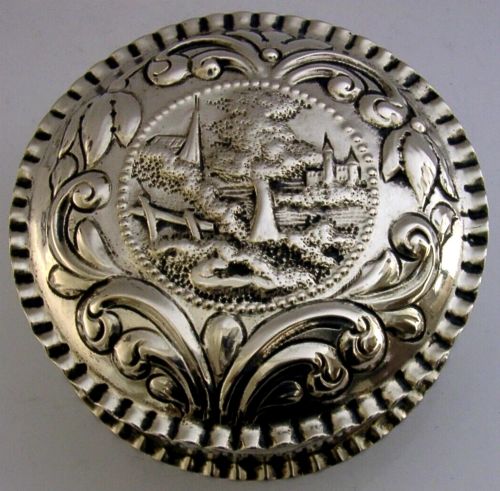
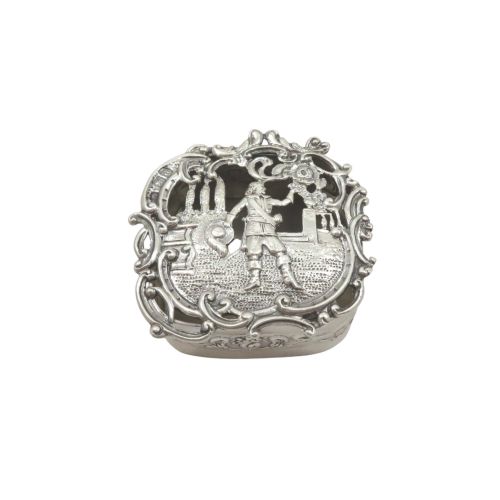
Most examples encountered on this page date from the later nineteenth century and feature heavily chased or hammered ornament across the lid and sides. Alongside standard rectangular caskets, collectors encounter specialised forms including heart-shaped boxes, picture castle top pieces, and dome-topped caskets.
Makers and silversmiths utilised varied outlines, ranging from simple oval containers to substantial heavy table boxes and small dressing table caskets lined with velvet, silk, or leather. These functional containers were designed to sit permanently on a dressing table, desk, or occasional table in domestic parlors.
What varies in quality
The distinction between standard containers and superior examples rests upon the depth, crispness, and artistic ambition of the embossed decoration. Boxes displaying finely detailed figural scenes, deep relief chasing, and substantial metal weight sit at the upper end of the range.
Internal preservation and the integrity of the original velvet, silk, or leather linings heavily influence desirability. Pieces that retain crisp hallmarks, solid hinges that close flush, and unblemished glass or metal bodies represent the finest tier.
Victorian Embossed Table Box Retail Price Guide 2026
Typical asking prices for victorian embossed table box among the pieces listed under this phrase on Sellingantiques today, from the lower quarter to the upper quarter. They describe what is for sale here now, not the wider market.
Some Victorian owners stored miniature glass scent bottles inside dome-topped leather caskets just large enough for a drop of perfume.
William Hutton·William Comyns·William Comyns and Sons
The Victorian Embossed Table Box Glossary
- Embossed
- Decorated with a design raised from the surface by hammering from the reverse side. This technique gives the metal a tactile, three-dimensional texture.
- Repoussé
- Metalworking method where the metal is hammered into relief from the reverse side. It forms the primary decorative finish on many silver boxes.
- Castle Top
- A specific style of box lid featuring an engraved or cast pictorial view of a famous building or estate. These scenes are usually framed by scrollwork.
- Hallmark
- Official stamp applied to precious metals indicating the assay office, purity standard, and year of manufacture. British silver carries these marks to verify authenticity.
- Casket
- A small ornamental box or chest intended for holding valuables or jewellery. These pieces often feature hinged lids and fitted interior linings.
Victorian Embossed Table Box: Frequently Asked Questions
What were table boxes used for?
These boxes served to hold small personal items such as rings, brooches, pins, and loose currency on dressing tables and desks.
Wealthy households utilised them to keep daily trinkets secure yet accessible within private chambers and reception rooms.
How do I date a silver box?
Dating relies heavily on the stamped hallmarks showing assay office letters and date ciphers, alongside stylistic clues.
Victorian pieces often display dense floral repoussé work, whereas Edwardian and later examples sometimes adopt smoother Art Nouveau lines.
Are interior linings original?
Many boxes retain their original velvet, silk, or leather pads, though fragile fabrics frequently required replacement over time.
Original linings typically show signs of gentle wear that match the external age of the silver mountings.