
Victorian Elm Dining Chairs
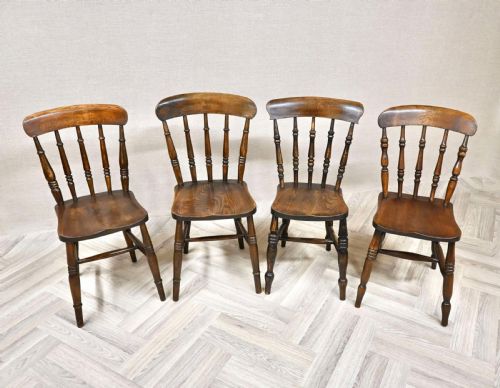
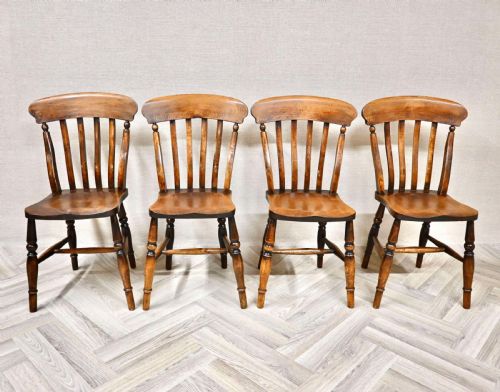
Victorian elm dining chairs bring robust character to a room, offering sturdy wooden seats shaped for daily kitchen use.
Victorian Elm Dining Chairs
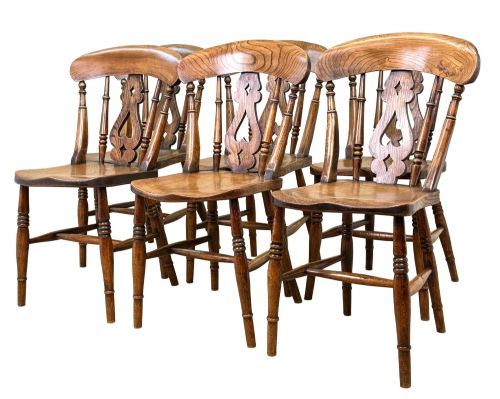
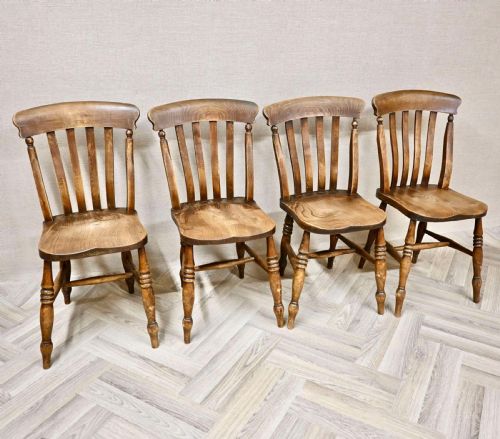
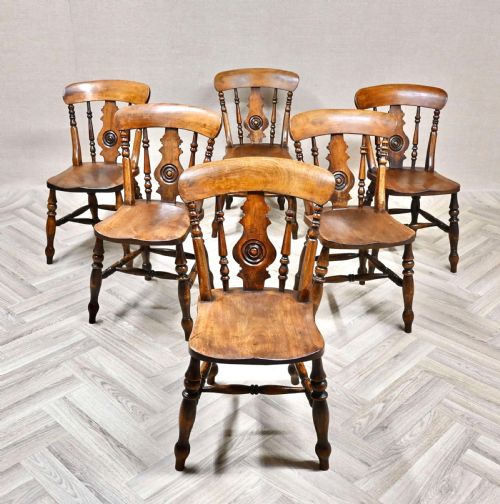
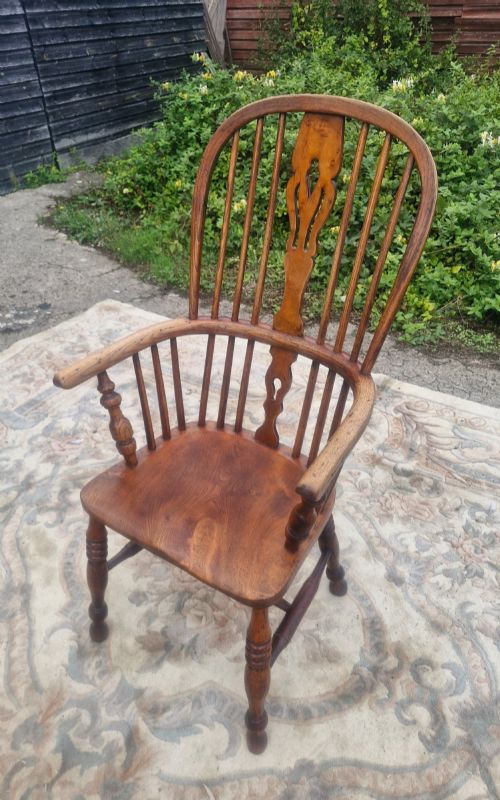
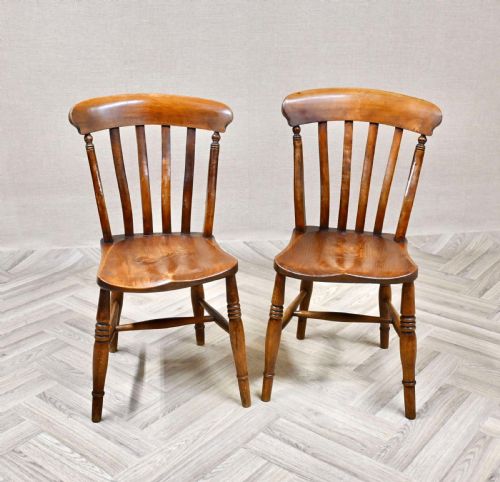
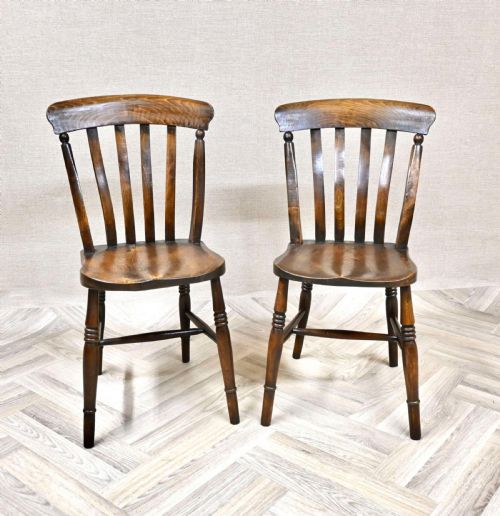
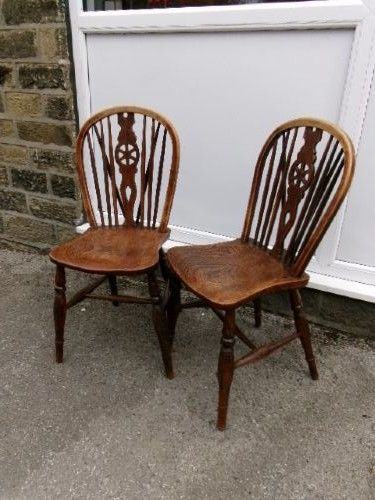
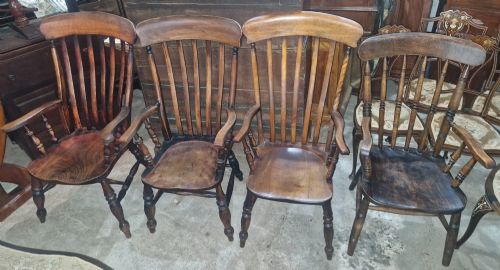
When searching for victorian elm dining chairs, buyers encounter sturdy country seating rooted in nineteenth-century vernacular traditions. The forms include Windsor chairs, lathbacks, wheelbacks, and stickbacks designed for heavy farmhouse and kitchen use.
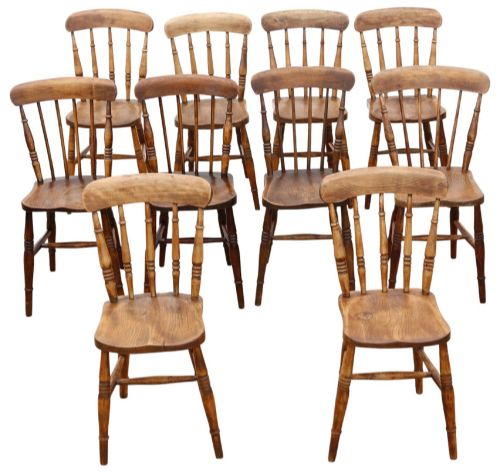
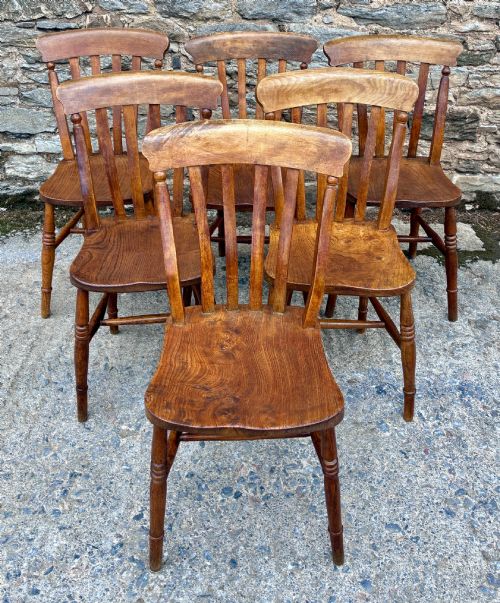
Most examples combine an elm seat with ash, beech, or oak components, reflecting regional British chair-making practices. Sets range from small pairs to large harlequin groupings gathered over decades.
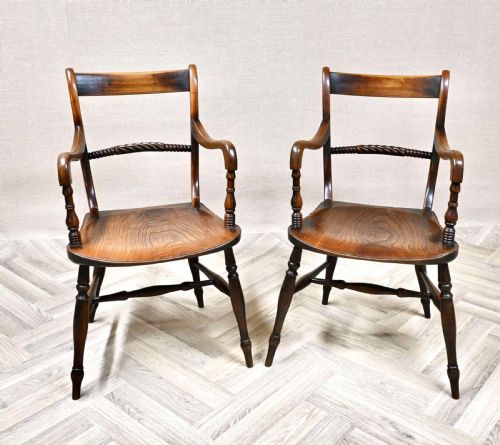
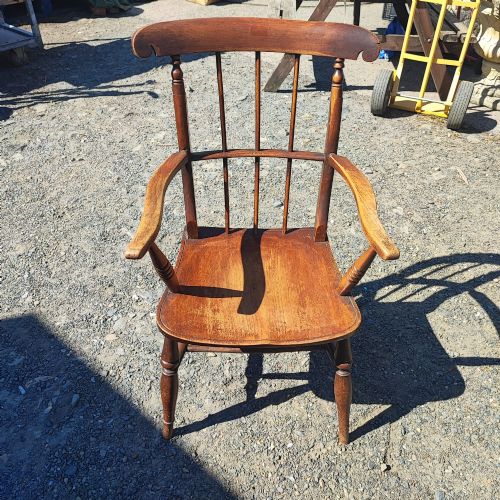
Armchairs, carvers, and smokers bows appear alongside standard single chairs. The overall aesthetic leans toward rustic practicality rather than formal parlor styling.
How They Were Made
Elm was chosen for seats because its interlocking grain prevented splitting when shaped with an adze or traviser. Artisans combined this durable timber with steam-bent ash for hoops and spindles, plus beech or oak for legs and stretchers.
Traditional bodgers turned legs and stretchers on pole lathes in woodland workshops before assembling the components into a rigid frame. Saddled wooden seats were hollowed out by hand to provide ergonomic comfort without upholstery.
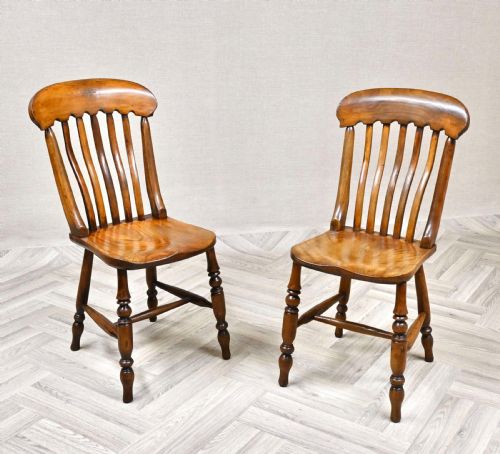
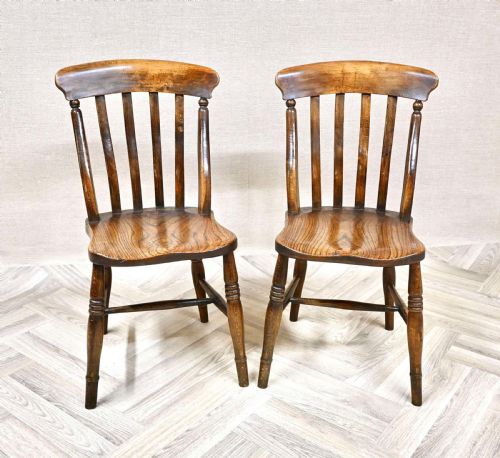
The listings show regional variations combining elm seats with beech, ash, and oak framing elements.
What Varies in Quality
Quality rests on the depth of the seat saddling and the grace of the spindle turnings. Superior pieces display well-proportioned bow bends and cleanly carved details without excessive replacement parts.
Harlequin sets vary depending on how closely individual chairs match in scale, colour, and timber figure. Original surface patination and minimal structural intervention separate museum-grade examples from heavily restored utilitarian items.
The Victorian Elm Dining Chairs Glossary
- Windsor chair
- A wooden chair built with a heavy solid timber seat into which the legs, back, and arms are separately tenoned. These chairs were widely produced across rural England.
- Crinoline stretcher
- A curved metal or wooden reinforcing rod linking the legs of a chair to provide extra rigidity. This feature is common on earlier provincial Windsor designs.
- Harlequin set
- A collection of dining chairs that share a similar style, period, and material but were gathered from different sources over time. Such sets offer visual harmony with subtle variations.
- Smokers bow
- A low-backed Windsor armchair with a continuous curved arm rail and turned spindles, frequently found in country homes and public houses. They provide sturdy seating for relaxed postures.
- Wheelback
- A Windsor chair style featuring a pierced central splat carved in the shape of a spoked carriage wheel. This decorative motif gained popularity during the mid-nineteenth century.
Victorian Elm Dining Chairs: Frequently Asked Questions
Are these chairs comfortable for daily dining?
The saddled wooden seats are shaped to fit the body, offering surprising support during long meals.
Many owners use sheepskins or loose pads for added softness without hiding the timber grain.
How do I care for antique elm furniture?
Keep the wood away from direct heat sources and sudden temperature shifts to prevent timber shrinkage.
Apply occasional natural wax to nourish the dry grain and maintain the protective surface sheen.
What is a harlequin set?
A harlequin set is a assembled group of chairs sharing a common era and form rather than originating as a single workshop batch.
These groupings display subtle differences in turning details while maintaining a cohesive country aesthetic.
How can I tell the age of these chairs?
Age is determined by construction methods, tool marks on the underside of the seat, and timber wear patterns.
Earlier nineteenth-century examples often feature heavier undercarriages and hand-carved saddle depressions.