





Victorian Ecclesiastical Table
A victorian ecclesiastical table brings sturdy oak, pitch pine and brasswork straight from chapel and chancel into domestic rooms.
Victorian Ecclesiastical Table
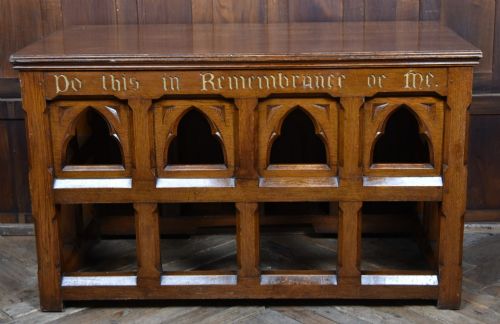
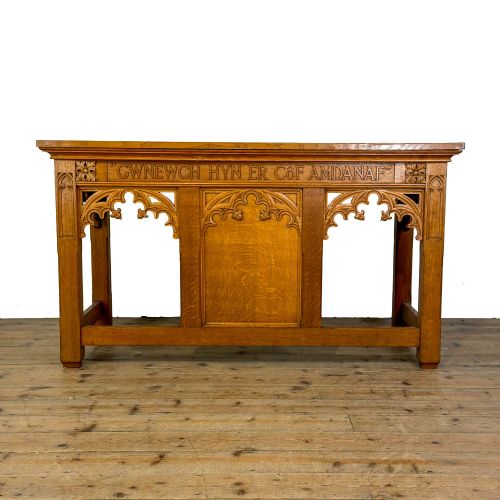
A victorian ecclesiastical table encompasses sturdy oak altar tables, pitch pine chapel furnishings, and smaller side boards designed for church or domestic prayer use. Most examples date from the nineteenth century into the early decades of the twentieth century, often following strict Gothic Revival principles.
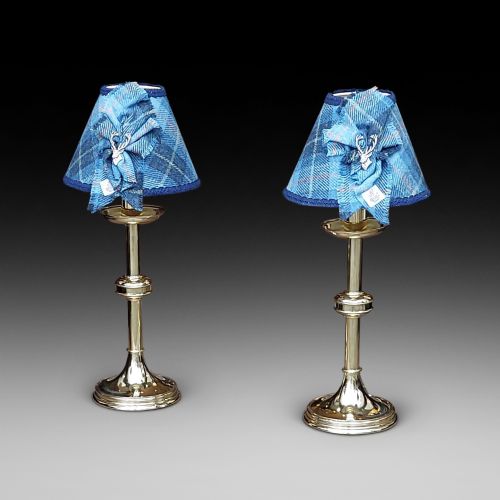
Buyers encounter heavy church altars, console tables, and prie-dieu prayer desks alongside converted candlesticks and side tables. These pieces draw on architectural forms from medieval buildings, adapted through Victorian craftsmanship for devotional or practical interior spaces.
How they were made
Joiners relied heavily on solid oak, pitch pine, and standard pine to build robust framework that could withstand decades of use in vestries and chapels. Surfaces often display straightforward tongue-and-groove construction and sturdy pegged joints rather than delicate veneers.
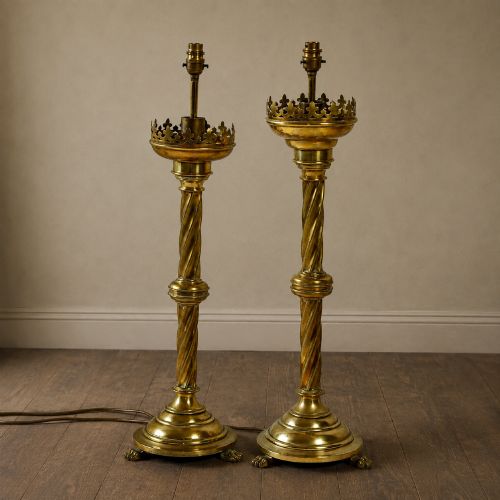
Metal elements utilise heavy cast brass, occasionally paired with opaline glass or fitted with silk fringe on related soft furnishings. Metalworkers shaped these brass components into altar sticks and candlestands using robust casting and turning techniques.
Victorian Ecclesiastical Table Retail Price Guide 2026
Typical asking prices for victorian ecclesiastical table among the pieces listed under this phrase on Sellingantiques today, from the lower quarter to the upper quarter. They describe what is for sale here now, not the wider market.
At least one revolving table top platter managed to sneak in among the solemn altars, ready to pass the mustard with monastic efficiency.
What varies in quality
The distinction between ordinary utility items and finer pieces rests on the choice of timber and the ambition of the Gothic Revival carving. Solid oak altars with crisp architectural tracery outrank plain pine side tables meant purely for functional storage.
Proportion and material weight dictate overall presence, particularly in heavy brass candlesticks and structural altar tables. Pieces showing specific stylistic adherence to known design manners command greater attention than generic workshop productions.
T Thomason And Co·AW Pugin
The Victorian Ecclesiastical Table Glossary
- Gothic Revival
- An architectural and decorative style drawing on medieval pointed arches, quatrefoils, and heavy structural forms. It dominated nineteenth-century church architecture and furnishings.
- Prie-Dieu
- A small devotional desk or kneeling chair designed for personal prayer. These items feature a sloping shelf for books and a padded lower rail for the knees.
- Pitch Pine
- A resinous, durable North American pine utilised widely during the nineteenth century for church interiors and furniture. It is prized for its prominent grain pattern and resistance to wear.
- Pricket Table Lamp
- A lighting fixture adapted from a pricket candlestick, which uses a sharp metal spike to hold a large candle rather than a socket. Converted examples mount electrical fittings above the original spike.
- Altar Table
- A raised table positioned at the eastern end of a chancel for communion services. In domestic settings, these function as heavy side tables or console surfaces.
Victorian Ecclesiastical Table: Frequently Asked Questions
What is a victorian ecclesiastical table?
A victorian ecclesiastical table is a heavy wooden furnishing originally constructed for church use, chapel devotions, or vestry storage. These pieces typically display Gothic Revival details such as pointed arches and robust framing.
Today, buyers repurpose these solid tables as console surfaces, hall tables, or architectural focal points in domestic rooms. Their durable timber construction makes them well-suited for everyday modern living.
How do I identify a gothic revival piece?
Gothic Revival furniture is identified by architectural motifs borrowed from medieval stone buildings, including pointed arches, quatrefoils, and heavy chamfered edges. The woodwork is almost exclusively solid oak or pitch pine.
Makers avoided delicate inlays in favour of structural honesty, visible peg joints, and solemn proportions. This aesthetic reflects the nineteenth-century return to traditional craftsmanship.
Where were these tables used?
These tables originated in Anglican and Welsh chapels, vestries, and parish churches, serving as altars, side boards, or prayer desks. Some simpler pine examples functioned in clergy quarters or church halls.
In modern homes, they fit naturally into hallways, kitchens, and living spaces as robust side tables. Their neutral wood tones complement both traditional and contemporary interiors.
What woods are most common?
Solid oak and pitch pine appear most frequently in these listings, alongside standard pine for secondary framing. Pitch pine is particularly notable for its dark, resinous grain.
These timbers were chosen for their structural strength and ability to endure heavy institutional use. Over decades, they develop a deep, rich patina across the unvarnished surfaces.