
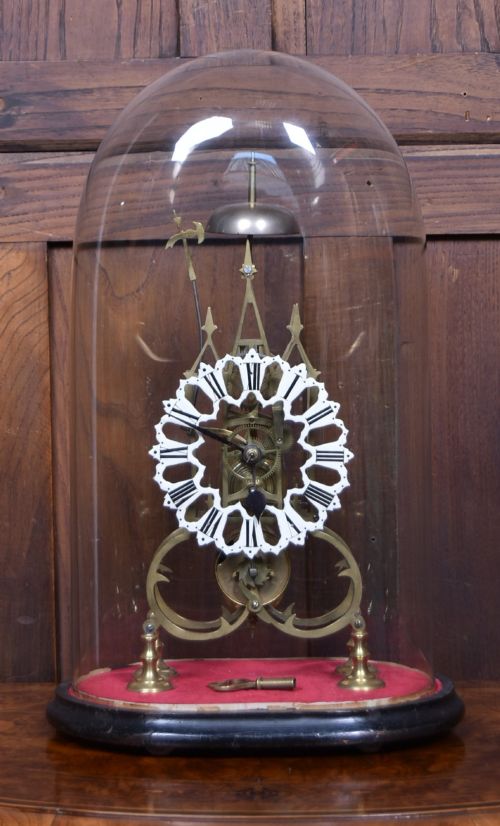
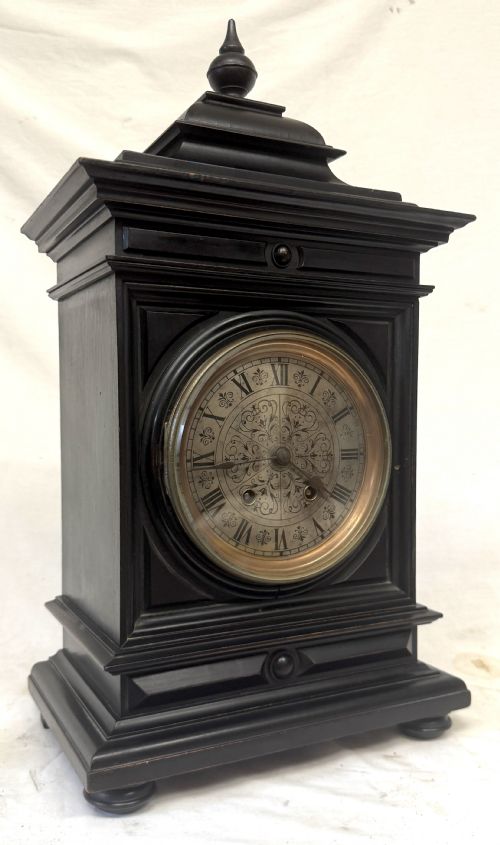
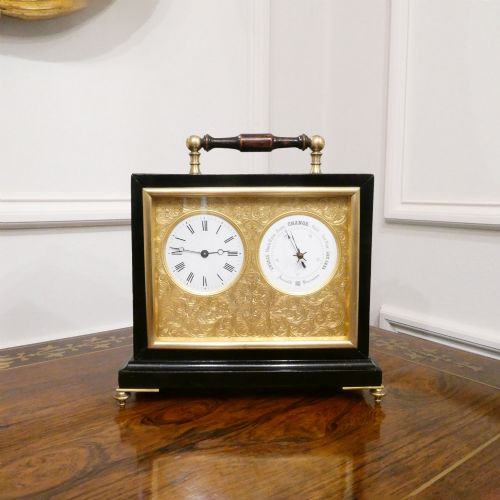
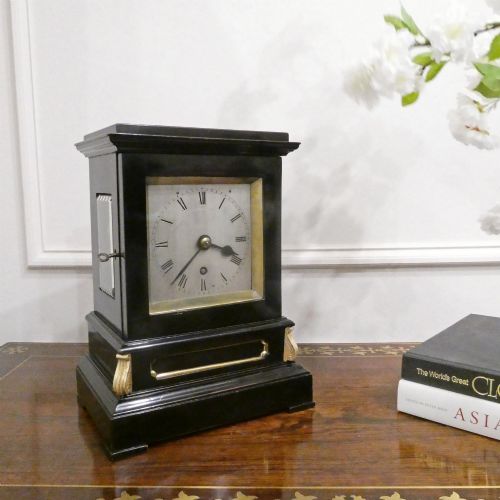
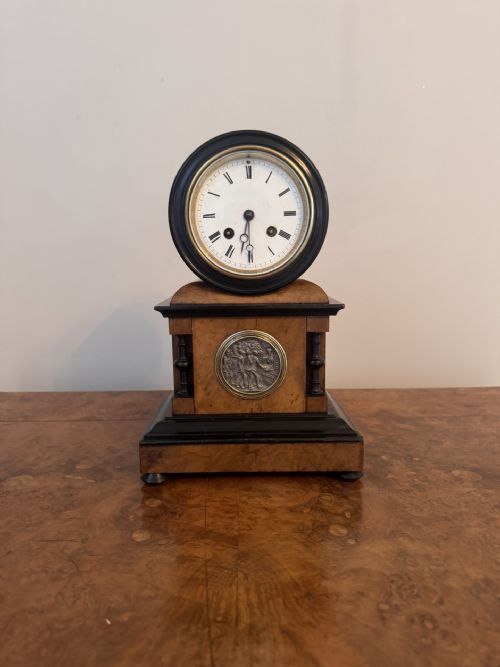
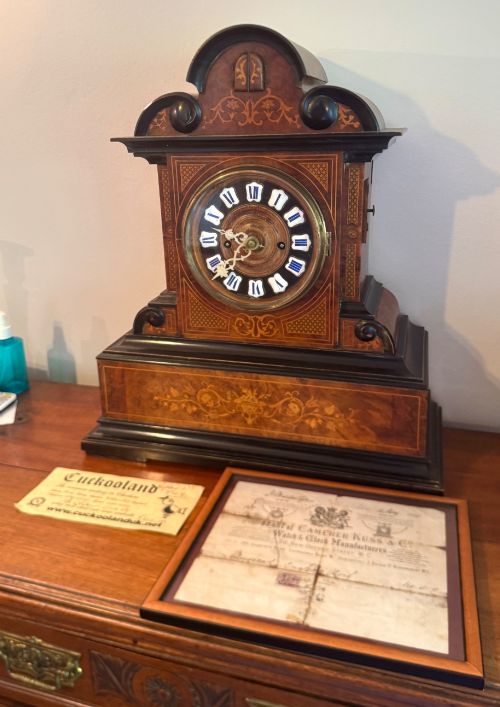


Victorian Ebonised Table Clock
A victorian ebonised table clock delivers dark, striking presence to a desk or mantel, combining heavy timber cases with intricate brass movements.
Victorian Ebonised Table Clock
A victorian ebonised table clock brings together the heavy, dark timber cases typical of the period and reliable mechanical movements. These pieces appear in forms such as mantel clocks, bracket clocks, desk clocks, and library clocks, often designed to sit solidly on a flat surface.
The pieces on this page span the Victorian era, the nineteenth century, the Edwardian period, and specific decades from eighteen fifty to eighteen ninety. Alongside pure ebonised wood, buyers encounter examples incorporating burr walnut, marquetry, ormolu, and gilt brass within styles ranging from French revival to the Aesthetic Movement.
Materials and Construction
Craftsmen built these clock cases using timber treated to achieve a dense, black ebonised finish, frequently pairing the dark wood with polished brass, ormolu mounts, and glass panels. Dials feature silvered metal or enamel, protected behind glazed bezels that allow a clear view of the face.
The internal mechanisms rely on brass wheel trains and steel arbors, driven by fusee movements or spring-driven striking systems. Makers housed these complex movements within robust wooden carcasses designed to maintain structural stability and acoustic resonance for chiming or bell-striking functions.
Listings feature items spanning the Victorian era, the nineteenth century, and the Edwardian period, alongside styles influenced by French design and the Aesthetic Movement.
Distinctions in Quality
Quality rests upon the crispness of the ebonised finish and the condition of any secondary decorative elements like ormolu mounts or marquetry inlay. Superior pieces exhibit precise joinery in the wooden case and undamaged glass enclosing the dial.
The mechanical sophistication within dictates the standing of the clock, distinguishing simpler timepieces from complex triple fusee musical bracket clocks or chiming models. Original components, legible dial engraving, and signed movements elevate the integrity of the piece.
Lenzkirch·Phillips Brothers·Arnold and Frodsham·Thomas A Paris·Payne and Co·Charles Frodsham and Holingue Freres·Barraud and Lunds·W and H·D Robertson of Perth·Baldwin of Loughborough·Henry Marc
The Victorian Ebonised Table Clock Glossary
- Ebonised wood
- Timber stained or painted to imitate ebony. This dark finish was highly popular across nineteenth-century furniture and clock cases.
- Fusee
- A conical pulley used in mechanical clocks to maintain an even pull as the mainspring unwinds. It ensures more consistent timekeeping.
- Ormolu
- Gilt bronze mounts applied to furniture and clock cases. The technique involves a mercury and gold amalgam fired onto a brass or bronze base.
- Silvered dial
- A metal clock face treated with a mixture containing silver to produce a bright, frosted finish. Numerals and text are typically engraved and filled with black wax.
- Striking clock
- A timepiece that sounds the hours or fractions of hours on a bell or gong. Many examples feature passing strikes or Westminster chimes.
Victorian Ebonised Table Clock: Frequently Asked Questions
How do I wind a fusee clock?
A fusee clock requires a dedicated winding key inserted into the dial aperture to tension the mainspring slowly. Care must be taken not to overwind the mechanism.
Most fusee movements run for eight days per wind. Keeping a steady hand ensures the internal chain seats correctly on the conical drum.
Where should I place a mantel clock?
A heavy ebonised clock needs a stable, level surface such as a sturdy mantelpiece, sideboard, or desk. Uneven placement can cause the pendulum to stop beating evenly.
Protection from direct sunlight and drastic temperature changes helps preserve the wood finish and the delicate oils within the brass movement.
How do I identify a French movement?
French movements often feature distinct foundry stamps on the backplate, alongside sequential serial numbers and matching pendulum stamps. They frequently utilise circular plates rather than the rectangular brass plates common in English bracket clocks.
Many of these movements are associated with Paris makers or workshops supplying the broader European market during the nineteenth century.
What maintenance do these clocks need?
Mechanical clocks benefit from professional cleaning and lubrication every few years to prevent wear on the brass pivots and gears. Dust accumulation inside the case should be minimised.
Setting the beat accurately by ear ensures the clock runs reliably without losing time throughout the week.