


Walnut Marquetry Clock
These walnut marquetry clock examples combine precise timekeeping with elaborate patterned inlay, offering a commanding presence for any serious interior.
Walnut Marquetry Clock
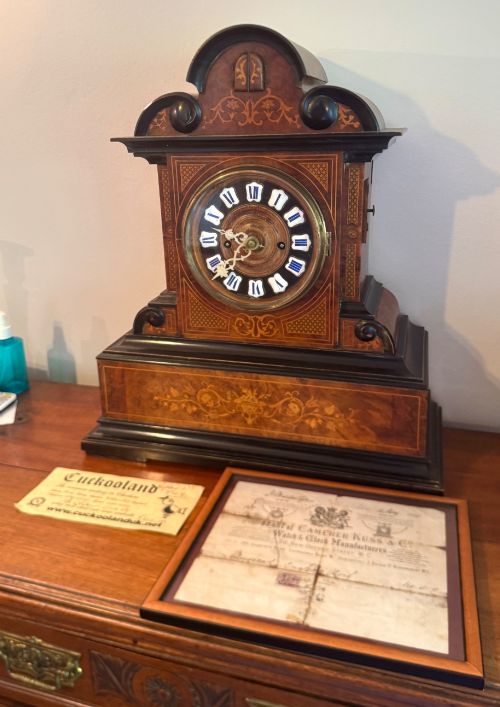
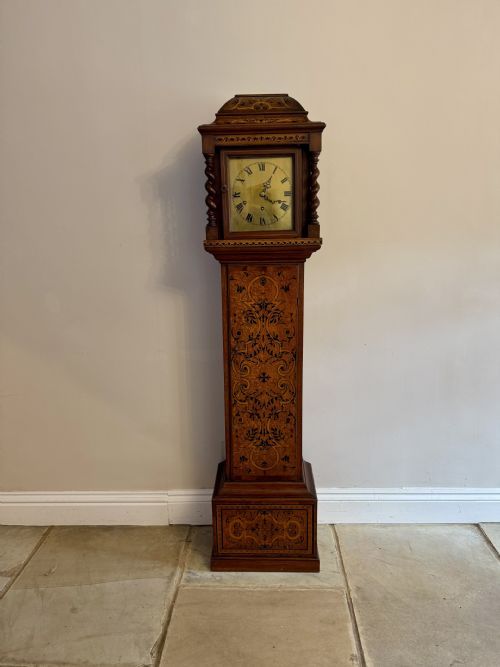
A walnut marquetry clock represents a sophisticated tradition of horology, most frequently encountered as tall longcase examples originating from the seventeenth and eighteenth centuries. These vertical timepieces dominate the record, alongside occasional nineteenth-century mantel and bracket iterations.
The aesthetic bridges several distinct periods including William and Mary, Queen Anne, and Victorian revivals. Longcase formats predominate among both current listings and past archives, establishing them as the primary form a collector encounters.
How they were made
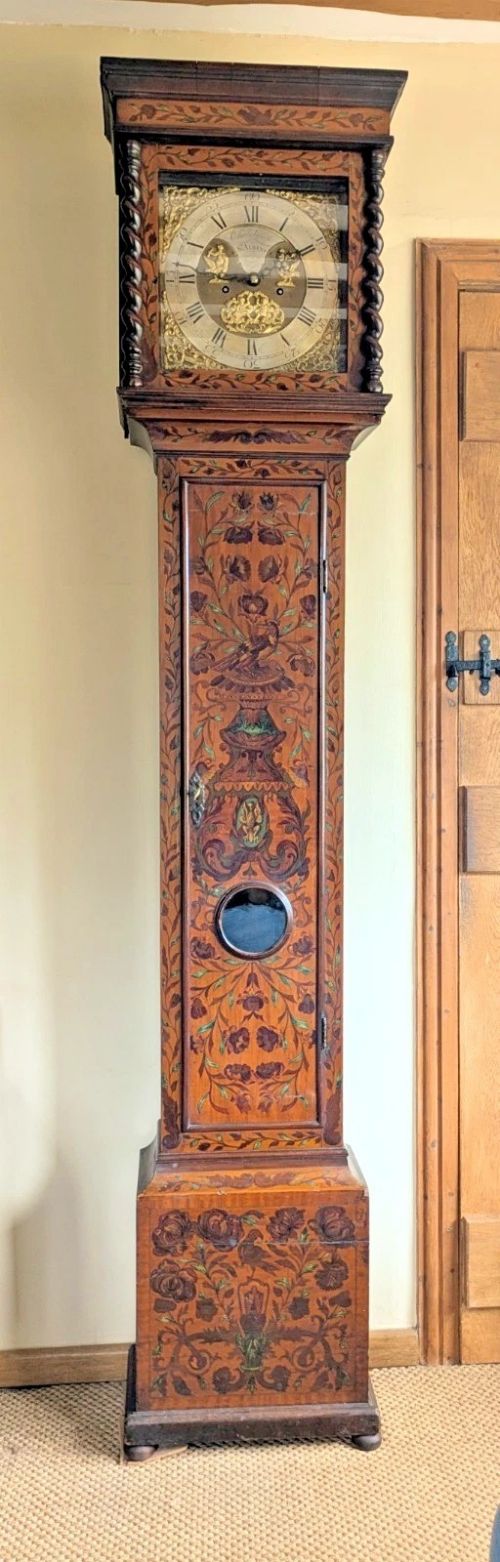
Construction relies upon a robust timber carcase overlaid with fine walnut veneers and intricate marquetry inlay executed in contrasting woods. Ebonised wood details frequently provide structural framing and visual contrast against the figured veneers.
Dial assemblies incorporate cast brass elements and occasionally enamel or subsidiary chapter rings. Glass panes protect the face and pendulum movement, while display domes sometimes accompany smaller bracket or mantel formats.
The documented pieces span from the late seventeenth century through the Victorian era, utilising walnut, marquetry inlay, ebonised wood, and glass.
What varies in quality
The standard of a walnut marquetry clock rests upon the intricacy and preservation of its floral or seaweed inlay patterns across the trunk and hood. Finer examples display meticulous alignment of the patterned wood veneers without distortion.
Horological merit depends upon the original integrity of the movement and the reputation of the maker inscribed upon the dial. Cabinets retaining deeper patination and original surfaces command greater appreciation among collectors.
Charles Louch St. Albans·Henry Massy·Nathaniel Pyne·Edward East·Edward Stanton·Peter Wise·Richard Baker·John Martin·John Ebsworth·Isaac Penton
The Walnut Marquetry Clock Glossary
- Marquetry inlay
- Decorative veneer work applied in floral, geometric, or seaweed patterns using contrasting timbers. This technique defines the primary surface decoration of the case exterior.
- Longcase clock
- A tall weight-driven timepiece housed in a vertical wooden case, frequently termed a grandfather clock. These standing pieces form the majority of historical examples.
- Ebonised wood
- Timber treated to imitate ebony, providing dark framing elements around the lighter walnut panels. It creates stark visual borders on the clock hood and trunk.
- Bracket clock
- A portable spring-driven timepiece designed to sit upon a shelf, bracket, or mantelpiece. They occasionally incorporate musical mechanisms.
- Display dome
- A blown glass cover positioned over a base to protect sensitive mantel clocks or related objects from dust. These clear covers preserve the delicate surfaces beneath.
Walnut Marquetry Clock: Frequently Asked Questions
How do I date a walnut marquetry clock?
Dating relies upon stylistic markers of the case, the construction methods of the movement, and any signature engraved upon the brass dial. Seventeenth-century examples typically display distinct floral or seaweed patterns.
Later Victorian revivals often incorporate heavier proportions or softer carving styles that differentiate them from earlier William and Mary origins.
Where should I place a longcase clock?
Position tall timepieces against stable interior walls away from direct sunlight and major heat sources to protect the delicate wood veneers. A level floor ensures the pendulum swings evenly and the movement operates correctly.
Allow sufficient clearance above the hood for the removal of the top bonnet during routine maintenance.
What is seaweed marquetry?
Seaweed marquetry refers to an intricate two-part veneer design resembling fine seaweed or arabesque foliage, popular during the late seventeenth century. Artisans cut delicate patterns from light and dark woods fitted closely together.
This technique creates a dense, shimmering surface across the entire front door and trunk of the longcase.
How do mantel and longcase clocks differ?
Mantel and bracket formats are compact, spring-driven timepieces designed for furniture tops, occasionally accompanied by glass display domes. Longcase versions are floor-standing, weight-driven pillars designed to anchor a room.
While both utilise walnut and marquetry decoration, their internal mechanical architecture and domestic functions diverge entirely.