


Victorian Ebonised Musical Box
A victorian ebonised musical box brings mechanical melody into the parlour, offering the rich sound of pinned cylinders and tuned combs housed in dark wood.
Victorian Ebonised Musical Box
When you search for a victorian ebonised musical box, you enter a world of nineteenth-century mechanical sound where precise engineering meets cabinet making. The pieces found here are predominantly traditional music boxes housed in ebonised wood cases, alongside related musical novelties.
Most examples date from the Victorian era and the broader nineteenth century, originating from Swiss workshops that dominated cylinder box production. You will encounter standard cylinder boxes as well as variations featuring bells in view or marquetry detail.
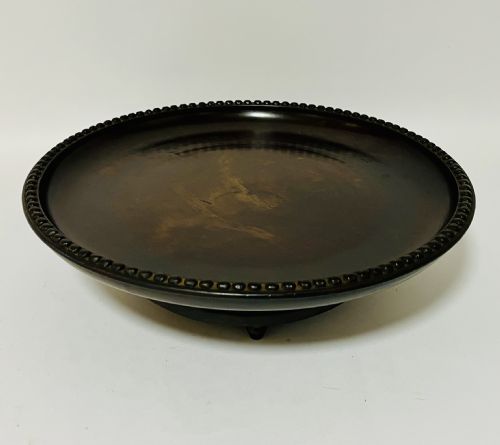
Beyond standard tabletop boxes, the selection extends to Swiss musical wooden fruit bowls and musical cigar boxes. These alternate forms apply the same mechanical movement to decorative objects designed for entertaining.
How they were made
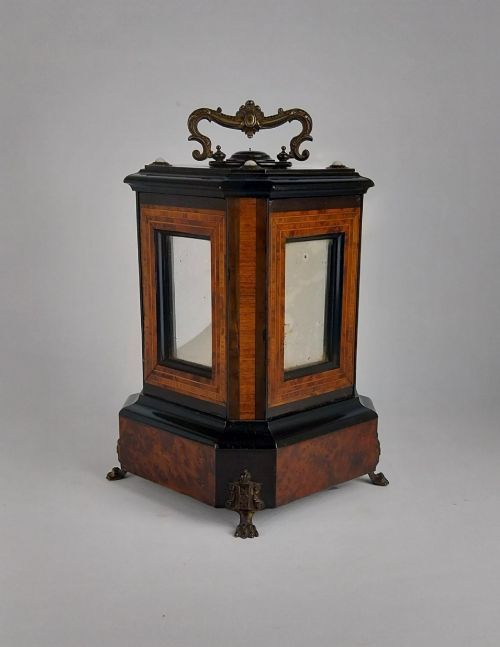
The casing relies on ebonised wood, rosewood, walnut, and burr walnut, often enhanced with boxwood stringing and marquetry inlay. Cabinet makers constructed these boxes to enclose the movement securely while projecting the sound.
Inside, the mechanical heart consists of a brass cylinder set with tiny pins that pluck a tuned steel comb. Some advanced models incorporate glass dust lids and visible bells struck by miniature hammers during play.
Several boxes allow you to watch miniature brass hammers strike tiny tuned bells while the music plays.
What varies in quality
The acoustic performance distinguishes a fine machine from an ordinary one, determined by the precision of the comb tuning and the complexity of the cylinder arrangement. Boxes playing multiple airs demonstrate greater mechanical ambition and skilled assembly.
The cabinet work similarly separates standard production from superior pieces, seen in the crispness of the marquetry, the depth of the ebonised finish, and the retention of original internal components like glass lids and brass levers.
Langdorff And Fils·Nicole Freres
The Victorian Ebonised Musical Box Glossary
- Cylinder
- The rotating brass barrel set with hundreds of tiny pins that determine the notes played by striking the comb. Each pin must be precisely positioned to ensure correct timing and melody.
- Comb
- The tuned steel plate with vibrating teeth that produce the musical notes when plucked by the cylinder pins. The quality of the steel dictates the purity of the tone.
- Air
- A distinct tune or musical piece programmed onto the cylinder. Boxes are often described by the total number of airs they can play.
- Ebonised
- Wood treated to imitate ebony, giving it a deep black finish popular in nineteenth-century decorative arts. This finish provides a formal, dark contrast to the bright brass interior movements.
Victorian Ebonised Musical Box: Frequently Asked Questions
How many tunes does it play?
The number of tunes, or airs, depends on the pinning of the brass cylinder. Many standard boxes feature a set sequence that repeats when fully wound.
Larger mechanisms accommodate multiple airs per cylinder, offering a varied repertoire of nineteenth-century melodies.
What is inside the box?
The interior houses a brass spring-driven motor connected to a pinned cylinder and a tuned steel comb. Additional elements may include miniature bells and a glass dust cover.
These components work in unison to mechanically translate stored kinetic energy into sustained musical notes.
Where were they made?
The majority of nineteenth-century mechanical musical boxes originated in Switzerland, where specialised craftspeople mastered precision pin setting. These Swiss movements were housed in various European and British cabinets.
Some pieces integrate Swiss movements into local wooden forms such as fruit bowls or cigar cases.
How do I operate the mechanism?
Operation involves winding the spring motor using the attached key or lever, then releasing the stop lever to start the cylinder rotation. The mechanism plays through its programmed sequence before pausing automatically.
Gentle handling ensures the delicate pins and comb teeth remain undamaged during winding and playback.