


Victorian Ebonised Bracket Clock
A victorian ebonised bracket clock brings architectural presence and mechanical precision to a room, combining dark timber cases with brass dials.
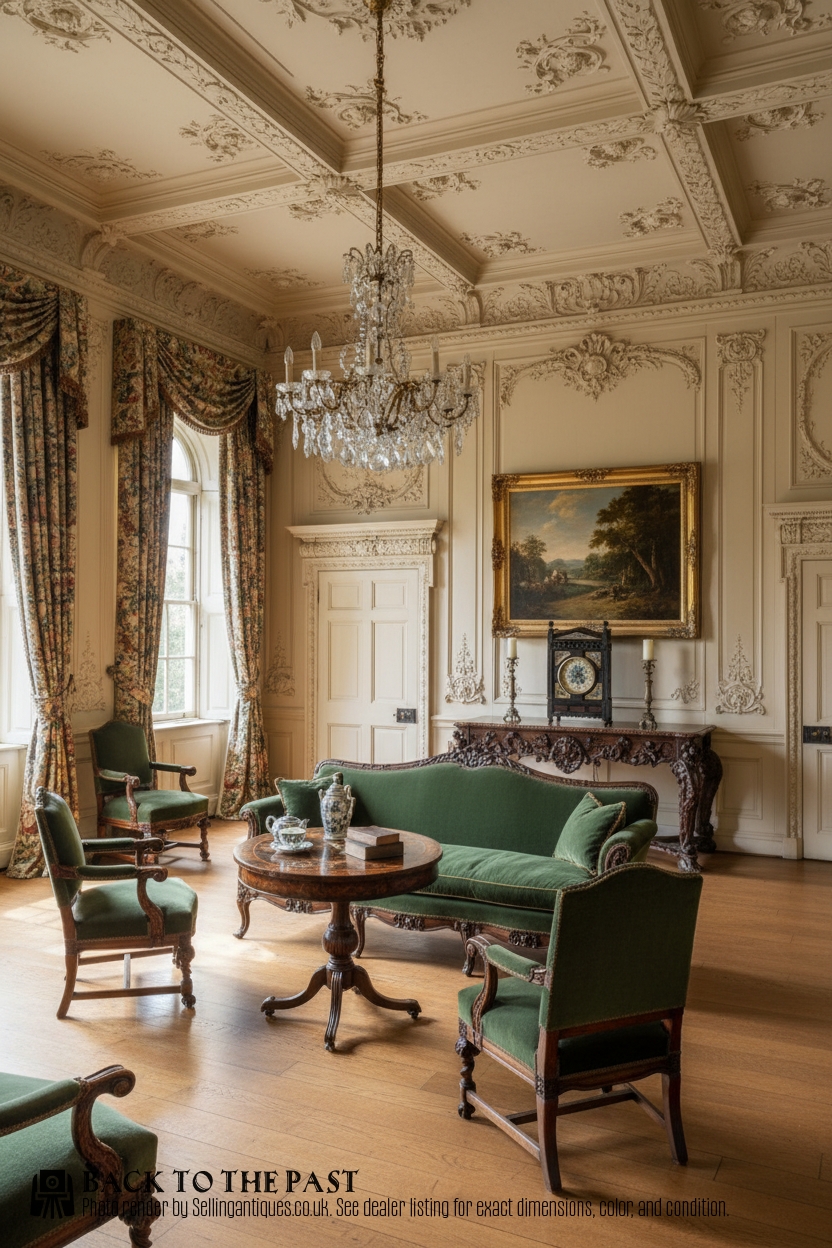
Victorian Ebonised Bracket Clock
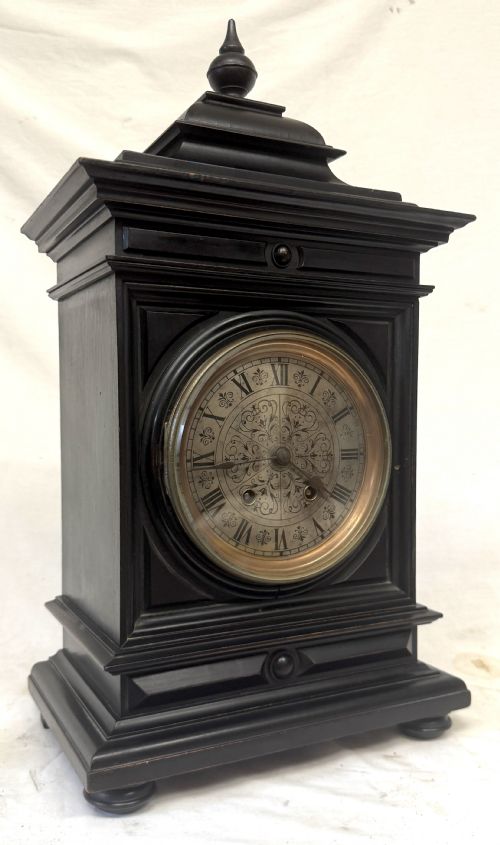
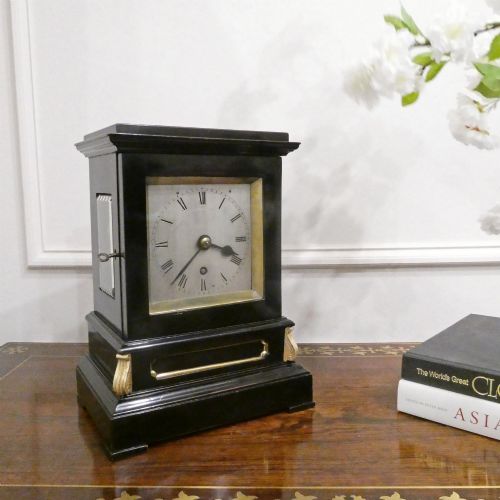
When you search for a victorian ebonised bracket clock, you encounter timepieces housed in dark wooden cases that mimic ebony, spanning the nineteenth century. These objects function as substantial mantel clocks, desk clocks, and library timepieces designed for prominent display within a room.
The pieces appearing on this page range from plain single fusee movements to complex musical and chiming bracket clocks. Makers utilise styles that draw on the aesthetic movement, Grand Regency, and Louis XV revival alongside traditional Victorian forms.
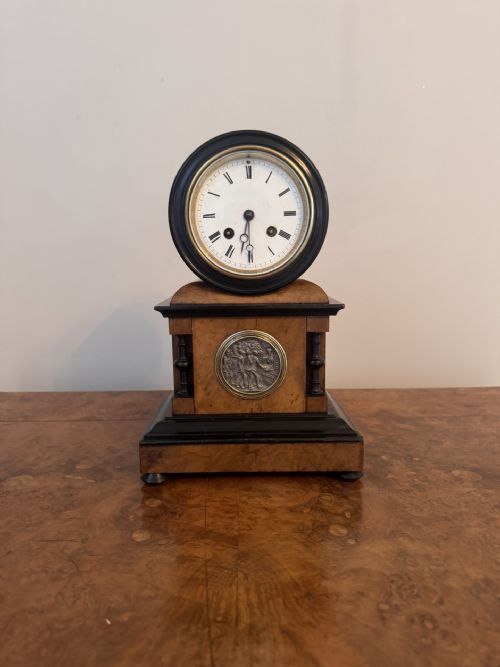
Most examples date between eighteen fifty and eighteen ninety, reflecting the industrial skill of British and continental workshops. Walnut, burr walnut, and ormolu mounts frequently accompany the ebonised wood to create contrast on the case.
How they were made
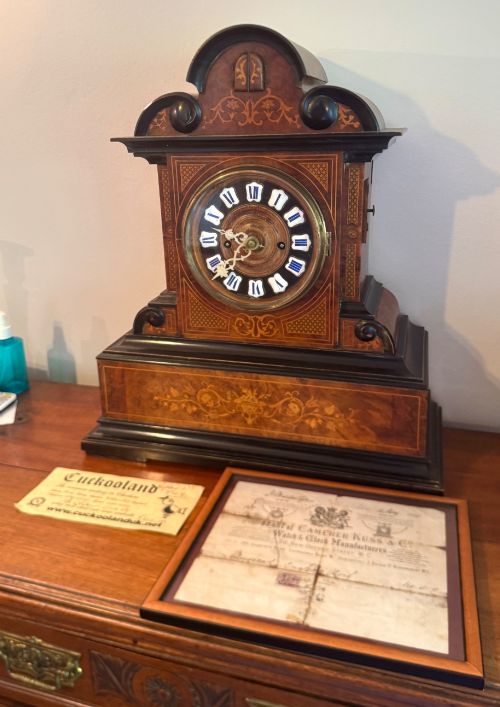
Craftsmen built the cases using timber painted or stained to resemble solid ebony, often incorporating burr walnut panels and marquetry inlay. Brass and ormolu mounts decorate the corners, bezels, and feet of the clock housings.
Internal mechanisms rely on fusee movements, spring drives, and anchor escapements to regulate time accurately. Dials feature silvered brass, enamel numerals, and delicate hands protected beneath curved glass bezels.
Listings feature ebonised wood combined with ormolu, brass, glass, enamel, and burr walnut across the Victorian period.
What varies in quality
The distinction between standard and exceptional pieces rests upon the complexity of the internal movement and the crispness of the case carving. Triple fusee musical movements operating on multiple bells represent a higher tier of clockmaking than simple time-only library clocks.
Case materials and secondary woods also dictate the grade of the piece, with solid ebonised timber and fire-gilt ormolu mounts marking superior workshop production. The integration of signed dials by recognised makers elevates the standing of an individual clock.
Lenzkirch·Phillips Brothers·Arnold and Frodsham·Thomas A Paris·Payne and Co London·Barraud and Lunds·D Robertson of Perth·Baldwin of Loughborough
The Victorian Ebonised Bracket Clock Glossary
- Ebonised wood
- Timber treated with a dark stain or finish to imitate expensive ebony. This treatment became popular during the nineteenth century for furniture and clock cases.
- Fusee
- A conical pulley inside a clock that equalises the declining power of the mainspring as it unwinds. This mechanism ensures consistent timekeeping throughout the power reserve.
- Silvered dial
- A brass clock face treated with a silver solution to create a matte metallic surface. Engraved numerals and markers are then filled with black wax for legibility.
- Ormolu
- Gilt bronze ornamentation applied to the exterior of clock cases. This decorative metalwork provides bright contrast against dark ebonised wood surfaces.
- Ting-tang
- A striking mechanism that sounds two different notes on the quarters or hours. It uses two hammers and two bells to create a distinctive chime.
Victorian Ebonised Bracket Clock: Frequently Asked Questions
How do I wind a fusee clock?
A key is inserted into the winding square on the dial face and turned clockwise until resistance is felt. Care must be taken not to overwind the spring.
Most single and triple fusee movements require attention once a week to maintain accurate timekeeping. The process should be done gently to protect the historical gearing.
What is the difference between a bracket clock and a mantel clock?
Bracket clocks historically rested on wooden wall brackets to project sound into a room. Over time, the term broadened to describe portable table clocks with handles or architectural tops.
Mantel clocks sit directly on a fireplace shelf or piece of furniture. Many examples on this page serve both functions interchangeably.
How do chiming mechanisms work?
Chiming movements utilise additional gear trains to strike bells or gongs at set intervals. A pinned cylinder or rack system releases the hammers in a specific sequence.
More complex models feature Westminster chimes or multiple bells that sound on the quarter hour. Simpler library clocks omit this feature entirely to focus on timekeeping.
Where should I place an ebonised clock?
These clocks require a stable, level surface away from direct sunlight and fluctuating temperatures. Heavy wooden furniture or sideboards provide a suitable foundation that prevents vibrations from disturbing the pendulum or balance wheel.
Allowing adequate clearance around the case ensures that the sound from bells or gongs projects clearly into the room.