



Victorian Ebonised Accent Chairs
Victorian ebonised accent chairs bring dark elegance and striking form to a room, offering both period character and practical seating.
Victorian Ebonised Accent Chairs
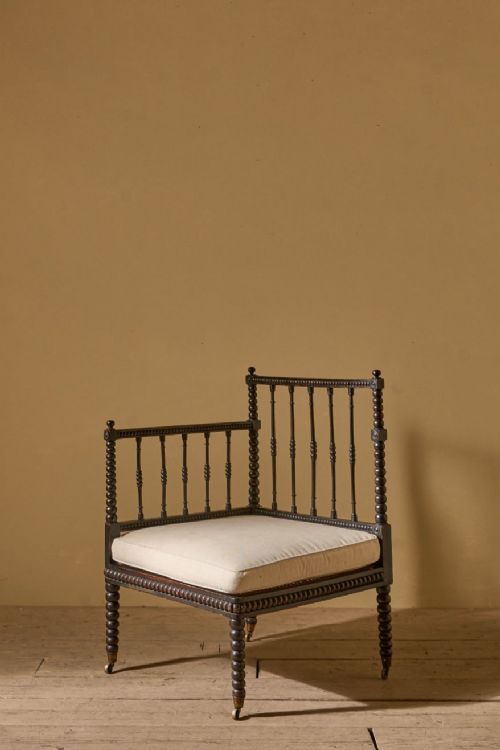
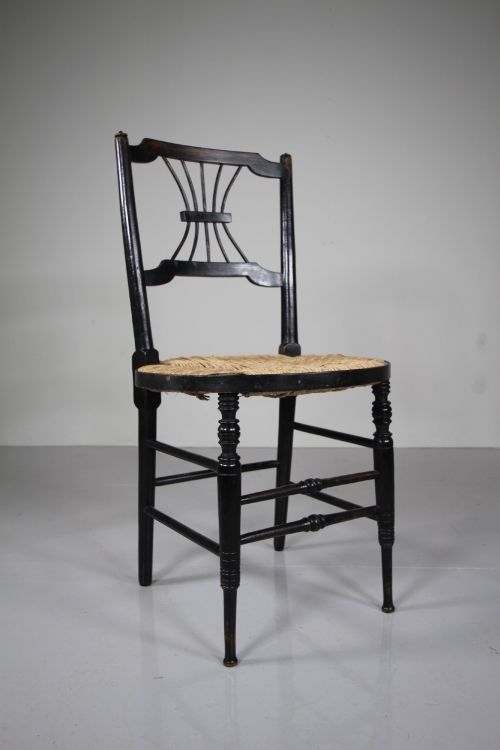
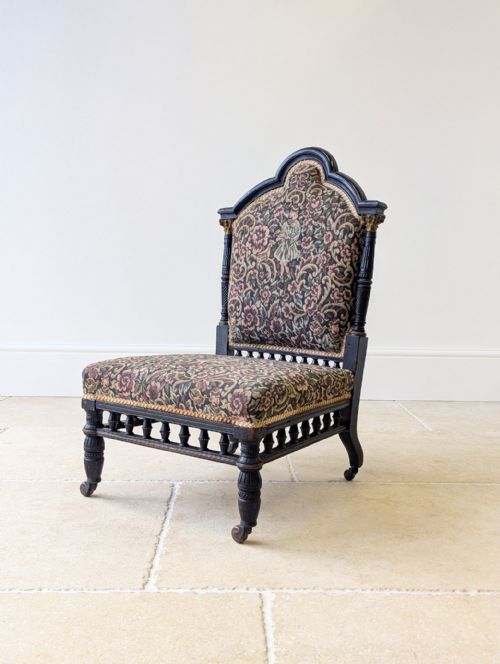
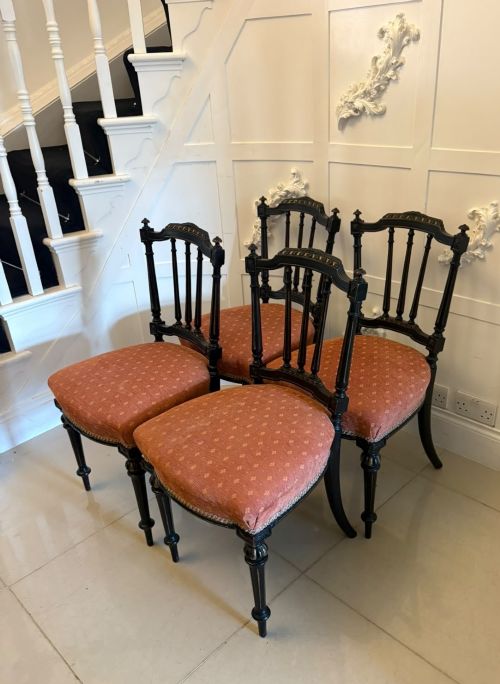
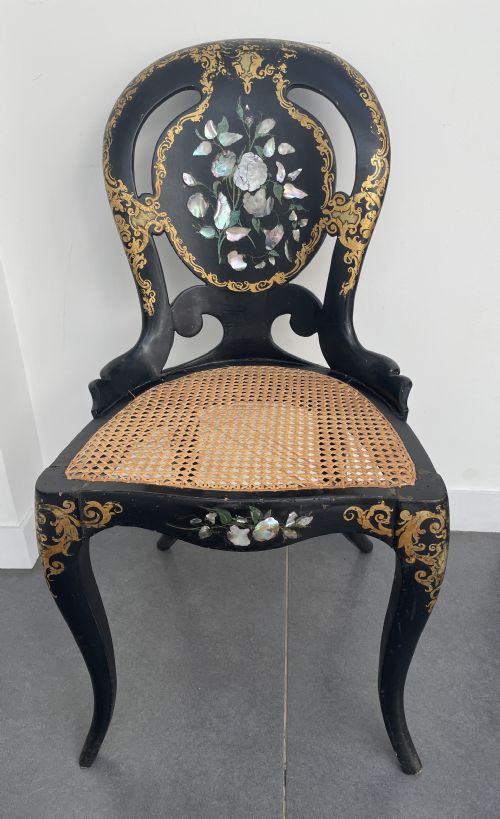
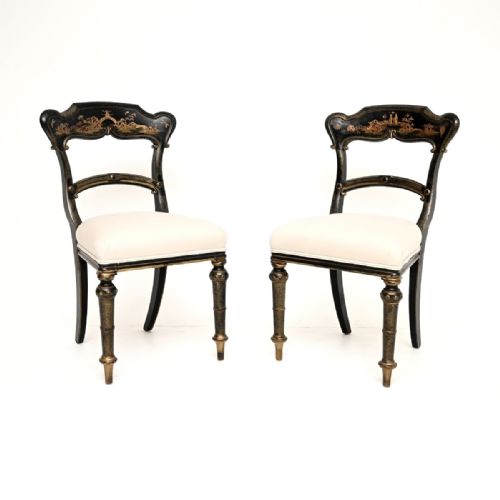
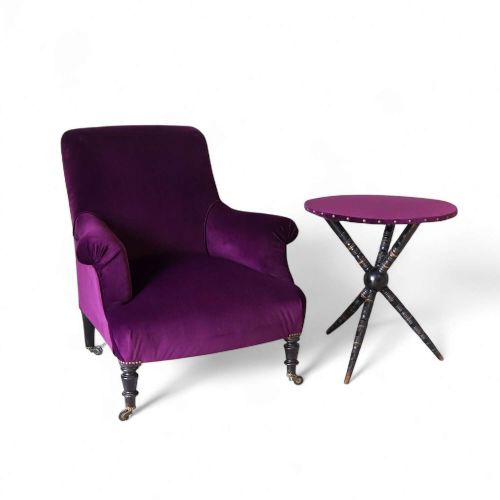
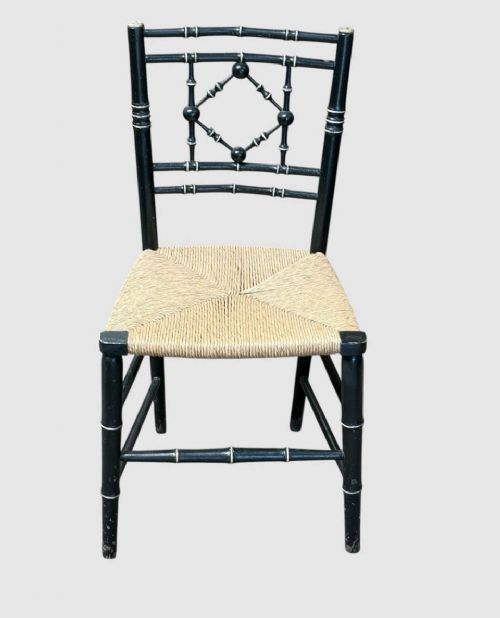
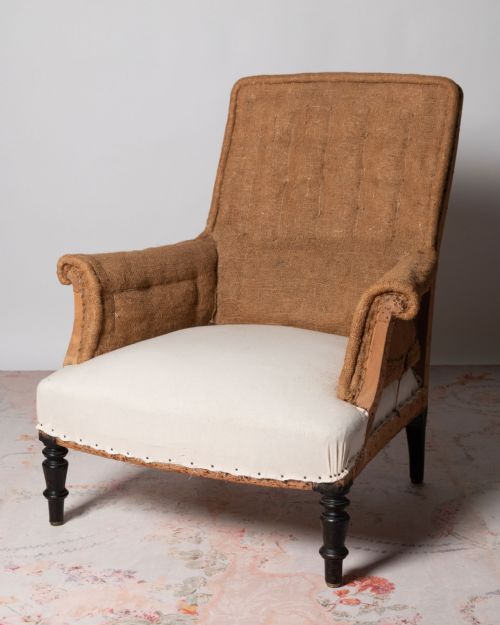
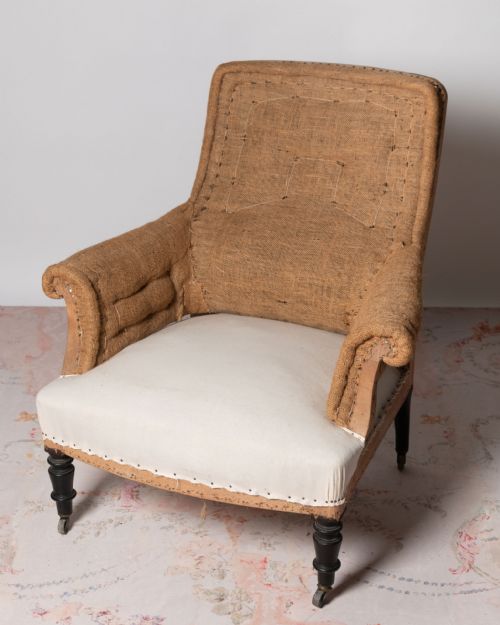
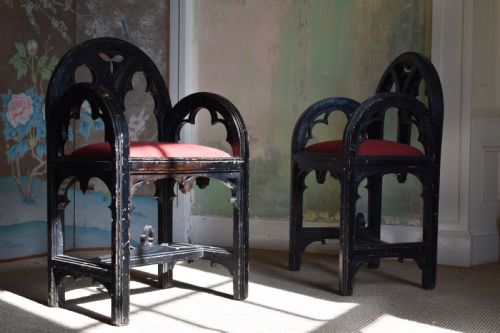
Victorian ebonised accent chairs span a variety of forms including side chairs, nursing chairs, salon chairs, and armchairs produced across the nineteenth century. These seating options emerge from distinct stylistic movements such as the Aesthetic Movement, Gothic Revival, and French Napoleon III designs.
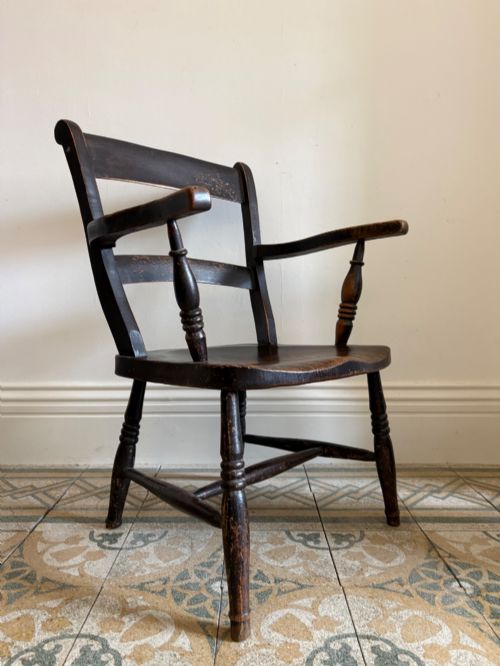
The pieces present diverse seating configurations ranging from low lounge models to upright side chairs and corner chairs. Many examples incorporate specific regional or stylistic traits, including English Windsor forms or French boudoir pieces.
Buyers encounter numerous variations in frame geometry and upholstery styles, reflecting the eclectic tastes of the Victorian period. The selection includes both intimate low chairs and substantial library or drawing room seating.
Materials and construction
The manufacturing process relies on hardwoods such as oak, ash, elm, and beech, which are finished to imitate ebony through ebonising or black lacquering. Carved details, gilt highlights, and inlaid mother-of-pearl often embellish the structural timber frames.
Seating surfaces utilise traditional support methods including cane panels, bentwood frames, and webbed foundations prepared for upholstery. Workshops employed materials like velvet, calico, hessian, and brass tacks to finish the cushions and button-upholstered backs.
Some Victorian children clearly ruled the parlour, judging by the miniature ebonised armchairs built precisely to their diminutive scale.
Evaluating craftsmanship
Quality reveals itself in the crispness of carved wooden details and the precision of applied gilding or mother-of-pearl inlay. Superior frames demonstrate robust joinery in the legs and arm supports, maintaining stability without excessive reinforcement.
The integrity of the ebonised finish significantly influences the piece, with better examples showing careful preparation of the underlying timber. Upholstered varieties distinguish themselves through the quality of the internal webbing and the proportion of the frame.
William Morris·Collier and Plucknett·Bruce J. Talbert·Liberty of London·Ford Maddox Brown
The Victorian Ebonised Accent Chairs Glossary
- Ebonised wood
- Timber treated with stain or paint to resemble costly ebony. This finish became particularly popular during the nineteenth century for furniture mimicking exotic hardwoods.
- Aesthetic Movement
- A late nineteenth-century design style emphasising visual beauty over narrative content. Pieces from this movement often feature slender ebonised frames and stylised ornamentation.
- Napoleon III
- A French design style spanning the mid to late nineteenth century characterised by eclectic influences and luxurious upholstery. These chairs frequently utilise gilt decoration and dark lacquered finishes.
- Bobbin turning
- A form of furniture leg or spindle shaping produced on a lathe to resemble a series of wooden beads or bobbins. It appears frequently on nineteenth-century corner and side chairs.
- Nursing chair
- A low-seated Victorian chair designed originally for comfort while nursing infants. These pieces often feature sprung upholstery and generous backrests.
Victorian Ebonised Accent Chairs: Frequently Asked Questions
How do I identify an ebonised finish?
An ebonised finish is achieved by staining or painting closed-grain wood to create a deep black, polished surface that imitates solid ebony. Close inspection under natural light reveals the underlying timber grain beneath the dark coating.
Unlike modern painted furniture, period pieces show wear consistent with age, where the black finish may soften around high-touch areas to reveal the wood underneath.
Where were these chairs used historically?
These versatile seats furnished various domestic spaces including formal drawing rooms, intimate boudoirs, and libraries. Lighter side and nursing chairs were easily moved about the home for conversation or reading.
Larger armchairs served as permanent fixtures in reception rooms, whilst smaller corner models utilised awkward architectural spaces effectively.
How should I care for ebonised wood?
Maintain the dark wooden surfaces by dusting gently with a dry, soft cloth to prevent particulate accumulation. Avoid silicone-based polishes and excessive moisture, which can damage the historic black finish.
Feed the timber occasionally with a microcrystalline wax to preserve the sheen and protect the ebonised layer from drying out.
What defines an Aesthetic Movement chair?
Aesthetic Movement chairs prioritise artistic design and linear grace, frequently drawing inspiration from Japanese art and simplicity. They typically feature slender ebonised frames, sometimes accented with gold leaf or subtle carving.
These pieces break away from heavy Victorian revival styles in favour of lighter, more refined silhouettes designed to harmonize with artistic interiors.
Are cane seats durable for daily use?
Historic cane seating is woven from natural rattan and offers a resilient, flexible surface when properly maintained. Regular humidity control prevents the natural material from becoming brittle and snapping.
While suitable for light sitting, these delicate panels benefit from occasional resting and should be protected from concentrated point pressure.