


Victorian Drop Front Desk
When you handle a victorian drop front desk, you find clever internal fittings and practical writing surfaces designed for nineteenth-century studies.

Victorian Drop Front Desk
A victorian drop front desk encompasses fall front writing pieces, bureaux, secretaire bookcases, and escritoires dating from the nineteenth century. These forms provide a concealed writing surface that folds down to reveal compartments, pigeonholes, and small drawers.
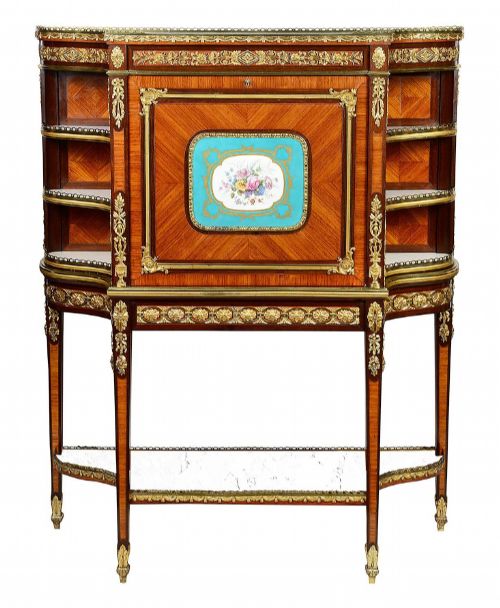
The most common examples on this page are mahogany and walnut secretaire chests, alongside bureau bookcases and inlaid rosewood abattants. Makers adapted these forms for both grand libraries and compact ladies writing rooms.
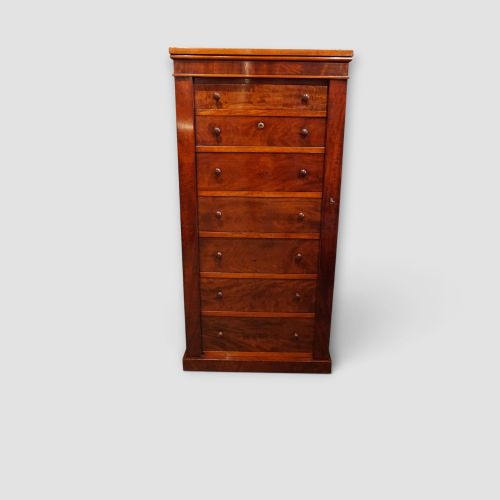
Pieces frequently incorporate secondary functions, pairing the drop front desk with a bookcase top, chiffonier base, or Wellington chest configuration. This variety reflects the diverse domestic demands of the period.
Materials and Construction
Cabinet makers relied heavily on solid hardwoods like mahogany, oak, and walnut, frequently applying flame mahogany veneer, burr walnut, or amboyna to primary display surfaces. Secondary timbers such as pine appear in concealed carcase parts.
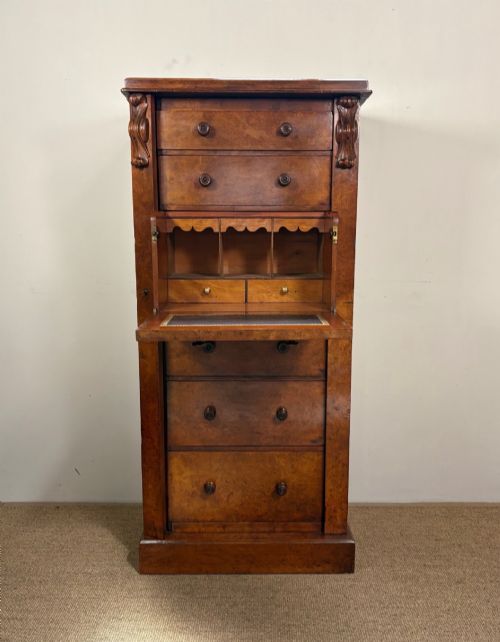
Structural complexity centres on the drop front hinge mechanism and internal stationery fittings, sometimes augmented by brass inlays, glass bookcase doors, and fitted leather writing surfaces. Joint work utilises traditional nineteenth-century carpentry techniques tailored to carcase furniture.
Victorian Drop Front Desk Retail Price Guide 2026
Typical asking prices for victorian drop front desk among the pieces listed under this phrase on Sellingantiques today, from the lower quarter to the upper quarter. They describe what is for sale here now, not the wider market.
Listings feature woods spanning mahogany, walnut, oak, rosewood, amboyna, and pine, alongside brass and glass elements.
Factors of Quality
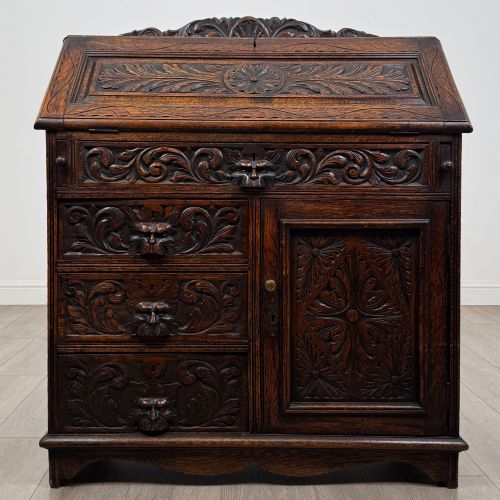
Quality in these desks rests upon the selection of timber veneers, the crispness of carved details like the Green Man motifs, and the complexity of the interior secret drawers. Finer pieces demonstrate precise grain matching across the fall front and balanced proportions in the surrounding cabinet work.
The integration of secondary elements, such as glazed bookcase doors, brass inlay, and specialised locking flaps on Wellington chests, elevates certain examples above standard utility furniture. Superior construction ensures the drop front operates smoothly and supports weight securely without straining the hinges.
Blake, London·Harris Lebus·Gregory & Co. of London·Druce & Co.
The Victorian Drop Front Desk Glossary
- Secretaire abattant
- A tall, upright cabinet with a vertical drop front writing flap that conceals a fitted interior of small drawers and pigeonholes.
- Escritoire
- A light writing desk, often taking the form of a cabinet with a fall front writing flap used for correspondence.
- Wellington chest
- A tall, narrow chest of drawers secured by a vertical locking flap hinged on one side and secured with a key.
- Bureau bookcase
- A combination furniture piece featuring a lower desk section with a sloping or drop front beneath an upper glazed bookcase.
- Burr walnut
- A prized wood veneer obtained from the knot growths of walnut trees, yielding intricate, swirling grain patterns.
Victorian Drop Front Desk: Frequently Asked Questions
How were these desks used?
Nineteenth-century users sat at these desks to write letters, manage household accounts, and store stationery in the internal pigeonholes. The drop front provided a clean surface that folded away after use.
Many examples combine this function with bookcase storage above or drawer space below for papers and books.
How do I style one at home?
These desks suit studies, living rooms, and bedrooms where traditional wood furniture adds warmth and character. Their vertical proportions make them effective for rooms with limited floor space.
Keep the drop front closed when not in use to display figured veneers like burr walnut or flame mahogany.
How do I date a Victorian desk?
Dating relies on stylistic clues, timber choices, and construction methods recorded across the nineteenth century. Pieces often incorporate revival styles, specific hardware, and distinct veneer applications typical of the era.
Makers' marks or stamps, when present, help narrow down the exact decade of manufacture.