



Victorian Dressing Table Casket
These robust victorian dressing table casket examples hold personal treasures with style, combining fine timbers and precious metals for the dressing room.
Victorian Dressing Table Casket
A victorian dressing table casket serves as a secure, elegant repository for personal ornaments, rings, and perfumes upon the bedroom surface. These pieces emerge predominantly from the nineteenth century, reflecting an era when personal grooming involved an array of specialised receptacles.
The selection here encompasses several related forms, including jewellery boxes, scent caskets, and glove boxes. Walnut, coromandel, and sterling silver dominate the choices available to the collector.
While most examples date from the Victorian and Edwardian periods, occasional pieces stretch back to the early nineteenth century or forward into the early twentieth century. These caskets vary from modest velvet-lined trinket boxes to substantial travel cases fitted with glass bottles.
Materials and Construction Methods
Cabinet makers utilised dense hardwoods such as burr walnut and coromandel as foundations, often mounting them with brass, ormolu, or mother of pearl inlay. Interiors received careful linings of silk and velvet to protect delicate contents from damage.
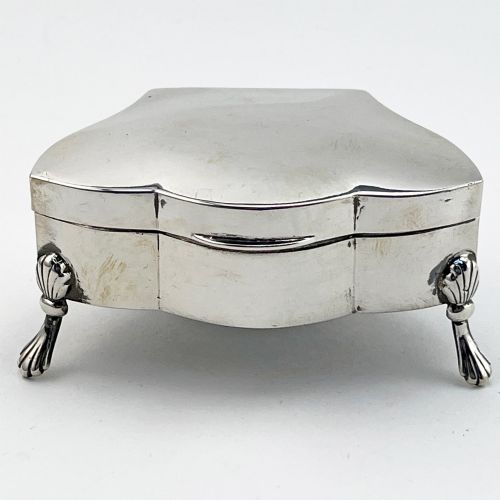
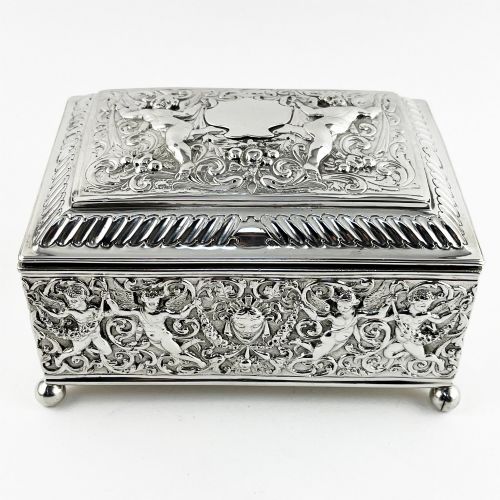
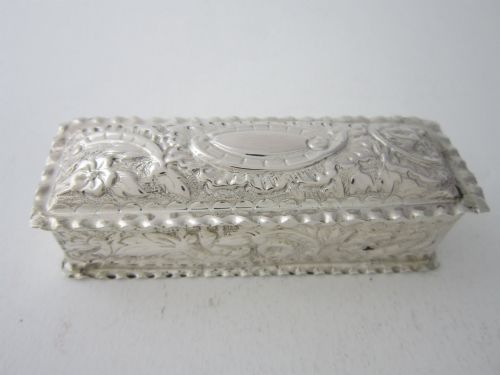
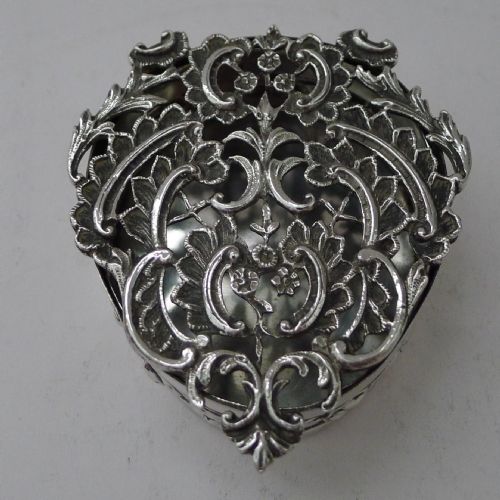
Silversmiths employed sterling silver for intricate repoussé and embossed caskets, frequently hallmarking their work in London or Birmingham. Glassmakers contributed heavy cut glass and Baccarat bottles designed to fit snugly within dedicated wooden or brass frameworks.
Victorian Dressing Table Casket Retail Price Guide 2026
Typical asking prices for victorian dressing table casket among the pieces listed under this phrase on Sellingantiques today, from the lower quarter to the upper quarter. They describe what is for sale here now, not the wider market.
Assessing Craftsmanship and Condition
Quality rests in the precision of the joinery and the weight of the materials employed. Substantial gauge silver and dense, richly figured timbers distinguish superior examples from lighter, more utilitarian counterparts.
The integrity of internal fittings, such as original silk linings, bevelled glass mirrors, and working locks with functional keys, elevates an item's standing. Elaborate decorative flourishes like hand-painted details or champlevé enamel indicate superior workshop output.
William Comyns·William Hutton·Jane Brownett Alexander Jones·Jennens & Bettridge
The Victorian Dressing Table Casket Glossary
- Casket
- A decorative box designed for storing valuables, jewellery, or letters. These pieces often feature hinged lids and secure locking mechanisms.
- Ormolu
- Gilded bronze or brass mounts applied to wooden furniture and boxes for ornamentation. This technique adds metallic contrast to dark woods like walnut.
- Repoussé
- A metalworking technique where the artisan hammers the design from the reverse side to create a raised relief on the surface. This method appears frequently on silver trinket boxes.
- Champlevé
- An enamelling process where troughs are carved into a metal surface and filled with vitreous enamel before firing. The resulting piece displays rich coloured patterns flush with the metal.
Victorian Dressing Table Casket: Frequently Asked Questions
What fits inside a victorian dressing table casket?
These boxes housed rings, brooches, gloves, and small grooming implements. Many contained fitted trays or specialised compartments for specific items.
Larger versions accommodated scent bottles, travelling mirrors, and multi-tier jewellery arrangements for daily use.
How do I date a silver trinket box?
British silver boxes bear hallmarks that indicate the assay office, the maker's mark, and a specific date letter. These stamped symbols provide precise chronological information.
Stylistic cues such as Art Nouveau curves or Victorian Gothic motifs offer additional clues when hallmarks are rubbed or absent.
Are interior linings usually original?
Many caskets retain their original silk or velvet linings, often showing gentle fading and wear from decades of use. Replacement linings appear frequently due to the fragile nature of antique fabrics.
Original padlocks and fitted compartments help confirm that the interior layout remains undisturbed.
Which woods were most popular?
Walnut, particularly burr walnut with its distinctive swirling grain, was a primary choice for nineteenth-century box makers. Exotic hardwoods like coromandel and rosewood also appeared on high-end luxury pieces.
Inlays of brass, mother of pearl, and pearl further enhanced these dark timber surfaces.